 Garden
Affiliate Disclosure
Some links on this page are affiliate links. As an Amazon Associate, we earn from qualifying purchases — at no extra cost to you. We do not buy, test, or physically handle the products we cover; our rankings come from aggregated owner reviews, ratings and expert consensus. Commissions never change our verdicts. How we rank · full disclosure.
The short answer: to get rid of whiteflies, hang yellow sticky traps to catch and monitor the adults, blast the undersides of the leaves with a strong spray of water to knock off insects and eggs, then spray those same undersides with insecticidal soap or a light horticultural oil, repeating every three to five days for two to three weeks. Whiteflies live and breed almost entirely on the leaf undersides, so any treatment that only hits the tops of the leaves fails. Spray in the cool early morning when the adults are least active.
Whiteflies are tiny, moth-like sap-sucking insects, about 1/16 inch long, that rise in a small white cloud when you brush an infested plant. They attack both houseplants and garden crops, and beyond weakening plants they excrete sticky honeydew that grows black sooty mold and, in some species, spread plant viruses. We do not test products first-hand; this guidance reflects horticultural and university-extension consensus, described in how we rank.
Confirm it is whiteflies
Whiteflies are easy to identify once you look under the leaves. Watch for:
- A cloud of tiny white flies lifting off when you shake or brush the plant, then settling back onto the leaf undersides.
- Tiny white or pale-green scales on leaf undersides — these are the immobile nymph stage, easy to mistake for a residue.
- Sticky honeydew on lower leaves and surfaces, often with black sooty mold.
- Yellowing, wilting, or stippled leaves and general decline; heavily fed plants weaken and drop leaves.
The University of California IPM program notes whiteflies can be difficult to control once established and that management depends heavily on early detection and persistence. If the flying insects come from wet potting soil rather than the leaves, you likely have fungus gnats instead — see how to get rid of fungus gnats.
The life cycle you have to outlast
Whiteflies develop from egg to adult in roughly three to four weeks in warm conditions, passing through egg, several nymph stages, a non-feeding pupal stage, and the winged adult. Females lay eggs on the leaf undersides, often in circular patterns. Crucially, the egg and pupal stages are protected and largely unaffected by contact sprays, so a single spray only knocks back the adults and mobile nymphs present that day. The overlapping generations are why control means repeated treatment over weeks, not a one-time application.
Yellow sticky traps: catch and monitor
Whiteflies are powerfully attracted to the color yellow, which makes yellow sticky traps genuinely useful. Hang them just above plant height, moving them up as plants grow, and place them among the plants rather than at the edge of the room or bed. Traps do three things: they physically remove large numbers of egg-laying adults, they reduce breeding, and they act as a monitor — a trap that keeps filling tells you the infestation is still active, while a trap that stays clean tells you the treatment is winning. Traps alone will not clear an established infestation because they do not touch eggs and nymphs, but they are an easy, non-toxic backbone for the whole program.
Sprays: soap, oil, and coverage of the undersides
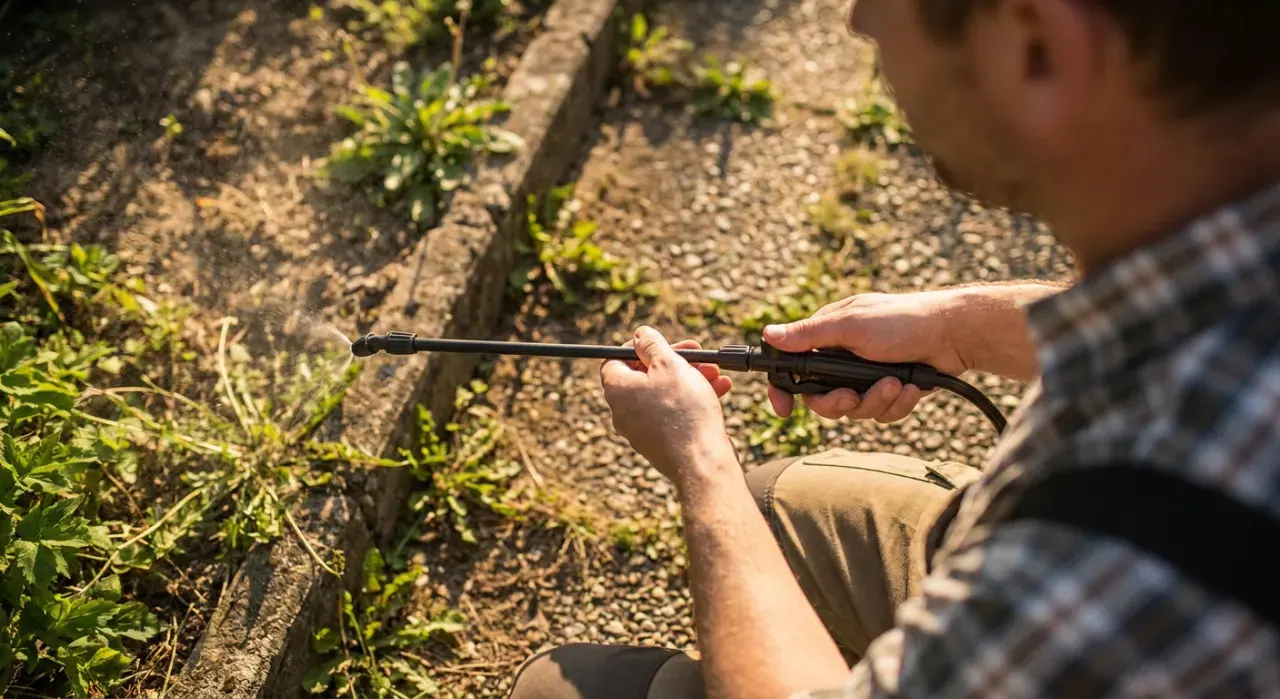
The working principle for all sprays is complete coverage of the leaf undersides, because that is where whiteflies live.
| Treatment | How it works | How to use it |
|---|---|---|
| Strong water spray | Physically dislodges adults, nymphs, and eggs | Aim under the leaves; do first, then follow with soap or oil |
| Insecticidal soap | Contact kill of soft-bodied insects; low toxicity | Wet all undersides thoroughly; repeat every 3 to 5 days |
| Horticultural or neem oil | Smothers insects and eggs, disrupts development | Coat undersides; apply out of direct sun and heat to avoid leaf burn |
Spray in the cool of early morning when adults are sluggish and less likely to scatter. Because the eggs survive, mark a calendar and repeat every three to five days for two to three weeks. Do not spray in the heat of the day or on drought-stressed plants, and always test a leaf first on sensitive foliage. For a broader chemical option on heavy garden infestations, our picks are in best yard insect killer.
The handheld vacuum trick for whiteflies
A small, well-established technique for whiteflies is to vacuum the adults. In the cool morning when they are slow, hold a handheld vacuum a few inches from the plant and gently disturb the leaves so the cloud rises into the airflow. Empty the vacuum contents into a sealed bag and freeze it or discard it outside far from your plants. This removes the breeding adults without any chemical and pairs well with sticky traps. It will not clear eggs and nymphs, so it is a supplement, not a stand-alone cure.

Biological control and companion tactics
In greenhouses and outdoors, natural enemies do real work. The parasitic wasp Encarsia formosa is a commercially available biological control widely used against greenhouse whitefly, and lacewings, lady beetles, and minute pirate bugs all prey on whiteflies. Avoid broad-spectrum insecticides that kill these beneficials, which can make a whitefly problem worse by removing its predators. In the vegetable garden, reflective silver mulch confuses incoming adults and reduces landings, and floating row covers keep them off susceptible transplants early in the season.
Preventing the next whitefly infestation
- Inspect and quarantine new plants, checking leaf undersides, for two weeks before adding them to your collection or garden. Most indoor infestations arrive on a new plant.
- Scout weekly. Turn over lower leaves and look for the white scales and eggs; early detection is the whole game.
- Remove heavily infested leaves and weeds nearby that can harbor whiteflies.
- Avoid excess nitrogen fertilizer, which drives the soft new growth whiteflies prefer.
- Protect beneficial insects by favoring soaps and oils over broad-spectrum chemicals.
Whiteflies reward persistence and punish a one-off spray. For related sap-suckers see how to get rid of aphids and how to get rid of mealybugs, and see the full pest and weed control hub.