 Garden

Affiliate Disclosure
Some links on this page are affiliate links. As an Amazon Associate, we earn from qualifying purchases — at no extra cost to you. We do not buy, test, or physically handle the products we cover; our rankings come from aggregated owner reviews, ratings and expert consensus. Commissions never change our verdicts. How we rank · full disclosure.
To get rid of thrips, layer your tactics: hang blue sticky traps to catch adults, blast nymphs off foliage with water, remove infested buds and spent flowers, then treat active outbreaks with an OMRI-listed spinosad or neem, and protect the natural predators that keep them down. These tiny, sliver-shaped insects rasp at leaves and petals, leaving silvery stippling dotted with black specks, and because they hide in buds and pupate in the soil, effective control means repeated, well-timed treatments rather than a single spray.
We do not test or physically handle the plants and products we cover; our guidance draws on horticultural extension research and the aggregated experience in thousands of owner reviews, as explained in how we rank.
Identify it first
Thrips are among the smallest insect pests you will deal with, slender and cigar-shaped, generally less than a twentieth of an inch long, and colored pale yellow, brown or black depending on the species. Because they are so small and quick to hide in tight spaces, most gardeners identify them by their damage rather than by sight. The hallmark is a silvery or bronzed, stretched-looking stippling on leaves and flower petals, produced as the insects rasp the surface and feed on the cells beneath. Scattered across that stippling you will see tiny black flecks, the thrips' excrement, which is a strong confirming clue.
Thrips attack an enormous range of plants, ornamentals, vegetables, houseplants, roses, onions and greenhouse crops among them. On flowers they cause streaked, deformed or browned petals and buds that fail to open cleanly; on new growth they can leave scarred, distorted leaves. Tapping a suspect bud or leaf over a sheet of white paper often dislodges the tiny slivers so you can see them move. When you find silvery stippling with black specks and confirm the moving specks on paper, you have thrips and can proceed to control.
Why they are so hard to reach
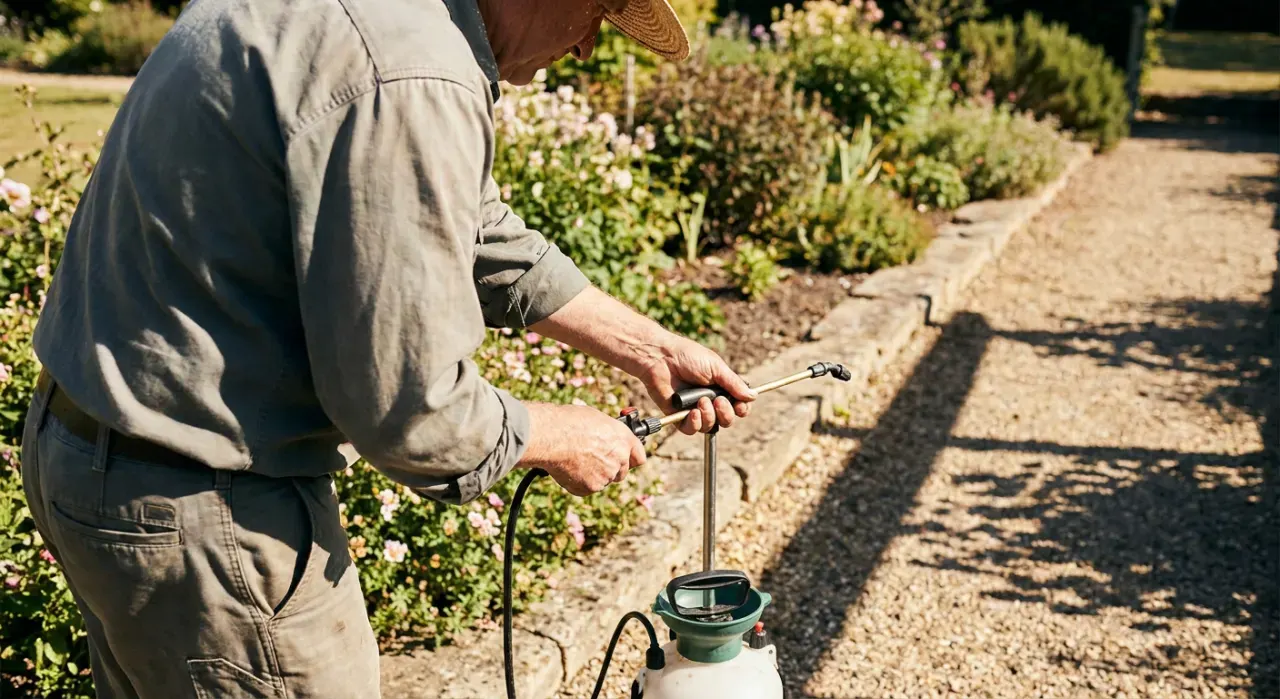
The central difficulty with thrips is that they are rarely fully exposed. They tuck themselves deep into buds, leaf folds and growing tips, precisely the places a foliar spray cannot easily wet, and a large part of their life cycle is spent as pupae in the soil or leaf litter, completely out of a spray's reach. On top of that, thrips reproduce very fast, often without mating, so a population knocked back today can rebound within days from eggs and sheltered stages that survived. This is why a single application so often disappoints and why the successful approach relies on repetition and coverage: hitting the plant several times a few days apart to catch newly exposed insects, while also addressing the soil stage and preserving predators.
Thrips treatment, least to most aggressive
Build from monitoring and physical controls up to selective sprays, and keep any broad-spectrum option as a genuine last resort.
- Blue sticky traps — Thrips are drawn to blue; traps catch the winged adults, tell you how heavy the population is, and reduce breeding adults. Use them to time your other actions.
- Water blasts and sanitation — A firm spray of water dislodges nymphs, and removing and destroying infested buds, distorted growth and spent flowers takes out the sheltered breeding sites.
- Insecticidal soap — Contact soap kills exposed nymphs and adults but needs thorough coverage and repeat applications, since it has no lasting residue.
- Neem oil / azadirachtin — Disrupts feeding, molting and reproduction; effective as a repeated backstop rather than a one-shot kill.
- Spinosad — This OMRI-listed insecticide is one of the most effective options against thrips. Apply thoroughly, repeat per the label a few days apart, and spray at dusk to protect pollinators; mind the pre-harvest interval on edibles.
- Beneficial predators and nematodes — Minute pirate bugs, lacewings and predatory mites attack thrips on the plant, while beneficial nematodes and predatory soil mites target the pupal stage in the soil. Preserve them by avoiding routine broad-spectrum sprays.
Comparing the control methods
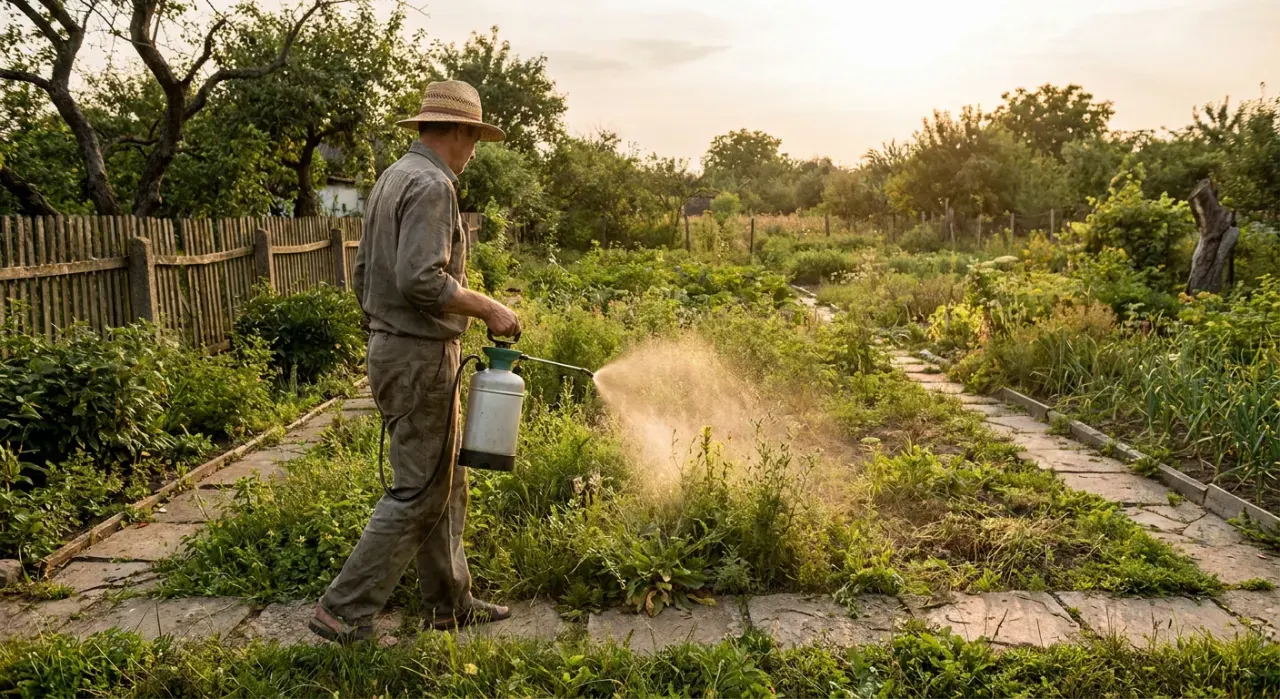
The table lines up each tool with what it targets and its limits.
| Method | Targets | Type | Note |
|---|---|---|---|
| Blue sticky traps | Adults | Physical / monitoring | Also gauges population size |
| Water blast | Nymphs on foliage | Physical | Repeat regularly |
| Remove infested buds | Breeding sites | Physical | Destroy, do not compost nearby |
| Insecticidal soap | Exposed nymphs, adults | Organic | Needs full coverage; no residue |
| Neem / azadirachtin | Feeding, reproduction | Organic | Repeat applications |
| Spinosad | Nymphs, adults | Organic / OMRI | Most effective; repeat per label |
| Predators / nematodes | Plant and soil stages | Biological | Preserve by avoiding broad sprays |
Because FIFRA makes the label binding, it governs the crops you may treat, the rate, the repeat interval, and how long to wait before harvest. Follow the label every time.
Thrips and plant viruses
One reason to take thrips seriously beyond their cosmetic stippling is that certain species transmit plant viruses, most notably tomato spotted wilt, which can devastate tomatoes, peppers and many ornamentals. A virus once introduced cannot be cured, so the practical implication is that keeping thrips numbers low is partly about preventing the far worse damage a virus would cause. If you see ring spots, bronzing or sudden wilting on plants that also have thrips, remove and destroy affected plants promptly to limit spread, and manage weeds nearby that can host both the thrips and the virus. This virus dimension is why thrips control is often worth the effort even when the direct feeding looks minor.
Preventing a thrips rebound
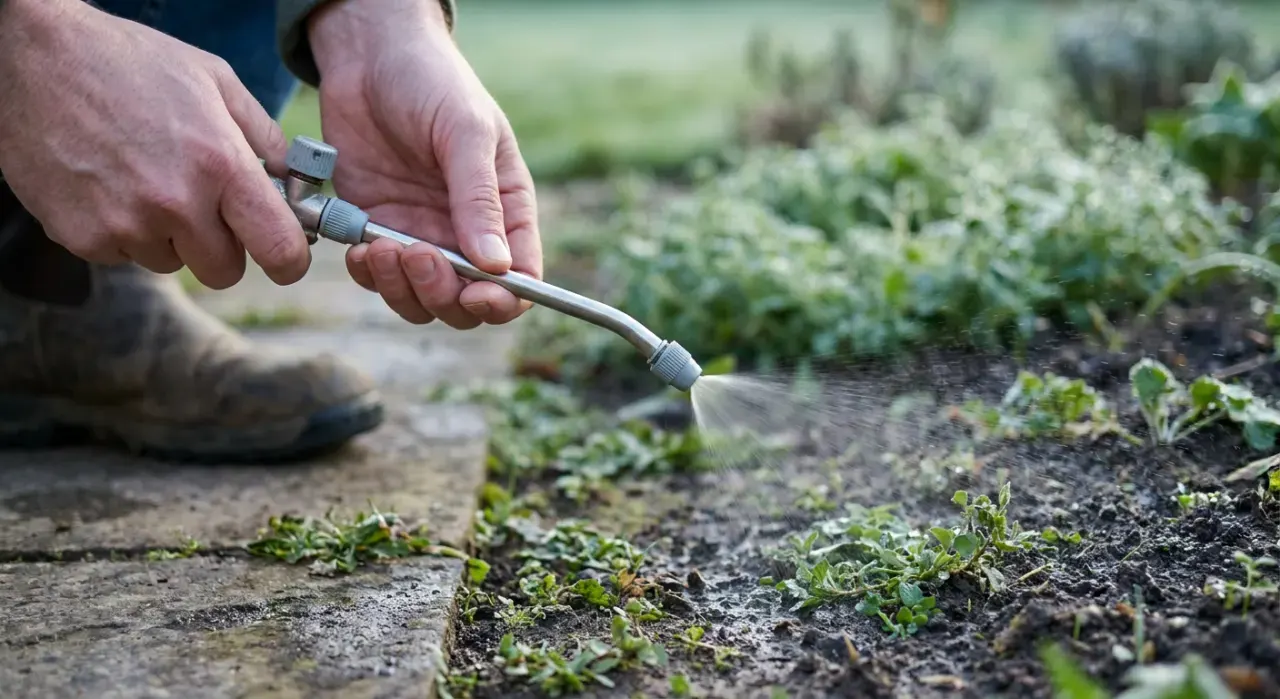
Because thrips move between plant and soil and reproduce quickly, prevention focuses on denying them footholds. Keep the garden and greenhouse free of plant debris and weeds that serve as reservoirs and pupation sites. Inspect new plants and any greenhouse or houseplant additions carefully before bringing them in, since thrips are a classic hitchhiker. Avoid over-fertilizing with nitrogen, which pushes the soft new growth thrips favor. Above all, protect the natural enemies that provide free, ongoing control by not spraying broad-spectrum insecticides on a routine schedule. Stacked together, sanitation, careful sourcing, balanced feeding and predator conservation keep thrips from rebuilding to damaging numbers.
Thrips on houseplants and in greenhouses
Thrips are a particular menace indoors and under glass, where the warm, sheltered, predator-free conditions let them breed year-round without the natural checks an open garden provides. If you keep houseplants or run a greenhouse, a few adjustments pay off. Inspect and, ideally, quarantine any new plant for a couple of weeks before it joins your collection, since thrips are one of the most common pests to arrive hidden on nursery stock. Blue sticky traps are even more useful indoors, both for early warning and for catching the winged adults in an enclosed space. Because you cannot rely on wild predators, some indoor growers deliberately introduce commercially available predatory mites or minute pirate bugs, which can establish well in a greenhouse. Keep humidity and airflow reasonable rather than stagnant, remove spent flowers and yellowing leaves promptly, and avoid the lush, over-fertilized growth thrips favor. When you do treat indoor plants, spot-treat and follow the label carefully, since enclosed spaces concentrate any product and the absence of predators means a heavy spray can leave you worse off once the survivors rebound.
Where to go next
For broader product options, the best insect killer for yards ranks the labeled choices. If your plants also show fungal spotting or leaf distortion from disease rather than feeding, compare symptoms at how to treat leaf curl. Everything sits under the Pest & Weed Control hub, and our method is explained on how we rank. Follow the label and check your local extension service for regional timing.