 Garden

Affiliate Disclosure
Some links on this page are affiliate links. As an Amazon Associate, we earn from qualifying purchases — at no extra cost to you. We do not buy, test, or physically handle the products we cover; our rankings come from aggregated owner reviews, ratings and expert consensus. Commissions never change our verdicts. How we rank · full disclosure.
Mulch is the most effective non-chemical weed control there is: two to three inches of wood chips stops the large majority of annual weed germination. Cardboard under mulch clears rough ground over a season. Boiling water handles cracks and paths for free. Hand-pulling after rain works permanently on annuals. Vinegar and flame burn off top growth but never kill roots, so perennials come straight back. And salt is the one to avoid entirely.
The Methods, Ranked by What They Actually Do
| Method | Best for | Kills roots? | Effort | Honest limit |
|---|---|---|---|---|
| Mulch, 2–3 in | Beds, borders, around shrubs | Prevents germination rather than killing | One afternoon a year | Does nothing to weeds already established |
| Cardboard + mulch | Clearing a whole bed or rough ground | Yes, by starvation over months | Low, but slow | Needs a full growing season on tough perennials |
| Hand-pulling | Annual weeds, small infestations | Yes on annuals, unreliably on perennials | High per weed | Fragments of perennial root regrow and multiply |
| Boiling water | Driveway and patio cracks, path joints | Shallow roots yes, deep roots no | Low, free | Non-selective; only reaches an inch or two down |
| Flame weeding | Gravel, hardscape, seedling flushes | No — top growth only | Low | Real fire risk; never near mulch, dry grass or fences |
| Horticultural vinegar | Young annual weeds on hard surfaces | No | Low | Perennials regrow; corrosive; non-selective drift |
| Solarization | Clearing a bed in a hot summer climate | Yes, including much of the seed bank | Low, very slow | Needs 6–8 weeks of real heat; ineffective in cool summers |
| Salt | Nothing we would recommend | Yes, and everything nearby | Low | Persists for years, leaches sideways, damages trees |
Mulch: The One That Does the Heavy Lifting
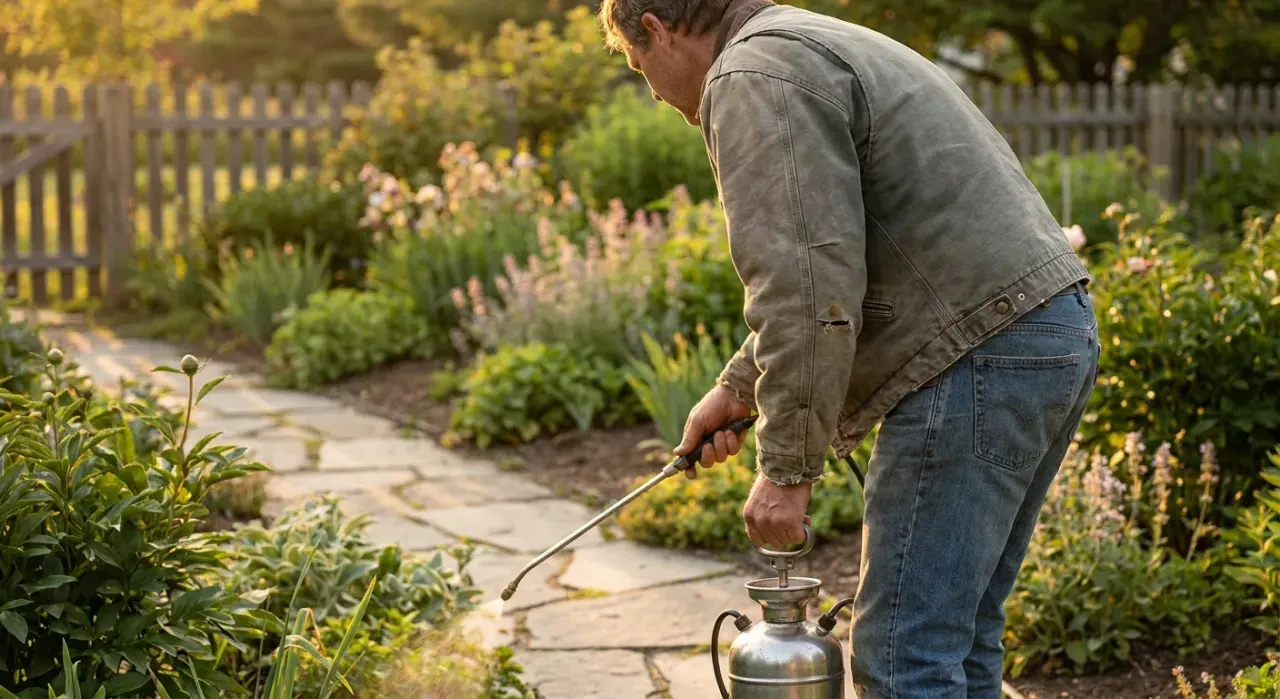
If you only adopt one thing on this page, adopt this. Almost every annual weed seed needs light to germinate, and two to three inches of coarse organic mulch denies it. It is not a partial improvement — a properly mulched bed is close to weed-free from germination, and the few weeds that do appear come from windblown seed landing on top, where they root shallowly in loose mulch and pull out with two fingers.
The specifics matter. Depth: 2 to 3 inches of coarse material. Under 2 inches lets light through. Over 4 inches holds too much moisture against stems and can go anaerobic underneath. Coarse beats fine — arborist wood chips and shredded bark form an open layer that drains and does not crust, while fine compost or peat is itself an excellent seedbed for anything that lands on it. Keep it off stems and trunks, pulled back a few inches, since a mulch volcano piled against bark invites rot and rodents. Top up annually, because organic mulch is supposed to break down and feed the soil; that is a feature, and it means the layer thins.
Shredded fall leaves are the cheapest good mulch in America and most people put them at the curb. A mulching mower pass reduces them enough to spread straight onto beds. The case is made in mulching leaves vs bagging.
Cardboard Smothering: Clearing Ground Without Digging
Sheet mulching — cardboard laid over living weeds and covered with mulch — clears rough ground with almost no labor, and it does something pulling cannot: it kills perennial roots by starvation without breaking them into fragments that resprout.
The method is simple. Mow or trample the weeds flat, water the ground thoroughly, lay plain corrugated cardboard with all tape and plastic labels removed, overlapping every seam by at least six inches because weeds find every gap, wet the cardboard so it stays put and starts breaking down, then cover with three or four inches of wood chips or shredded leaves. Annual weeds die within weeks. Established perennials — bindweed, quackgrass, thistle — take a full growing season and occasionally a second, because they will send shoots along under the cardboard looking for an edge. Check the perimeter monthly.
By the following spring the cardboard has largely composted and the soil underneath is loose, moist and full of earthworms, which is why this is the standard approach for converting a patch of lawn into a planting bed. You can also cut a hole and plant through it immediately if you are impatient.
Heat: Boiling Water and Flame
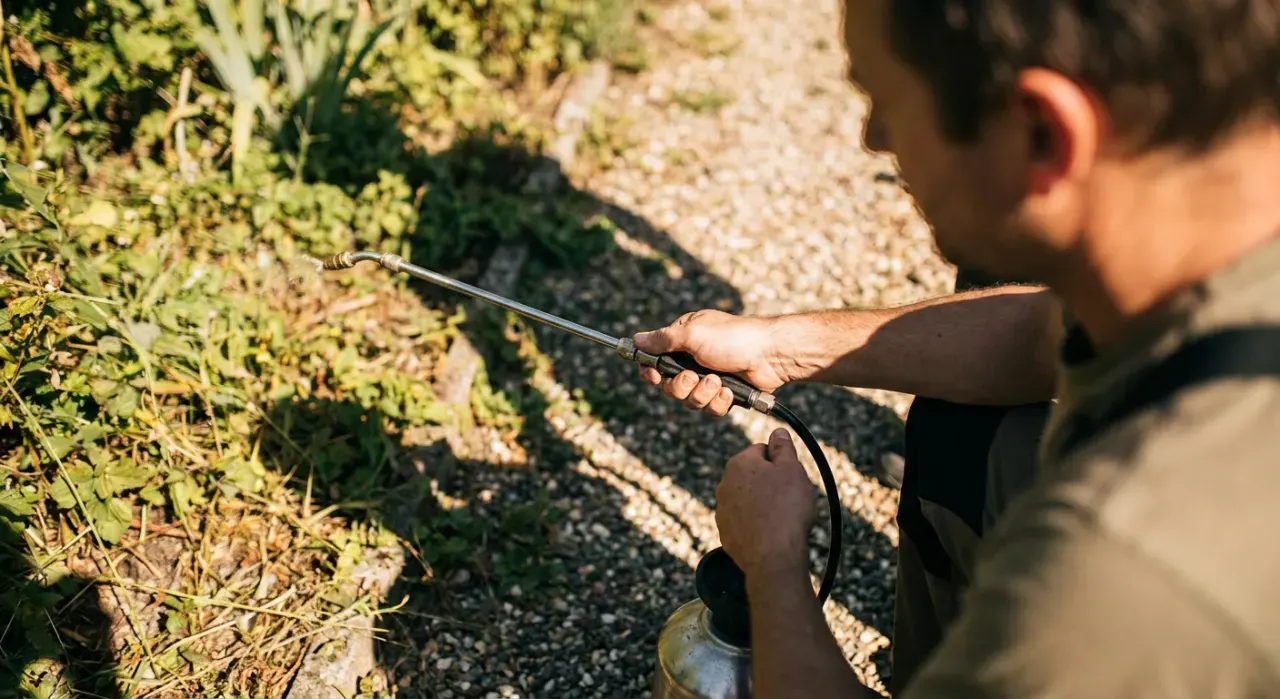
Boiling water is the most underrated tool in this category. A full kettle poured slowly over a weed in a driveway crack ruptures the cells outright, and the plant collapses within hours. It costs nothing, leaves no residue, and unlike vinegar the heat penetrates an inch or two into the soil, which takes out the shallow root as well as the top. On paths, patio joints, driveway cracks and gravel edges it is genuinely the correct answer. Two cautions: it is completely non-selective, so it kills turf, ornamental roots and soil life within the pour zone, and it is a scald hazard — carry it in a kettle with a lid, not an open pan.
Flame weeding uses a propane torch not to burn the plant but to heat it just enough to rupture cell walls; a couple of seconds of contact until the leaf looks slightly darker is sufficient, and blackening it is wasted fuel. It is fast and effective on flushes of seedlings on gravel and hardscape. It is also top-growth only, so perennials return. The overriding consideration is fire: never use one near mulch, dry grass, wooden fencing, or under eaves, never during a burn ban or a windy dry spell, and keep a hose running nearby. Smoldering mulch that catches hours later is a documented way to lose a fence.
Vinegar, Honestly
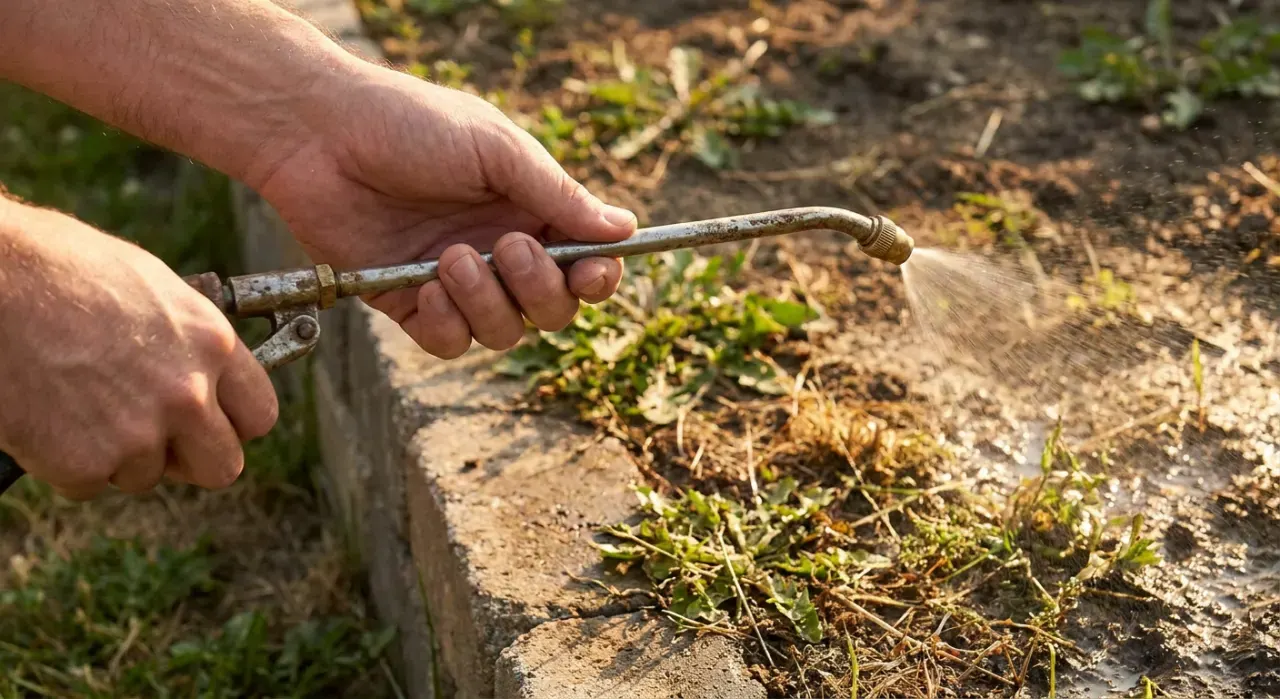
Horticultural vinegar at 20 to 30% acetic acid is a real contact herbicide and it works — young annual weeds on a hot day collapse within hours, and the consensus across owner reviews is that the visual result is dramatic. What it will not do is kill a root. Dandelion, bindweed and thistle regrow from the crown within two or three weeks, and repeated burn-downs slowly exhaust some perennials but rarely finish them.
Three things are worth being straight about. It is non-selective, so drift onto turf or ornamentals burns them exactly as it burns the weed. It is corrosive at strength — 20% acetic acid can cause serious eye injury and skin burns, and it requires goggles and gloves, which is not what most people picture when they hear vinegar. And kitchen vinegar at 5% is not the same product; it browns cotyledon-stage seedlings on hot pavement and essentially nothing else. Common recipes adding dish soap and salt improve the soap part (it helps the acid stick) and ruin the rest, for reasons covered below.
Commercial fatty-acid products based on ammonium nonanoate work on the same contact principle with less corrosivity and are, for most households, the better version of this idea. They appear in the ranked field in best weed killers.
Why Salt Is the One to Skip
Salt kills plants by drawing water out of roots, and it does so effectively. The problem is that sodium chloride does not degrade. It stays in the soil, moves laterally and downward with every rain, and accumulates. People who salt a driveway or a fence line commonly find dead patches appearing in the adjacent lawn the following spring, and mature trees rooting under a hardscape can be injured well outside the treated strip. It also destroys soil structure, leaving ground that crusts and sheds water for years.
There is no situation in a home yard where salt is the best available option. Boiling water does the same immediate job and leaves nothing behind.
Pulling and Hoeing, Done Properly
Timing and technique turn a chore into an efficient method. Pull after rain or a deep watering, when moist soil releases roots whole instead of snapping them. Grip at the base, at soil level, and lift steadily rather than yanking the foliage. Pull before seed set — a single crabgrass or purslane plant allowed to seed stocks the soil for years, so the ten minutes you spend in July saves hours the following June.
For seedlings across a large area, a sharp hoe is far faster than hands. A stirrup or scuffle hoe slid a half inch under the surface severs seedlings at the root, and if you go out on a dry sunny morning they desiccate before they can re-root. Do not dig deep: every inch you turn the soil brings new dormant seed up into the light. This is the single most common self-inflicted weed problem in vegetable gardens.
Know when pulling backfires. Bindweed, Canada thistle, quackgrass and yellow nutsedge all regenerate from fragments, so pulling propagates them. Those need smothering, persistent removal over multiple seasons, or a targeted systemic product — and the difference between the product types is explained in selective vs non-selective herbicides.
Prevention Beats Every Method Here
Weeds colonize what your plants are not using. Close the openings and the workload collapses. Mow cool-season turf at 3.5 to 4 inches so the soil surface stays shaded, which prevents a large share of crabgrass germination on its own. Water deeply and infrequently rather than daily, since a constantly damp top half inch is a germination zone. Plant densely and let ground covers close the gaps in beds. Overseed thin turf in fall, because bare soil in September is crabgrass in June. And keep bare soil covered — with mulch, with a cover crop, with anything.
What each weed is telling you about the underlying condition is set out in common lawn weeds identified, and crabgrass specifically has a prevention calendar in how to get rid of crabgrass.
Where to Go Next
If you decide a product is genuinely the answer for part of the yard, work out which category you need first — the ranked field is in best weed killers, and households with animals should read weed killers and pet safety before buying. Everything sits under the pest and weed control hub.
We never buy, apply or physically handle the products we rank — recommendations come from aggregated owner reviews and expert consensus, and the method is on how we rank. Where a product is involved, the label is the legally binding instruction in the United States and it overrides anything written here.