 Garden

Affiliate Disclosure
Some links on this page are affiliate links. As an Amazon Associate, we earn from qualifying purchases — at no extra cost to you. We do not buy, test, or physically handle the products we cover; our rankings come from aggregated owner reviews, ratings and expert consensus. Commissions never change our verdicts. How we rank · full disclosure.
Four options, in ascending order of cost and control: a solar cover, solar panels, an electric heat pump, and a gas heater. A solar cover is the cheapest and highest-return of the four and belongs on almost every pool regardless of what else you install, because evaporation is how an outdoor pool loses most of its heat. Solar panels are cheapest to run but weather-dependent. A heat pump is the economical choice for holding a temperature all season. A gas heater is expensive per hour and unbeatable when you want warm water this afternoon.
The four options compared
| Solar cover | Solar panels | Heat pump | Gas heater | |
|---|---|---|---|---|
| Upfront cost | $80 to $200 | $2,500 to $6,000 installed | $2,000 to $5,500 installed | $2,000 to $5,000 installed |
| Running cost | Nothing | Pump electricity only | Low per hour | High per hour |
| Speed | Gradual gain, strong overnight retention | Slow, weather-dependent | 24 to 72 hours for a real rise | Hours |
| Works in cold air | Yes — it retains, it does not generate | No, needs sun | Poorly below about 50°F | Yes, any temperature |
| Lifespan | 2 to 5 seasons | 10 to 20 years | 10 to 15 years | 7 to 12 years |
| Best for | Every pool, always | Sunny climates, season extension | Holding a set temperature | Occasional on-demand heat |
Start with a cover — the arithmetic is unarguable
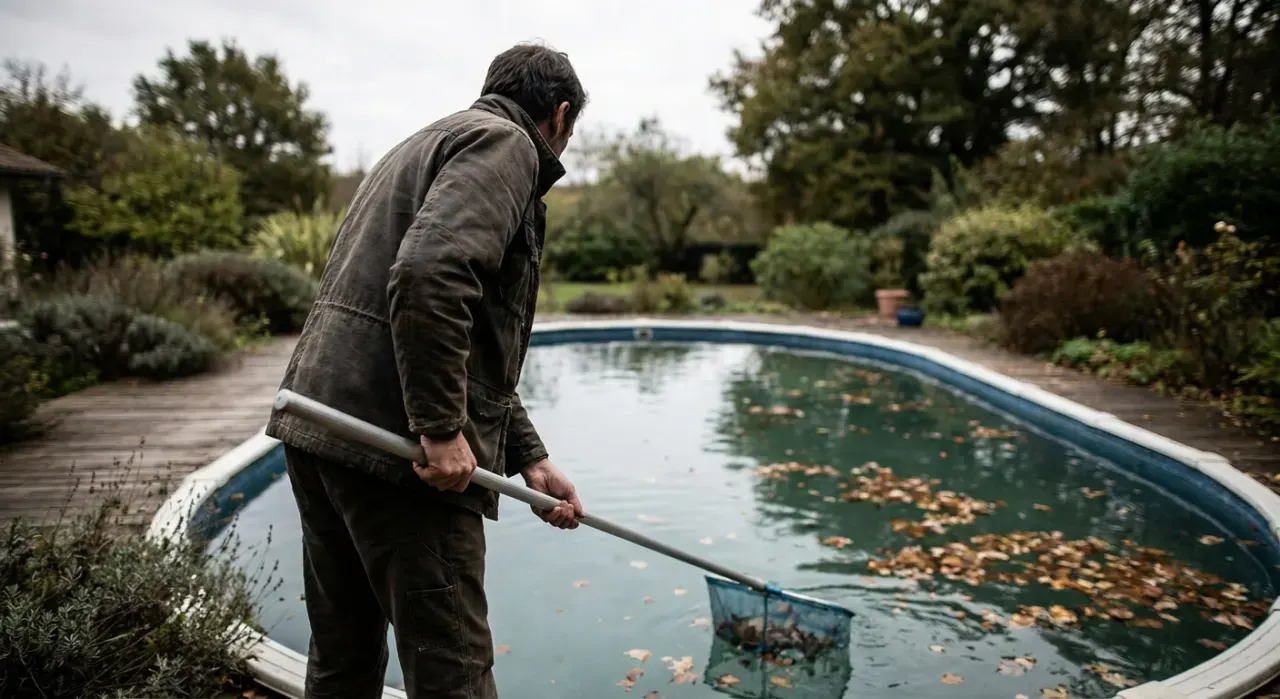
An uncovered outdoor pool loses most of its heat through evaporation, not through the walls or the floor. Every gallon that evaporates carries away a substantial amount of energy, which is why a pool can be warm at 6pm and noticeably cool by breakfast even on a mild night. A floating cover stops that, and it does so whether or not you own a heater.
The two effects stack. During the day the cover admits sunlight and traps the gain; at night it puts a lid on evaporation. On a heated pool the saving is the largest single efficiency measure available — heating an uncovered pool overnight is close to heating the yard. Even on an unheated pool a cover commonly adds several degrees over a week of sun, which is often the whole difference between a pool people use and one they do not.
The honest catch is behavioral. A cover only works on the nights it is actually on, and a heavy manual cover on a large pool is a chore that plenty of owners quietly abandon by midsummer. If your pool is large, budget for a reel — it converts a two-person wrestle into a one-person job and is the difference between a cover that gets used and one that lives rolled up beside the shed.
A solar cover is not a safety cover. It floats, it supports no weight, and a child who gets onto one can slip underneath and become trapped beneath a sheet that is hard to see through and hard to push away from below. Never leave one partly on with the pool unattended, and never let anyone walk or sit on it. Safety covers are an entirely separate product, anchored to the deck and load-rated — the layered approach is set out in pool safety.

Best for holding the heat you already have, on any pool with any heater
- 12 mil thickness — the heavier grade lasts longer than 8 mil in strong sun
- Insulating bubbles face down onto the water
- Cuts evaporation, which is how an outdoor pool loses most of its heat
- Trim to fit an irregular pool with scissors
Why buy it: evaporation is the dominant heat loss from an outdoor pool, so a cover does more for the water temperature per dollar than any heater upgrade.
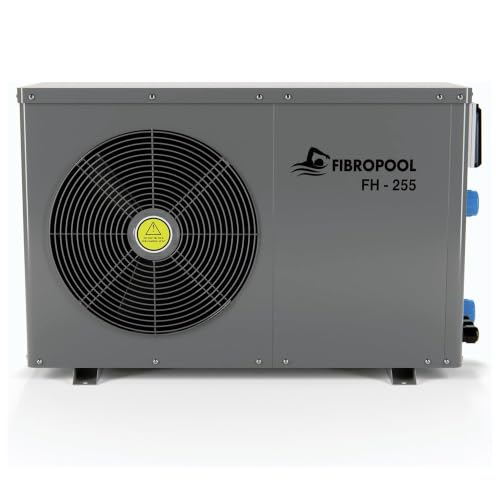
Best for holding a set temperature all season on a pool up to about 10,000 gallons
- 55,000 BTU output on a 240V supply
- Titanium heat exchanger, which suits salt pools
- Heat and cool modes
- Sized for above-ground and smaller in-ground pools
Why buy it: a heat pump moves existing heat rather than making it, so it costs far less per hour than gas to hold a temperature through a long season.
We do not buy or physically handle the equipment we rank; verdicts come from aggregated owner ratings and expert consensus, described on how we rank. The ranked fields are in the best pool solar covers and the best above-ground pool heaters.
Solar panels
A solar heating system circulates pool water through collector panels — usually on a roof, sometimes ground-mounted — where the sun warms it directly before it returns to the pool. Running cost is essentially nothing beyond the pump electricity you were already spending, and a well-sized array lasts ten to twenty years.
Sizing is what separates a system that works from one that disappoints. The standard guidance is collector area equal to 50 to 100 percent of the pool's surface area, toward the upper end in cooler or cloudier climates. Nearly every dissatisfied owner review of a solar heating kit describes the same thing: a small mat sold for a large pool, doing almost nothing. Undersized is the failure mode.
Panels also need a suitable mounting surface with good sun exposure through the middle of the day, and they need the pump to run while the sun is on them, which sometimes means a longer daytime run schedule than filtration alone would require. What they will never do is deliver heat on demand, hold a temperature through a cold overcast week, or work at night. Treat solar as season extension — several weeks at each end — rather than climate control.

Electric heat pumps
A heat pump does not create heat, it moves it. A fan draws outside air across an evaporator coil, refrigerant carries that captured warmth to a heat exchanger, and it transfers into the pool water. Because it is moving heat rather than manufacturing it, it delivers several units of heat for every unit of electricity consumed, which is why it costs so much less per hour than gas.
Two properties define how it should be used. First, it is slow — 24 to 72 hours for a meaningful temperature rise on a residential pool — so it suits setting a target and leaving it, not deciding on Saturday morning that the pool should be warm by lunch. Second, its efficiency depends on air temperature, and falls sharply once the air drops below about 50°F. In a cold-climate shoulder season, exactly when you want the extra weeks, output declines just as demand rises.
Practical notes: a heat pump needs a 240V circuit and a competent electrician, generous clear space around it for airflow, and — on a salt pool — a titanium heat exchanger, since salt is unkind to lesser materials. It runs with a persistent fan noise similar to an air-conditioning condenser, so siting matters if the pool is near a bedroom window. And it should be paired with a cover, because without one a large share of what it patiently adds all day leaves overnight.
Gas heaters
A gas heater burns natural gas or propane to add heat directly, and it is the only option that gives you genuine control. It raises a residential pool by several degrees in hours, works at any outside air temperature, and does not care whether the sun is out. For a spa, or for a pool used on unpredictable weekends, nothing else does the job.
It is also the most expensive way to heat water. Running a large residential unit at full fire commonly costs several dollars an hour on natural gas and considerably more on propane, so leaving one holding a temperature all season is a genuinely serious bill. The right use is on-demand: heat the pool for the weekend, then let it drift back.
Installation is not a DIY job. Gas heaters require correctly sized gas supply piping, proper venting, and combustion clearances, and gas work is governed by codes that vary by jurisdiction. Have it installed by a licensed professional, permitted where required, and serviced annually. Never operate or store a pool gas heater in an enclosed space that is not designed and vented for it.
Choosing
- Every pool: a solar cover, plus a reel if the pool is large. Nothing else on this page returns as much per dollar.
- Sunny climate, want more season: solar panels sized at 50 to 100 percent of the pool surface, plus the cover.
- Want a set temperature all season: a heat pump, plus the cover. Size it to the pool volume and expect it to work slowly.
- Occasional use, want warm water today: a gas heater, plus the cover, professionally installed.
- Cold-climate shoulder season: gas, or a heat pump chosen with its cold-weather output specifically checked.
- Small above-ground pool: a cover first, then a modest heat pump or a solar mat sized honestly against the pool surface.
Whichever you pick, aim for the lowest temperature everyone is genuinely happy with. Heat loss rises with the gap between water and air, so each degree above 80°F costs disproportionately more to hold.
Where to go next
Pool running costs works the heating arithmetic alongside the pump, chemicals and water. For the specific case of a small pool, how to keep an above-ground pool warm and how long it takes to heat a pool 10 degrees. For the ranked fields, the best solar pool heaters. Everything else sits under the pools and spas hub.