 Garden

Affiliate Disclosure
Some links on this page are affiliate links. As an Amazon Associate, we earn from qualifying purchases — at no extra cost to you. We do not buy, test, or physically handle the products we cover; our rankings come from aggregated owner reviews, ratings and expert consensus. Commissions never change our verdicts. How we rank · full disclosure.
The short version: the best cordless circular saw is the DEWALT DCS570B, because it pairs a brushless 20V MAX motor with a full 7-1/4 inch blade — 2-9/16 inches of depth at 90 degrees, which is what it takes to cut a 2x4 at any bevel in a single pass and to use the same blades as every corded saw you own. If weight matters more than capacity, the sub-compact Makita XSH04ZB is around 6.4 pounds bare. And if you already own batteries on a platform, buy the bare tool that fits them: the battery system you are locked into is worth more than the small differences between good saws.
Cordless circular saws crossed the line from convenient to genuinely capable when brushless motors arrived. The remaining honest limitation is not power but runtime — you will change batteries, not struggle to cut. For the corded comparison, see corded versus cordless, and our main circular saw roundup covers corded models. The power tools and workshop hub maps the rest of the shop.
Top Picks at a Glance

Our #1 Pick: DEWALT DCS570B 20V MAX 7-1/4 in.
Blade size is the spec that decides what a circular saw is for, and it is the one most cordless saws quietly compromise on. A 6-1/2 inch blade gives you around 2-1/8 inches of cut depth at 90 degrees. A 2x4 is a nominal size — actually 1-1/2 by 3-1/2 inches — so 2-1/8 inches clears it easily flat. Tilt the saw to 45 degrees for a bevel, though, and the effective depth drops by roughly 30 percent, and suddenly you are stopping short in a 2x4. A full 7-1/4 inch blade at 2-9/16 inches has the headroom to bevel a 2x4 in one pass, which is why every corded framing saw is 7-1/4.
The DCS570B puts that full blade on a brushless motor spinning to 5200 RPM, and holds speed under load rather than bogging when the cut tightens. Owners consistently report that it feels like a corded saw in use, which is a specific and meaningful compliment — the complaint about earlier cordless saws was always that they slowed the moment the wood pinched.
Two other features matter more in daily use than the headline specs. The electric brake stops the blade in a fraction of a second when you release the trigger, which changes how comfortable you are setting the saw down on a sawhorse. And the 57 degree bevel capacity exceeds the usual 45 or 50, which turns up whenever you are cutting a roof or a stair stringer.
Consensus Score █████████░ 8.9 — built from aggregated verified owner ratings, weighted for review volume.
The honest weaknesses: it is a bare tool, so a battery and charger are extra and can cost more than the saw; the full-size blade makes it heavier and more tiring overhead than a compact saw; and it is left-blade, which some right-handed users take a while to adjust to. Runtime on a small battery is genuinely limiting — pair it with a high-capacity pack.
Check price on Amazon → (paid link)
The Ranked Field

Best for framing, decking and sheet goods with a full-size 7-1/4 inch blade
- Brushless motor, 5200 RPM
- Full 7-1/4 inch blade, 2-9/16 inch depth
- Bevels to 57 degrees
- Electric brake stops the blade fast
Why buy it: a full 7-1/4 inch blade is the only cordless size that cuts through a 2x4 at 45 degrees in one pass, which is the difference between a framing saw and a trim saw.

Best for overhead work, ladders and long days where weight matters
- Sub-compact body, about 6.4 lbs bare
- Brushless motor to 5000 RPM
- Automatic Speed Change under load
- 6-1/2 inch blade, 2-1/4 inch depth
Why buy it: six and a half pounds instead of nine changes what you can do above shoulder height, and the automatic speed change keeps the cut moving when the material bites.

Best for anyone already invested in Milwaukee M18 batteries
- 6-1/2 inch blade at 3500 RPM
- Magnesium upper and lower guards
- 2-1/8 inch depth at 90 degrees
- Runs on any M18 battery
Why buy it: if you already own M18 batteries the bare tool price is most of the saving, and magnesium guards survive being dropped off a sawhorse in a way plastic does not.
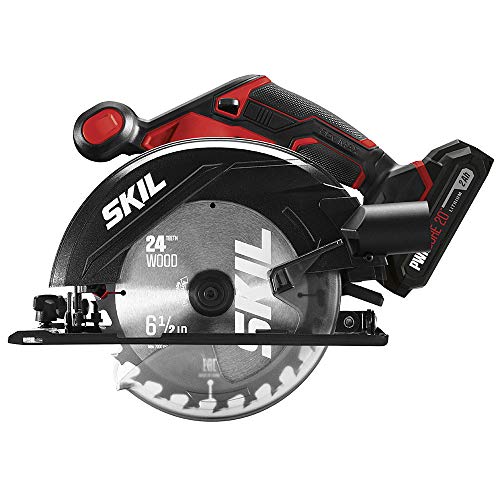
Best for a first cordless saw with battery and charger included
- Battery and charger in the box
- Up to 4500 RPM
- 2-1/8 inch depth at 90 degrees
- Bevels to 50 degrees
Why buy it: a complete saw, battery and charger for roughly the price of a bare-tool premium saw is the honest entry point if you own no cordless platform yet.

Best for ONE+ battery owners who want a full-size blade
- Full 7-1/4 inch blade
- Brushless motor at 3800 RPM
- Works with every 18V ONE+ battery
- Bevel and depth adjustment
Why buy it: a full-size blade on the cheapest big battery platform in the country means deck and framing capacity without buying into a new battery system.

Best for plywood, paneling, laminate and one-handed trim cuts
- Tiny 3-3/8 inch blade
- Two batteries and charger included
- About 3.3 lbs with battery
- 1 inch depth at 90 degrees
Why buy it: it weighs about as much as a cordless drill, which makes cutting a sheet of paneling or a laminate plank a one-handed job rather than a two-person one.

Quick Comparison
| Product | Best for | Rating | Price | Buy |
|---|---|---|---|---|
| DEWALT 20V MAX Circular Saw Cordless with Brake, 7-1/4 Inch, Tool Only (DCS570B) | Best Overall Cordless Circular Saw | — | Check (paid link) | |
| Makita XSH04ZB 18V LXT Sub-Compact Brushless Cordless 6-1/2 in. Circular Saw, Tool Only | Best Compact | — | Check (paid link) | |
| Milwaukee M18 Cordless Lithium-Ion 6-1/2 in. Circular Saw 2630-20, Bare Tool | Best for M18 Owners | — | Check (paid link) | |
| SKIL 20V 6-1/2 Inch Cordless Circular Saw with 2.0Ah PWR CORE 20 Lithium Battery and Charger, CR540602 | Best Value Kit | — | Check (paid link) | |
| Ryobi 18V One+ Brushless 7-1/4 Inch Circular Saw | Best for ONE+ Owners | — | Check (paid link) | |
| Makita SH02R1 12V max CXT Lithium-Ion Cordless 3-3/8 in. Circular Saw Kit (2.0Ah) | Best Ultra-Compact | — | Check (paid link) |
How We Rank
We do not buy, test or physically handle these products. For cordless circular saws we weight cut depth and bevel capacity, whether the motor holds speed under load, weight and balance for overhead and long-session work, build quality of the shoe and guards, and the value of the battery platform you are buying into. Rankings come from the aggregated owner-review record — ratings weighted by review volume, plus the failure modes that repeat across many reviews. Prices were current at the time of writing. Full method on how we rank.
The Cordless Circular Saws, Reviewed
1. DEWALT DCS570B — Best Overall
Covered above. What owners praise: that it cuts like a corded saw, the full 7-1/4 inch capacity, the brake and the 57 degree bevel. What owners complain about: bare tool pricing, weight overhead, and runtime on small batteries. The default cordless saw for anyone doing structural work.
2. Makita XSH04ZB Sub-Compact — Best Compact
Makita’s sub-compact line exists for a specific realization: most cuts do not need a framing saw, and carrying one up a ladder all day is a choice. At around 6.4 pounds bare and 10-5/8 inches long, this saw changes what is comfortable overhead, in a crawlspace, or on a roof. The brushless motor reaches 5000 RPM and Automatic Speed Change adjusts torque when the material loads it, which is what keeps a small saw from stalling in a knot. What owners praise: the weight, the balance and that it still cuts a 2x4 flat without complaint. What owners complain about: 6-1/2 inch capacity is marginal on a beveled 2x4, and blade choice is narrower than the universal 7-1/4 inch size. The saw you will actually reach for on a remodel.
3. Milwaukee 2630-20 M18 — Best for M18 Owners
The straightforward argument here is platform. If your drill, impact driver and light are M18, adding a bare-tool saw costs you a fraction of buying into another system. The 2630-20 is a brushed 6-1/2 inch saw at 3500 RPM — not the fastest number in this field — but it has magnesium upper and lower guards, which survive drops off a sawhorse and jobsite abuse in a way plastic guards do not. What owners praise: the durability, that it runs on batteries they already own, and the balance. What owners complain about: a brushed motor draws more current and gives less runtime per charge than the brushless saws here, and 3500 RPM is noticeably slower in thick stock. Buy it for the ecosystem, not for the spec sheet.
4. SKIL CR540602 20V — Best Value Kit
The entry point that includes everything. A 6-1/2 inch saw reaching 4500 RPM with 2-1/8 inches of depth and 50 degrees of bevel, plus a 2.0Ah battery and a charger, for roughly what a premium bare tool costs. If you own no cordless platform and want a saw that works out of the box for occasional projects, the math is hard to argue with. What owners praise: the completeness, the price and that it cuts plywood and dimensional lumber capably. What owners complain about: the 2.0Ah battery is small so runtime is short, and the PWR CORE 20 platform has a narrower tool range than the big three. A genuinely sensible first saw.
5. Ryobi 18V ONE+ Brushless 7-1/4 in. — Best for ONE+ Owners
ONE+ is the largest homeowner battery platform in the United States, and this is the saw that gives it full framing capacity. A brushless motor and a 7-1/4 inch blade at 3800 RPM means real depth of cut, and it runs on every 18V ONE+ battery you already own, including the old ones. What owners praise: that a full-size blade is available on a budget platform, and the value for occasional deck and shed work. What owners complain about: 3800 RPM is slower than the premium saws so it works harder in thick stock, and older low-capacity ONE+ batteries sag badly under a saw’s draw. Pair it with a high-amp-hour pack.
6. Makita SH02R1 12V max CXT 3-3/8 in. Kit — Best Ultra-Compact
A different category of tool. With a 3-3/8 inch blade and about an inch of cut depth, it will never touch framing lumber — but at roughly 3.3 pounds with a battery it turns cutting plywood, paneling, laminate flooring and thin trim into a one-handed job. Owners doing flooring installs and cabinet work rate it highly for exactly this. The kit includes two batteries and a charger. What owners praise: the weight, the control, and that it makes clean cuts in sheet goods without a helper. What owners complain about: the tiny depth of cut is a hard limit, and 3-3/8 inch blades are a specialty purchase. A supplement to a full-size saw, not a replacement.

What Owners Actually Complain About
Cordless circular saws produce a remarkably consistent complaint pattern, and understanding it before you buy prevents most disappointment.
“The battery dies too fast.” Overwhelmingly the top complaint, and rarely a fault. A circular saw is the highest-draw tool most people own — it pulls many times what a drill does. A 1.5 or 2.0Ah battery that lasts all day in a drill will manage a modest cut list in a saw. High-capacity packs do not just last longer, they also sag less under load, which keeps blade speed and cut quality up. See how long power tool batteries last.
“It bogs down in thick or wet lumber.” Usually a dull or wrong blade rather than the saw. A 24-tooth framing blade rips fast; a 40 or 60-tooth finish blade in a 2x8 will bog any saw. Wet pressure-treated stock is genuinely harder work and will slow everything. See changing a circular saw blade.
“It will not cut a 2x4 on a bevel.” This is a 6-1/2 inch saw meeting geometry, not a defect. Bevel cuts reduce effective depth substantially. Buy 7-1/4 inch if beveled framing cuts are part of your work. How deep a circular saw cuts explains the numbers.
“My cuts are not straight.” Almost always technique or a flexed shoe on a cheap saw. Use a guide or a straightedge clamped to the work, let the saw set its own pace, and check that the shoe is square to the blade — many arrive slightly out. See cutting a straight line.
“The blade guard sticks.” Sawdust and resin build up in the guard pivot, particularly when cutting treated or wet lumber. A blast of compressed air and a drop of dry lubricant fixes it; ignoring it is a genuine safety problem, and OSHA also treats the wood dust itself as a health hazard rather than just a mess because a guard that does not return leaves a spinning blade exposed when you set the saw down.
How to Choose a Cordless Circular Saw
Pick the battery platform first, the saw second. If you already own cordless tools, the bare tool on your existing platform is almost always the right answer, and the saving on batteries and chargers dwarfs the performance difference between good saws. If you own nothing, choose the platform you will still be buying tools on in five years.
Then choose blade size by what you cut. 7-1/4 inch for framing, decking, beveled cuts and 4x4 posts, and for blade availability — every hardware store carries them. 6-1/2 inch for remodeling, sheet goods and anything overhead, where lighter matters more than deeper. Under 6 inches is a sheet-goods and trim tool only.
Insist on brushless if the saw will see real work. Brushless motors deliver noticeably more runtime per charge and hold speed better under load. On a low-draw tool the difference is academic; on a circular saw it is the whole experience. See brushless versus brushed for how the technology differs.
Look at the shoe. A thin stamped steel shoe flexes, and a flexing shoe means a wandering cut and an inaccurate bevel. Magnesium or thick cast shoes stay flat. This is the single most reliable indicator of a saw’s real quality level.
Budget for a good blade and hearing protection. NIOSH treats noise as hazardous from 85 dBA up, which a circular saw clears comfortably. The blade that comes in the box is almost always mediocre. A quality 24-tooth framing blade or a 40-tooth finish blade transforms how any saw cuts, and costs a fraction of the tool. Circular saws are loud enough to damage hearing over a day, so plugs or muffs are not optional.
The Verdict
Buy the DEWALT DCS570B if you want one cordless saw that will genuinely do framing and decking, and pair it with a high-capacity battery. Buy the Makita XSH04ZB if your work is remodeling and overhead cuts, where six and a half pounds beats an extra half inch of depth every time. If you already own M18 or ONE+ batteries, take the bare tool on your platform and put the savings into a good blade. And if you have never owned a cordless platform, the SKIL CR540602 kit is the honest place to start. Check price on Amazon → (paid link)