 Garden


Affiliate Disclosure
Some links on this page are affiliate links. As an Amazon Associate, we earn from qualifying purchases — at no extra cost to you. We do not buy, test, or physically handle the products we cover; our rankings come from aggregated owner reviews, ratings and expert consensus. Commissions never change our verdicts. How we rank · full disclosure.
No — not uncovered, and not by moving it somewhere sheltered. Rain reaching a running generator's outlets, control panel or windings is an electrocution risk and will often destroy the machine. But the fix people reach for is worse than the problem: moving it into a garage, under a carport or beneath a tarp kills people every storm season by trapping carbon monoxide. The only correct answer is a purpose-built generator canopy rated for use while running — one that sheds water from above while leaving all four sides open for exhaust and heat.
Why water is a genuine hazard, not a manufacturer's caution
A running generator has 120 or 240 volts present at the receptacle panel, live windings inside the alternator housing, and a control board. Water reaching any of those does one of three things.
It creates a path to ground through you. A wet receptacle panel, a wet cord connection lying in a puddle, or a wet frame can energize surfaces you would reach for without thinking. This is the reason manufacturers tell you to operate on a dry surface and not to touch the machine with wet hands — it is a shock and electrocution risk, and outdoors in a storm you are usually standing on wet ground, which makes you an excellent conductor.
It destroys the alternator. Water reaching the windings causes shorting and corrosion that shows up as a machine that runs but produces no output, or output that collapses under load. This is not usually repairable at a sensible price.
It kills the electronics. Inverter generators have a control board doing the frequency synthesis, and it is not a wet-rated component.
Every major manufacturer's manual says the same thing in slightly different words: operate on a dry, level surface under an open canopy or open structure, never in rain or snow, never in standing water. That is a specification, not a disclaimer.
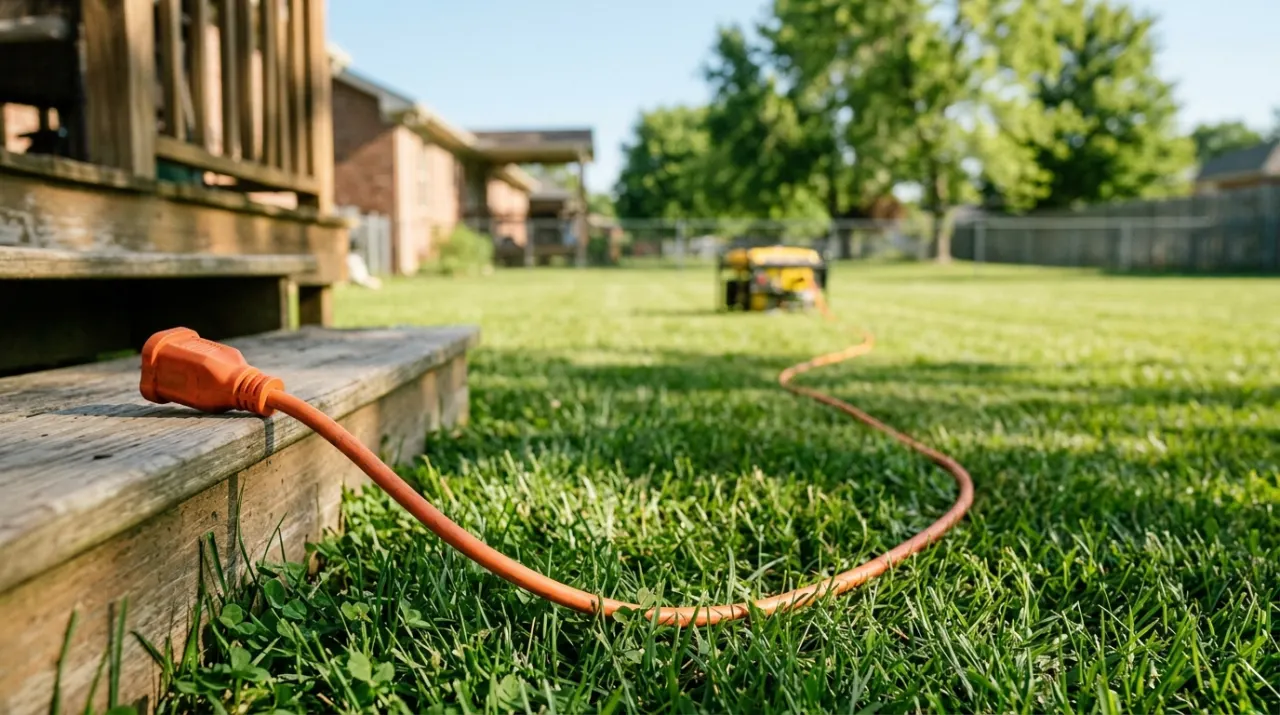
The three wrong answers, and why each one is worse
A tarp over the generator
The most common improvisation and the most dangerous. A muffler on a running generator reaches several hundred degrees; tarp material in contact with it melts and can ignite. Draped fabric also traps exhaust in the space under it, so carbon monoxide builds around the machine and then moves with the wind toward the house. And a tarp is bad at the job anyway — it channels runoff into the frame rather than away from it. There is no way to make a tarp safe by propping it up with sticks; the clearance and the open sides are engineering requirements, not suggestions.
The garage, with the door open
This is the mistake that appears most often in CO fatality reports. Carbon monoxide accumulates in an attached garage far faster than an open door disperses it, particularly in the still, humid air of a storm. It then enters the living space through the connecting door, wall and ceiling gaps and any duct that passes through. An open door does not create airflow; it creates the illusion of it. A garage is never acceptable for any length of time.
A carport, porch or open-sided shed
These feel like outdoors and behave like indoors. A roof overhead traps exhaust against the ceiling where it pools, and any of these structures is attached to or close against the house — so the pooled gas moves toward doors, windows and soffit vents rather than away. The CPSC treats partially enclosed spaces as unsafe, and that is what these are.
The right answer: a rated running canopy
A generator tent or running cover is a purpose-built product, and the design differences from a tarp are exactly the safety-critical ones:
- A frame that holds fabric well clear of the engine and muffler, so nothing hot ever touches material.
- Open on all four sides, so exhaust and engine heat leave freely and no gas pools under the cover.
- Flame-resistant fabric — the better canopies use material rated to NFPA flame-resistance standards rather than ordinary polyester.
- Water shed away from the frame rather than into it, keeping the receptacle panel dry.
- Wind resistance, because a cover that leaves in a gust and lands on the muffler is worse than no cover.
Note that a canopy does not change the siting rules at all. The generator still runs at least 20 feet from the house, still points its exhaust away from doors, windows and vents, and still requires CO alarms indoors. A canopy solves the water problem; nothing solves the CO problem except distance and open air.

Best for open-frame generators that have to keep running through a storm
- Frame clamps to the generator and holds the fabric well clear of the engine
- Open on all four sides so exhaust and engine heat escape
- Flame-resistant fabric rated to NFPA standards
- Designed to stay on while the generator runs
Why buy it: the design point is that it sheds water without enclosing the machine — that clearance is what separates a rated canopy from a tarp that traps exhaust and melts.

Best for mid-size and large portable generators used for home backup
- Sized for 3,500 to 12,000-watt open-frame machines
- Open sides and generous top clearance for heat and exhaust
- Heavy waterproof fabric with a supporting frame
- Fits over the generator without contacting hot surfaces
Why buy it: the same clearance principle at a lower price, and the size range covers the 7,500 to 9,500-watt machines most home-backup buyers actually own.
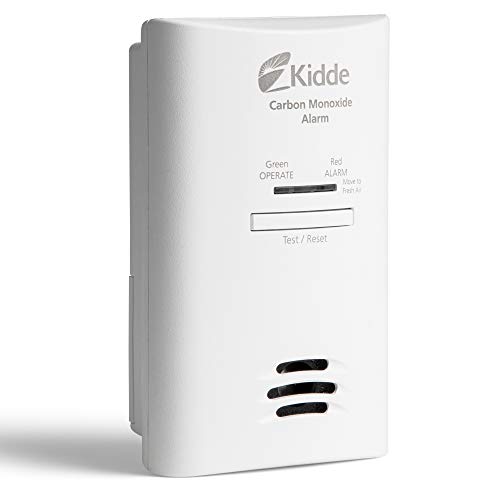
Best for every level of any house where a generator runs outside
- Plug-in with AA battery backup so it survives the outage
- Electrochemical CO sensor with a test and hush button
- End-of-life warning when the sensor expires
- One of the most-owned CO alarms in the United States
Why buy it: a canopy protects the generator; this protects you — and during an outage a plug-in alarm without battery backup is doing nothing at all.

Setting up in wet weather, step by step
- Pick the spot before it rains. Level, well-drained ground at least 20 feet from the house, clear of the drip line from the roof and not in a place where water collects. Exhaust points away from every door, window, soffit vent and dryer vent.
- Get the machine off the ground. A rubber mat, pavers or a purpose-made stand keeps it above sheet water and reduces splash-back onto the panel.
- Fit the canopy before starting, and check that no fabric can contact the muffler under any wind condition.
- Keep cord connections off the ground. Use a listed weather-resistant cord connector or hang the joint under the canopy so it does not sit in a puddle. Extension cords for outdoor generator use should be rated for outdoor service and undamaged.
- Do not touch the machine with wet hands, and do not stand in standing water while operating it. OSHA treats wet conditions around electrical equipment as an aggravating factor for exactly this reason — see OSHA on electrical hazards.
- Shut down and let it cool before refueling, and refuel out of the rain so water does not enter the tank.
- Check the CO alarms indoors before you start, and treat any alarm as an evacuate-first event rather than something to investigate.
If the generator has been in floodwater
Do not start it. A generator that has been submerged or has sat in floodwater has water in the fuel system, the crankcase, the alternator housing and the control electronics, and starting it risks both destroying the machine and energizing the frame. The National Weather Service's guidance after flooding is to have flood-damaged equipment inspected before use — see NWS flood safety. Have a qualified small-engine technician assess it, and expect that a fully submerged unit is usually not economic to repair.

Snow, freezing rain and cold
The same rules apply, with two additions. Snow accumulating on and around a running generator melts into exactly the places you do not want water, so a canopy matters as much in winter as in a thunderstorm. And in freezing conditions, keep the exhaust and cooling air intakes clear of drifted snow — a blocked airflow path raises engine temperature and, more importantly, causes exhaust to accumulate near the machine rather than dispersing.
If you run propane in the cold, be aware that vaporization slows sharply below about 20°F, and a small tank may not sustain a heavy load. That is covered further in best dual fuel generators.
Where to go next
The grounding question that often comes up alongside this one is answered in how to ground a portable generator. To connect a generator to your house legally — never through a wall outlet — see how to connect a generator to your house. Machines are ranked in best generators for home backup, and the cords that keep connections safe in best generator extension cords. Everything sits under the power tools and workshop hub.
We never buy or physically handle the equipment we write about — verdicts come from aggregated owner reviews, published specifications and manufacturer safety documentation. The method is on how we rank. Product links are affiliate links; they earn us a small commission at no cost to you and never change a recommendation.