 Garden

Affiliate Disclosure
Some links on this page are affiliate links. As an Amazon Associate, we earn from qualifying purchases — at no extra cost to you. We do not buy, test, or physically handle the products we cover; our rankings come from aggregated owner reviews, ratings and expert consensus. Commissions never change our verdicts. How we rank · full disclosure.
The short version: the best chainsaw for most people is the EGO POWER+ CS1804 — an 18 in. brushless cordless saw that cuts near a 45cc gas machine, starts on a trigger pull and needs no fuel mixing. If you own land and cut all day, buy the gas Husqvarna 455 Rancher. If you cut occasionally near the house, the corded Oregon CS1500 costs a third as much and sharpens its own chain. If all you do is prune, a 6 in. one-handed saw like the Milwaukee M12 HATCHET is safer and more useful than any full-size saw.
Before any of the specifications: a chainsaw is the most dangerous tool most homeowners will ever own, and the injuries are not freak accidents — they are one predictable mechanism repeated. OSHA lists a hard hat, safety glasses, hearing protection, heavy gloves, cut-resistant chaps and ankle-covering boots as standard chainsaw kit. Nothing on this page assumes otherwise, and the budget picks are not an invitation to save money on protection. If you buy a saw, buy chaps in the same order.
This page covers the whole field. If you already know the power source you want, go straight to best battery chainsaw, best electric chainsaw, best mini chainsaw or best chainsaw for firewood. Everything else is at the pruning, trimming and hedges hub.
Top Picks at a Glance

Our #1 Pick: EGO POWER+ CS1804
The reason cordless has taken over general home chainsaw use is not raw power any more — it is that the saw works when you need it. A gas saw with stale ethanol-blended fuel sitting in the carburetor is a source of misery on precisely the morning after a storm, and the number of homeowners who abandoned gas for that single reason is enormous. This saw pulls a trigger and cuts.
Consensus Score ████████░░ 8.8 — owners consistently compare its cutting speed favorably to small gas saws
The performance is genuinely there. A brushless 56V motor pushing chain speed to roughly 11,000 RPM through an 18 in. bar covers storm limbs, small tree felling and bucking firewood rounds without complaint. Tool-free chain tensioning and an automatic oiler with a visible reservoir handle the two maintenance jobs most owners neglect, and the 5.0Ah battery supplied is a working pack rather than a token one.
The 56V platform runs EGO's mowers, blowers and trimmers, which matters financially: batteries are the expensive part of cordless yard work, and a saw sharing packs with everything else in the shed costs far less to own than one stranded on an orphan platform.
The recurring criticisms are worth weighing honestly. It is heavy — an 18 in. bar plus a 5.0Ah pack is real weight at arm's length, and owners consistently mention fatigue on longer sessions. Runtime is finite: a battery that handles a morning of limbing will not process a cord of firewood, and a second pack is close to essential for serious work. Several owners report the oiler over-delivering and leaving the saw sitting in a puddle in storage. Chain tension needs checking repeatedly through the first few cuts of a new chain, which is normal but reads as a fault. And it is expensive next to a corded saw doing lighter work.
Check price on Amazon → (paid link)
Best Chainsaws 2026: The Ranked Field

Best for the homeowner who wants one saw for storm cleanup, small felling and a few cords of firewood
- 18 in. bar driven by a brushless 56V motor rated near a 45cc gas saw
- Chain speed up to around 11,000 RPM
- Tool-free chain tensioning and an automatic bar oiler
- 56V 5.0Ah battery and charger included, shared across the EGO range
Why buy it: it cuts close to a small gas saw but starts on a trigger pull, which removes the single biggest reason home saws sit dead in a shed.

Best for acreage, long cutting days, hardwood rounds and work nowhere near an outlet
- 55cc X-Torq two-stroke, around 3.5 HP
- 20 in. bar for larger diameter timber
- Inertia-activated chain brake and side-mounted tensioner
- Air Injection centrifugal air cleaning for longer filter intervals
Why buy it: refuelling takes fifteen seconds where a battery takes an hour, and that single fact decides a full day of firewood cutting.
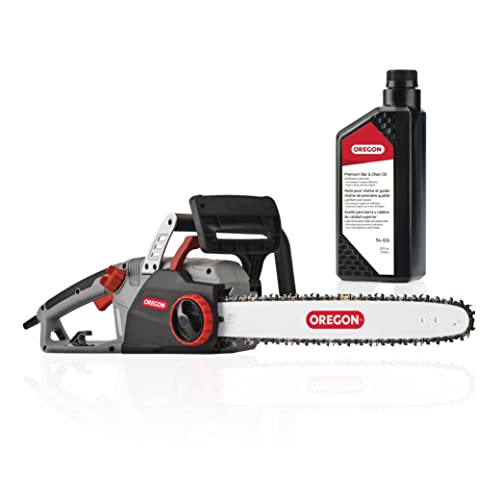
Best for yard work within reach of an outlet, and anyone who hates sharpening
- 15 amp motor with an 18 in. low-kickback bar
- Built-in PowerSharp system sharpens the chain in three to five seconds
- Automatic oiler with a level window
- Chain brake and tool-free tensioning
Why buy it: the built-in sharpener solves the maintenance job homeowners skip most, and a dull chain is both slower and more dangerous.

Best for anyone with a shed full of DeWalt 20V MAX and FLEXVOLT batteries
- 16 in. Oregon bar and chain on a brushless 60V motor
- Tool-free chain tensioning and a bar retention knob
- Automatic oiling with a low-oil window
- FLEXVOLT packs run 60V tools and step down to 20V MAX
Why buy it: the battery you already own is most of the cost of a cordless saw, so staying on your platform routinely beats a better saw on a new one.

Best for limbing, pruning and cutting up branches after a storm
- 16 in. bar on a brushless 40V motor
- Tool-free chain tensioning
- Automatic bar and chain oiler with a level window
- 40V battery shared across a very wide Greenworks range
Why buy it: a brushless motor at this price is unusual, and it is what keeps chain speed up in the cut instead of fading under load.

Best for one-handed pruning, tight access and limbs up to about 3 in.
- Under 5 lb with a 6 in. bar and full-house chain
- POWERSTATE brushless motor cutting hardwood to around 3 in.
- Automatic oiler and a tool-free chain tensioner
- Runs on the M12 battery platform, kit includes a 4.0Ah pack
Why buy it: most home chainsaw work is limbs under 4 in., and a 5 lb saw is far easier to control at arm’s length than a 12 lb one.
Quick Comparison
| Product | Best for | Rating | Price | Buy |
|---|---|---|---|---|
| EGO POWER+ Chain Saw 18 in Battery Powered Cordless with 56V 5.0Ah Battery and Charger CS1804 | Best Overall | — | Check (paid link) | |
| Husqvarna 455 Rancher Gas Chainsaw 55-cc 3.5-HP 2-Cycle X-Torq Engine 20 Inch with Automatic Oiler | Best Gas | — | Check (paid link) | |
| Oregon CS1500 18 in 15 Amp Self-Sharpening Corded Electric Chainsaw with PowerSharp | Best Corded Value | — | Check (paid link) | |
| DEWALT FLEXVOLT 60V MAX Brushless Cordless Chainsaw 16 in with Battery and Charger | Best for Tool Platform Owners | — | Check (paid link) | |
| Greenworks 40V 16 in Brushless Cordless Chainsaw with 4.0Ah Battery and Charger | Best Value Cordless | — | Check (paid link) | |
| Milwaukee M12 FUEL HATCHET 6 in Pruning Saw Kit 2527-21 with Battery and Charger | Best Small Saw | — | Check (paid link) |

How We Rank
We do not buy or physically handle these saws. Rankings come from aggregating star ratings and review volume across large owner-review sets, weighting recent reviews above launch-window ones, checking bar lengths, engine displacements, motor specifications, weights and safety features against manufacturer documentation, and reading the negative reviews closely. In this category the negative reviews are unusually informative about ownership: oiler failures, chain tension and starting problems dominate them, and those are what decide whether a saw is still working in year three.
Four factors set the order. Cutting performance under real load, judged from owner descriptions of seasoned hardwood rather than headline chain speeds. Weight and controllability, weighted heavily because fatigue with a chainsaw is a safety problem, not a comfort one. Maintenance burden — oilers, tensioning, and whether the saw starts after six months in a shed. And owner satisfaction, weighted by review volume and read with attention to the work being described. Prices were checked at the time of writing. Full method: how we rank.
The Saws, Reviewed
1. EGO POWER+ CS1804 — Best Overall
Covered above. Consensus Score ████████░░ 8.8. Strengths: cutting performance close to a 45cc gas saw; instant starting with no fuel or carburetor; an 18 in. bar covering nearly all home work; tool-free tensioning and an automatic oiler; and a 56V battery shared across a wide tool range. Recurring complaints: heavy at arm's length; finite runtime that makes a second pack close to essential for firewood; reports of over-oiling and storage puddles; frequent early tension checks on a new chain; and a high price next to corded saws.
2. Husqvarna 455 Rancher — Best Gas
The saw people buy when the property is big enough that battery logistics stop making sense. A 55cc X-Torq two-stroke producing around 3.5 HP through a 20 in. bar puts it firmly into firewood and land-clearing territory rather than yard tidying. X-Torq is Husqvarna's low-emission combustion design, and the practical benefit owners report is lower fuel consumption over a long day rather than any difference you feel in the cut.
Consensus Score ████████░░ 8.6 — the reference homeowner-to-semi-pro gas saw for two decades
The inertia-activated chain brake matters here more than on smaller saws. A 20 in. bar puts a lot of nose out in front of you, and the brake is what stops the chain when a kickback event throws the saw. Learn to engage it deliberately with the back of your left hand as well as trusting inertia to do it.
Recurring complaints: starting after storage dominates the negative reviews, and stale ethanol fuel is behind most of it. Carburetor adjustment and fuel-line degradation appear in years two and three. It is heavy at roughly 13 lb dry, and loud enough that hearing protection is mandatory rather than advisable. Owners report the chain oiler needing adjustment for the 20 in. bar. And two-stroke fuel mixing is a chore people consistently underestimate — see how to mix 2-stroke fuel.
3. Oregon CS1500 — Best Corded Value
The most interesting saw in this list for the money, because it solves a problem no other saw does. Chainsaw chains dull constantly — one touch of dirt or a buried nail does it — and most homeowners never sharpen. The integrated PowerSharp system pulls a lever and dresses the chain against a built-in stone in a few seconds. That is a genuine safety feature, not a gimmick: a dull chain makes you push harder, and pushing harder is how people lose control of a saw.
Consensus Score ████████░░ 8.5 — high ratings, with the cord the main limitation
Recurring complaints: the cord is the whole compromise — it snags, it limits range, and dragging a live extension lead around a cutting area is a hazard that has to be actively managed. The PowerSharp stone is a consumable and owners report needing replacements. Several describe oil weeping from the reservoir in storage. It is nose-heavy for an 18 in. saw. And like every corded tool it is useless in the power outage you most want a saw for.
4. DEWALT FLEXVOLT 60V MAX 16 in — Best for Tool Platform Owners
The pragmatic pick for anyone whose garage already runs on DeWalt. FLEXVOLT packs power 60V tools and step down to run 20V MAX drills and drivers, so the battery is not a single-purpose purchase. A 16 in. Oregon bar and chain on a brushless motor is a properly capable combination for storm work and small felling.
Consensus Score ████████░░ 8.5 — strong ratings, with platform ownership the deciding factor
Recurring complaints: runtime on a single pack is short for anything beyond limbing, and FLEXVOLT batteries are expensive. Owners report the bar-retention knob needing frequent re-checking. Several describe the oiler as inconsistent. It is heavier than the 16 in. bar suggests. And if you do not already own DeWalt batteries, the total cost is high for the capability.
5. Greenworks 40V 16 in — Best Value Cordless
The sensible middle for a suburban lot. A 16 in. bar is the right size for the work most homeowners genuinely do — limbing, pruning, cutting up storm debris — and a brushless motor at this price is unusual and useful, because it holds chain speed in the cut where brushed motors fade away. Tool-free tensioning, an automatic oiler with a level window, and a battery that runs a very wide Greenworks range.
Consensus Score ████████░░ 8.2 — strong ratings and consistently praised on value
Recurring complaints: the 4.0Ah battery is modest for sustained cutting and owners report short sessions. It bogs noticeably in seasoned hardwood. Several reviewers report oiler failures, which is the most damaging fault a chainsaw can develop. The supplied bar and chain draw consistent criticism and are often replaced early. And charge times are long relative to runtime.
6. Milwaukee M12 FUEL HATCHET 2527-21 — Best Small Saw
Worth taking seriously rather than treating as a toy. Most chainsaw work a homeowner actually does is limbs under 4 in., and for that job a sub-5 lb saw you can hold one-handed with a chain brake is both faster and considerably safer than swinging a 12 lb machine at shoulder height. Milwaukee rates it for hardwood up to about 3 in., with a proper automatic oiler and tool-free tensioner rather than the token versions found on cheap mini saws.
Consensus Score █████████░ 9.0 — one of the highest-rated saws of any size
Recurring complaints: it is expensive for a 6 in. saw, especially if you have no M12 tools. Runtime on a 4.0Ah M12 pack is limited under load. Owners report the small bar making it easy to bury the nose, which is exactly the kickback geometry to avoid. Several describe the chain needing frequent tensioning. And it cannot do the work a 16 in. saw does, which some buyers discover late.
How to Choose a Chainsaw
Start with the work, not the saw. Pruning and limbing is a 6 to 10 in. saw. Storm debris and small trees is a 14 to 16 in. saw. Bucking firewood rounds is an 18 to 20 in. saw with real torque behind it. Buying more bar than the job needs makes the work harder and more dangerous, because a heavy saw held at arm's length is a saw you control less well, and a longer bar means more of the kickback-prone nose is out in front of you. Our sizing guide is what size chainsaw do I need.
Then pick a power source by where you cut. Battery suits nearly every suburban property, and the real question is whether you already own packs on a platform that offers a saw. Corded is excellent value close to the house and useless when the power is out. Gas earns its maintenance burden on acreage, long sessions and work far from an outlet — and it needs fuel stabilizer and a proper storage routine to start in the spring. The trade-offs are laid out in electric vs gas chainsaw and battery vs gas chainsaw. If you are choosing between the two big gas brands, see Stihl vs Husqvarna.
Check the safety features and know what they do. A chain brake — the band that stops the chain when the front hand guard is pushed forward or when inertia trips it — is standard and non-negotiable. A low-kickback chain with guard links between cutters is standard on consumer saws and materially reduces kickback energy. A chain catcher stops a thrown chain from reaching your hand. Confirm all three are present and that the brake actually stops the chain, tested at low throttle over bare ground, before your first real cut.
Budget for the protection at the same time as the saw. Cut-resistant chaps, a helmet with a face screen, eye protection, hearing protection, heavy gloves and boots that cover the ankle. Chaps work by pulling loose ballistic fibers into the drive sprocket and jamming the chain, which happens in fractions of a second — they are the reason a leg contact becomes a bruise instead of a hospital visit. This is the one place in the whole purchase where you should not economize.
Chainsaw Safety: the Mechanism, Not the Platitude
Kickback is the injury mechanism you have to understand. When the upper quadrant of the bar nose — the top half of the tip — touches wood or any solid object, the chain's cutting force cannot pull through, so it drives the bar backward and upward in an arc toward the operator's head and shoulder. It takes a fraction of a second and is far faster than a human reaction. The mitigations are specific: never cut with the nose of the bar; keep the tip in view and clear of branches, the ground and other limbs; grip the front handle with your thumb fully wrapped underneath so the bar cannot be thrown out of your hands; stand slightly to the left of the cutting line rather than directly behind the bar; keep the chain sharp and correctly tensioned, because a dull or loose chain grabs; and keep the chain brake serviceable and know how to engage it.
Never operate a chainsaw from a ladder, and never cut above shoulder height. Both put the bar tip where you cannot see it and your body where you cannot brace it, and a kickback from a ladder adds a fall to a laceration. Work that cannot be reached from the ground belongs to a pole saw or to a professional with rope and rigging.
Stop and call an arborist for anything near a power line, any tree leaning toward a structure, any storm-damaged tree with limbs under spring tension, any hollow or rotten trunk, and any tree taller than you can drop with confidence in open ground. OSHA requires unqualified workers to stay at least 10 feet clear of overhead lines. The CDC sets out the same protective equipment and safe operating practice for post-storm cutting, which is when most homeowner chainsaw injuries happen.
For the specific physics and how saw design counters it, read what causes chainsaw kickback, and before working in bad weather see can you use a chainsaw in the rain.
What Owners Actually Complain About
Oiler failures are the most damaging complaint in this category and they appear across every brand and price point. A saw with a failed oiler ruins a bar and chain within an hour and runs dangerously hot. The check takes five seconds: hold the running saw at part throttle over a light surface and look for a thrown line of oil. Do it before every session.
Chain tension problems generate an enormous volume of reviews, most of them describing normal behavior. New chains stretch and need retensioning several times in the first hour, and chains loosen as they heat. Over-tightening is the opposite error and grinds the bar rails away. The correct tension and how to set it are in how tight should a chainsaw chain be and how to tension a chainsaw chain.
Gas saws that will not start in spring is the recurring seasonal complaint, and stale ethanol-blended fuel is behind the overwhelming majority. Pump gasoline with ethanol absorbs water and degrades within weeks, not months. Stabilizer, or draining the tank and running the carburetor dry before storage, prevents nearly all of it.
Battery runtime is the cordless equivalent and is usually a pack-size problem rather than a saw problem — kits frequently ship the smallest usable battery. And saws that cut crooked generate a steady stream of one-star reviews that are almost always a sharpening or bar-wear issue rather than a defect; the diagnosis is in why does my chainsaw cut crooked.
The Verdict
For most people the EGO POWER+ CS1804 is the chainsaw to buy: it cuts like a small gas saw, starts every time, and shares batteries with a whole range of yard tools. Buy the gas Husqvarna 455 Rancher if you have acreage and cut for hours at a time, and accept the fuel and carburetor routine that comes with it. The corded Oregon CS1500 is the value pick and the self-sharpening system solves the maintenance job most owners skip. Stay on your platform with the DeWalt FLEXVOLT if you already own the batteries, take the Greenworks 40V if budget is the constraint, and take the Milwaukee M12 HATCHET if honest reflection says your work is really pruning.
And buy the chaps in the same order as the saw. That is not a sales line — it is the difference between a bad afternoon and a permanent injury.
Check price on Amazon → (paid link)
Next: protect yourself with best chainsaw chaps, keep it cutting with how to sharpen a chainsaw chain, learn the felling sequence in how to fell a small tree, or compare more tools at compare and tools.