 Garden


Affiliate Disclosure
Some links on this page are affiliate links. As an Amazon Associate, we earn from qualifying purchases — at no extra cost to you. We do not buy, test, or physically handle the products we cover; our rankings come from aggregated owner reviews, ratings and expert consensus. Commissions never change our verdicts. How we rank · full disclosure.
Short answer: buy cordless unless your hedges are long, close to an outlet, and you want to spend as little as possible. A 20V cordless trimmer with a 4.0 Ah battery gives 30 to 60 minutes of real cutting, weighs 6 to 7.5 pounds, and handles any hedge kept on a normal schedule. A corded trimmer costs less, weighs slightly less, and never runs out — at the cost of dragging 100 feet of cable through the shrubs.
Below is the comparison in the terms that actually decide it: weight in your hands after twenty minutes, runtime against the size of your hedge, and what each one costs across ten years.
Side by Side
| Corded electric | Cordless (battery) | Gas | |
|---|---|---|---|
| Typical weight | 5–6.5 lb | 6–8 lb with battery | 10–13 lb |
| Runtime | Unlimited | 30–60 min on 4.0 Ah | Unlimited with fuel |
| Cut capacity | 3/8–5/8 in. | 3/8–3/4 in. (higher voltage cuts more) | 3/4–1 in. |
| Typical blade length | 17–24 in. | 18–24 in. | 22–30 in. |
| Starting price | $ | $$ (tool only) to $$$ (with battery) | $$$ |
| Maintenance | Blade care only | Blade care, battery health | Fuel mix, spark plug, air filter, carburetor |
| Noise | Moderate | Moderate — usually the quietest | Loud; hearing protection required |
| Reach limit | Length of cord | Anywhere | Anywhere |
| Best for | Long hedges near an outlet, tight budgets | Most home yards; scattered shrubs; front and back in one trip | Daily professional use, very thick growth |
The Case for Cordless
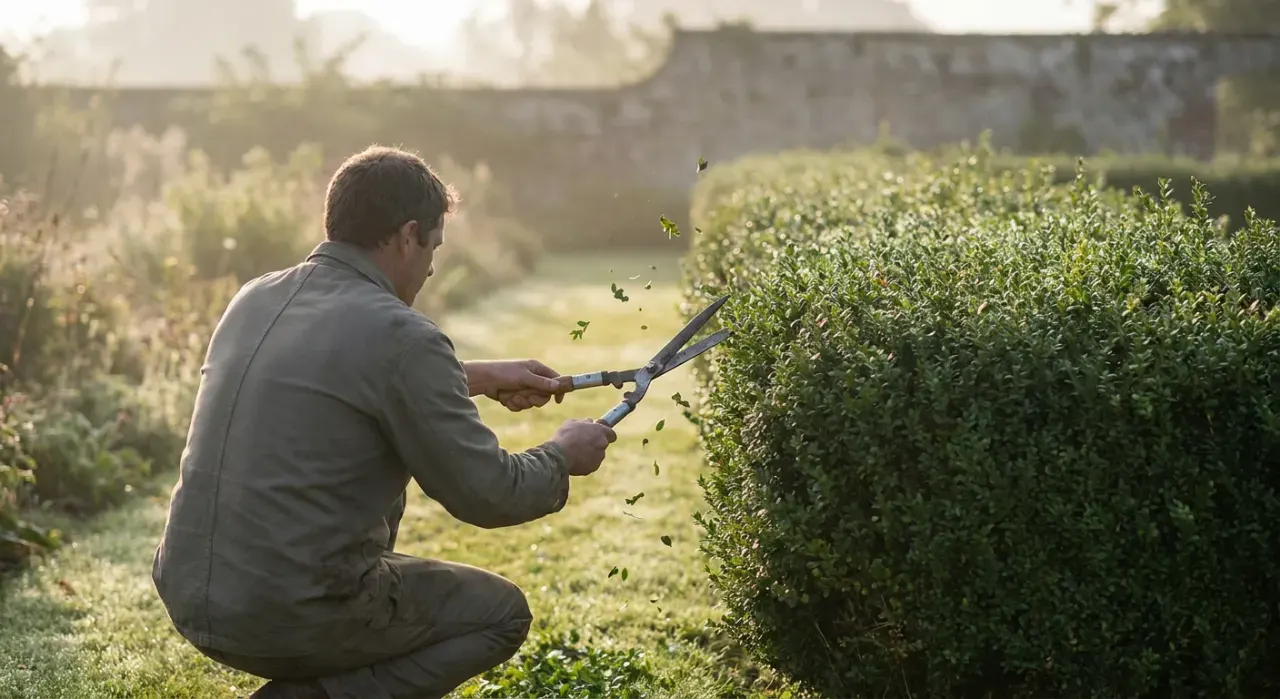
The cord is worse than it sounds. This is the point that decides most purchases, and it is hard to appreciate until you have done it. A cord must be managed continuously: kept behind you, kept out of the blade path, unhooked from shrubs, and dragged around the far side of a hedge you are working both faces of. On a hedge that runs around a corner, you spend a real fraction of the session on cord management rather than cutting. Owners who switch to cordless consistently describe the freedom as the thing they notice, ahead of any performance difference.
Battery platforms have made it cheap. If you already own a drill, blower or mower on a 20V, 40V or 60V system, the trimmer is a bare-tool purchase — often half the price of the kit — and the battery you already have does the job. That is the single biggest cost variable in this whole comparison, and it is worth checking before comparing sticker prices across brands.
Performance is no longer the issue. For soft green growth up to about 1/2 inch, which is what a hedge cut on a sensible schedule presents, a 20V cordless trimmer cuts as cleanly as a corded one. Higher voltages buy torque for thicker stems rather than dramatically longer runtime.
The trade-offs are real but manageable: the battery adds weight at the handle, runtime is finite, batteries degrade over five to seven years and cost real money to replace, and cold weather reduces capacity noticeably.
The Case for Corded
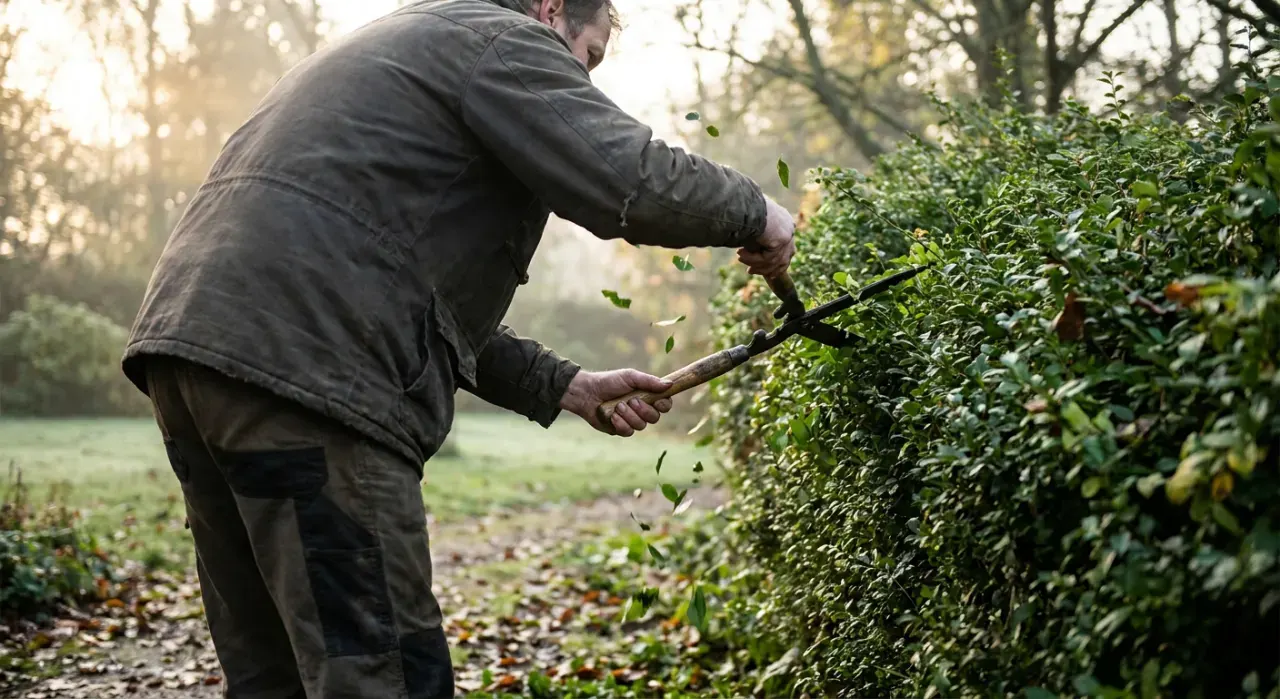
It never stops. If you have 150 feet of privet that takes ninety minutes to cut, a corded trimmer finishes the job in one session. Doing that on battery means two packs and a charge break.
It costs less. A corded trimmer with a 22-inch blade typically costs less than a comparable bare cordless tool, and far less than a cordless kit with battery and charger. There is no battery to replace in year six.
It is often lighter. Without a battery pack on the handle, corded models sit at the light end of the range, and hedge trimming is a tool-held-at-arms-length job where a pound matters more than you would expect.
Cord sizing matters. An undersized extension cord causes voltage drop, which makes the motor run hot and cut poorly, and it is a genuine fire hazard. Use these as minimums:
| Tool draw | Up to 50 ft | Up to 100 ft | Up to 150 ft |
|---|---|---|---|
| Under 5 amps | 16 gauge | 14 gauge | 12 gauge |
| 5–8 amps | 14 gauge | 12 gauge | 12 gauge |
| 8–10 amps | 14 gauge | 12 gauge | 10 gauge |
Use an outdoor-rated cord marked W or SJTW, plug into a GFCI outlet, run the cord over your shoulder and behind you, and use a cord-retention loop or a simple knot at the tool plug so it cannot pull out mid-cut.
Which One for Your Yard
| Your situation | Buy |
|---|---|
| Under 50 feet of hedge, plus scattered shrubs | 20V cordless, 4.0 Ah battery |
| Hedges front and back, one trip around the house | Cordless — the cord swap is the whole argument |
| 100+ feet of hedge, outlet nearby | Corded, 22 in. blade |
| Thick growth, cut once a year | 40V or 60V cordless, or loppers plus a lighter trimmer |
| Already own a battery platform | Bare-tool cordless on that platform |
| No outlet within reach of the hedge | Cordless — this is not really a decision |
| Small formal box or topiary | Manual shears, or a light cordless shrub shear |
| Cutting for hours daily | Gas, or high-end 60V/80V cordless |

The Specs That Actually Matter
- Cut capacity, not blade length. Most home trimmers are rated for green stems between 3/8 and 3/4 inch, and that rating assumes live growth, not dry wood. Forcing thicker branches through is the leading cause of bent teeth, stalled motors and burnt gearboxes in owner reports. Anything above the rating goes to loppers up to about an inch and a half, and a pruning saw beyond that.
- Blade length. 18 to 22 inches suits most home hedges and stays controllable overhead. 24 inches and up is for long formal runs and gets heavy fast. Shorter blades are easier on detailed shapes.
- Dual-action blades — where both blades move in opposite directions rather than one moving against a fixed bar — cut with noticeably less vibration and a cleaner finish. Nearly all decent trimmers have them; the cheapest do not.
- Weight and balance. Total weight matters less than where it sits. A rear-heavy cordless with the battery low in the handle feels better than a nominally lighter tool with the mass out front.
- Wrap-around or rotating rear handle. Being able to hold the tool comfortably when cutting a vertical face is the difference between a clean side and a wandering one.
- Amp-hours, not just volts. Voltage sets torque; amp-hours set runtime. A 20V 4.0 Ah pack outlasts a 40V 2.0 Ah pack.
- Two-hand safety switch and a brake. Standard on quality tools. The blade brake that stops the teeth within a fraction of a second after release is worth having.
The Verdict
For the great majority of homes, cordless is the right buy: the freedom from a cord changes the job more than any spec difference, battery platforms make the second and third tool cheap, and performance on normal hedge growth is no longer a compromise. Get 20V with a 4.0 Ah battery for typical suburban hedges, or 40V and up if your growth is thick or the runs are long.
Corded remains a sensible, unglamorous choice if you have a long hedge near an outlet, want to spend the least, and do not mind managing a cable. It is also the better tool for anyone who trims infrequently, because a battery left flat in a shed for two years is a battery you will be replacing.
Whichever you buy, the finish depends more on blade condition than on the tool — ten minutes of cleaning and sharpening is what separates a clean cut from brown-edged leaves a week later, and it is covered in hedge trimmer blade care. The specific models the owner-review consensus supports are in best hedge trimmers, and the technique that makes a hedge look professionally kept is in how to trim a hedge straight. More at pruning, trimming and hedges; our research method is on how we rank.