 Garden

Affiliate Disclosure
Some links on this page are affiliate links. As an Amazon Associate, we earn from qualifying purchases — at no extra cost to you. We do not buy, test, or physically handle the products we cover; our rankings come from aggregated owner reviews, ratings and expert consensus. Commissions never change our verdicts. How we rank · full disclosure.
The short answer: sharpen hedge trimmer blades about once a year for light, seasonal use, and roughly every 50 hours of runtime — or more often — if you trim frequently or cut tough, woody growth. The real trigger is the cut quality: the moment the trimmer starts tearing and snagging instead of slicing cleanly, or the hedge browns at the cut ends within a day, the blades are dull regardless of the hours. Sharpening at the start of each season, before the first big trim, keeps most home trimmers cutting well.
A sharp trimmer cuts cleanly and protects the hedge; a dull one shreds it. We do not run trimmers to log hours; our tool rankings come from aggregated owner reviews and expert consensus, described in how we rank. The full care guide is at the pruning and hedges hub, with the deep dive in hedge trimmer blade care.
How often by use?
Frequency scales with how much you trim and how hard the growth is on the blades. Sappy conifers and thick woody stems dull an edge faster than soft new growth.
| Use | Sharpen |
|---|---|
| Light, a few trims a season | Once a year, at season start |
| Regular, several hedges monthly | Every ~50 hours or twice a season |
| Heavy or woody growth, sappy conifers | More often; inspect regularly |
| After hitting wire, fence or hard debris | Inspect and touch up right away |
Keeping the blades clean and oiled between trims stretches the interval, because dried sap build-up is a major cause of drag and premature dulling.
What does a dull hedge trimmer do to a hedge?
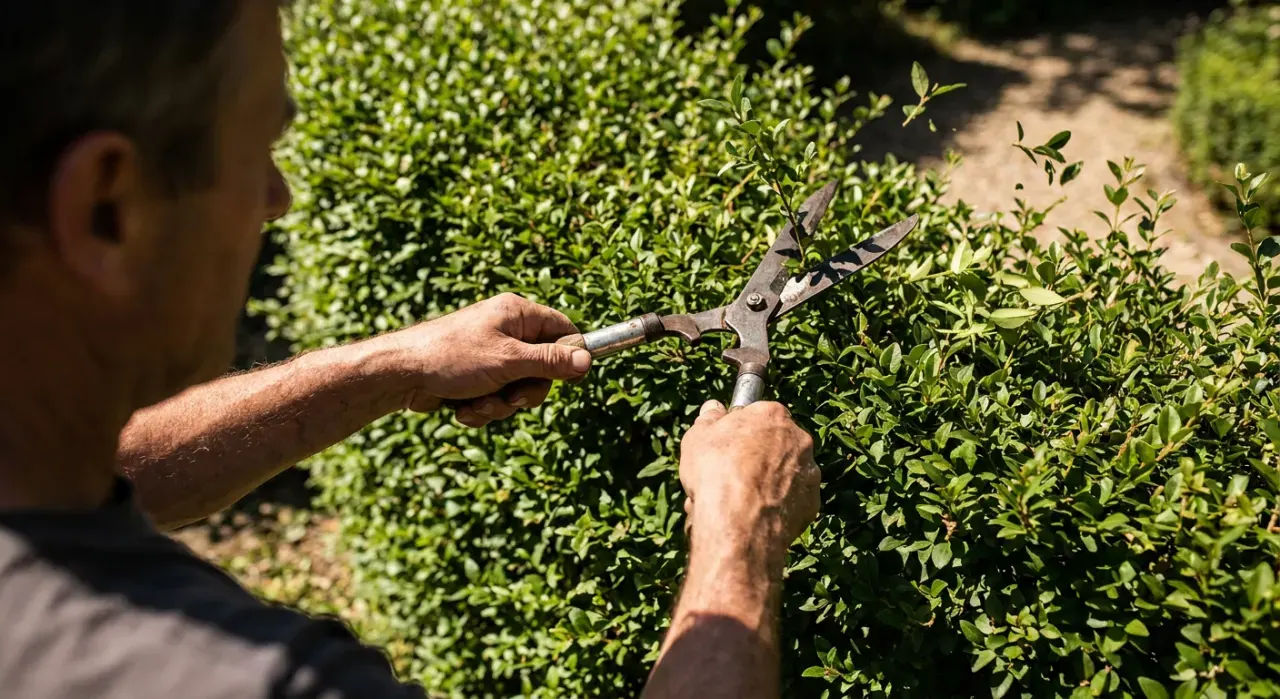
Dull blades crush and tear stems rather than slicing them. The mangled cut ends dry out and turn brown or whitish within a day, giving a freshly trimmed hedge a scorched, ragged appearance instead of a crisp green face, and the open, torn wounds heal slowly and give disease an easier entry — the same problem a dull mower blade causes on a lawn. The trimmer itself also works harder: it snags on branches it should cut, needs repeated passes, vibrates more, and bogs down, draining a battery or straining a motor. Clean cuts from a sharp blade keep the hedge healthier and the tool running easier.
How do you sharpen the blades?
- Disconnect power first — unplug the trimmer or remove the battery before touching the blades.
- Clean the blades of dried sap and resin with a solvent or resin remover so you can see the teeth.
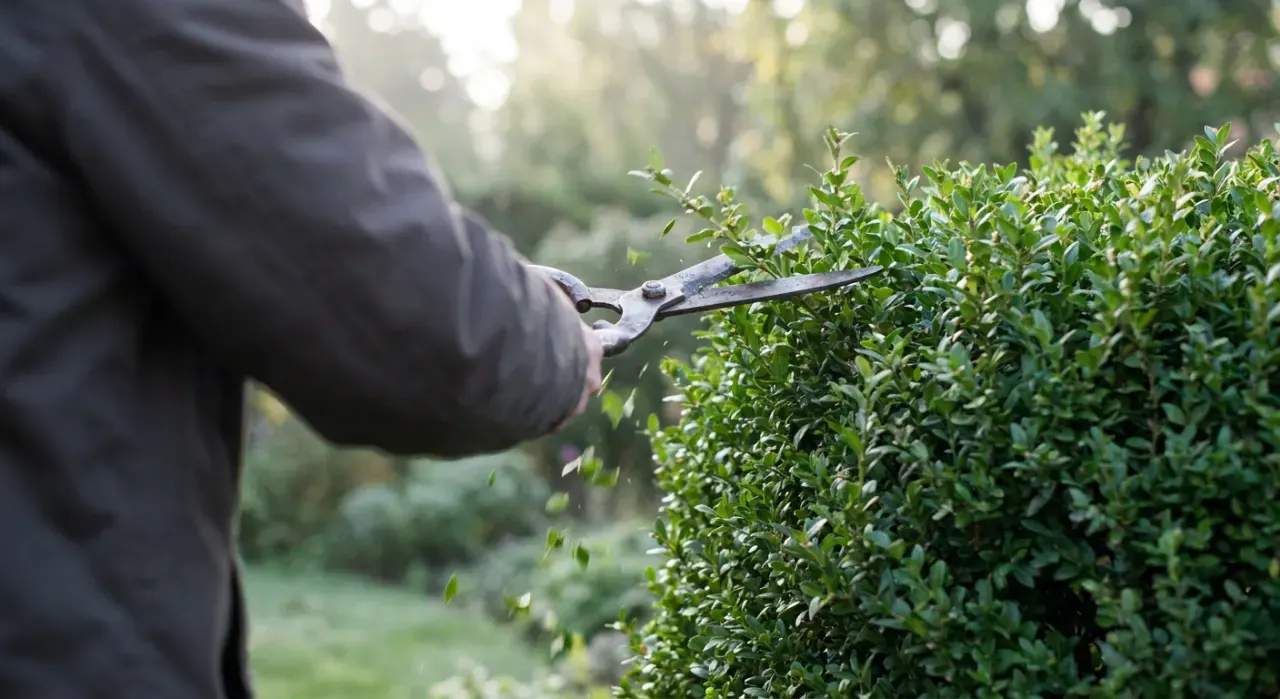
- File each tooth with a flat file following the original bevel angle, filing in one direction only, a few strokes per tooth, keeping the angle consistent.
- Remove burrs from the back of the blade with a whetstone or by hand so the two blade sets slide cleanly.
- Wipe with light oil or blade lubricant to prevent rust and reduce friction.
A rotary tool with a sharpening stone speeds the job on longer blades, but keep a light touch so you do not overheat and soften the steel.
When should you replace instead of sharpen?
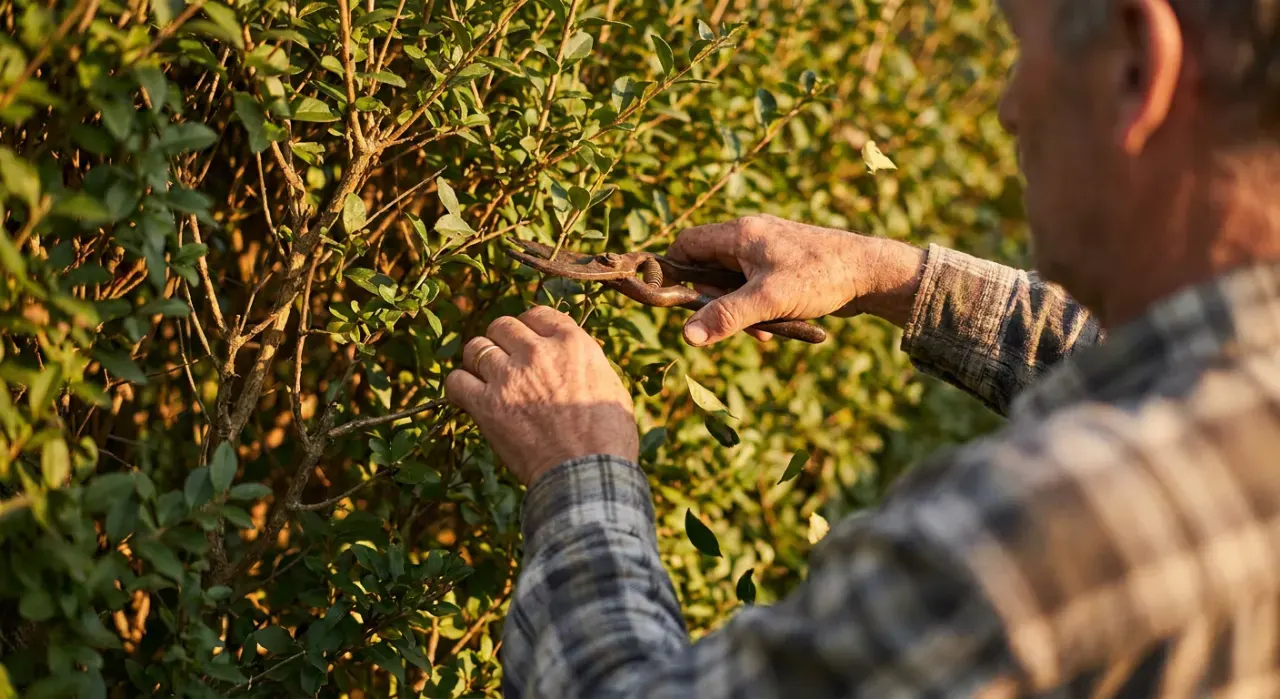
Sharpening restores an edge but cannot fix damaged blades. Replace the blade set when teeth are broken, deeply chipped or bent, when the steel is worn thin from many sharpenings, or when the two blades no longer meet cleanly so they jam rather than shear. Hitting a wire fence, hidden stake or woody stem beyond the trimmer's rated cutting capacity is the usual cause of unfixable damage, so know your tool's limit — thick branches belong to loppers or a saw, not a hedge trimmer, as covered in best loppers. A fresh blade set restores a trimmer that sharpening can no longer help.
Keep the blades clean, oiled and sharpened once a season and a hedge trimmer cuts crisply for years. Related questions: heading vs thinning cuts, can you prune evergreens in the fall?, and the trimmer field in best hedge trimmers.