 Garden

Affiliate Disclosure
Some links on this page are affiliate links. As an Amazon Associate, we earn from qualifying purchases — at no extra cost to you. We do not buy, test, or physically handle the products we cover; our rankings come from aggregated owner reviews, ratings and expert consensus. Commissions never change our verdicts. How we rank · full disclosure.
The short answer: it depends entirely on the type. Bigleaf and oakleaf hydrangeas bloom on old wood — stems from last year — so prune them right after they finish flowering in summer, and never in fall, winter or spring or you cut off next year's blooms. Panicle and smooth hydrangeas bloom on new wood — this season's growth — so prune them in late winter or early spring before growth starts. Getting this backward is the number-one reason a healthy hydrangea makes leaves but no flowers.
So the first job is identifying which hydrangea you have. We do not grow test shrubs; our tool rankings come from aggregated owner reviews and expert consensus, described in how we rank. The full seasonal guide is at the pruning and hedges hub.
When to prune each type of hydrangea
Four common types cover most gardens, and they split cleanly into old-wood and new-wood bloomers.
| Type | Blooms on | When to prune |
|---|---|---|
| Bigleaf (mophead, lacecap) | Old wood | Right after summer bloom |
| Oakleaf | Old wood | Right after summer bloom |
| Panicle (‘Limelight’) | New wood | Late winter to early spring |
| Smooth (‘Annabelle’) | New wood | Late winter to early spring |
| Reblooming (Endless Summer) | Old and new wood | Light: after bloom; tidy in spring |
If you do not know the type, watch a full season: note when it blooms and whether flowers appear on new shoots or last year's stems, then time your cuts to match. When in doubt, do not prune, since skipping a year costs nothing.
Why does timing decide whether it blooms?
Old-wood hydrangeas set their flower buds in late summer, on the stems that grew that year, and carry those buds through winter to bloom the following summer. Cut those stems any time between late summer and the next spring and you remove the buds, leaving a leafy plant with no flowers. New-wood hydrangeas, by contrast, form their buds on shoots that emerge in spring, so cutting them back in late winter simply clears the way for vigorous new flowering stems. This old-wood-versus-new-wood distinction is the same principle that governs when to prune roses and lilacs, laid out across shrubs in the pruning calendar.
How should you actually prune each type?
- Old-wood types: right after bloom, remove spent flower heads down to the first strong pair of buds, take out any dead or weak stems, and thin crowded growth. Keep cuts light so you preserve this season's new buds.
- Smooth types (‘Annabelle’): in late winter, cut stems back hard, even to 6 to 12 inches, to promote strong stems that hold the big blooms upright.
- Panicle types (‘Limelight’): in late winter, cut back by about a third and remove crossing or weak stems to build a sturdy framework.
- Reblooming types: deadhead and lightly shape after the first flush, tidy dead wood in spring, and avoid hard cuts that sacrifice old-wood buds.
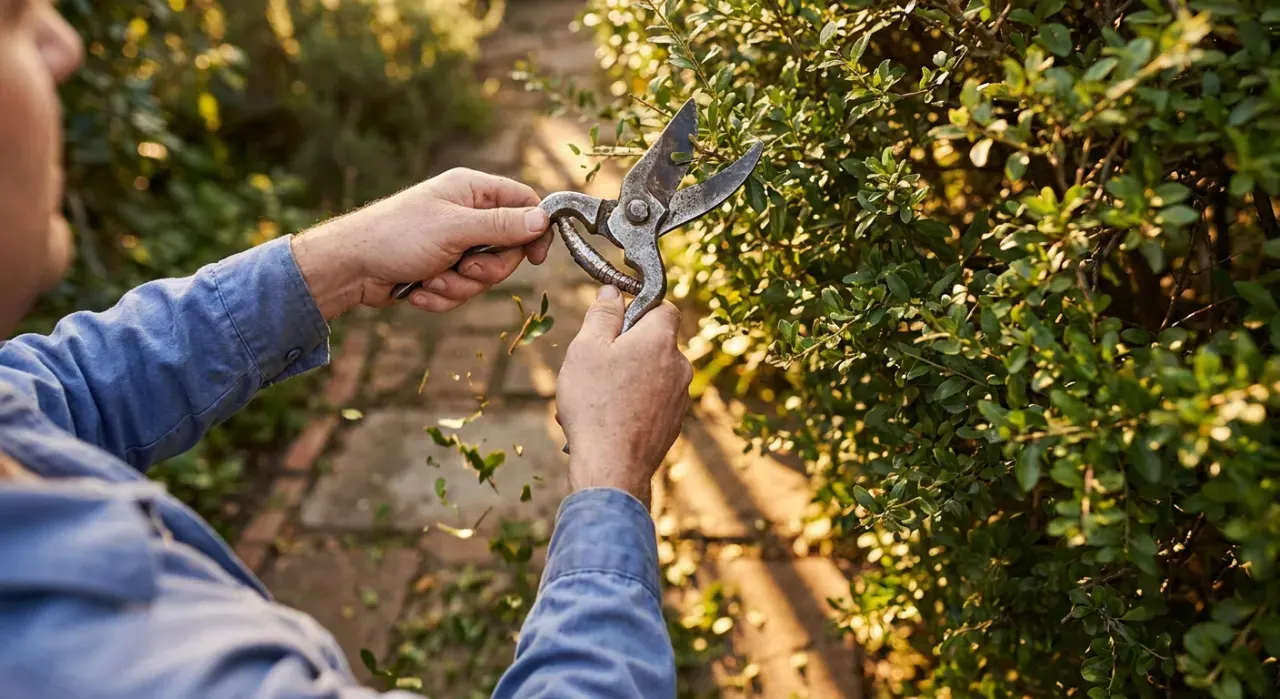
Use sharp bypass pruners for clean cuts on hydrangea stems; loppers handle the thicker old canes of a mature plant, as covered in best loppers.
Should you deadhead and remove dead wood?
Yes, and these are safe any time. Removing spent flowers keeps the plant tidy and, on rebloomers, can encourage more flushes; cutting out clearly dead, damaged or crossing stems improves health and airflow on any hydrangea regardless of type. What you avoid year-round is a hard structural cut on old-wood types outside the after-bloom window. Some gardeners also leave dried panicle and smooth flower heads on through winter for interest and light frost protection, cutting them in late winter. General cut-quality and disease habits are in common pruning mistakes.
Identify the type, then let its bloom wood set the timing: old wood after flowering, new wood in late winter. Related questions: when not to prune roses, can you prune evergreens in the fall?, and heading vs thinning cuts.