 Garden

Affiliate Disclosure
Some links on this page are affiliate links. As an Amazon Associate, we earn from qualifying purchases — at no extra cost to you. We do not buy, test, or physically handle the products we cover; our rankings come from aggregated owner reviews, ratings and expert consensus. Commissions never change our verdicts. How we rank · full disclosure.
The short version: the best wood for a raised garden bed is cedar. Its natural oils resist rot, decay and insects, so a cedar bed lasts 10 to 15 years untreated and is completely safe for growing food — no sealer, no liner, no chemical worries. Redwood performs similarly but costs more and is regional; Douglas fir and pine are cheap but rot in three to five years; and modern pressure-treated lumber is far safer than the old arsenic-treated kind, though many gardeners still avoid it for edibles. Since building from raw cedar boards is fiddly, our #1 pick is a ready-made cedar kit, the CedarCraft 49 x 49 bed, which assembles without tools.
Below we compare the woods, then rank the best cedar beds you can buy. For raised beds across all materials, including metal, see our best raised garden bed guide, and on the treated-wood question, is pressure-treated lumber safe.
How the Woods Compare
| Wood | Rot resistance | Lifespan | Food-safe? | Note |
|---|---|---|---|---|
| Cedar | Excellent (natural oils) | 10–15 yrs | Yes | Best all-round choice |
| Redwood | Excellent | 10–20 yrs | Yes | Pricier, mostly Western US |
| Douglas fir | Moderate | 5–7 yrs | Yes | Cheaper, shorter life |
| Pine (untreated) | Poor | 3–5 yrs | Yes | Cheapest, rots fast |
| Pressure-treated (ACQ) | Very high | 15–20 yrs | Considered safe; line if cautious | No arsenic since 2003 ban |
The takeaway: cedar sits in the sweet spot, and it is the wood Oregon State Extension names alongside redwood as the more expensive but long-lasting, safe choice for edible beds. Redwood is marginally more durable but costs more and is hard to get outside the West. Fir and pine are tempting on price but you will be rebuilding the bed in a few years. Pressure-treated lasts longest, and Oregon State Extension identifies the preservatives now used on consumer lumber as copper azole, micronized copper azole and alkaline copper quaternary rather than the old arsenic-based CCA; but if you want zero doubt around food, cedar is the no-asterisk answer.

Top Picks at a Glance
Our #1 Pick: CedarCraft 49 x 49 Raised Cedar Bed
You can buy cedar boards and build a bed, but corners are where wooden beds fail and where a lot of home builds go wrong. A tool-free kit like the CedarCraft solves that with interlocking joinery, and it puts genuine western red cedar — the best raised-bed wood — into a food-safe box that will resist rot for a decade or more without any sealer or liner. At roughly ten inches deep it suits most vegetables, and owners consistently note it going together in minutes and weathering to a soft silver-gray without falling apart.
The honest limitations: cedar kits cost more than buying pine boards, and like all wood it will eventually weather and, after many years, need replacing — just far later than a fir or pine bed. If you want it to keep its warm color, an annual coat of food-safe oil helps, though it is optional.
Check price on Amazon → (paid link)
The Ranked Field
Best for a rot-resistant cedar bed that assembles without tools
- Western red cedar, naturally rot-resistant
- No tools required to assemble
- Roughly 10 in. deep for most vegetables
- Safe, untreated wood for food crops
Why buy it: cedar is the best wood for a raised bed and this is the easiest way to buy it — a tool-free, food-safe cedar box that shrugs off rot for a decade without any sealer or liner.

Best for the cheapest way into real cedar
- North American cedar boards
- Dovetail corners, no hardware to rust
- Stackable and expandable
- Untreated and food-safe
Why buy it: genuine cedar at a budget price, with dovetail corners that need no rust-prone screws — the most-owned cedar bed and a safe first raised bed.

Best for a small patio or a first square-foot garden
- Western red cedar, 3 x 3 ft footprint
- Tool-free assembly
- 10.5 in. depth for roots
- Fits tight patios and side yards
Why buy it: the same rot-resistant cedar in a compact footprint, ideal where a full 4-by-4 bed will not fit but you still want the durability of cedar.

Best for gardening at waist height with no bending
- Waist-high cedar planter on legs
- Naturally rot-resistant wood
- Good depth for greens and herbs
- No-bend gardening
Why buy it: cedar raised off the ground on legs, so you get the durable wood plus a waist-high working height — kinder on the back and out of reach of many ground pests.

Best for cedar durability plus a built-in water reservoir
- Cedar planter with a self-watering reservoir
- Waist-high, elevated on legs
- Reduces watering frequency
- Rot-resistant wood
Why buy it: combines the best wood with a reservoir that waters from below, so a cedar bed keeps producing through a hot week without daily attention.
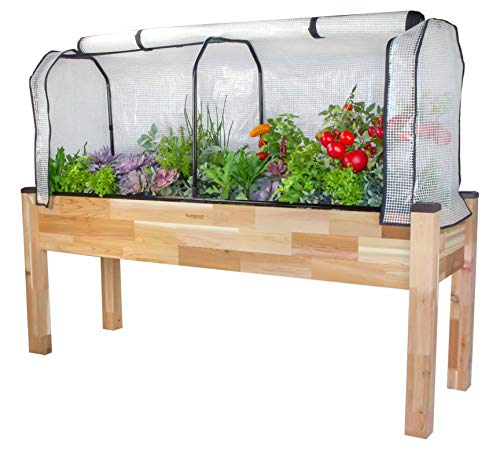
Best for starting earlier and growing later in cold zones
- Long cedar planter with a greenhouse cover
- Extends the growing season front and back
- Rot-resistant cedar frame
- Waist-high working height
Why buy it: a big cedar planter with a clip-on greenhouse cover, so northern gardeners get the durable wood plus weeks of extra season at each end of the year.
Quick Comparison
| Product | Best for | Rating | Price | Buy |
|---|---|---|---|---|
| CedarCraft Raised Cedar Garden Bed, 49 x 49 x 10 in. | Best Overall | — | Check (paid link) | |
| Greenes Fence Cedar Raised Garden Bed, 4 x 4 x 10.5 in. | Best Value Cedar | — | Check (paid link) | |
| CedarCraft Cedar Raised Garden Bed, 36 x 36 x 10.5 in. | Best Compact Cedar | — | Check (paid link) | |
| CedarCraft Elevated Cedar Planter, 23 x 49 x 30 in. | Best Elevated Cedar | — | Check (paid link) | |
| CedarCraft Self-Watering Elevated Cedar Planter, 22 x 48 x 30 in. | Best Self-Watering Cedar | — | Check (paid link) | |
| CedarCraft Elevated Cedar Planter with Greenhouse Cover, 23 x 72 x 30 in. | Best for Season Extension | — | Check (paid link) |
Specifications Side by Side
| Bed | Wood | Footprint | Style | Depth |
|---|---|---|---|---|
| CedarCraft 49 x 49 | Western red cedar | 4 x 4 ft | Ground bed | ~10" |
| Greenes Fence | Cedar | 4 x 4 ft | Ground bed | ~10.5" |
| CedarCraft 36 x 36 | Western red cedar | 3 x 3 ft | Ground bed | ~10.5" |
| CedarCraft Elevated | Cedar | 23 x 49 in. | Waist-high legs | Planter box |
| CedarCraft Self-Watering | Cedar | 22 x 48 in. | Waist-high + reservoir | Planter box |
| CedarCraft + Greenhouse | Cedar | 23 x 72 in. | Waist-high + cover | Planter box |
How We Rank
We never buy or build these beds. The ranking comes from aggregated owner ratings across the most-owned cedar beds, weighted toward reviews written a season or more after assembly, when rot resistance and joint strength show. The factors that carry the weight: wood quality and rot resistance, first; build and corner strength, since corners fail first; depth and capacity for real vegetables; and value for the years of service. Prices were checked at the time of writing. Full method: how we rank.
The Beds, Reviewed
1. CedarCraft 49 x 49 — Best Overall
Covered above. Owners praise: real cedar, tool-free assembly, and years of rot-free service. Owners gripe about: the price versus raw lumber and weathering to gray if left unoiled. Check price (paid link).
2. Greenes Fence Cedar — Best Value Cedar
The most-owned cedar bed and the cheapest way into the best wood. Dovetail corners slot together with no hardware to rust, and the panels stack and expand, so you can start with a 4-by-4 and grow the garden later.
Owners praise: the low price for real cedar, no-hardware corners, and expandability. Owners gripe about: thinner boards than premium beds and a shorter life than a heavy cedar build. Check price (paid link).
3. CedarCraft 36 x 36 — Best Compact Cedar
The same rot-resistant cedar in a 3-by-3 footprint for patios, side yards and first square-foot gardens. Tool-free assembly and a good root depth make it a tidy small-space bed.
Owners praise: a compact size that still grows real crops and easy assembly. Owners gripe about: limited capacity for sprawling plants and the cedar premium. Check price (paid link).
4. CedarCraft Elevated Cedar Planter — Best Elevated Cedar
Cedar raised onto legs for waist-high, no-bend gardening, which also lifts crops out of reach of many ground pests. Best for greens, herbs and shallow-rooted vegetables given the planter depth.
Owners praise: the back-friendly height and durable wood. Owners gripe about: a shallower soil volume than a ground bed and needing more frequent watering. Check price (paid link).
5. CedarCraft Self-Watering Elevated — Best Self-Watering Cedar
Adds a water reservoir to the elevated cedar planter, so it keeps producing through a hot week without daily watering — the fix for the elevated-bed downside of drying out fast.
Owners praise: less watering plus cedar durability at a comfortable height. Owners gripe about: the higher price and a reservoir that needs monitoring in wet spells. Check price (paid link).
6. CedarCraft with Greenhouse Cover — Best for Season Extension
A long cedar planter with a clip-on greenhouse cover, giving northern gardeners weeks of extra season at each end of the year on top of the durable wood. A two-in-one for cold zones.
Owners praise: earlier starts, later harvests, and sturdy cedar. Owners gripe about: the price and a cover that needs venting on warm days. Check price (paid link).
What Owners Actually Complain About
Choosing pine to save money. Untreated pine is cheap and rots in a few seasons, so the saving evaporates when you rebuild. Cedar costs more up front and lasts three to four times as long.
Over-lining rot-resistant wood. Lining a cedar bed all over traps moisture against it and shortens its life. Cedar does not need a liner.
Letting the base sit in water. A bed sitting in constant standing water rots at the bottom first. Give it a little drainage underneath.
Worrying about modern treated wood. The arsenic treatment is long gone — EPA records that manufacturers voluntarily stopped making CCA-treated wood for homeowner uses in December 2003 — and today's lumber uses copper-based preservatives. If you still prefer caution, line a treated bed's walls or just buy cedar.
How to Choose the Wood
Default to cedar — it is food-safe, rot-resistant and lasts 10 to 15 years with no treatment. Choose redwood only if it is affordable and available where you are. Use fir or pine only for a temporary or budget bed you accept rebuilding in a few years. Consider modern pressure-treated for maximum longevity if you are comfortable with copper-based preservatives, and line the walls if you want extra reassurance around food. Then pick the format — ground bed, elevated, or self-watering — to match your space and your back.
The Verdict
Cedar is the best wood for a raised garden bed, and the easiest way to own it is a tool-free kit. The CedarCraft 49 x 49 is our overall pick; the Greenes Fence cedar bed is the value route into real cedar; and if bending is the problem, the elevated and self-watering CedarCraft planters bring cedar up to waist height. Skip pine unless you enjoy rebuilding, and treat pressure-treated as a safe-but-optional longevity play. Check price on Amazon → (paid link)
More from this hub: raised beds & planters · best raised garden bed · is pressure-treated lumber safe · are galvanized beds safe · how we rank.