 Garden


Affiliate Disclosure
Some links on this page are affiliate links. As an Amazon Associate, we earn from qualifying purchases — at no extra cost to you. We do not buy, test, or physically handle the products we cover; our rankings come from aggregated owner reviews, ratings and expert consensus. Commissions never change our verdicts. How we rank · full disclosure.
Yes, you can put a raised bed on concrete — but you must handle two things: drainage and depth. On a slab, water has nowhere to soak away, so it will pool at the base and drown roots unless you give it an escape route: raise the bed slightly on feet or paver blocks and keep weep holes clear. And because roots cannot grow down into the ground, the bed is a true container, so build it deeper than you would on soil — 12 inches minimum for greens, 18 for most vegetables, 24 for perennials. Get those right and a bed on concrete grows just as well.
Why drainage is the first problem
On open soil, excess water drains straight down into the ground. On concrete there is no down — water hits the slab and sits, saturating the base of the bed where it kills roots and breeds rot. Solving it is straightforward but essential. Raise the bed slightly off the slab on feet, cleats or a course of paver blocks so water can run out the bottom and the sides rather than pooling underneath. Make sure any weep or drainage holes stay clear of fabric and settled fines. If the patio has any slope, orient the bed so water sheds toward the low side. The goal is simple: give water somewhere to leave, because it will not disappear on its own.
Why the bed has to be deeper
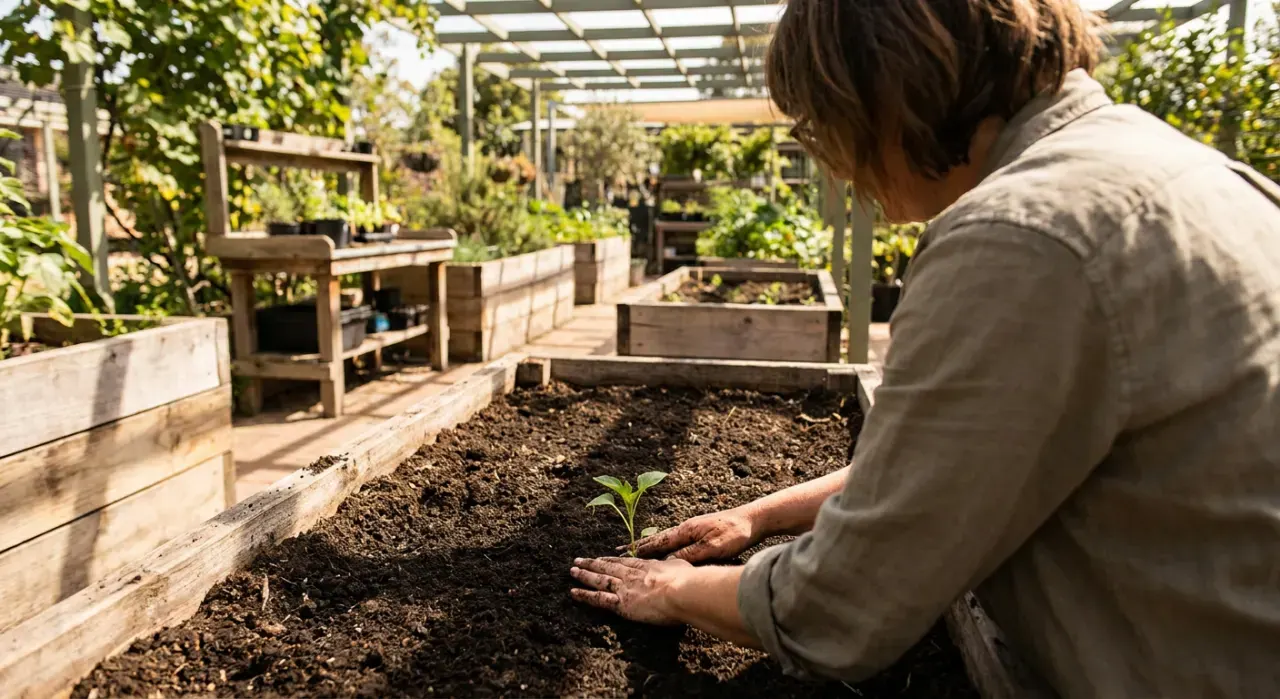
A bed on soil borrows depth from the ground — roots reaching the bottom of the frame keep going, so a 12-inch frame behaves much deeper. On concrete that is gone; every inch of root volume must be inside the box, and the sides and base lose heat and moisture on all faces, drying faster. So add depth over the usual figures.
| Crop | Minimum depth on concrete |
|---|---|
| Salad greens, herbs, radishes | 12 in |
| Bush beans, peppers, eggplant | 14–16 in |
| Tomatoes, squash, root vegetables | 18 in |
| Perennials, asparagus, shrubs | 24 in |

Protecting the slab and the bed
A few steps keep both in good shape. If the concrete is decorative or you want to avoid staining, put down a waterproof tray or raise the bed clear so air and water move underneath rather than sitting against the surface. If the bed frame is wood, a moisture barrier — landscape fabric or a ground-rated liner — between the wood and the slab slows rot from constant dampness, though make sure it does not trap water inside the bed. You do not need hardware cloth against burrowing rodents from below, since concrete blocks them, though the open sides of a low bed can still admit them. On a utility slab or driveway, none of this cosmetic care matters much.

Check the weight on decks and balconies
A ground-level concrete patio carries a full bed without concern, but a raised deck or balcony is a different question. Moist soil runs roughly 75 to 100 pounds per cubic foot, so a 4-by-8-foot bed at 18 inches deep weighs on the order of two tons once watered. A slab on grade shrugs that off; a wooden deck or an upper-floor balcony may not, and overloading either is genuinely dangerous. If the bed is going anywhere but a ground-level slab, confirm the structure's load rating first, and favor shallower beds, lighter fill in the base, and spreading the load over more of the surface.
The bottom line
Put the bed on concrete freely, but raise it slightly so water can escape and build it deeper than you would on soil — 12 inches for greens, 18 for most crops, 24 for perennials. Depth on a hard surface is the crux, covered fully in how deep a raised bed should be. For a bed that stays clear of the slab, an elevated planter may suit better, and to fill a deeper box economically, see cheapest way to fill a raised bed.
We never buy, test or physically handle the products we rank. Recommendations come from aggregated owner reviews, star ratings, review volume and expert consensus — see how we rank.
More from this hub: Raised Beds & Planters · Raised bed depth · Best elevated planter box · Cheapest way to fill a bed · How we rank