 Garden
Affiliate Disclosure
Some links on this page are affiliate links. As an Amazon Associate, we earn from qualifying purchases — at no extra cost to you. We do not buy, test, or physically handle the products we cover; our rankings come from aggregated owner reviews, ratings and expert consensus. Commissions never change our verdicts. How we rank · full disclosure.
The short answer: the best things to plant in a raised bed are compact, high-yield vegetables and herbs that reward the loose, warm, well-draining soil — tomatoes, peppers, lettuce and salad greens, spinach, carrots and other root crops, radishes, bush beans, cucumbers, strawberries, and herbs. Root crops especially thrive because the deep, stone-free soil lets them grow long and straight. Arrange tall crops on the north side so they do not shade shorter ones, space plants by their mature size, and mix in a few flowers like marigolds and nasturtiums to draw pollinators and deter pests.
A raised bed is the most productive small growing space most gardeners have. The soil warms earlier in spring, drains better, and stays loose and free of foot compaction, which lets you plant more intensively than you could in the ground. The question is not really what will grow — almost anything will — but what makes the best use of that premium space. This guide covers the top crops, how to lay them out, how densely to plant, and what to skip.
Why raised beds grow such good vegetables
Understanding the raised-bed advantage tells you which crops to prioritize.
- Loose, deep, stone-free soil — ideal for root crops that fork or stunt in heavy ground.
- Warms earlier in spring — you can plant sooner and extend the season at both ends.
- Excellent drainage — crops that hate wet feet do far better.
- No soil compaction — you tend the bed from the edges, so the soil stays airy and roots spread freely.
- Intensive spacing — the rich soil supports closer planting than row gardening.
Get the soil right first — a raised bed lives or dies on its fill. See best soil for a raised garden bed and the best soil mix ratio for a raised bed. We rank products on aggregated owner reviews, not in-house testing, as explained in how we rank.
The best crops for a raised bed
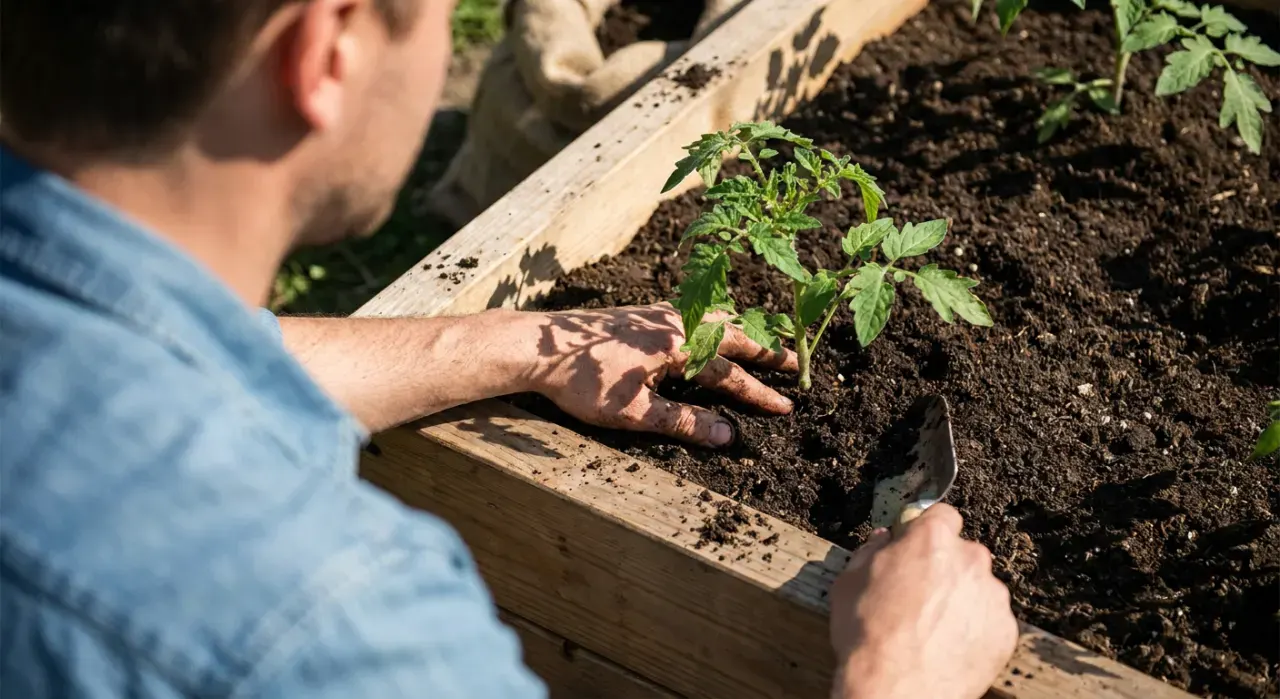
These give the most food and the fewest problems per square foot.
| Crop | Why it thrives | Spacing (per plant) |
|---|---|---|
| Lettuce and salad greens | Fast, high yield, cut-and-come-again | 4 per sq ft |
| Spinach and chard | Loose soil, cool-season workhorses | 4 to 9 per sq ft |
| Carrots, radishes, beets | Deep loose soil grows straight roots | 9 to 16 per sq ft |
| Tomatoes | Warm soil, great drainage; trellis them | 1 per sq ft, staked |
| Peppers | Love the warmth and drainage | 1 per sq ft |
| Bush beans | High yield, no staking | 9 per sq ft |
| Cucumbers (trellised) | Vertical growth saves space | 2 per sq ft on a trellis |
| Herbs | Compact, productive, deter pests | 1 to 4 per sq ft |
| Strawberries | Perfect drainage, easy to net | 4 per sq ft |
For the fuller ranked list, see best vegetables for a raised garden bed. Leafy greens and herbs are the most forgiving starting point; root crops are where a raised bed truly outshines the ground.
What to skip in a raised bed
Some crops technically grow but waste the space that makes a raised bed valuable.
- Pumpkins and winter squash — huge sprawl for a modest yield; give them the ground.
- Corn — needs a dense block for pollination, more than a small bed offers.
- Sunflowers and other giants — shade everything around them.
- Mint and other rampant spreaders — they take over; grow them in their own container.
- Sprawling melons — unless you have a large bed and a strong trellis.
Lay it out for light and access
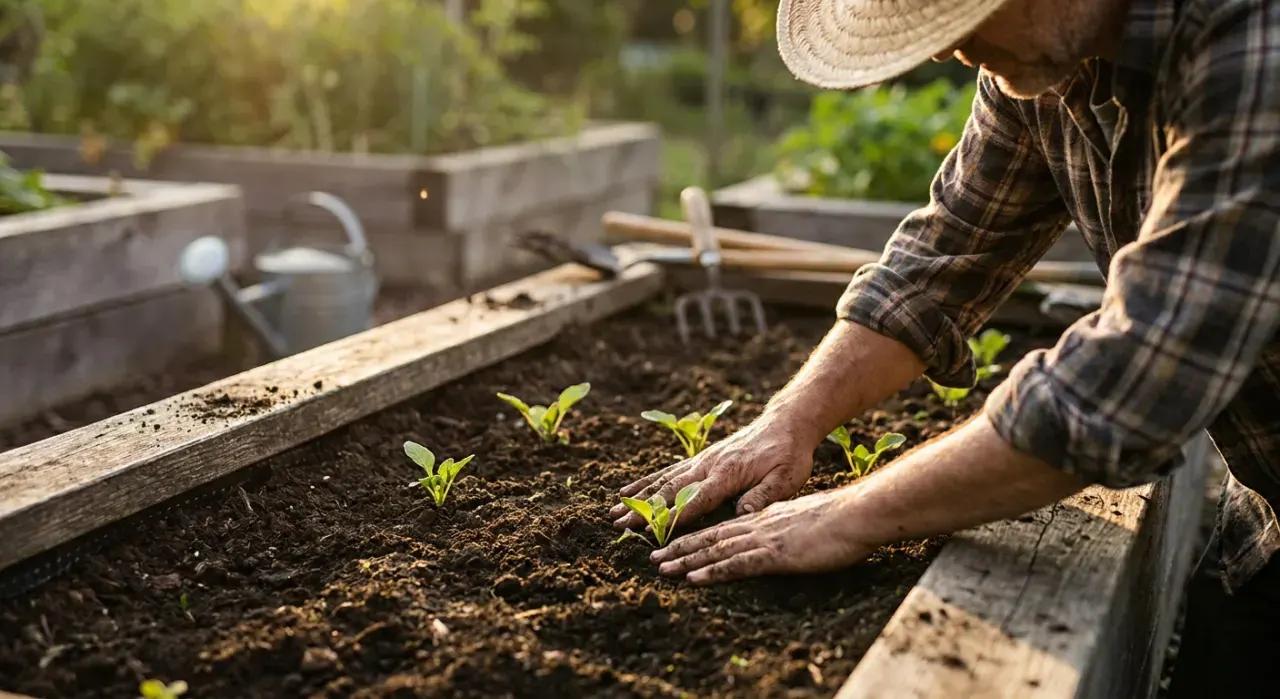
Orientation and reach matter as much as plant choice.
- Tall crops on the north side: tomatoes, pole beans, and trellised cucumbers go where they will not shade shorter plants.
- Medium crops in the middle: peppers, bush beans, eggplant.
- Low crops on the south side: lettuce, herbs, radishes, and other short plants that want full light.
- Keep the center reachable: a 4-foot-wide bed lets you reach the middle from both sides without stepping on the soil.
- Go vertical: trellis vining crops to multiply your growing space upward. See how to stake tomatoes for support ideas that translate to beds.
More on arranging a bed efficiently is in raised bed spacing and layout.
How densely to plant
Raised beds support intensive spacing, but overcrowding backfires. The square-foot method is a reliable guide: divide the bed into 1-foot squares and plant each to the crop's mature size.
| Plants per square foot | Crops |
|---|---|
| 1 | Tomato, pepper, eggplant, broccoli |
| 4 | Lettuce, strawberry, chard |
| 9 | Bush beans, spinach, beets |
| 16 | Carrots, radishes, onions |
Crowding beyond this cuts airflow, spreads disease, and shrinks each plant's yield. For a 4-by-4 bed, see how many plants fit in a 4x4 raised bed.
Mix in flowers and companions
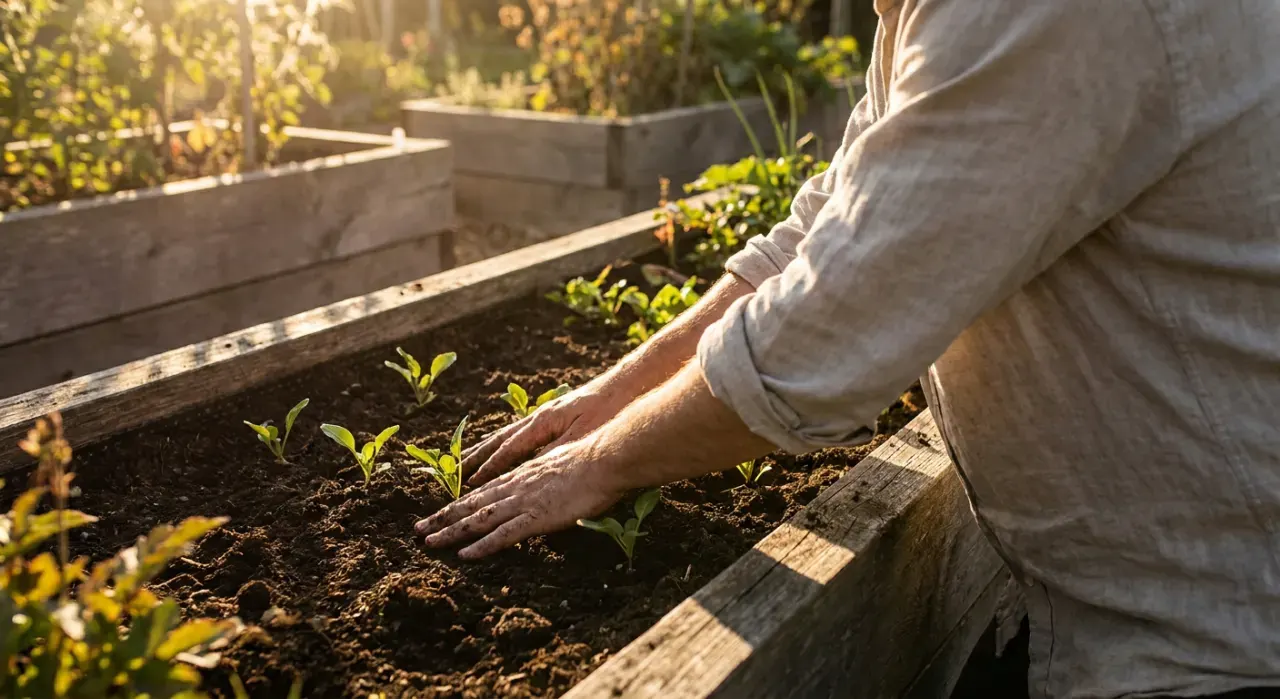
Interplanting flowers and pairing compatible crops improves both the harvest and the look of the bed.
- Marigolds deter some pests and add color.
- Nasturtiums lure aphids away from crops and are edible.
- Borage and calendula draw pollinators and beneficial insects.
- Classic pairings: basil with tomatoes, carrots with onions, lettuce tucked under taller crops for shade in summer heat.
Match every companion's sun and water needs to its neighbors, and rotate what grows where each year to keep the soil healthy — see do you need to rotate crops in a raised bed.
Plant through the seasons
A raised bed can produce nearly year-round if you plant in waves.
- Cool season (spring and fall): lettuce, spinach, peas, radishes, carrots, kale.
- Warm season (summer): tomatoes, peppers, beans, cucumbers, herbs.
- Succession plant: sow quick crops like lettuce and radishes every couple of weeks for a continuous harvest.
- Interplant fast and slow crops: radishes between slower carrots use the space twice.
A well-planned raised bed grows more food in a small footprint than almost any other method — the key is choosing compact, high-value crops, spacing them by mature size, and arranging them so every plant gets its light. Start with easy greens and root crops, add a tomato or two on a trellis, and tuck in some marigolds, and you have a bed that produces from spring through fall. For everything on building and filling beds, browse the raised beds and planters hub, and confirm your bed is deep enough in how deep should a raised bed be.