 Garden

Affiliate Disclosure
Some links on this page are affiliate links. As an Amazon Associate, we earn from qualifying purchases — at no extra cost to you. We do not buy, test, or physically handle the products we cover; our rankings come from aggregated owner reviews, ratings and expert consensus. Commissions never change our verdicts. How we rank · full disclosure.
Most home security cameras see 20 to 30 feet in infrared night vision and 30 to 50 feet in color night vision with a spotlight, while wired cameras with larger IR arrays reach 60 to 100 feet. The critical distinction is between detecting and identifying. A camera rated for 100 feet can register that a person is present at that distance, but recognizing a face usually requires them to be within roughly a fifth of that range. Rain, fog, dark clothing and open lawn with nothing to reflect infrared all cut the working distance further.
What range should you expect by camera type?
These are working figures rather than box figures, drawn from what owners consistently report about real yards. The identification column is the one worth planning around, because that is the distance at which footage is useful to describe someone.
| Camera type | Stated range | Realistic detection | Face identification |
|---|---|---|---|
| Battery camera, basic IR | 25–30 ft | 20–25 ft | 6–10 ft |
| Video doorbell | 15–25 ft | 15–20 ft | 3–6 ft |
| Wired camera, IR array | 60–100 ft | 40–70 ft | 12–20 ft |
| Spotlight camera, color night | 30–50 ft | 25–40 ft | 10–15 ft |
| 4K wired with strong IR | 100 ft plus | 60–100 ft | 20–30 ft |
| Floodlight camera | Lit area | Whatever the flood covers | 15–25 ft |
What actually limits how far it sees?
Five things, and resolution is only one of them. A 4K sensor pointed into an unlit yard is not better than a 1080p sensor with a strong infrared array — you cannot resolve detail from photons that never arrived.
- Infrared power and LED count. The dominant factor. Battery cameras run small arrays to preserve runtime, which is why they see so much less than wired models.
- Field of view. A wide angle spreads the same sensor across more scene, so a 130-degree lens puts fewer pixels on a face at 20 feet than a 90-degree lens does.
- What is in the scene. Infrared works by bouncing back. A fence, wall or hedge at 25 feet reflects light and defines the scene; an open lawn absorbs it and the image goes black beyond a short distance.
- Weather. Rain, snow and fog scatter IR, and each falling drop near the lens registers as a bright speck. Heavy weather can halve usable range and trigger constant motion alerts.
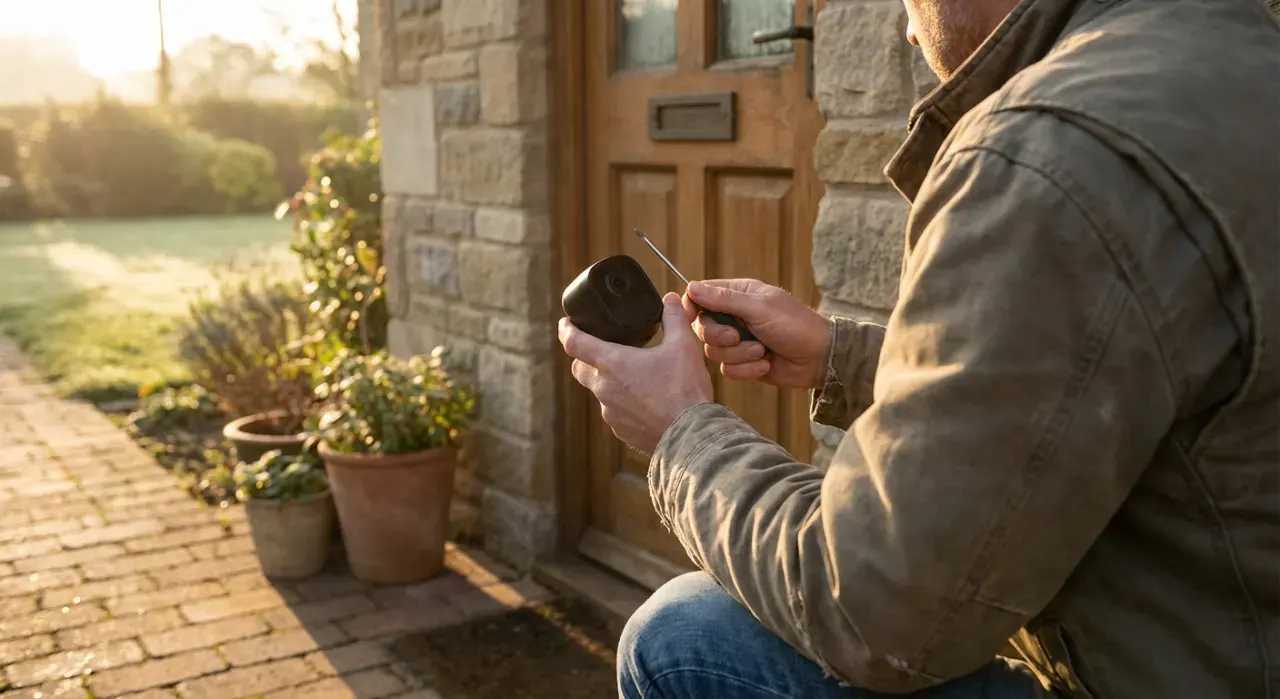
- Mounting. Anything within about two feet of the lens reflects IR straight back and blows out the exposure for everything behind it. Spiderwebs across the housing are the most common cause of poor night footage owners report.
How do you get more usable distance?
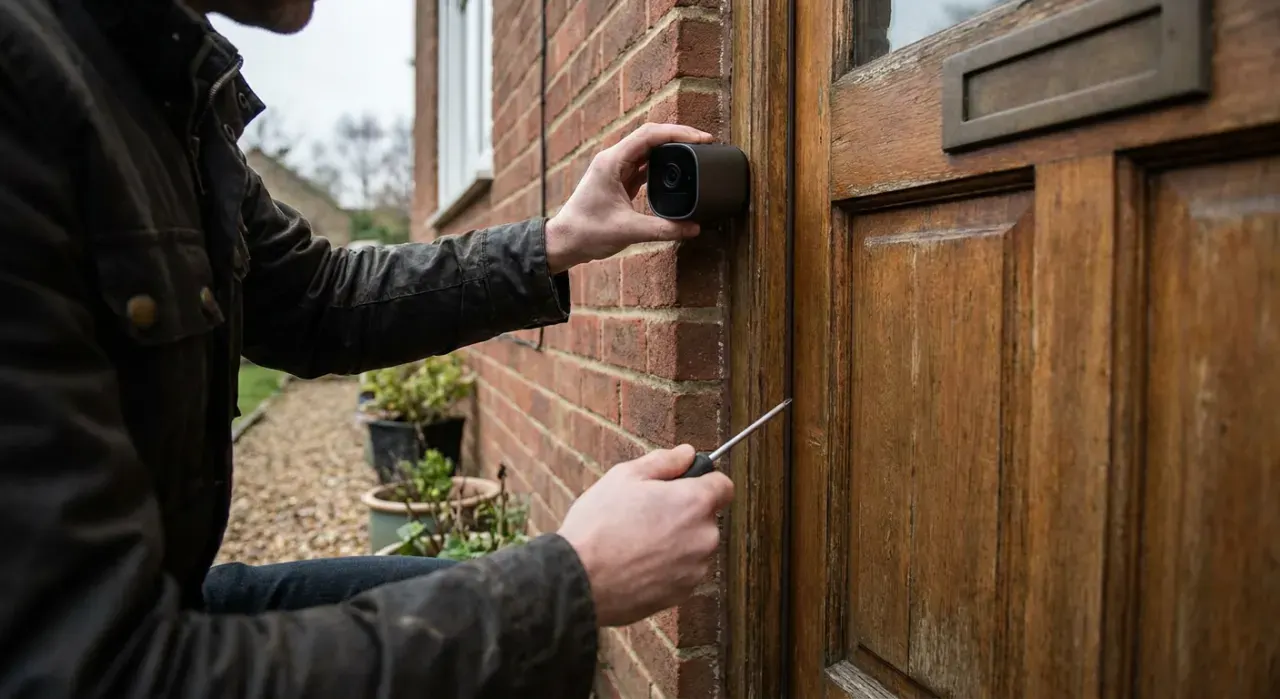
Start with placement, because it is free. Mount at 8 to 10 feet, aim across the approach path rather than down it, keep the housing clear of soffits and columns, and check nothing bright sits inside the frame. Then add light: a well-placed exterior fixture aimed at the area you care about, positioned behind the camera, does more for night footage than any sensor upgrade. Color night vision needs light to work with, and a warm porch fixture is enough to unlock it.
If the distance genuinely cannot be reduced — a long driveway, a gate at the property line — the answer is a second camera near the subject rather than a longer-range camera at the house. Face identification is a function of pixels on the face, and moving closer beats every specification. Working out how many you need is covered in how many cameras do I need for my house, and the power and reliability trade is set out in wired vs wireless home security cameras.
Owners consistently rate wired spotlight cameras highest for night performance and battery models lowest, which is reflected in our home security camera picks. Mounting technique matters just as much — see how to mount outdoor security cameras.
We never buy, install or physically handle the products we rank. Every recommendation comes from aggregated owner reviews, star ratings, review volume and published expert consensus — see how we rank.
More from this hub: Smart Home & Security · Footage retention · Do cameras deter burglars? · Best home security camera · How we rank