 Garden

Affiliate Disclosure
Some links on this page are affiliate links. As an Amazon Associate, we earn from qualifying purchases — at no extra cost to you. We do not buy, test, or physically handle the products we cover; our rankings come from aggregated owner reviews, ratings and expert consensus. Commissions never change our verdicts. How we rank · full disclosure.
Yes, for most offenders. In a University of North Carolina at Charlotte survey of 422 convicted burglars, around 60 percent said the presence of an alarm or visible security would cause them to choose a different target, and about half said they would abandon an attempt if they discovered one after starting. That research, conducted for the Alarm Industry Research and Educational Foundation, is the most widely cited evidence on the question. Cameras deter by making a house look like more work than the one next door — the effect is displacement to an easier target, not elimination of the crime.
What does the research actually say?
The UNC Charlotte study by Blevins and Kuhns remains the reference point because it asked offenders directly rather than inferring from crime statistics. Several findings are consistently repeated in later work and in guidance from local police crime prevention units.
- Roughly 60 percent said visible security would send them elsewhere. This is the headline figure and it is about target selection, not about being caught.
- Around 12 percent said they would go ahead regardless. A determined minority is not deterred by anything short of physical barriers.
- Most attacks are opportunistic. Offenders described choosing houses on visible cues rather than planning specific targets in advance, which is precisely the decision a camera can influence.
- Occupancy is the dominant factor. Signs that someone is home outranked hardware in offender accounts. Avoiding contact matters more than avoiding a recording.
- Doors and first-floor windows are the entry points. Which is where cameras and lighting should be aimed.
Guidance from the National Crime Prevention Council and from municipal crime prevention through environmental design programs points the same way: visibility, lighting and evidence of occupancy do the work.
Which setups deter and which do not?
Deterrence depends on being noticed during the approach, and on being credible once noticed.
| Measure | Deterrent value | Evidence value |
|---|---|---|
| Visible doorbell camera | High | High — faces at close range |
| Motion-activated floodlight camera | High | Good — the light is the point |
| Discreet camera under an eave | Low | High |
| Dummy camera | Low | None |
| Alarm sign with no system | Low to moderate | None |
| Camera plus audible alarm | Highest | Good |
| Exterior lighting alone | Moderate to high | Indirect |
The pairing of a camera with a siren is the strongest combination in the offender accounts, because it converts a recording into an immediate risk of being seen. Systems that combine both are compared in our DIY home security system picks.
What should you do with that?
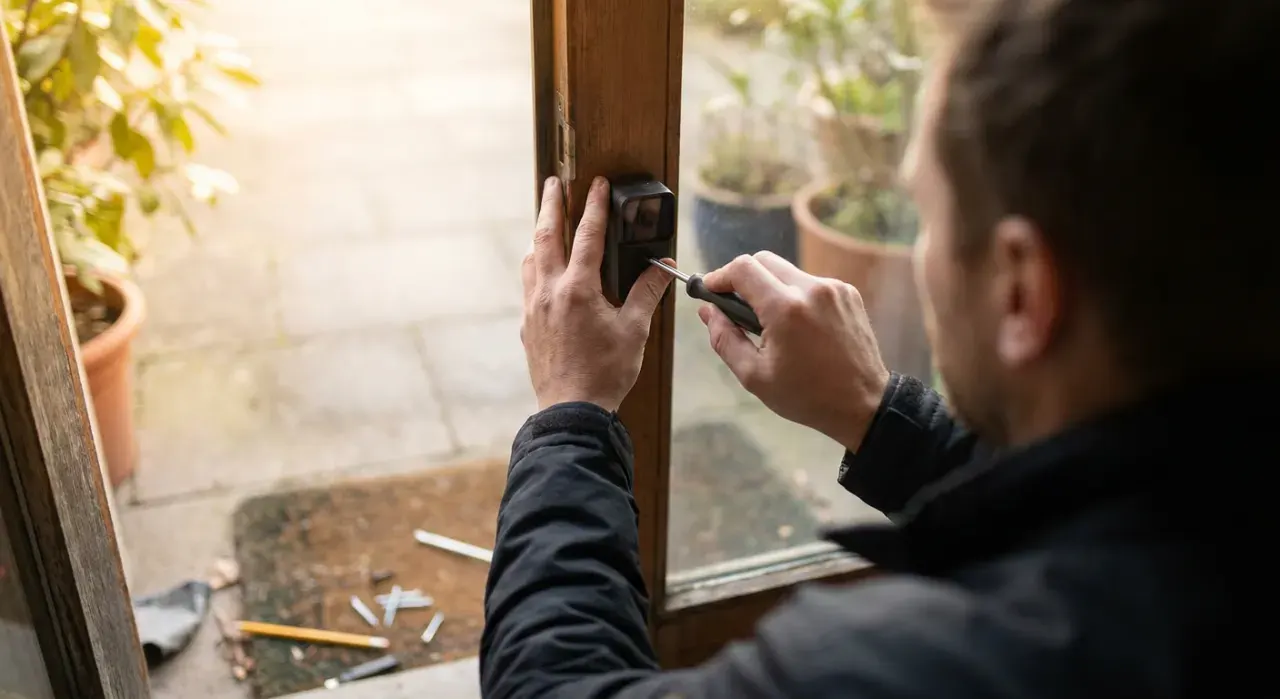
Make the security legible from the street, cover the actual entry points, and do the cheap physical work first. In order: fit three-inch screws through the strike plate into the stud frame on every exterior door, trim shrubs away from ground-floor windows, put a visible camera at the front door and one covering the driveway, add motion lighting on the dark sides, and use a smart plug or two to vary interior lights when the house is empty — an ordinary use case covered in what you can do with a smart plug.
Then be realistic about what footage gives you. Identification requires a face close and lit, which is why the ranges in how far a camera sees at night matter, and why how many cameras you need is answered by counting entry points rather than square feet. The cameras owners rate most highly for visible deterrence and usable night footage are in our home security camera picks.
We never buy, install or physically handle the products we rank. Every recommendation comes from aggregated owner reviews, star ratings, review volume and published expert consensus — see how we rank.
More from this hub: Smart Home & Security · Best video doorbell · Set up a DIY system · Wired vs wireless · How we rank