 Garden


Affiliate Disclosure
Some links on this page are affiliate links. As an Amazon Associate, we earn from qualifying purchases — at no extra cost to you. We do not buy, test, or physically handle the products we cover; our rankings come from aggregated owner reviews, ratings and expert consensus. Commissions never change our verdicts. How we rank · full disclosure.
Turn the brush roll off, or fit a soft-bristle or fabric bare-floor head, keep the vacuum wheels clean, and move with the grain of the boards. The vacuum itself rarely scratches wood — what scratches it is grit being dragged across the finish, either by a stiff nylon brush roll spinning at speed or by hard plastic wheels with debris stuck in them. Suction alone lifts dust and hair from a smooth floor perfectly well, so on hardwood the brush roll gives you nothing and costs you finish.
What actually scratches a wood floor
Almost all fine scratching on hardwood is abrasion from mineral grit — sand tracked in on shoes, road salt in winter, and the fine mineral dust that settles from the air. Those particles are harder than a polyurethane finish. Anything that presses them against the floor and moves them creates a scratch: a shoe, a chair leg, a hard wheel, or a spinning brush. The vacuum enters the picture because a stiff brush roll is very good at catching grit and grinding it along the surface, and because wheels pick up debris and carry it. Remove the grit and the mechanism disappears.
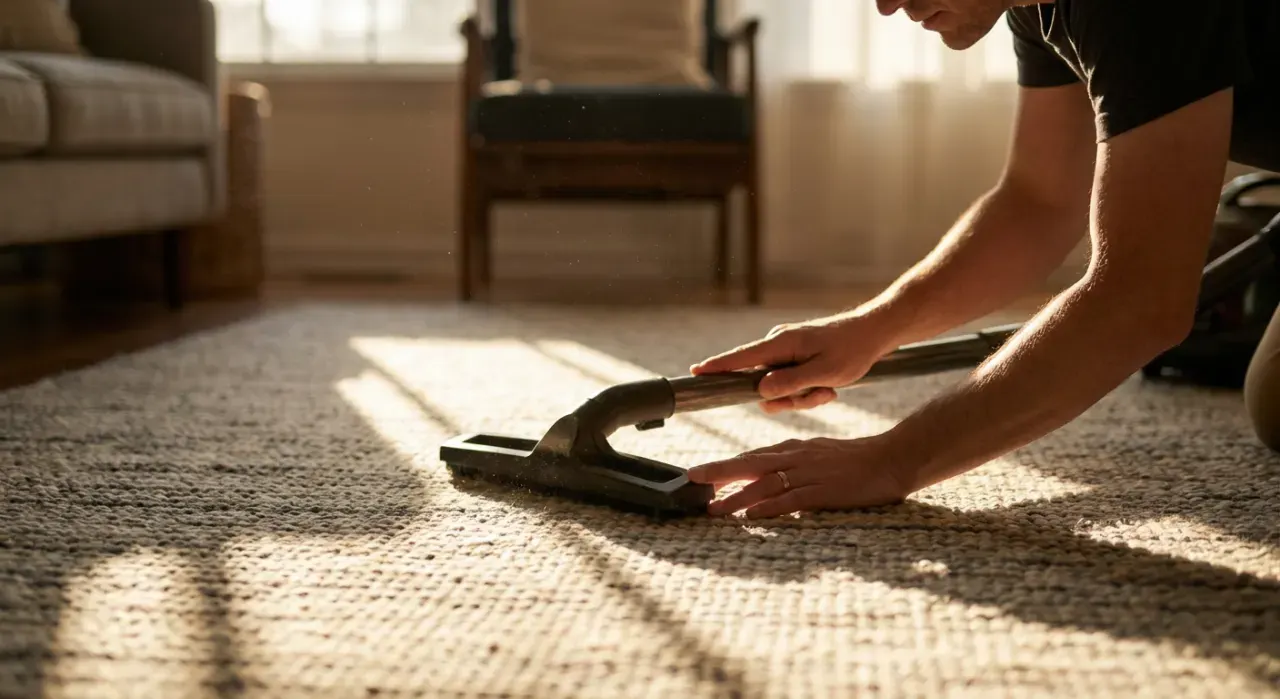
Set the vacuum up correctly
| Component | On hardwood | Why |
|---|---|---|
| Brush roll | Off, or a soft fabric or natural-bristle roller | Stiff nylon grinds grit into the finish |
| Head type | Bare-floor tool or soft-roller head | Designed for a sealed surface, not pile |
| Wheels | Rubber or felt, wiped clean | Hard wheels with embedded grit leave tram lines |
| Suction | Medium — reduce if the head seals down | Full suction can lock the head to the floor |
| Filtration | Sealed, HEPA if possible | Unsealed vacuums blow fine grit back onto the floor |
| Beater bar attachments | Never on bare wood | Nothing to agitate; only risk |
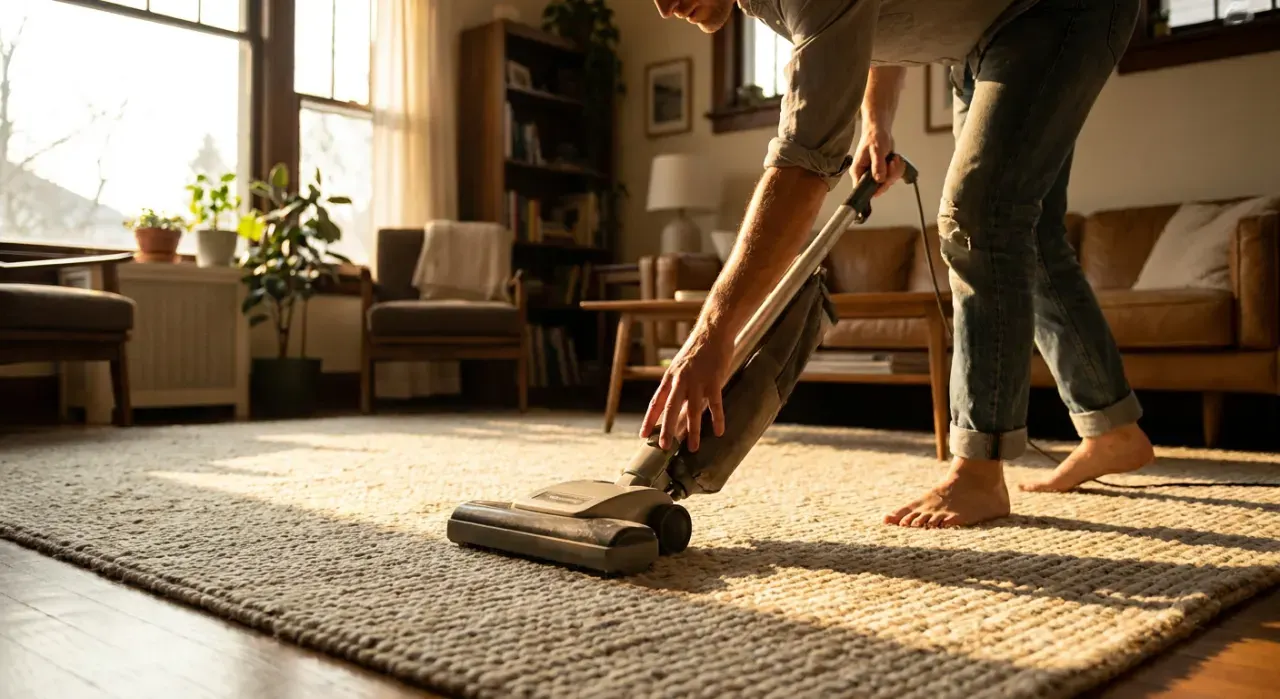
Step-by-step
- Inspect the head before every session, 20 seconds. Turn the head over and look at the wheels and the underside. A single embedded staple, grain of grit or fragment of metal in a wheel will draw a line the length of the room. Pick debris out and wipe the wheels with a damp cloth.
- Switch to bare-floor mode. Turn the brush roll off, or fit the bare-floor tool or soft-roller head. If your vacuum has neither, use the crevice and dusting tools rather than running a carpet head on wood.
- Deal with the entry first. Most of the grit in a house arrives at the door. Vacuum entry mats and the first few feet of floor before you work into the room, so you are not distributing that grit across the whole floor.
- Vacuum with the grain, in overlapping passes. Follow the direction of the boards. Any faint marks you do leave will run with the grain and be far less visible, and the head follows the board seams better, picking grit out of the gaps rather than skating over them.
- Slow down. A slow steady pass lifts more than a fast one and puts less lateral force through the head. Speed is what turns a wheel into a scraper.
- Do the edges with a crevice tool. Grit collects along baseboards and in the gap at the wall. A floor head does not reach it, and it migrates back out under foot traffic.
- Empty and clean the filter on schedule. A packed filter drops suction, which means you push harder and pass more times. It also means an unsealed vacuum recirculates fine dust straight back onto the floor.
- Follow with a dry microfiber mop where you want a finish. Vacuuming lifts the grit; a microfiber pass picks up the film. Damp mop only if the floor is sealed, using barely damp and never wet, and never on waxed, oiled or unsealed wood.
The prevention that matters more
- Mats at every entry, both outside and inside, are the single highest-value protection. Most grit is caught in the first six feet.
- Felt pads under every furniture leg, checked twice a year — a pad that has worn through and embedded grit is a gouge waiting to happen.
- Shoes off, particularly in winter where road salt and de-icing grit are involved.
- A rug pad under any area rug, and never a PVC waffle pad on hardwood, which can harden and mark the finish. See rug pad picks for hardwood floors.
- Trim pet nails and keep pet bowls on a mat.
- Vacuum often. Two or three times a week in traffic paths beats one thorough clean weekly, because grit left on the floor is ground in by every footstep.
Mistakes to avoid
- Running a carpet brush roll on bare wood. No benefit, real risk.
- Never checking the wheels. Embedded debris is the most common cause of a mystery line across a room.
- Full suction on a sealing head. The head locks down and you drag it, which increases friction. Drop the suction.
- Wet mopping unsealed or waxed wood. Water lifts grain, dulls wax and can cup boards. Barely damp on sealed floors only.
- Steam mops on hardwood. Many flooring manufacturers warn against them, since heat and moisture drive water into seams and can compromise the finish and the adhesive on engineered boards. Check your floor maker's care guidance.
- Vacuuming around the furniture forever. Grit accumulates where the head never goes and migrates back out. Move things occasionally.
Choosing a vacuum for wood
Look for a genuine bare-floor mode or a soft-roller head, rubber or felt wheels, sealed filtration and low weight, in that order. Owner reviews across the category consistently divide hard-floor performance on head design and wheel material rather than on raw suction, which is a useful signal because those are the parts that touch the floor. Our hardwood floor vacuum picks weigh those first, cordless picks for hardwood and carpet covers mixed-floor homes, and robot vacuum picks suits daily grit removal on smooth floors.
We never buy, test or physically handle the products we rank. Recommendations come from aggregated owner reviews, star ratings, review volume and expert consensus — see how we rank.
More from this hub: Vacuums & Floor Care · Upright vs canister · Cleaning a vacuum filter · Fixing vacuum smells · Best hardwood vacuums · How we rank