 Garden

Affiliate Disclosure
Some links on this page are affiliate links. As an Amazon Associate, we earn from qualifying purchases — at no extra cost to you. We do not buy, test, or physically handle the products we cover; our rankings come from aggregated owner reviews, ratings and expert consensus. Commissions never change our verdicts. How we rank · full disclosure.
The short answer: the smell tells you which fault it is. Burning rubber — the most common by a wide margin — means the drive belt is slipping against a brushroll jammed with hair or a stuck object. Hot plastic or a dusty, electrical smell means restricted airflow and an overheating motor, usually a full bag, a clogged hose or a saturated filter. Either way, switch off and unplug immediately: the rubber version destroys a belt in minutes, and the electrical version can end the motor.
We do not buy or physically handle the machines we write about — our rankings come from aggregated owner reviews and expert consensus, described in how we rank. Model picks are in best vacuum cleaner.
What does each smell mean?
Vacuums produce a small number of distinct smells and each maps to a different part of the machine. Identify it before opening anything, because it tells you where to look and how urgent the situation is.
| Smell | Cause | Urgency | What to check |
|---|---|---|---|
| Burning rubber | Belt slipping on a stalled brushroll | Stop now | Roller turns freely by hand? Hair at the end caps? |
| Hot plastic, dusty | Motor overheating from restricted airflow | Stop, let cool 30 min | Bag, bin, pre-motor filter, hose, wand |
| Sharp electrical or ozone | Worn motor brushes or failing windings | Stop, do not restart | Machine age; service or replace |
| Sweet, acrid, melting | Plastic or foil object against the fan or roller | Stop now | Underside of the head, fan chamber |
| Musty rather than burnt | Damp filter or wet debris in the bin | Low | Filters — dry 24 hours before reinstalling |
| Hot battery, chemical | Lithium-ion pack fault (cordless) | Stop, do not recharge | Move it away from combustibles; contact the maker |
Why does the belt burn?
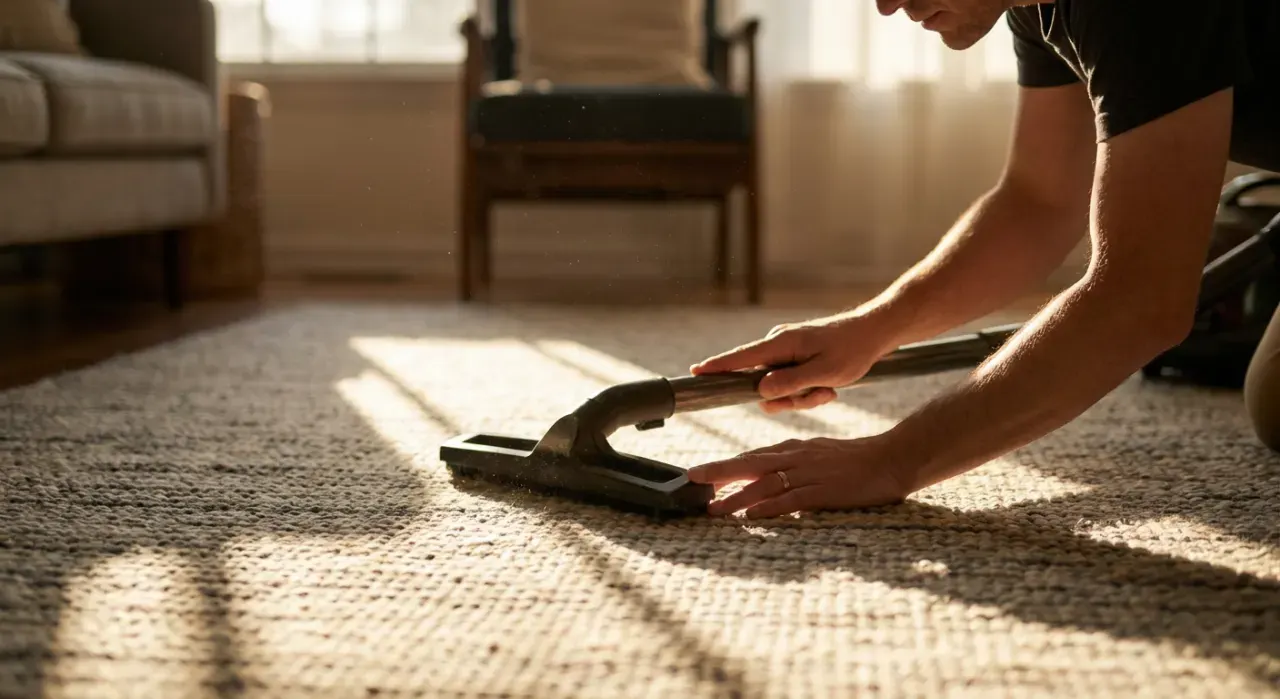
Because a flat drive belt is deliberately the weakest link. It transfers motor rotation to the brushroll, and when something stops the roller from turning — long hair wound into a solid mat, a sock, a cord, carpet fringe — the motor pulley keeps spinning inside a stationary rubber loop. Friction concentrates on one short section of the belt, and rubber begins to scorch within seconds. Most owners smell it long before anything else goes wrong, which is genuinely a good design outcome: a $6 part fails instead of a $150 motor.
The tell is that suction still seems normal while carpet pickup is poor. On nearly every upright the suction motor and the brushroll drive are separate paths, so a completely destroyed belt leaves you with a machine that sounds healthy and cleans carpet badly. Replacement intervals and how to spot a stretched belt are in how often should you replace a vacuum belt.
What should I check, in order?
- Unplug it. Not switched off — unplugged, or with the battery removed on a cordless machine. Brushrolls restart without warning.
- Turn the machine over and spin the brushroll by hand. It should rotate smoothly with light resistance. If it will not turn, that is your answer.
- Cut hair off the roller with a seam ripper or a utility blade held flat along the roller, then pull the end caps and clear the bearings — that is where the melted, permanently smelly deposits live.
- Look at the belt. Glazed, shiny, cracked, stretched so it no longer snaps back, or visibly thinned in one spot all mean replace, even if it is unbroken.
- Empty the bin or change the bag and check the pre-motor filter. A filter clogged flat is the most common cause of the hot-plastic smell.
- Clear the airway. Detach the hose and drop a coin through it — if it does not fall out the other end, there is a clog. Check the wand, the neck at the head, and the cyclone shroud on bagless machines.
- Let it cool 30 minutes before restarting. Many machines have a thermal cutout that will not reset until it has.

When is it the motor rather than the belt?
When the smell is electrical rather than rubbery, when it happens with the floorhead detached, and when the machine is old. Universal motors in vacuums use carbon brushes that wear down over several hundred hours of running; as they reach the end, arcing increases and produces a sharp ozone-and-hot-metal smell distinct from anything the belt does. On many machines those brushes are a replaceable part, but on sealed modern motors they are not, and the honest answer at that point is a repair-versus-replace decision.
Two rules keep motors alive far longer than anything else. First, treat a thermal cutout as information — a machine that shuts itself off mid-clean is telling you the airflow is restricted, and clearing the cause is a five-minute job while ignoring it repeatedly is fatal. Second, never vacuum anything damp with a dry machine; wet debris packs the filter and drenches the motor’s cooling air. Expected service life by machine type is in how many years should a vacuum cleaner last. If the smell came with the machine cutting in and out on a cordless model, the diagnosis is different — see why does my cordless vacuum keep cutting out — and filter care, which prevents most of this, is in can you wash a vacuum HEPA filter.