 Garden

Affiliate Disclosure
Some links on this page are affiliate links. As an Amazon Associate, we earn from qualifying purchases — at no extra cost to you. We do not buy, test, or physically handle the products we cover; our rankings come from aggregated owner reviews, ratings and expert consensus. Commissions never change our verdicts. How we rank · full disclosure.
The short answer: hardening off takes 7 to 10 days. Day one is 1 to 2 hours outdoors in full shade, out of the wind, above 50°F. Add 1 to 2 hours each day and introduce direct morning sun on day three or four, working up to a full day of sun by day seven. Spend the last two nights outdoors if temperatures allow, then transplant late in the afternoon or on an overcast day. Water slightly less than usual and stop fertilizing for the week.
Why It Is Not Optional
An indoor seedling is a soft plant. Under a fixture, in still air, at steady temperature, it builds a thin waxy cuticle, wide thin leaves optimized to catch weak light, and a stem that has never had to resist anything. Outdoors, all four of its assumptions break at once — ultraviolet light it has never encountered, wind pulling water out of the leaves faster than roots can supply it, a 30-degree temperature swing between noon and dawn, and direct sun several times stronger than any indoor light.
The plant can build the tougher cuticle, the smaller thicker leaves and the stiffer stem it needs. It just takes about a week of increasing exposure to do it. Given that week, transplants barely pause. Denied it, they bleach, wilt or sit motionless for two to three weeks — and a two-week stall in May erases the entire advantage of having started seeds indoors in February.
The Day-by-Day Schedule
Start when your seedlings have two to three sets of true leaves and your target planting date is 7 to 10 days out. A shaded porch, the north side of the house or under a patio table all work for the early days.
| Day | Time outdoors | Sun exposure | Conditions |
|---|---|---|---|
| Day 1 | 1–2 hours | Full shade only | Above 50°F, sheltered from wind, mid-morning |
| Day 2 | 2–3 hours | Full shade | Light breeze acceptable |
| Day 3 | 3–4 hours | 1 hour early-morning sun, then shade | Avoid 11am–3pm sun entirely |
| Day 4 | 4–5 hours | 2 hours morning sun | Check pots for drying — wind matters more than heat |
| Day 5 | 5–6 hours | 3–4 hours sun incl. some midday | Water in the morning, not the evening |
| Day 6 | Most of the day | Dappled or filtered midday, sun otherwise | Bring in at dusk |
| Day 7 | Full day | Full sun | Bring in at dusk |
| Days 8–10 | Day and night | Full sun | Overnight outdoors if above the crop minimum below |
Two practical notes. First, morning sun is much gentler than afternoon sun at the same duration — build the early exposure between 8am and 10am. Second, wind does more damage than most people expect and is the reason day one specifies a sheltered spot. A seedling that has never flexed will snap in a gust that an outdoor-grown plant shrugs off, and constant wind on a small pot dries it out faster than sun does.
Minimum Night Temperatures by Crop
The overnight stage is where seedlings are most often set back, and the thresholds differ sharply by crop. Cold does not have to kill to cost you weeks.
| Crop | Safe overnight minimum | What happens below it |
|---|---|---|
| Kale, cabbage, broccoli | 35–40°F | Very tolerant; light frost is survivable |
| Lettuce, spinach, chard | 40°F | Slowed growth, tip burn at freezing |
| Onion, leek, peas | 40°F | Hardy; among the first out |
| Tomato | 50°F | Growth stalls; blossom set suffers below 50°F |
| Cucumber, summer squash | 55°F | Stunting, yellowing, vulnerability to disease |
| Pepper, eggplant | 55–60°F | Chilling injury — weeks of stalled growth |
| Basil | 55–60°F | Blackened leaf patches below 50°F |
| Melon, okra | 60°F | Permanent setback; better to wait |
Peppers deserve the emphasis. A pepper plant exposed to 45°F does not die, which is precisely why gardeners get away with it and then wonder why the plant sulks through half of June. Chilling injury in peppers and eggplant is real, cumulative and effectively unrecoverable within a season. If the forecast dips, bring them in.
Warning Signs and What They Mean
| What you see | Cause | Response |
|---|---|---|
| White or tan bleached patches on upper leaves | Sunscald — too much direct sun too soon | Back to shade; resume two days earlier in the schedule |
| Wilting within an hour outdoors | Wind stripping water faster than roots supply | Move to a sheltered spot; water; shorten sessions |
| Purple leaves and undersides | Cold — phosphorus uptake stalls below ~55°F | Bring in overnight until nights warm |
| Growth completely stopped for a week | Chilling injury, usually peppers or eggplant | Warmth and patience; no fertilizer while stalled |
| Snapped or bent stems | Wind on unconditioned stems | Stake; start wind exposure gradually next time |
| Crisp, dry leaf edges | Pot dried out while outside | Water in the morning; check pots twice on windy days |
Some of these look like the symptoms covered in why seedlings get leggy, but the cause is opposite: legginess is too little light, sunscald is too much too quickly. A stretched seedling needs both fixes, in order — light indoors first, then a slower than usual hardening off, because soft stretched tissue scalds more easily than stocky tissue.
If You Do Not Have Ten Days
Weather rarely cooperates with a schedule. Three legitimate compressions:
The four-day version. Day 1, three hours in shade. Day 2, five hours with an hour of morning sun. Day 3, most of the day with three hours of sun. Day 4, full day plus overnight if warm enough. It is harder on the plants than the full week and you should expect a few scorched leaves, but it works.
A cold frame or cloche. Any covered structure — a cold frame, a low tunnel, even a clear storage tote propped open — does much of the work automatically. Open the lid a little wider each day and you have hardening off without the daily carrying. It also lets you start earlier, because it buffers the night lows.
Shade cloth over the bed. If you are out of time entirely, plant on an overcast day and cover the new transplants with 30 to 40 percent shade cloth or an old bedsheet on stakes for the first three days, removing it progressively. This shifts the acclimatization to after planting rather than before, which is second best but far better than nothing.
Transplant Day
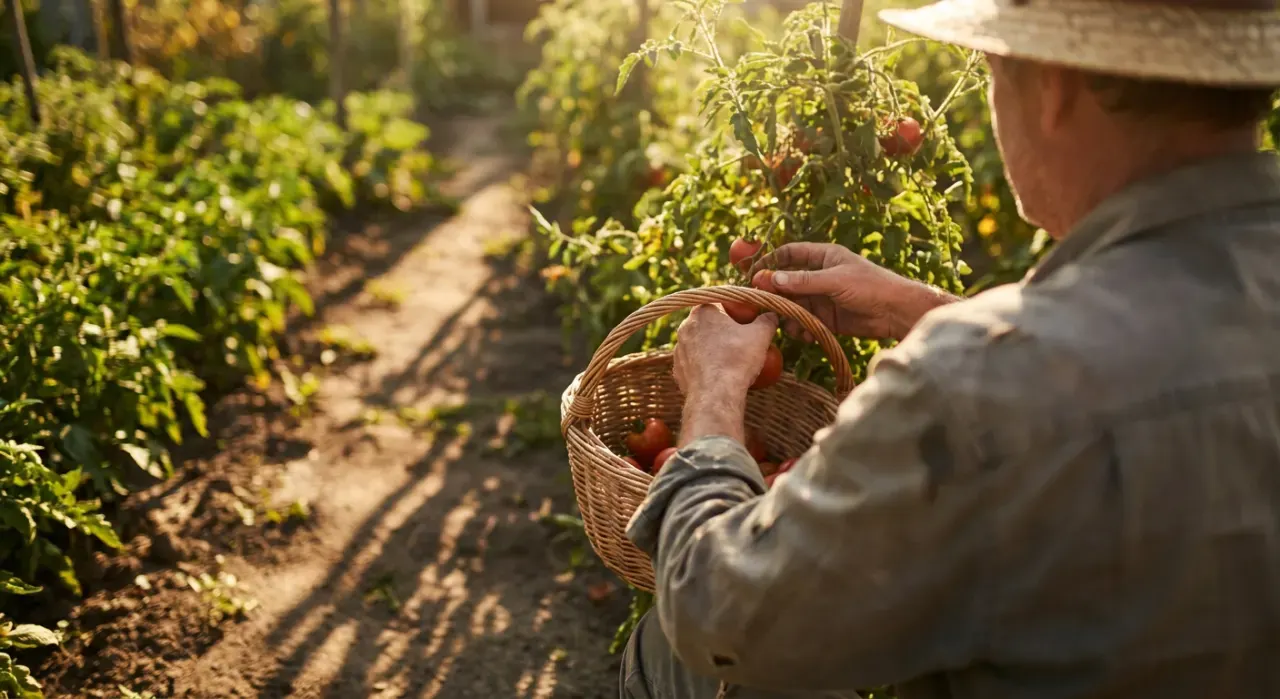
Plant late in the afternoon or on an overcast day, never at midday in full sun — you want the plant to get a cool evening to recover in before it faces its first full day. Water the seedlings thoroughly an hour beforehand so the root ball holds together and comes out of the cell in one piece.
Handle by the leaves and the root ball, never the stem; a crushed stem is unrecoverable while a torn leaf is trivial. Set most crops at the depth they were growing — tomatoes are the exception and can be buried up to their lowest leaves, or laid in a shallow trench with the top few inches curved upward, because they root from the buried stem. Firm the soil gently to remove air pockets, then water in thoroughly, which settles the soil around the roots as much as it hydrates.
Watch the forecast for the following ten days. A row cover, a cloche or an upturned bucket over each plant on the one unexpected cold night costs nothing. And keep an eye on moisture — new transplants have a small root ball in a large bed and dry out faster than established plants for the first two weeks, which is where how often to water a vegetable bed picks up.
Which Seedlings Need This Most
Everything raised indoors or bought from a greenhouse bench benefits, but the need scales with how sheltered the plant has been and how tender the crop is. Peppers, eggplant, basil and melons need the full ten days. Tomatoes and cucurbits do well on seven. Brassicas, lettuce and onions are tough enough to manage on four or five. Nursery plants that have been sitting outdoors on a garden center rack for a week are already part-hardened, though the ones just wheeled out of a heated greenhouse that morning are not — and the two look identical.
Crops you direct sowed need none of this at all, which is one of the underrated arguments in direct sow vs transplant. A carrot or a bean germinating in the bed hardens itself as it grows.
We do not buy, test or physically handle any product on this site. Rankings come from aggregated owner reviews and horticultural consensus — see how we rank.
More from this hub: Seeds & Vegetable Growing · How to start seeds indoors · Why seedlings get leggy · When to start seeds by zone · Best seed starting kits · How we rank