 Garden
Affiliate Disclosure
Some links on this page are affiliate links. As an Amazon Associate, we earn from qualifying purchases — at no extra cost to you. We do not buy, test, or physically handle the products we cover; our rankings come from aggregated owner reviews, ratings and expert consensus. Commissions never change our verdicts. How we rank · full disclosure.
The short answer: caring for tomatoes comes down to six habits — full sun (6 to 8 hours), deep and consistent watering, staking or caging from the start, mulching, stage-appropriate feeding, and pruning suckers on indeterminate types. Do those consistently and you head off the common problems (blossom end rot, cracking, disease) before they start. The through-line of all tomato care is consistency: steady water, steady food, steady support. The wild swings — feast-or-famine watering, a growth spurt of nitrogen, a plant left to sprawl — are what cause most trouble.
Tomatoes are not difficult, but they are demanding, and a plant that gets attention weekly outperforms one left to fend for itself by a wide margin. This is the season-long routine. We do not test the products we rank; our picks come from aggregated owner reviews and expert consensus, explained in how we rank.
Know your type: determinate vs indeterminate
Almost every care decision hinges on which kind of tomato you have, so establish this first.
| Trait | Determinate (bush) | Indeterminate (vining) |
|---|---|---|
| Growth | Stops at a set height (3 to 4 ft) | Keeps growing until frost (6 ft or more) |
| Harvest | One concentrated crop | Steady fruit all season |
| Pruning suckers | No — reduces the crop | Yes — improves size and airflow |
| Support | Standard cage | Tall stake, string, or heavy cage |
| Best for | Canning, small spaces, containers | Fresh eating over a long season |
The seed packet or plant tag will say which it is. Paste and canning types are often determinate; most beefsteaks and cherries are indeterminate.
Sun and site for tomatoes
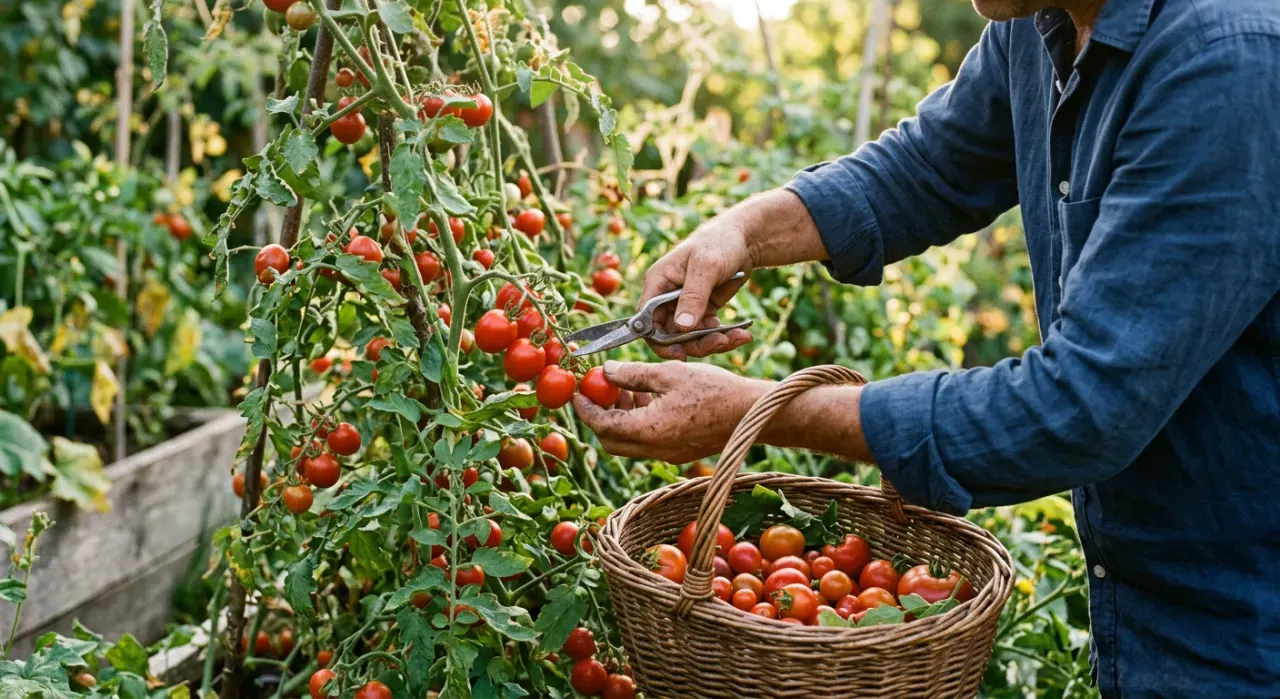
Tomatoes are full-sun plants. Give them a minimum of 6 hours of direct sun and, ideally, 8 or more — more light means more and sweeter fruit. A poor, shady spot produces leggy plants and disappointing yields no matter how well you feed and water. In the hottest southern climates, light afternoon shade during extreme heat can actually improve fruit set, because tomatoes stop setting when it gets too hot, but everywhere else, maximize sun. Space plants 18 to 36 in apart depending on type so air moves freely between them, which is your first line of defense against disease.
Watering tomatoes
Consistent, deep watering is the foundation of tomato care and the fix for the most common disorders. Aim for about 1 to 1.5 in of water per week (more in heat), delivered in deep soaks two or three times a week rather than daily sprinkles, so roots grow deep and drought-tough. Water at the base, in the morning, keeping foliage dry to reduce fungal disease. The wet-dry swings that come from erratic watering are what cause blossom end rot and cracked fruit, so steadiness matters more than volume. Container tomatoes dry out much faster and often need daily water. For the full breakdown, see how often to water tomatoes.
Feeding tomatoes through the season
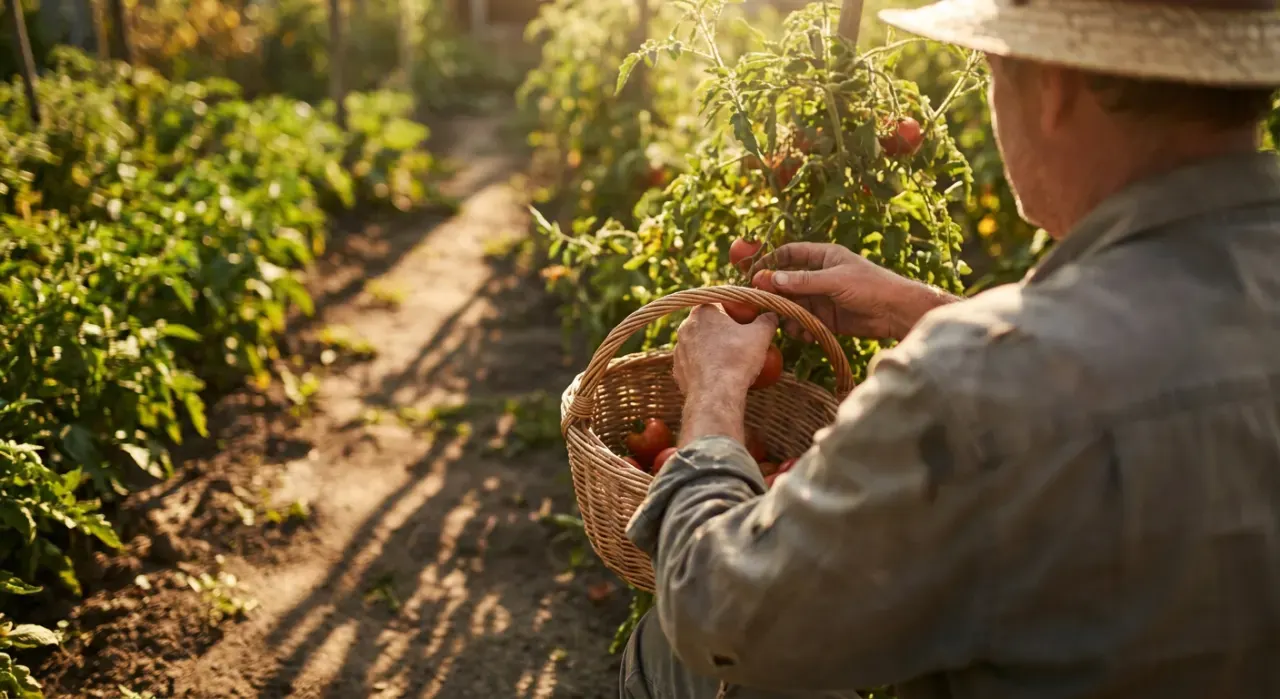
Tomatoes are heavy feeders whose nutritional needs shift as they grow. Early on, moderate nitrogen builds the plant; once flowering starts, switch to a lower-nitrogen, higher phosphorus and potassium formula to drive fruit rather than foliage. Feeding high nitrogen all season is the classic mistake that grows a lush, fruitless jungle. Work compost and a balanced fertilizer into the soil at planting, then side-dress or liquid-feed a fruiting formula every three to four weeks once flowers appear. The complete feeding plan, including NPK stages, is in best fertilizer for tomatoes.
Staking, caging and mulching
Support tomatoes from planting time, before the roots spread, so you can install stakes or cages without damage and the plant grows up rather than sprawling. Indeterminate types need serious support — a tall sturdy stake, a string trellis, or a heavy-gauge cage; the flimsy conical store cages buckle under a mature vine. Tie stems loosely with soft ties as they grow, checking every week or two.
Mulch is the quiet workhorse of tomato care. A 2 to 3 in layer of straw or shredded leaves over the root zone conserves moisture, evens out soil temperature, suppresses weeds, and — importantly — blocks soil-borne fungal spores from splashing up onto the lowest leaves, one of the main ways disease starts. Keep mulch pulled an inch back from the stem. See best mulch for a vegetable garden for materials.
Pruning suckers
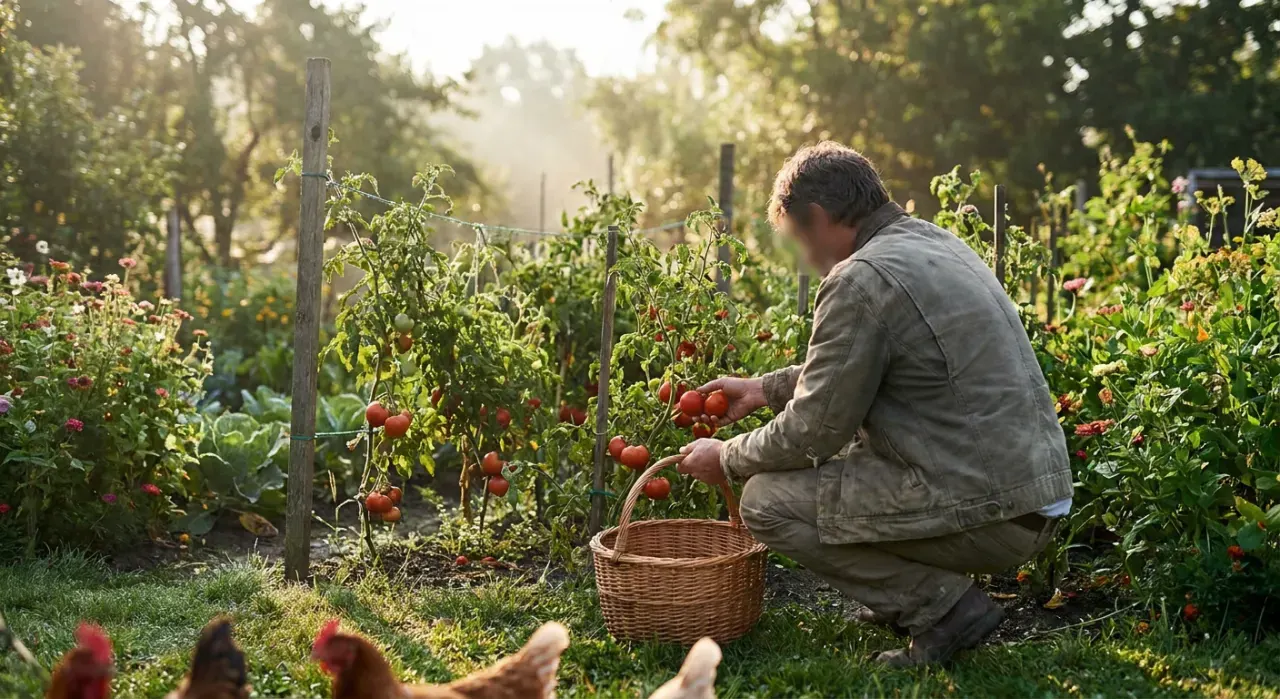
On indeterminate tomatoes, pruning suckers — the shoots that sprout in the joint between the main stem and a branch — pays off. Removing them channels energy into fewer, larger fruit, improves airflow, and keeps the plant trainable on a stake. Pinch small suckers out with your fingers when they are a few inches long; larger ones can be snapped off cleanly. Also strip the lowest leaves so none touch the soil. Do not prune determinate types — they fruit on a fixed frame and removing growth cuts your harvest. Never remove more than about a third of the foliage at once, and prune on a dry day to let wounds heal.
Pollination and fruit set
Tomatoes are self-pollinating, but they rely on wind or insect vibration to shake pollen loose. In still air, a screened porch, or a greenhouse, fruit set can suffer, so gently shaking the flowering stems or tapping the stake every couple of days helps. The bigger fruit-set problem is temperature: pollen goes sterile when nights stay above about 75°F or days exceed 90°F, causing flower drop during heat waves. This resolves on its own when temperatures moderate. Excess nitrogen and drought stress also reduce fruit set, so keep feeding balanced and water steady.
Preventing common problems
| Problem | Cause | Prevention |
|---|---|---|
| Blossom end rot | Uneven watering blocking calcium | Consistent moisture; mulch |
| Cracked fruit | Heavy water after drought | Steady watering; mulch |
| Leaf curl | Heat, uneven water, or variety trait | Even water; usually not serious |
| Early blight (brown leaf spots) | Fungus splashing from soil | Mulch; water at base; space plants; strip low leaves |
| Flower drop | Extreme heat or excess nitrogen | Wait out heat; balanced feeding |
| Yellow lower leaves | Often overwatering or age | Check soil moisture; remove old leaves |
For the two problems that worry growers most, dig into what causes blossom end rot on tomatoes and why are my tomato leaves curling. Everything else is at the seeds and vegetable growing hub.