 Garden
Affiliate Disclosure
Some links on this page are affiliate links. As an Amazon Associate, we earn from qualifying purchases — at no extra cost to you. We do not buy, test, or physically handle the products we cover; our rankings come from aggregated owner reviews, ratings and expert consensus. Commissions never change our verdicts. How we rank · full disclosure.
The short answer: to grow tomatoes in pots, use a large container — at least 15 to 20 gallons for full-size varieties, 5 to 10 for compact ones — filled with quality potting mix (never garden soil). Plant deep, add a cage or stake at planting, place the pot in 6 to 8 hours of full sun, and water thoroughly whenever the top inch of mix dries, which in summer means daily. Feed with a diluted tomato fertilizer every 1 to 2 weeks once flowering begins. The two things that kill container tomatoes are pots that are too small and inconsistent watering.
Container growing lets anyone with a sunny balcony or patio grow real tomatoes, and it gives you control the ground never does — better soil, faster spring warming, and the ability to move plants out of a late frost. The catch is that a pot is a small, fast-draining world, so water and food run out quickly. Manage those and pot tomatoes rival anything in the garden.
Container size: the make-or-break decision
The most common container-tomato failure is a pot that is too small. Roots need soil volume, and soil volume is your buffer against drought stress. Match the pot to the plant type:
| Tomato type | Minimum pot size | Rough dimensions |
|---|---|---|
| Dwarf / patio (Tiny Tim, Tumbling Tom) | 5–7 gallons | 12–14 in wide and deep |
| Determinate / bush (Celebrity, Patio) | 10 gallons | 16 in wide and deep |
| Indeterminate / full-size (Sungold, beefsteaks) | 15–20 gallons | 18–24 in wide and deep |
One tomato plant per pot — do not crowd two into a container. Fabric grow bags, plastic nursery pots, half whiskey barrels, and 5 gallon buckets all work as long as they hit the size target and have drainage holes. If your container lacks holes, drill several; standing water rots roots fast.
Use potting mix, never garden soil
Fill pots with a quality potting mix, not garden soil or topsoil. Garden soil compacts in a container, drains poorly, and can carry disease. A peat- or coir-based mix with perlite gives the drainage and air pockets roots need. Blend in a few handfuls of compost for fertility and a slow-release fertilizer at planting.
Tomatoes like slightly acidic conditions, pH 6.0 to 6.8, which most bagged mixes already provide. Do not reuse last year's spent mix straight — refresh it with new mix and compost, since old mix compacts and its nutrients are gone.
Planting Tomatoes Deep and Adding Support
Plant tomatoes deep — bury the stem up to the first set of leaves, or lay a leggy transplant sideways in a trench. Tomatoes grow roots all along a buried stem, and a bigger root system means a stronger, more drought-resistant plant, which matters even more in a pot.
- Fill the pot to within a few inches of the rim with moist mix.
- Pinch off the lower leaves and set the plant deep, firming mix around the stem.
- Install a cage or stake now, before roots fill the pot — adding support later damages roots.
- Water in thoroughly to settle the mix.
Even determinate tomatoes get heavy with fruit, so support is not optional. See the best tomato cages roundup for options that fit containers.
Sun and Placement for Potted Tomatoes
Tomatoes need 6 to 8 hours of direct sun to fruit well; less than 6 and you get a leafy plant with few tomatoes. The advantage of pots is mobility — put them where the sun is, and reposition through the season as the sun angle changes. In extreme heat above 95°F, a bit of afternoon shade actually helps fruit set, and being able to slide a pot into shade is a container-only luxury. Group pots together to shade each other's soil and slow moisture loss, but keep enough airflow between plants to discourage disease.
Watering: the daily job
Water is where container tomatoes are won or lost. Potting mix dries far faster than ground soil, so in summer heat expect to water once a day, sometimes twice for a large plant. Water thoroughly until it runs from the drainage holes, wetting the whole root ball, then let the top inch begin to dry before watering again — but never let the pot dry out fully.
Inconsistent watering is the direct cause of two classic problems: blossom end rot (a dark sunken patch on the fruit bottom, from calcium not reaching the fruit when water swings) and cracked or split fruit (from a dry-then-soaked cycle). A thick mulch on the soil surface, a saucer reservoir, or a self-watering container all even out the swings and can buy you a day between waterings. For the mechanism behind cracking and end rot, see what causes blossom end rot.
Feeding on a schedule
Because frequent watering leaches nutrients out of the mix, container tomatoes need regular feeding. Work a slow-release granular fertilizer into the mix at planting, then start liquid feeding once the first flowers appear: a diluted tomato fertilizer every 1 to 2 weeks. Choose a formula with more phosphorus and potassium than nitrogen — high nitrogen produces a lush plant and few tomatoes. Watch the leaves: pale lower leaves signal it is time to feed; dark green leaves with no fruit signal too much nitrogen. Compare formulas in the best organic fertilizer for tomatoes roundup.
Choosing the right container material
The pot material affects how often you water and how the roots fare in heat.
| Material | Pros | Cons |
|---|---|---|
| Fabric grow bag | Excellent drainage and air-pruning; roots stay cool; cheap | Dries out fastest; needs more frequent watering |
| Plastic / resin | Retains moisture; lightweight; affordable | Can overheat roots in full sun; ensure drainage holes |
| Glazed ceramic | Holds moisture; stable and attractive | Heavy; can crack in hard freezes |
| Terracotta | Breathable, classic look | Dries out fast; heavy; can crack |
| Half whiskey barrel | Large volume; steady moisture; great for full-size plants | Bulky and heavy to move |
Whatever you choose, drainage holes are mandatory and light-colored pots stay cooler than dark ones in blazing sun. In very hot climates, avoid thin black plastic in full afternoon sun, which can cook the root ball; a fabric bag or a lighter color keeps roots in a safer range.
Pruning, problems, and harvest
Indeterminate tomatoes in pots benefit from light pruning — pinch out the suckers (shoots in the leaf-stem junctions) to keep the plant open and manageable and to direct energy into fruit. Determinate types need little or no pruning; removing too much cuts your yield. The full method is in how to prune tomatoes.
| Problem | Likely cause | Fix |
|---|---|---|
| Blossom end rot | Uneven watering; calcium not reaching fruit | Water consistently; mulch; steady feeding |
| Cracked fruit | Dry-then-flooded cycle | Keep mix evenly moist; harvest before heavy rain |
| Leafy plant, no fruit | Too much nitrogen or too little sun | Switch to low-nitrogen feed; move to more sun |
| Wilting despite watering | Pot too small; root-bound | Up-pot next time; water more often; add mulch |
| Yellowing lower leaves | Nutrients leached out | Begin or increase liquid feeding |
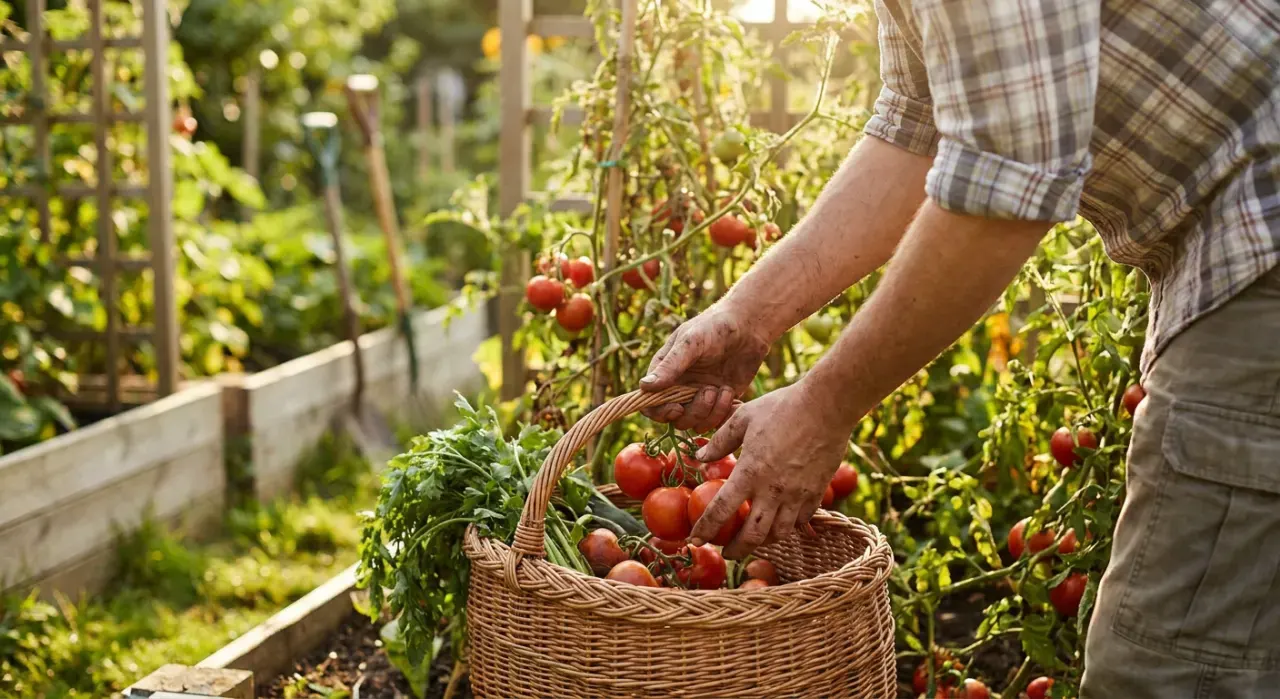
Harvest tomatoes when fully colored and slightly soft to the touch; picking regularly encourages more. Choose the right variety for your space — compact determinate and dwarf types are far more manageable than a sprawling indeterminate in a pot.
Best Tomato Varieties for Pots
Variety choice matters more in a pot than in the ground, because a rampant indeterminate plant will constantly outgrow its root space. Match the plant to the container:
- Dwarf and micro-dwarf ('Tiny Tim', 'Micro Tom', 'Red Robin'): stay under 12 to 18 inches, ideal for small pots and windowsills.
- Hanging basket types ('Tumbling Tom', 'Tumbler'): trail over the edge, perfect for baskets and railing planters.
- Compact determinate ('Patio', 'Bush Early Girl', 'Better Bush', 'Celebrity'): bush plants bred for pots that fruit over a defined window with minimal staking.
- Cherry and grape ('Sungold', 'Sweet 100'): technically indeterminate and vigorous, but so productive they earn their keep in a 15 to 20 gallon pot with strong support.
Avoid large indeterminate beefsteaks in anything under 20 gallons; they can be done, but the constant thirst and heavy support needs make them the hardest way to succeed with pot tomatoes.
Getting through the whole season
Container tomatoes reward a little end-of-season management. As nights cool in early fall, stop feeding and let the plant put its energy into ripening the fruit it has. If an early frost threatens, the pot's mobility is your ace — wheel it into a garage or against a warm south wall overnight, or pick the mature green tomatoes and ripen them indoors on a counter. Do not refrigerate green tomatoes, which stops ripening. At season's end, empty the spent mix (do not reuse it straight for next year's tomatoes, which invites disease carryover), scrub the pot, and store it. Refresh with new mix and compost next spring, and rotate to a different crop or fresh mix to keep soilborne problems from building up.
For getting your transplants started right, see when to plant tomatoes and the full seeds and vegetable growing hub. All our product recommendations come from aggregated owner reviews and expert consensus, never first-hand testing — see how we rank.