 Garden

Affiliate Disclosure
Some links on this page are affiliate links. As an Amazon Associate, we earn from qualifying purchases — at no extra cost to you. We do not buy, test, or physically handle the products we cover; our rankings come from aggregated owner reviews, ratings and expert consensus. Commissions never change our verdicts. How we rank · full disclosure.
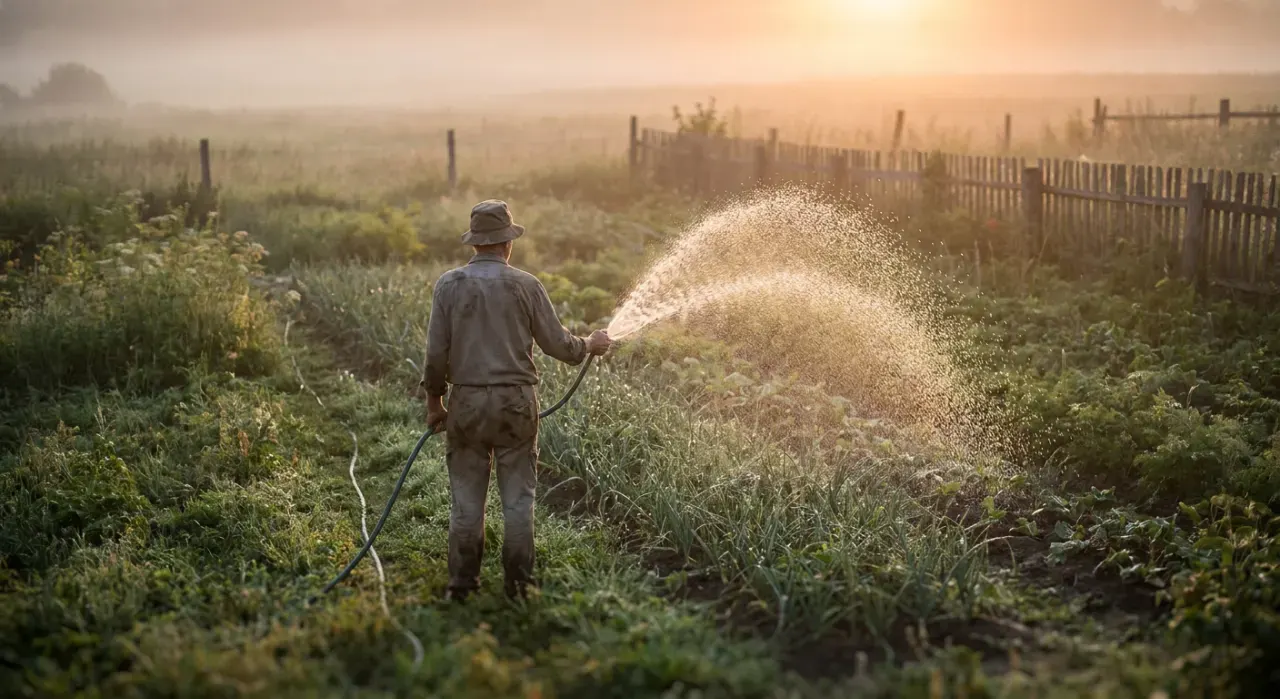
The short answer: the best time of day to water plants is early morning, roughly between 5 and 10 am. Watering then gives plants a full drink before the heat of the day, lets the water soak deep into the soil instead of evaporating, and allows foliage to dry quickly in the morning sun — which sharply reduces fungal disease. If mornings are impossible, late afternoon or early evening is the second choice, provided leaves dry before nightfall. The worst routine is watering at night, which leaves foliage wet for hours and invites disease.
When you water turns out to matter almost as much as how much. The same amount of water delivered at the right time reaches roots efficiently and keeps plants healthy; delivered at the wrong time it either evaporates away or sits on leaves breeding disease. The good news is the rule is simple and applies to nearly everything you grow. This guide explains why morning wins, when the alternatives make sense, and how timing interacts with how deeply and often you water.
Why early morning is best
Three separate advantages stack up in the early morning, which is why it is the near-universal recommendation.
- Low evaporation. Cool morning air and soil mean far more of the water soaks in and reaches the roots instead of evaporating off the surface.
- Plants are hydrated for the heat. Watering before the day warms up fills the plant's tank so it can handle the midday and afternoon stress without wilting.
- Foliage dries fast. Any water that lands on leaves dries quickly in the morning sun, giving fungal spores no time to establish.
Deep, morning watering also encourages roots to grow downward toward the moisture, building a more drought-resilient plant. This is the foundation of efficient watering, and it pairs with the right delivery method — drip and soaker systems put water at the base where it belongs. See best drip irrigation kit and best soaker hose. We rank products on aggregated owner reviews, not in-house testing, as explained in how we rank.

The full ranking of watering times
Every part of the day has trade-offs. Here they are in order.
| Time | Rating | Why |
|---|---|---|
| Early morning (5 to 10 am) | Best | Low evaporation, hydrated for the heat, leaves dry fast |
| Late afternoon (4 to 6 pm) | Good | Cooler; leaves can still dry before dark if you finish early |
| Midday (11 am to 3 pm) | Wasteful | High evaporation; inefficient but does not scorch leaves |
| Night (after dark) | Worst routine | Wet foliage all night invites fungal disease |
Two myths cloud this. First, midday water does not burn leaves — the lens-effect claim has been tested and does not hold for garden plants; midday is simply wasteful, not harmful. Second, night watering does not harm the plant's ability to drink; the problem is purely the prolonged leaf wetness that breeds disease.
When evening watering is fine
Life does not always allow a morning routine, and evening is a reasonable fallback if you manage it right.
- Water early enough that foliage dries before nightfall — aim for late afternoon rather than after dark.
- Water at the base of the plant, keeping leaves dry, using a soaker hose, drip line, or a careful hand-water at soil level.
- Prioritize disease-prone plants for morning — tomatoes, roses, squash, and anything that gets powdery mildew or blight should be watered in the morning if at all possible.
A hose timer makes an automatic early-morning schedule effortless even if you are asleep — see best hose timer.
Timing works with depth and frequency
The best time of day only pays off if you also water deeply and not too often. Shallow daily watering keeps roots at the surface where they dry out fast; deep, less frequent watering drives roots down.
- Water deeply. Soak the root zone thoroughly so moisture penetrates several inches, rather than wetting just the surface.
- Water less often. Let the top inch or two of soil dry between waterings for most established plants — check the soil, not the calendar.
- Adjust for weather. More in heat waves and wind, less in cool or humid spells and after rain.
For how much to give a garden, see how much to water a garden.
Timing by plant type
The morning rule holds across the board, but frequency and delivery vary.
| Type | Best practice |
|---|---|
| Containers and pots | Water most mornings in summer; they dry fastest, and a hot day may need a second check |
| Vegetable garden | Morning, at the base, deep soak; keep foliage dry |
| Lawn | Early morning, deep, a couple of times a week — see the lawn-specific guide |
| Established shrubs and trees | Deep, infrequent morning soaks; rarely need daily water |
Potted plants are the exception that most tests your discipline — they dry out fast, so a summer morning watering is often non-negotiable. See best time of day to water potted plants and, for turf, best time of day to water lawn.
Making every watering count
Right timing also saves water, which matters most where it is scarce or costly.
- Mulch beds 2 to 3 inches deep to slow evaporation and hold morning moisture through the day.
- Use drip or soaker systems on a morning timer to deliver water precisely and efficiently.
- Capture rainwater for the dry stretches with a rain barrel.
- Group plants by water need so each zone gets the right amount — the core of drought tolerant landscaping.
Watering in the early morning is the single easiest habit that improves plant health, cuts waste, and prevents disease all at once. Combine it with deep, infrequent soaking and base-level delivery, and you give your plants exactly what they need with the least water and the fewest problems. For the full range of hoses, sprinklers, timers, and drip gear, browse the watering and irrigation hub.