 Garden
Affiliate Disclosure
Some links on this page are affiliate links. As an Amazon Associate, we earn from qualifying purchases — at no extra cost to you. We do not buy, test, or physically handle the products we cover; our rankings come from aggregated owner reviews, ratings and expert consensus. Commissions never change our verdicts. How we rank · full disclosure.
To get rid of dust in the house, clean top to bottom with tools that trap dust rather than scatter it, then attack the sources: upgrade the furnace filter, run a HEPA vacuum and air purifier, control humidity, and cut down on dust-shedding textiles. The reason a house stays dusty despite regular cleaning is almost always method plus sources — dry dusters relaunch particles into the air, and hidden reservoirs in carpet, filters and fabrics keep refilling the room faster than you empty it.
Household dust is mostly dead skin, fibers, pet dander, tracked-in soil, pollen and dust mite debris. Because most of it is generated inside, controlling the sources beats cleaning harder. We do not test products first-hand; our picks come from aggregated owner reviews and expert consensus, described in how we rank.
Use tools that trap, not scatter
The most common mistake is using dry cloths and feather dusters that fling particles into the air, where they float for hours and resettle. Switch to tools engineered to hold onto dust.
| Tool | Why it works | Avoid instead |
|---|---|---|
| Microfiber cloth, lightly damp | Static and fine fibers grip dust; damp locks it in | Dry cotton rag |
| Electrostatic or microfiber duster | Attracts and holds particles | Feather duster |
| HEPA-filter vacuum, sealed body | Traps fine dust instead of exhausting it | Bagless unit with poor filtration |
| Damp microfiber mop | Picks up floor dust without kicking it up | Dry sweeping |
A vacuum without true HEPA filtration and a sealed body can blow the finest, most irritating particles straight back into the room, which is why cheap vacuums can leave a house dustier-feeling than before. For the ranked field see the vacuums and floor care hub.
Clean in the right order: top to bottom
Gravity is on your side only if you work with it. Always clean high surfaces first so anything you dislodge falls onto surfaces you have not cleaned yet.
- Start at the ceiling. Fan blades, light fixtures, the tops of tall cabinets and door frames, crown molding and vents.
- Work down to mid-height. Shelves, picture frames, electronics, windowsills and blinds.
- Do soft furnishings next. Vacuum upholstery, curtains and mattresses; these are huge dust reservoirs.
- Vacuum floors last. By now everything you knocked loose has landed on the floor, so this pass captures it.
- Damp-mop hard floors. A final damp pass lifts the fine residue a vacuum leaves.
Dust with a lightly damp microfiber cloth rather than dry, and rinse it often so you are removing dust rather than smearing it around.
Cut the sources of dust
Cleaning removes dust; source control stops it forming. This is where lasting reductions come from.
- Upgrade and change your furnace filter. A quality pleated filter (MERV 8 to 13, whatever your system tolerates) pulls dust from the air every time the system runs. A clogged or low-grade filter is one of the biggest hidden dust sources. See how often to change a furnace filter.
- Stop dust at the door. Most tracked-in dust comes on shoes. Use a coarse outdoor mat plus a washable indoor mat, and consider a shoes-off rule; studies of household dust consistently find outdoor soil is a major component.
- Reduce dust-shedding textiles. Carpet, heavy drapes, upholstered furniture and throw blankets all shed fibers and hold dust. Hard flooring and washable rugs are far easier to keep dust-free.
- Wash bedding weekly in hot water. The mattress and bedding zone is a primary dust mite habitat.
- Groom pets and vacuum their zones. Dander is a large share of dust in pet homes.
Filter and move the air
Much of what becomes settled dust starts as airborne particles. Removing them before they land cuts the whole cycle.
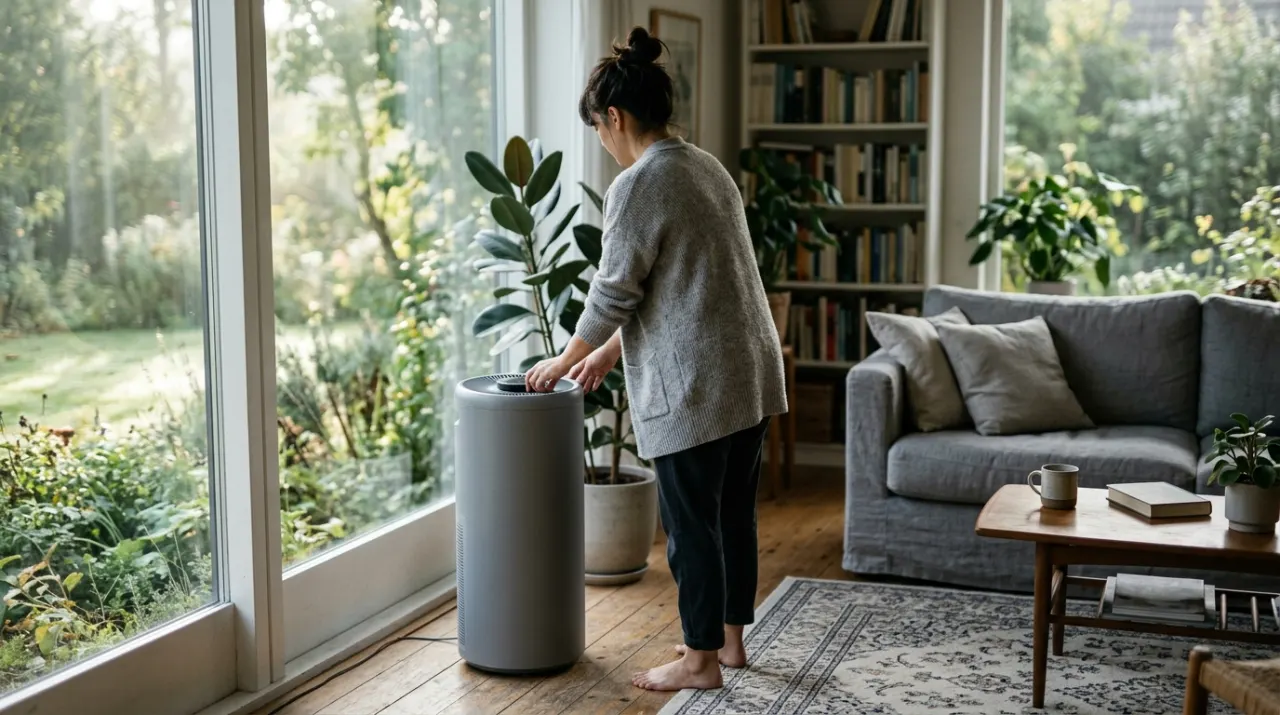
A true HEPA air purifier, sized to the room by its CADR rating and run continuously, measurably lowers airborne particle counts and the amount that settles on surfaces. Put it where you spend the most time — usually the bedroom and the main living area. It will not remove dust already on shelves or in carpet, so treat it as a partner to cleaning, not a replacement. The dust-focused picks are in best air purifier for dust, and the general field is in best air purifiers.
Get the humidity right
Air that is too dry keeps fine particles floating and worsens static cling; air that is too humid feeds dust mites. The sweet spot is a relative humidity of 30 to 50 percent.
| Humidity | Effect on dust |
|---|---|
| Below 30 percent (dry winter air) | Particles stay airborne longer; static cling worsens |
| 30 to 50 percent (target) | Particles settle and are captured; mites discouraged |
| Above 50 percent | Dust mites and mold thrive, adding to allergen load |
A simple hygrometer tells you where you stand. Add a humidifier in dry winter months or a dehumidifier in damp seasons to hold the band. See best humidity level for a house for the full targets.
A realistic dusting schedule
Consistency beats intensity, because dust reservoirs rebuild within days. A light, regular rhythm keeps the airborne load lower than an occasional marathon clean.
| Frequency | Tasks |
|---|---|
| Weekly | Dust hard surfaces with damp microfiber; vacuum carpets and rugs (twice in pet or high-traffic homes); damp-mop hard floors |
| Monthly | Ceiling fan blades, tops of door frames and cabinets, vents and returns, baseboards, behind accessible furniture; vacuum upholstery |
| Quarterly | Wash or vacuum curtains and drapes; clean under and behind large furniture and appliances; wash washable rugs |
| Seasonally | Replace or wash HVAC filter (monthly if you have pets); rotate and vacuum mattresses; clean closets |
Two habits amplify the whole schedule. Dust top to bottom every time so gravity works for you, and always finish with the floors. And keep the microfiber cloths and vacuum filter clean — a saturated cloth just smears dust around, and a clogged vacuum filter blows fine particles back into the room. Working this rhythm keeps a house genuinely dust-controlled rather than trapped in a cycle of cleaning hard and staying dusty.
Don't forget the hidden dust traps
Dust concentrates in places routine cleaning skips, and these reservoirs feed the visible dust you keep wiping.
- HVAC vents and returns. Vacuum the grilles monthly; they collect and redistribute dust every cycle.
- Behind and under large furniture. Move it a few times a year for a full clean.
- Baseboards and door tracks. Wipe with a damp microfiber cloth.
- Electronics and cords. Screens and warm equipment attract dust; use a soft dry brush and canned air.
- Closets and stored clothing. Folded textiles shed constantly; keep them contained.
A dusty house is rarely one problem — it is method, sources and air working against you together. Fix all three and the difference is dramatic and lasting. For related indoor-air topics see how to improve indoor air quality and do air purifiers help with allergies. Everything else is at the air quality hub.