 Garden

Affiliate Disclosure
Some links on this page are affiliate links. As an Amazon Associate, we earn from qualifying purchases — at no extra cost to you. We do not buy, test, or physically handle the products we cover; our rankings come from aggregated owner reviews, ratings and expert consensus. Commissions never change our verdicts. How we rank · full disclosure.
To improve indoor air quality, work in order of impact: control pollution sources first, ventilate with fresh air second, filter the air with a true HEPA purifier third, and manage humidity to 30 to 50 percent throughout. The EPA ranks source control as the most effective strategy because it stops pollutants before they enter the air, while ventilation and filtration remove what remains. This matters because indoor air can be two to five times more polluted than outdoor air, and most people spend about 90 percent of their time inside.
There is a lot of hype in this space — ozone generators, air-purifying plants, gimmick gadgets — and most of it underdelivers. We do not test products first-hand; our picks come from aggregated owner reviews and expert consensus, described in how we rank. Here is what actually works.
Step 1: Control the sources
The EPA is clear that the single most effective approach is source control — eliminating or reducing what pollutes the air. Every other step is easier when there is less to remove.
- Vent combustion and cooking outside. Gas stoves, ovens and fireplaces produce fine particles and gases; use a range hood that vents outdoors, not just recirculates.
- Do not smoke indoors. Secondhand smoke is one of the most harmful indoor pollutants there is.
- Fix moisture and mold. Damp materials release spores and microbial VOCs; repair leaks and control humidity.
- Choose low-VOC products. Paints, finishes, cleaners and new furniture off-gas volatile organic compounds; pick low-VOC options and ventilate well when using them.
- Reduce dust and pet dander at the source with regular cleaning and grooming; see how to get rid of dust in the house.
Step 2: Ventilate
Fresh air dilutes whatever pollutants remain. Modern homes are built tight for energy efficiency, which saves energy but traps indoor air, so deliberate ventilation matters.
| Method | Best for | Caveat |
|---|---|---|
| Open windows for cross-ventilation | Flushing VOCs and CO2 on clean-air days | Skip during wildfire smoke or high pollen |
| Bathroom and kitchen exhaust fans | Removing moisture and cooking byproducts at the source | Must vent outside, not into the attic |
| Whole-house or ERV/HRV ventilation | Continuous fresh air in tight homes | Higher cost, needs installation |
The exception to open windows is when outdoor air is worse than indoor — during wildfire smoke, high pollution or peak pollen, keep windows closed and rely on filtration. Check your local air quality index first.
Step 3: Filter the air
Filtration removes airborne particles that source control and ventilation miss. There are two layers.
- Upgrade your HVAC filter. A pleated filter rated MERV 8 to 13 (whatever your system tolerates) cleans particles every time the system runs. Change it on schedule — see how often to change a furnace filter.
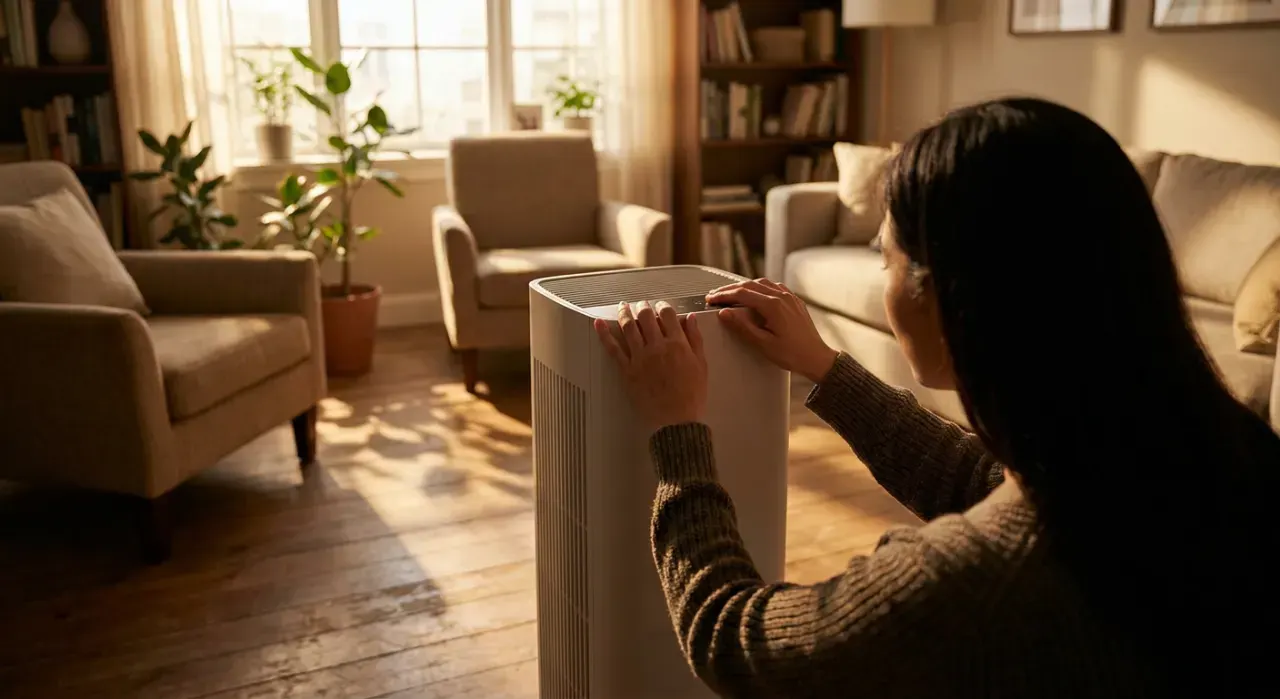
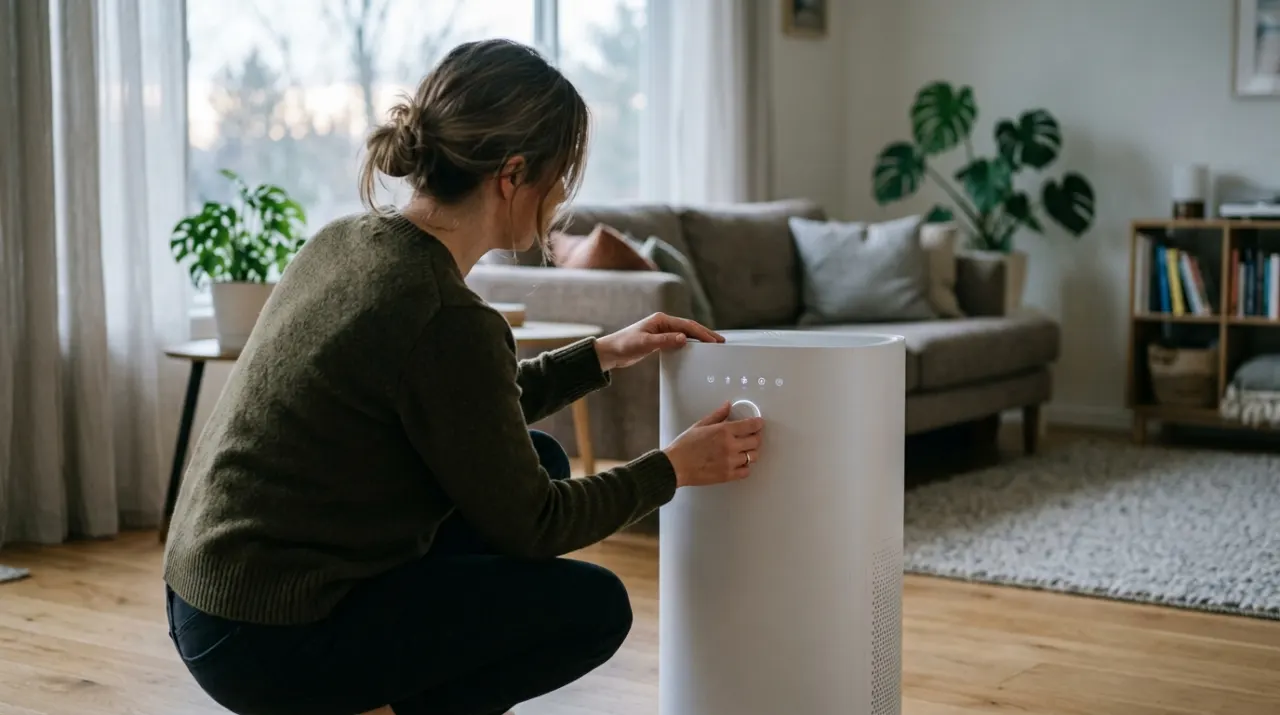
- Add a portable HEPA air purifier in the rooms you use most, sized to the room by its CADR rating and run continuously. A true HEPA filter captures 99.97 percent of 0.3-micron particles, covering allergens, dust and smoke particulates.
For odors and gases, choose a purifier with an activated carbon stage. Avoid ozone generators entirely: the EPA and California Air Resources Board warn that ozone is a lung irritant that worsens air quality in occupied rooms. See best air purifiers and, for allergies specifically, do air purifiers help with allergies.

Step 4: Manage humidity
Humidity is the quiet driver of indoor air problems. Too high feeds mold and dust mites; too low irritates airways and keeps dust airborne. Hold relative humidity at 30 to 50 percent.
Use a hygrometer to measure, a dehumidifier or better ventilation to bring damp rooms down, and a humidifier in dry winter months. The EPA recommends staying below 60 percent to control mold. See best humidity level for a house and how to reduce humidity in a room.
Measure and monitor indoor air quality
You cannot manage what you do not measure. A layered monitoring approach tells you where to focus.
| Tool | What it tracks |
|---|---|
| Indoor air quality monitor | PM2.5, VOCs, CO2, temperature, humidity |
| Carbon monoxide detector | CO from combustion appliances |
| Radon test kit | Radon gas from soil |
| Hygrometer | Relative humidity |
Carbon monoxide and radon deserve special mention because both are invisible and dangerous, and neither is caught by a general air monitor. Every home should have working CO detectors, and every home should be tested for radon — see how to test for radon.
A room-by-room plan to improve indoor air quality
The four steps apply everywhere, but the priorities shift by room. Here is where to put your effort in the spaces that matter most.
| Room | Biggest issue | Priority fix |
|---|---|---|
| Kitchen | Cooking particles and gases | Ducted range hood, run it every time |
| Bedroom | Allergens where you spend a third of your time | HEPA purifier running overnight |
| Bathroom | Moisture and mold | Exhaust fan, run 20 minutes after showers |
| Basement | Radon, humidity, musty air | Radon test, dehumidifier |
| Living room | Dust, dander, VOCs from furnishings | HEPA purifier, regular cleaning |
If you can only do one thing per room, do the one in the priority column — those are the highest-impact moves for each space. The kitchen and bathroom fixes are about removing pollutants and moisture at the source before they spread, which is why ventilation leads there. The bedroom and living room are about filtering the air you breathe most, which is why a purifier leads there. The basement is unique because it holds two invisible hazards, radon and chronic humidity, that no amount of surface cleaning addresses.
Indoor air quality: what is overhyped
Save your money and effort by skipping the things that do not deliver.
- Air-purifying houseplants. Real, but negligible in a normal room. Research shows you would need hundreds of plants per room to match ordinary ventilation. Keep them for the greenery; see best plants for air quality.
- Ozone generators and many ionizers. These can create a harmful pollutant rather than remove one.
- Scented sprays and plug-ins. These mask odors and add VOCs; they do not clean the air.
- Undersized purifiers. A tiny unit in a large room barely moves the needle; size to the CADR.
Do the four real steps in order — source control, ventilation, filtration, humidity — and your indoor air improves in ways you can measure. Everything else is at the air quality hub.