 Garden


Affiliate Disclosure
Some links on this page are affiliate links. As an Amazon Associate, we earn from qualifying purchases — at no extra cost to you. We do not buy, test, or physically handle the products we cover; our rankings come from aggregated owner reviews, ratings and expert consensus. Commissions never change our verdicts. How we rank · full disclosure.
To reduce humidity in a room, run a properly sized dehumidifier, ventilate with exhaust and ceiling fans, use the air conditioner, and remove moisture sources like drying laundry, long hot showers and standing water. The goal is a relative humidity of 30 to 50 percent, the range the EPA recommends staying under 60 percent to prevent mold and dust mites. A dehumidifier is the fastest and most dependable single tool; ventilation and source control keep the moisture from coming back.
Excess humidity is not just uncomfortable — above 60 percent it fuels mold, dust mites and condensation damage. We do not test products first-hand; our picks come from aggregated owner reviews and expert consensus, described in how we rank.
Measure the room's humidity before you act
Fixing humidity blind wastes effort. A cheap digital hygrometer tells you where you stand and whether your fixes are working. Place it centrally, 2 to 6 feet off the floor, away from vents and exterior walls, and check the reading.
| Reading | Status | Action |
|---|---|---|
| 30 to 50 percent | Ideal | Maintain |
| 50 to 60 percent | Elevated | Ventilate, reduce sources |
| Above 60 percent | Too high | Run a dehumidifier, find the source |
Recheck a day after each change so you can tell what actually moved the number. For the full targets see best humidity level for a house.
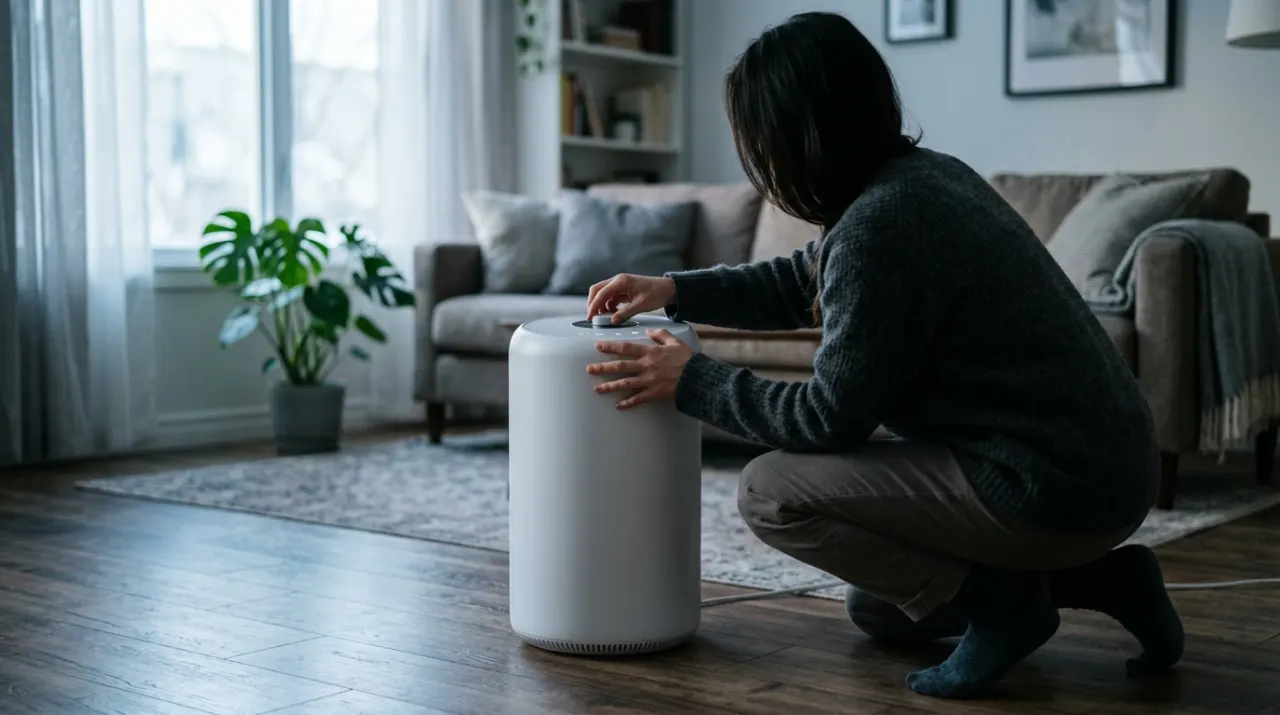
Run a dehumidifier (the reliable fix)
For a persistently damp room, a dehumidifier is the most effective tool by a wide margin. It pulls air across cold coils, condenses out the moisture, and returns drier air, collecting the water in a tank or draining it away.
- Size it to the room and the dampness. Capacity is rated in pints removed per day; a small room needs far less than a wet basement. An undersized unit runs constantly and never catches up.
- Close the door. It should work on the target room, not fight the whole house.
- Set it to 45 to 50 percent for most rooms; lower to dry out a damp basement.
- Handle the water. Empty the tank regularly, or run a hose to a drain for continuous operation.
- Give it airflow. Place it centrally with space around the intake and exhaust.
For the ranked field see best dehumidifiers, and for damp basements specifically, best dehumidifier for a basement.
Ventilate to reduce humidity in the room
Ventilation dilutes humid indoor air with drier air and is free, but it only works when the outdoor air is actually drier than inside.
- Run exhaust fans in bathrooms during and 20 minutes after showers, and in the kitchen while cooking. This removes moisture at the source before it spreads.
- Open windows on dry days. When outdoor humidity is lower than indoor, cross-ventilation flushes moisture out. On muggy or rainy days, keep them closed — you will only import moisture.
- Use ceiling and box fans to keep air moving, which speeds evaporation of surface moisture and helps a dehumidifier or AC work evenly.
- Vent appliances outside. A clothes dryer or range hood that vents indoors dumps large amounts of moisture into the house.
Use the air conditioner
Air conditioning removes humidity as a byproduct of cooling, because moisture condenses on the cold evaporator coil and drains away. In summer, running the AC often keeps a room comfortably dry on its own.
Two tips: keep the AC filter clean so airflow and moisture removal stay strong, and avoid oversized AC units, which cool the room fast but cycle off before removing much humidity, leaving it cool and clammy. A right-sized unit runs longer and dehumidifies better. See the heating and cooling hub for more.
Cut the moisture sources
Every fix above is easier if less moisture is entering the room to begin with. Source control is the quiet half of the job.
| Source | Fix |
|---|---|
| Drying laundry indoors | Use a vented dryer or dry outside |
| Long, hot showers | Shorter showers, run the exhaust fan |
| Cooking without ventilation | Vent range hood outside, cover pots |
| Houseplants over-watered | Water appropriately; group fewer in damp rooms |
| Standing water, aquariums, leaks | Remove, cover, or repair |
| Firewood or damp storage indoors | Store elsewhere |
You can also use moisture absorbers like desiccant products in small enclosed spaces such as closets, though these are a supplement, not a substitute for a dehumidifier in a whole room.

DIY moisture absorbers for small spaces
For a closet, pantry, gun safe, RV or a small enclosed area, a full dehumidifier is overkill. Passive absorbers quietly pull moisture from the air and are cheap to run.
| Absorber | How it works | Best for |
|---|---|---|
| Calcium chloride tubs (store-bought or DIY) | Salt draws moisture and drips into a reservoir | Closets, basements corners, RVs |
| Silica gel packs | Desiccant beads adsorb moisture, rechargeable in an oven | Drawers, safes, camera bags |
| Charcoal briquettes in a tin | Porous carbon soaks up moisture and odor | Small enclosed spaces |
| Rock salt in a bucket | Cheap large-volume absorber | Damp basements as a supplement |
These are supplements, not substitutes. Calcium chloride absorbers are the most effective of the group and are what most commercial moisture-absorber tubs contain; you empty the collected water periodically. Silica gel is reusable — dry the packs in a low oven when they stop working. None of these will dry out a whole damp room the way a powered dehumidifier does, but they are ideal for the small, closed spaces where mold and mustiness start, and they run with no electricity.
When room humidity won't quit
If a room stays humid despite all of the above, the moisture is likely coming from the building itself, and that needs investigation rather than more fans.
- Hidden plumbing leaks behind walls or under floors keep an area damp; look for stains and check for water usage you cannot account for.
- Foundation and basement moisture wicks up through concrete and comes in through cracks; sealing and grading help, and a dedicated basement dehumidifier is usually needed. See what causes a musty basement smell.
- Poor drainage outside — downspouts and grading that send water toward the foundation raise indoor humidity.
- Recurring condensation on windows and walls means the air is chronically too moist for the surface temperatures.
Persistent high humidity eventually shows up as mold, so if you are seeing both, read signs of mold in your home too. Everything else is at the air quality hub.