 Garden

Affiliate Disclosure
Some links on this page are affiliate links. As an Amazon Associate, we earn from qualifying purchases — at no extra cost to you. We do not buy, test, or physically handle the products we cover; our rankings come from aggregated owner reviews, ratings and expert consensus. Commissions never change our verdicts. How we rank · full disclosure.
The short answer: in most American homes, low shower pressure is one of three unrelated problems, and telling them apart takes about five minutes. Either the shower head is clogged with mineral scale, which is the most common cause by a wide margin and costs nothing to fix; or a flow restrictor or blocked inlet screen is choking the fixture; or your supply pressure is genuinely low across the whole house, which is a plumbing problem rather than a shower one. Run this test first: turn on the bathroom sink. If it is strong and the shower is not, the fault is in the shower. If both are weak, it is the house.
How do I tell which problem I have?
Work through it in this order, because each step rules out a whole category and the cheap fixes come first.
| Test | Result | What it means |
|---|---|---|
| Run the bathroom sink | Strong | Problem is the shower head, arm or valve |
| Run the bathroom sink | Weak too | House-wide — regulator, main valve or supply |
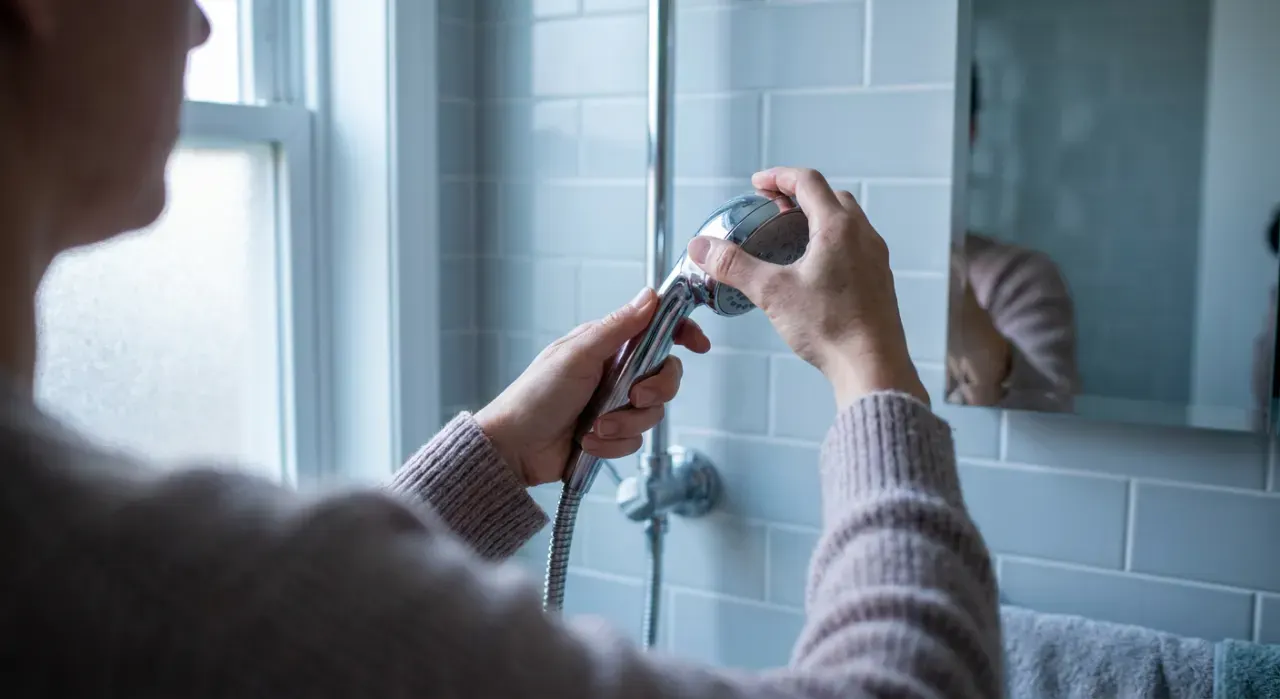
| Unscrew the head, run the bare arm | Gushes | The head is the problem — descale it |
| Unscrew the head, run the bare arm | Still weak | Valve, pipe or supply, not the head |
| Check pressure at a hose bib with a gauge | Under 40 psi | Genuinely low supply pressure |
| Weak on hot only | — | Water heater shutoff partly closed, or a scaled heater |
That third test is the decisive one. Unscrewing the head takes a minute and a wrench, and the answer it gives is unambiguous.
Cause 1: mineral scale in the shower head
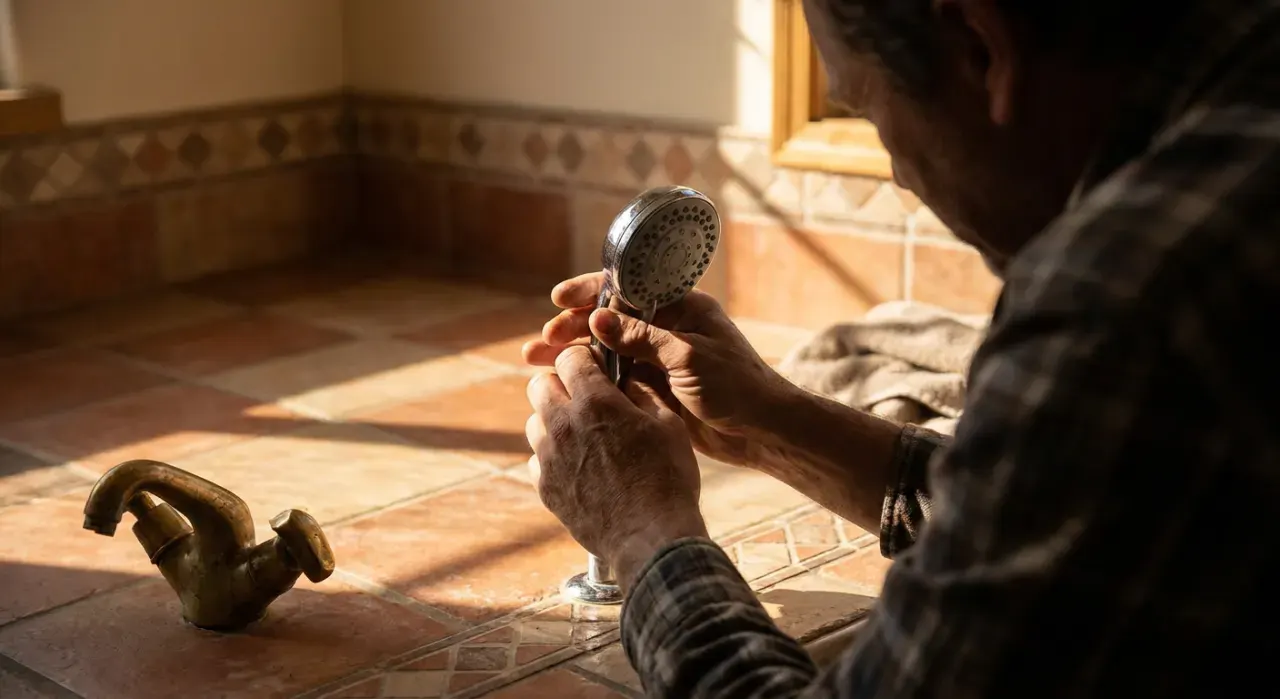
The commonest cause and the cheapest fix. Calcium and magnesium carbonate deposit inside the face plate and internal channels every time water evaporates on the fixture, and after a year or two of hard water the head is spraying through a fraction of its original openings. The symptoms are distinctive: jets pointing sideways, dead patches on the face, dribbling at the edges, and a spray that got worse gradually rather than overnight.
The fix is a soak in undiluted white vinegar — thirty minutes for light buildup, two to four hours for normal, up to eight hours for a badly crusted head — then scrubbing the nozzles and flushing hot. Full method in how to clean a shower head. If your head has soft silicone nozzle tips, rubbing a thumb across the face under running water clears most of it in thirty seconds.
Cause 2: the flow restrictor and the inlet screen
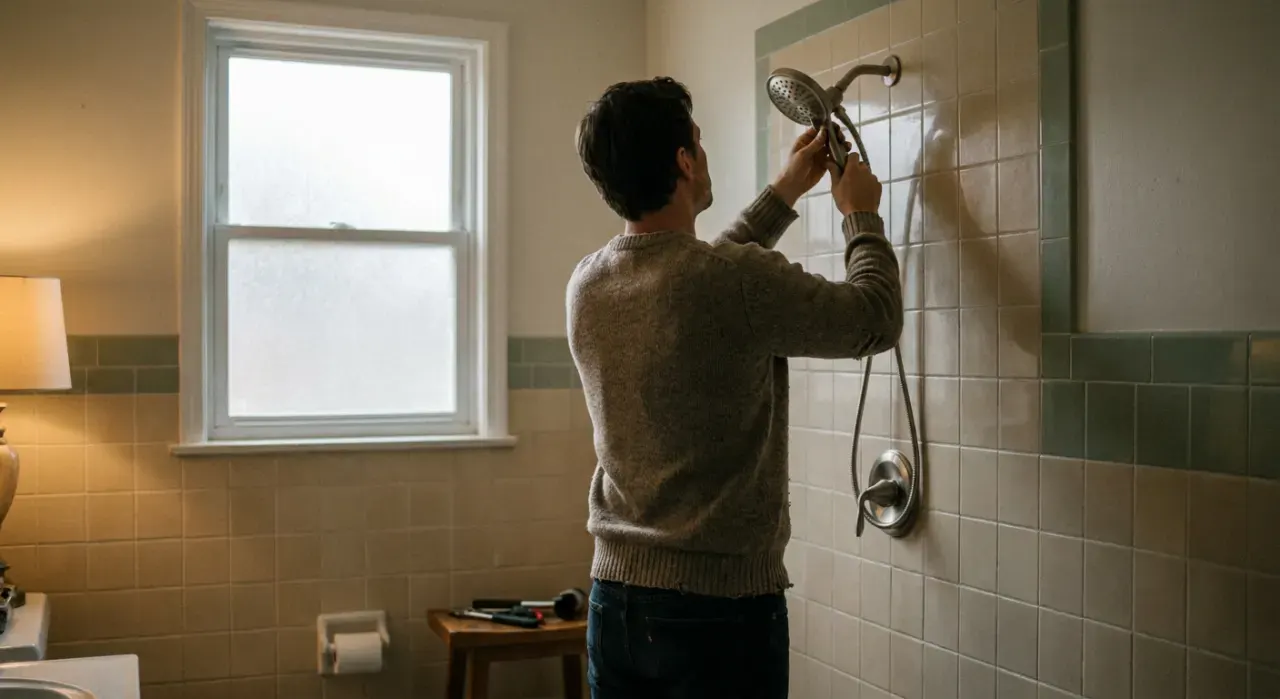
Unscrew the head and look inside the female thread. You will usually find a small mesh screen, and behind it a plastic disc with a small hole — the flow restrictor. The screen is the one to suspect: it catches grit, pipe scale and shredded PTFE tape from a previous install, and a blocked screen strangles a fixture that is otherwise perfect. Rinse it under a hard stream, hold it to the light, and refit it.
The restrictor is a different story, and it is where most of the misunderstanding in this subject lives. Federal law has capped showerheads at 2.5 gallons per minute at 80 psi since 1994, and California, Colorado, New York and Washington are among the states enforcing a stricter 1.8 gpm. Every head sold in the US contains a restrictor to meet that limit. Removing it will not give you the shower you remember from 1985 — most modern heads are engineered around the restricted flow and simply spray unevenly without it — and it voids the warranty. Descale first; consider the restrictor only if a genuinely clean head is still weak.
Pressure or flow? They are not the same thing
This distinction explains almost every disappointing shower head purchase. Pressure is the force in the pipe, measured in psi, and it is a property of your plumbing. Flow is the volume delivered per minute, and it is capped by law. A shower head cannot raise either one.
What a well-designed head can do is change how the same flow feels. Narrower nozzles raise velocity so droplets hit harder. Fewer, better-placed jets concentrate the water instead of spreading it. The EPA WaterSense specification pairs its 2.0 gpm limit with a spray-force performance requirement for exactly this reason — a labeled head has to prove it still feels like a shower. So a head marketed as high-pressure is not exceeding any limit; it is making the permitted flow feel stronger. That is a real engineering difference, and it is worth paying for, but it is not extra water. The honest field is in best high pressure shower head, and the options built for weak supply are in best shower head for low water pressure.
Cause 3: the mixing valve cartridge
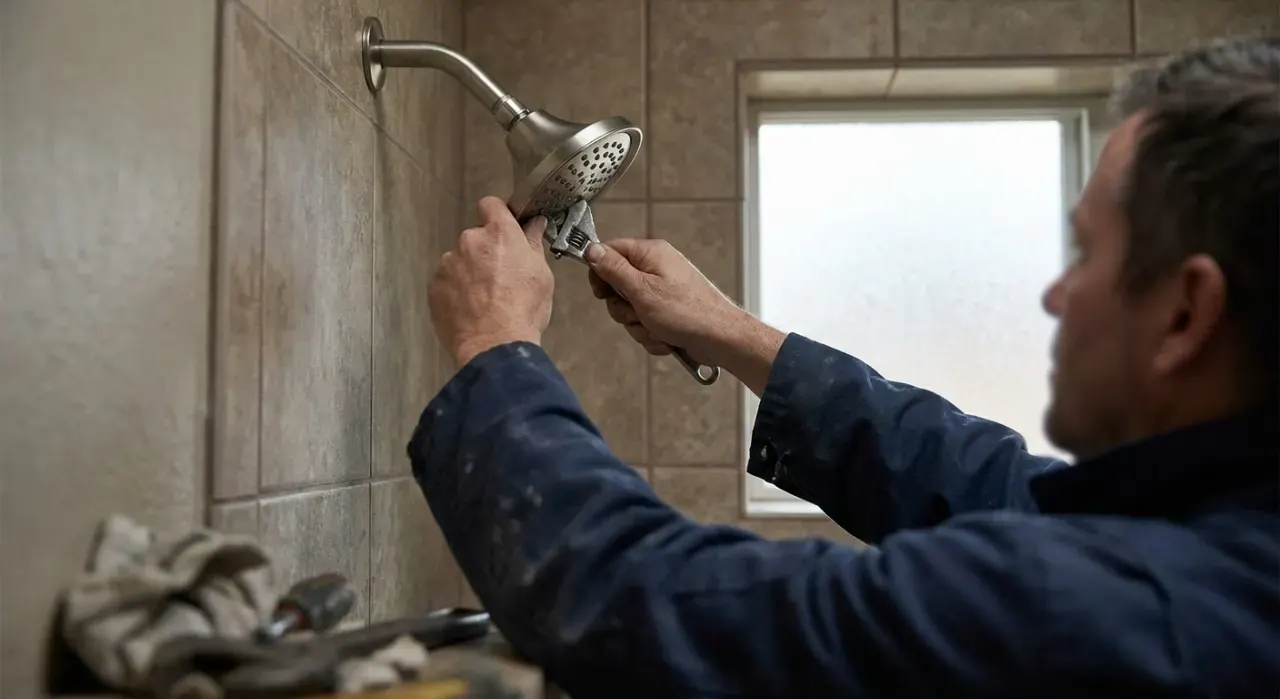
If the bare shower arm gushes but a clean head still delivers a weak spray, or the pressure fell off suddenly rather than gradually, look at the valve behind the wall. The cartridge inside a pressure-balancing shower valve wears and scales, and a partly failed one restricts flow, often on hot more than cold. Two other tells: water that swings hot and cold when a toilet flushes elsewhere in the house, and a handle that has become stiff or vague.
Replacement cartridges cost $15 to $50, are model-specific, and are a genuine DIY job on most Moen, Delta and Kohler valves — shut off the water, pull the handle and trim, extract the cartridge with the puller tool, fit the new one. If your shower has no accessible shutoff and you would have to kill the whole house, or if the valve body itself is corroded, that is the point to call a licensed plumber. Anything requiring opening a wall is a professional job, and in most jurisdictions replacing a valve body needs a permit — codes vary by city, so check yours.
Cause 4: it is the whole house
If the sink is weak too, stop looking at the shower. Check, in order: the main shutoff valve is fully open (partly closed after a repair is a classic), the pressure-reducing valve where the supply enters the building has not failed, and the actual pressure at a hose bib with a twelve-dollar screw-on gauge. Under 40 psi is genuinely low. On a private well, a waterlogged pressure tank or a mis-set pressure switch produces the same symptom. On municipal supply, a sustained drop across the neighborhood is a utility problem worth a phone call — and a sudden drop with discolored water needs one immediately.
Older homes with galvanized steel supply piping are the difficult case. Galvanized corrodes inward over decades and slowly narrows the bore until flow is throttled everywhere, and no fixture change fixes it. Repiping is expensive and is the correct answer. More on house-side diagnosis in what psi should home water pressure be.
Related: how to increase shower head water pressure, how to fix low water pressure in a shower, why a new shower head has low pressure, and the bathroom hub. We do not test products ourselves — our rankings come from the aggregated owner-review record, explained on how we rank.