 Garden

Affiliate Disclosure
Some links on this page are affiliate links. As an Amazon Associate, we earn from qualifying purchases — at no extra cost to you. We do not buy, test, or physically handle the products we cover; our rankings come from aggregated owner reviews, ratings and expert consensus. Commissions never change our verdicts. How we rank · full disclosure.
Yes, but through three different mechanisms, and only one of them is the feeling people buy for. Cooling sheets work by conduction (a dense smooth fiber pulls heat from skin, which is the cool touch — it fades in about a minute), breathability (an open weave lets warm air move away, which lasts all night), and moisture wicking (the fiber absorbs sweat so it evaporates rather than sitting on you). Linen, cotton percale and Tencel lyocell deliver these genuinely. Polyester microfiber sold as cooling does not.
Which mechanism does what?
| Mechanism | What you feel | How long it lasts | Best fabrics |
|---|---|---|---|
| Conduction (cool touch) | Immediate coolness on contact | Under a minute per contact | Tencel lyocell, bamboo lyocell, silk |
| Breathability (airflow) | Bed does not build up heat | All night | Linen, cotton percale |
| Moisture wicking | You do not wake up damp | All night | Tencel lyocell, linen, bamboo lyocell |
| Phase-change finishes | Small buffering of temperature swings | Limited, and it washes out over time | Coated synthetics — least durable claim |
The distinction matters when you shop. A sheet that markets the cool-touch sensation is selling conduction, which is real but momentary. The properties that decide whether you sleep through the night are breathability and moisture handling, and those come from the weave and the fiber, not a finish.
Which fabrics actually deliver?
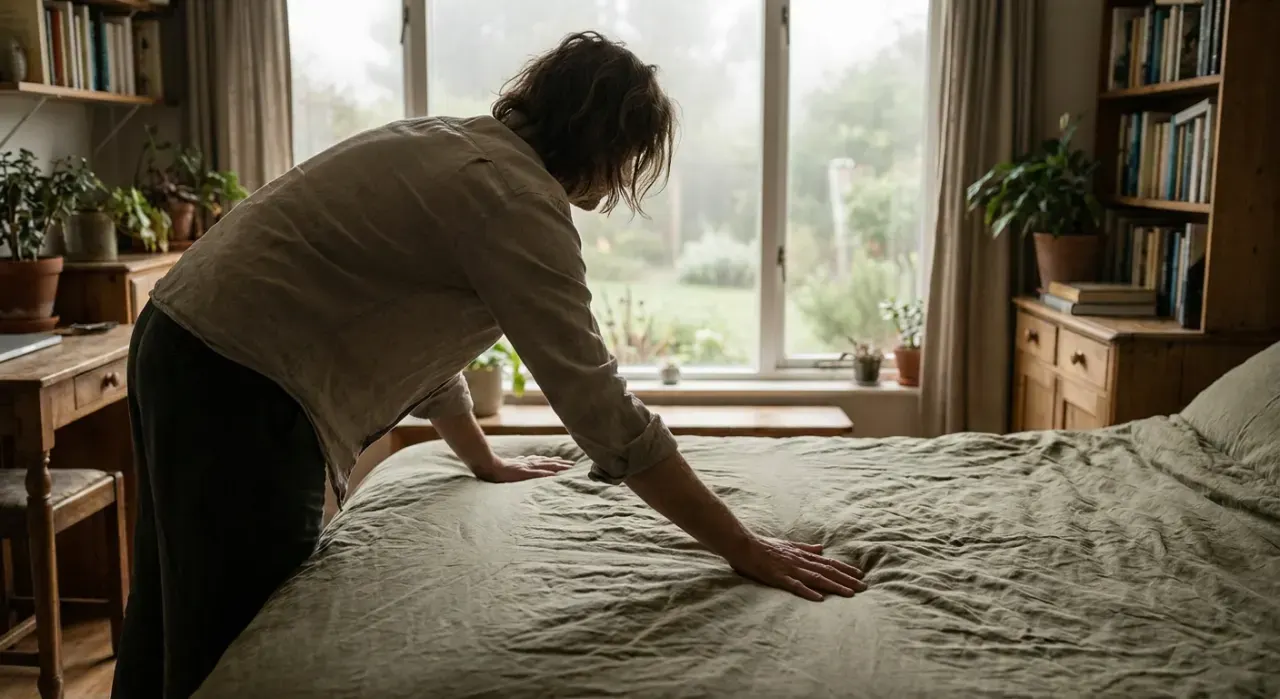
Linen is the strongest all-night performer. The flax fiber is hollow and the weave is open, so air moves through it and moisture leaves fast. It does not feel cool to the touch and it is wrinkled by nature, which is why it does not test well in stores and does well in bedrooms.
Cotton percale at 200 to 400 thread count is the reliable default: a plain one-over-one-under weave with gaps that air passes through. Push the thread count to 600 or 800 and the same cotton becomes warmer, because the weave densifies — which is the whole reason thread count is a poor quality signal. Sateen uses a floating weave for softness and sheen and sleeps warmer than percale at equal thread count, covered in percale versus sateen.
Tencel lyocell is the moisture specialist. The fiber absorbs substantially more moisture than cotton and releases it, which is why it is the common recommendation for night sweats. Bamboo-derived viscose and lyocell behave similarly — note that the US Federal Trade Commission requires these be labeled by their actual fiber name rather than simply as bamboo, so a listing that says only bamboo is being loose with the description.
Which claims do not hold up?
- Cooling microfiber. Microfiber is polyester. It is hydrophobic, holds heat and handles moisture poorly, and no finish changes that.
- Cool-touch coatings on synthetics. Real for the first touch, and increasingly diminished with each wash.
- High thread count as a cooling feature. The opposite is true.
- Unnamed cooling fabric. Fiber content must be disclosed, so a listing that hides it is usually hiding polyester.
There are laboratory measures for these properties — Qmax for cool touch, AATCC test methods for moisture management — but nothing requires them on packaging, so a specific named test result is a meaningfully better signal than any adjective.
How much of the problem can a sheet solve?
The surface layer only. A sheet weighs a couple of pounds against a comforter, a topper and a mattress that together weigh a hundred, and thermal mass is what stores heat overnight. In owner reviews the pattern is consistent: people switching from microfiber or heavy sateen report a real difference, and people switching from percale to premium percale mostly report a nicer sheet.
If you are still hot on good sheets, work down the stack — a breathable rather than vinyl protector (do mattress protectors make you sweat), a lighter fill comforter (comforters for hot sleepers), and a mattress or topper that is not dense closed-cell foam. Room temperature underlies all of it; the commonly cited range for adult sleep is around 65 to 68°F.
What to buy
Buy the fiber, not the label. Linen for humid heat, percale for a crisp breathable default, Tencel lyocell for sweat. Our cooling sheet picks compare the field on owner reports after a full summer, and are cooling sheets worth it covers the money side.
We never buy, test or physically handle the products we rank. Recommendations come from aggregated owner reviews, star ratings, review volume and expert consensus — see how we rank.
More from this hub: Bedding & Sleep · Sheets for night sweats · Stopping sheet pilling · How we rank