 Garden


Affiliate Disclosure
Some links on this page are affiliate links. As an Amazon Associate, we earn from qualifying purchases — at no extra cost to you. We do not buy, test, or physically handle the products we cover; our rankings come from aggregated owner reviews, ratings and expert consensus. Commissions never change our verdicts. How we rank · full disclosure.
For almost all bedding: wash warm at about 104°F on a normal cycle, use roughly half the detergent the cap suggests, skip fabric softener entirely, and tumble dry on low until just dry. Hot water and high dryer heat are the two things that shorten the life of good sheets more than anything else. The exceptions are worth knowing — linen prefers cold and air drying, down needs a commercial-size machine, and waterproof protectors must never see high heat — and the rest of this guide covers them fabric by fabric. For how often to run all this, see how often to wash bedding.
Getting the temperature right
Warm is the answer for cotton, cotton blends and bamboo viscose. It dissolves body oils, which is the actual job, without the fiber damage that hot water causes. Cotton loses tensile strength faster at high temperatures, elastic in fitted-sheet hems degrades quickly, and protein stains — blood, sweat, anything organic — set permanently above roughly 120°F.
Two situations justify hot. Dust mite allergy, where the evidence supports water at 130 to 140°F, and illness in the household. Both can usually be handled better in the dryer: a full high-heat dryer cycle reaches mite-lethal temperatures without soaking the fibers at that temperature for half an hour. If you do run a hot wash, reserve it for white cotton and expect a shorter service life from the set.
Cold works fine with a modern detergent formulated for it, and is the right choice for linen, anything dyed a deep color, and any fabric with elastane in it. It will not shift heavy body oil buildup on its own, so alternate cold weeks with a warm wash.

Detergent, dosing and the softener problem
Use less than you think. The single most common cause of stiff, gray, faintly musty sheets is over-dosing: the excess does not rinse out, it stays in the fibers, and it then traps the very oils you were trying to remove. Half a cap is enough for a normal bedding load in a modern high-efficiency machine, and a heavily soiled load is better served by a longer cycle than by more detergent.
Choose a low-fragrance or free-and-clear formula for anything that spends eight hours against your face. Heavy perfumes are the second most common complaint after residue, and they are what people are actually smelling when they describe sheets as smelling “chemical” rather than clean.
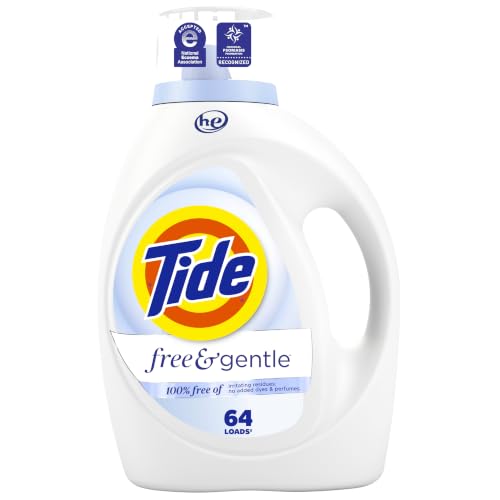
Best for sheets and duvet covers washed weekly — no dyes, no fragrance, and it rinses clean at warm rather than hot
- No added dyes or perfumes, so nothing is left sitting against skin
- Works at warm and cold, which is where bedding should be washed
- Widely available, which matters for something you rebuy monthly
- Owners with sensitive skin report it as the switch that stopped the itching
Why buy it: the residue left behind by heavily perfumed detergents is the most common cause of sheets that feel stiff and smell “off” after a few washes.

Best for replacing dryer sheets and cutting the drying time on a bulky comforter
- Separate tangled sheets so hot air actually circulates
- No coating left on fibers, unlike dryer sheets and liquid softener
- Reusable for years rather than thrown away each load
- Owners consistently report shorter cycles on comforters and duvets
Why buy it: fabric softener and dryer sheets coat bedding fibers with a waxy film that reduces absorbency and breathability — the two properties you want most in sheets.
Skip fabric softener and dryer sheets on bedding entirely. Both work by depositing a waxy or silicone film on the fibers. On a towel that means reduced absorbency; on sheets it means reduced breathability, and on a moisture-wicking or cooling fabric it disables the exact property you paid for. It also accelerates pilling, which is covered in how to stop sheets pilling. Wool dryer balls give you the anti-static and separation benefit without the coating.
Method by fabric
| Item | Water | Dry | Notes |
|---|---|---|---|
| Cotton percale & sateen sheets | Warm, normal cycle | Low, remove slightly damp | Sateen pills if dried hot |
| Linen sheets | Cold or warm, gentle | Low or line dry | Softens with every wash; never bleach |
| Bamboo viscose | Cold to warm, gentle | Low, short cycle | Weakest when wet — do not wring |
| Microfiber | Warm, no softener ever | Low | Traps oils; wash separately from lint sources |
| Down comforter | Warm, gentle, commercial machine | Low, hours, with dryer balls | Must be bone dry or it mildews |
| Down-alternative comforter | Warm, gentle | Low | Polyester fill clumps if dried hot |
| Waterproof mattress protector | Warm, gentle | Low or air only | High heat destroys the membrane |
| Weighted blanket | Cold, gentle, check weight limit | Low or air dry flat | Glass beads; many exceed machine capacity |
| Pillows (synthetic) | Warm, two at a time | Low with dryer balls | Extra rinse; dry completely |
Item-specific walkthroughs exist for the trickier ones: how to wash a mattress protector, how to wash a weighted blanket, how to wash cooling sheets and washing a comforter.

Loading and cycle choice
Bedding needs room to move. A drum packed past about three-quarters full cannot tumble, which means the fabric never gets agitated properly and the rinse never fully clears the detergent. Wash a sheet set on its own; add the duvet cover only if the machine is large. Never wash bedding with towels — towels shed enormous amounts of lint and sheets pick it up.
Two habits prevent most damage. Close duvet cover buttons or zips before washing, otherwise the cover swallows everything else in the load and comes out as a single knotted mass. And shake fitted sheets out before loading so they do not wrap around the agitator or roll into a rope, which is what causes the torn corner elastic owners so often blame on quality.
If the machine itself smells, no wash cycle will fix the outcome. Front-loaders in particular grow biofilm in the gasket and dispenser, and it re-contaminates every load — see how to clean a washing machine and why clothes still smell after washing.
Drying without wrecking the fabric
Low heat, and take everything out while it still feels faintly cool rather than baked. Over-drying is what makes cotton feel harsh, sets wrinkles hard enough that they never fully shake out, and cooks the elastic in fitted sheets. Pulling sheets out at the just-dry point and folding or bedding them immediately does most of what ironing would.
Line drying is genuinely better for linen and for anything with elastane, and sunlight has a mild whitening and deodorizing effect on white cotton. It is also the only safe option for many weighted blankets. The trade-off is a stiffer hand feel; twenty minutes in the dryer at the end softens line-dried cotton without undoing the benefit.
The one non-negotiable is that anything with a fill — comforters, pillows, down — must come out completely dry. Damp clusters deep inside a comforter mildew from the inside out, and by the time you can smell it, the item is finished. Expect several hours and check by squeezing the thickest sections.

Fixing the four problems people actually have
Sheets that smell before they are dirty. Residue holding body oils, or a machine growing biofilm. Halve the detergent, run a hot maintenance cycle in the empty machine, and dry bedding fully rather than pulling it out damp.
Fitted sheets that will not stay on. Usually pocket depth rather than elastic failure — modern mattresses plus a topper routinely exceed 15 inches. If the elastic itself has gone slack, high dryer heat is the cause, and lowering the setting on the replacement set will keep it alive far longer.
Gray, dull whites. Cumulative detergent and mineral residue rather than dirt. An overnight oxygen bleach soak recovers most of it; chlorine bleach makes it worse over time by yellowing the cotton. If your water is hard, the underlying cause is covered in hard water laundry fixes.
Sheets pilling in patches. Friction plus a coating. Short-staple cotton pills fastest, fabric softener accelerates it, and washing bedding with towels or zippers guarantees it. Wash sheets alone, on a normal cycle, and dry low.
The five mistakes that ruin good bedding
- Hot water as a default. It shortens the life of every fiber in the bed and sets protein stains permanently.
- Fabric softener. Coats fibers, kills breathability, accelerates pilling, and disables cooling finishes.
- Too much detergent. Residue is the actual cause of most “my sheets feel horrible” complaints.
- Chlorine bleach on white cotton. It yellows the fiber over time and weakens it. Oxygen bleach does the job without the damage.
- Overloading. No agitation, no rinse, torn elastic, and a machine that smells within a month.
Care habits are also what decide whether a good sheet set stays good, which is worth remembering before spending more: see best sheet brands and thread count explained.
We never buy, sleep on or physically handle the products we rank. Every recommendation is drawn from aggregated owner reviews, star ratings, review volume and published expert consensus — see how we rank.
More from this hub: Bedding & Sleep · How often to wash bedding · Thread count explained · Best cooling sheets · How we rank