 Garden

Affiliate Disclosure
Some links on this page are affiliate links. As an Amazon Associate, we earn from qualifying purchases — at no extra cost to you. We do not buy, test, or physically handle the products we cover; our rankings come from aggregated owner reviews, ratings and expert consensus. Commissions never change our verdicts. How we rank · full disclosure.
Six to twelve weeks for a properly batch-loaded tumbler in warm weather. The two-week claim on most packaging is achievable only with finely shredded material, an ideal mix and daily turning, and even then the output needs curing. Realistically: 6 to 8 weeks with shredded material, a good browns-to-greens balance and turning three times a week in summer; 10 to 12 weeks with coarser material or in cooler weather; and indefinitely if you keep adding fresh scraps, which is the mistake that stops most tumblers from ever finishing.
What decides the timeline?
| Factor | Fast (6–8 weeks) | Slow (12+ weeks) |
|---|---|---|
| Loading | One batch, sealed and left | Fresh material added continuously |
| Particle size | Shredded or chopped under 2 in | Whole stems, uncut leaves, big scraps |
| Browns to greens | Roughly 2:1 to 3:1 by volume | Nitrogen-heavy sludge or all dry leaves |
| Moisture | Wrung-out sponge | Dry and dusty, or waterlogged |
| Turning | 2–3 times a week | Occasional, or daily to the point of cooling |
| Air temperature | Above 70°F | Below 50°F |
| Fill level | About three-quarters full | Crammed to the lid, or a third full |
Fill level catches people out. A drum packed to the lid has no room to tumble, so the material slumps rather than mixing, and a drum only a third full loses heat too fast to build any. Three-quarters is the target.
Why does batch loading matter so much?
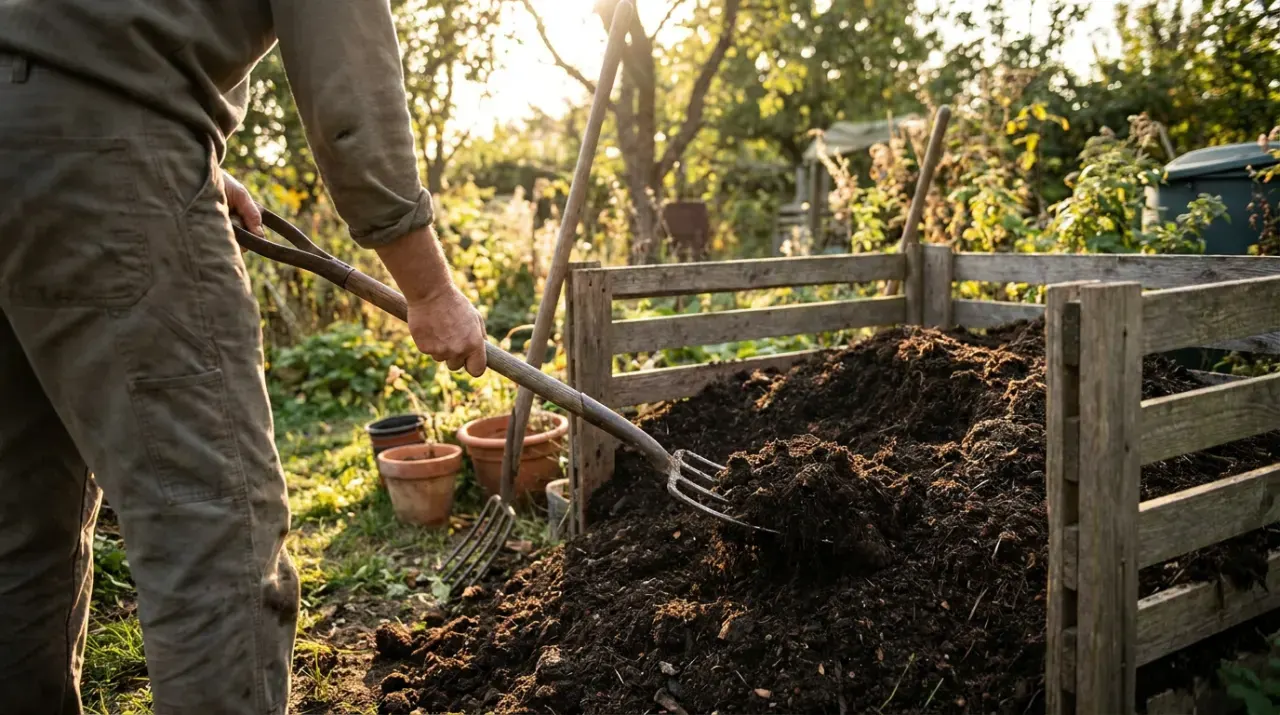
Because composting is a process with a start and an end, and continuous feeding removes the start. Every time you add fresh kitchen scraps, you introduce raw material that has to go through the whole cycle, and because a tumbler mixes everything together you cannot separate the new material from the old. Two months in, you have a drum of uniformly half-finished compost that will never be finished as long as you keep feeding it.
The workaround most owners settle on is two drums, or a dual-chamber tumbler: fill one, seal it and let it run while the second one collects. If you have one single-chamber drum, collect material in a kitchen caddy and a bag of shredded leaves, load in one go, and use a separate ground bin for the scraps generated during the working cycle. Bin options are compared in tumbler versus compost bin.
How do you make it faster?
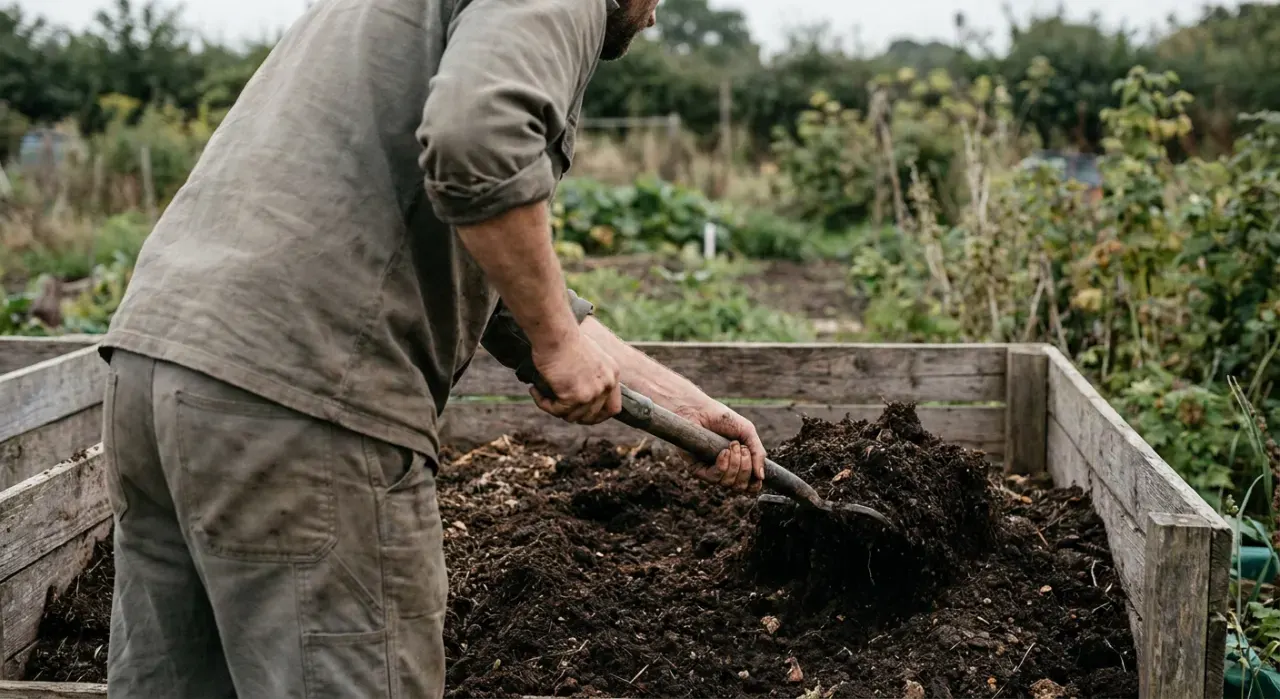
- Shred everything. Particle size is the biggest single lever after batching — run leaves over with a mower and chop kitchen scraps to an inch or two. Surface area is where the microbes work.
- Get the ratio right. Roughly two to three parts browns to one part greens by volume; see browns and greens explained.
- Check moisture at every turn. Squeeze a handful — a drop or two of water is right. Tumblers dry out faster than ground bins because they are sealed off from the soil.
- Seed the batch. Two shovelfuls of finished compost or garden soil brings in the organisms; a sealed drum has no soil contact to supply them.
- Turn three times a week, not daily. Enough to aerate and mix, not so much that the temperature never builds.
- Fill it in warm weather. A batch started in June finishes; the same batch started in October waits until spring.
How do you know when it is done?
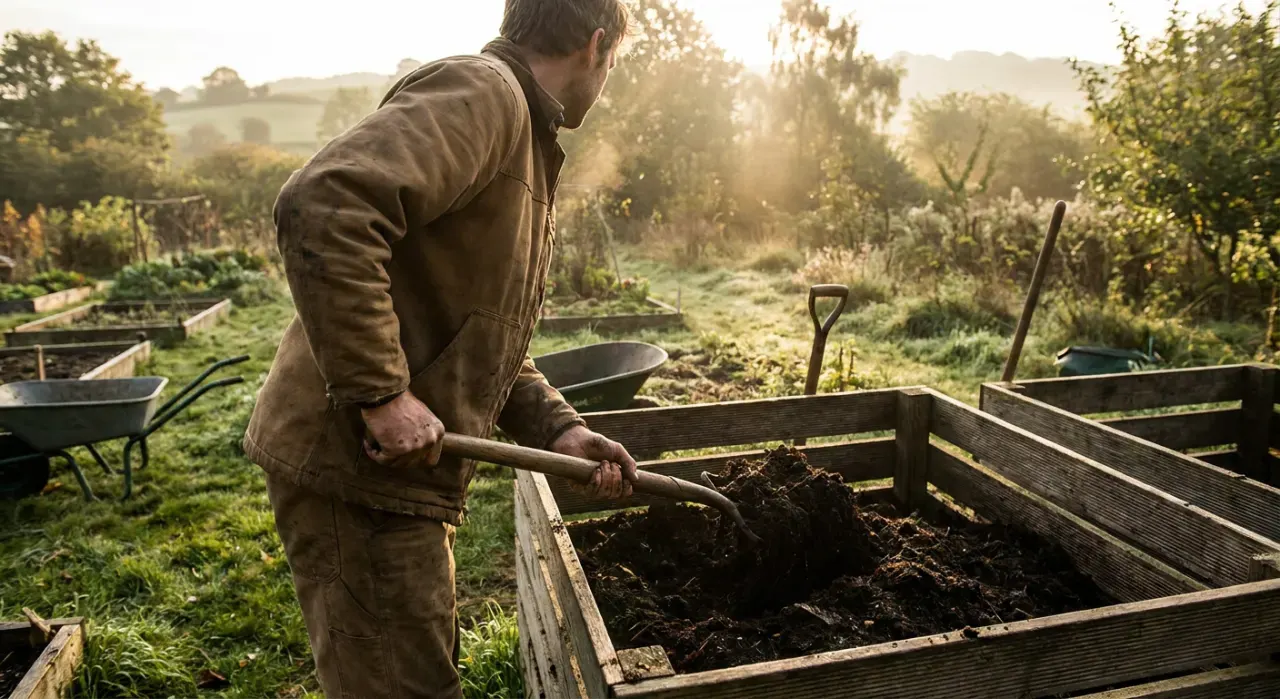
Uniform dark crumbly material with nothing recognizable in it, an earthy smell rather than a sour one, and a volume that has dropped by roughly half. The tumbler-specific tell is weight and sound: a finished drum is noticeably lighter and turns smoothly instead of sloshing or thudding.
Then cure it. Tumbler output at week eight is usually stable but not mature, and immature compost stalls seedlings by competing for nitrogen. Empty the drum into a pile or a bin, keep it lightly moist and covered, and leave it two to four weeks before it goes near young plants. The bag test and the germination test in how to tell when compost is finished settle it either way.
What should you realistically expect from a tumbler?
Speed and cleanliness, not heat or volume. A tumbler is the right choice for a small yard, a hard surface, or a neighborhood with a rodent problem — it is sealed, raised and easy to turn without a fork. What it does not do well is reach and hold the temperatures that kill weed seeds and pathogens, so keep seeded weeds and diseased material out of it entirely, as covered in what not to put in a compost bin. For volume and heat, a large ground bin still wins, and the timelines there are in how long compost takes to break down.
Our compost tumbler picks rank the field on owner reports of drum sealing, frame stability and how the mechanism holds up after a couple of seasons, which is where cheap tumblers fail.
We never buy, test or physically handle the products we rank. Recommendations come from aggregated owner reviews, star ratings, review volume and expert consensus — see how we rank.
More from this hub: Composting & Soil · Compost bin size · Compost and rats · How we rank