 Garden
Affiliate Disclosure
Some links on this page are affiliate links. As an Amazon Associate, we earn from qualifying purchases — at no extra cost to you. We do not buy, test, or physically handle the products we cover; our rankings come from aggregated owner reviews, ratings and expert consensus. Commissions never change our verdicts. How we rank · full disclosure.
A well-run compost bin does not attract rats; a neglected one can shelter them. Rodents come for three things — food, water and dry undisturbed shelter — and a pile that gets meat, dairy or grease, or one that sits dry and untouched for months, supplies all three. A hot, damp, turned pile fed only plant material supplies none of them. Four changes solve almost every case: exclude the wrong inputs, keep it damp, turn it weekly, and line the base with quarter-inch hardware cloth.
What actually draws them?
| Attractant | Why it works for a rat | Fix |
|---|---|---|
| Meat, fish, bones, dairy, grease | High-value food, and it lingers | Keep it out entirely of a home bin |
| Cooked grains, bread, pasta on the surface | Easy calories at the top of the pile | Bury in the center or leave out |
| A dry pile | Dry material is ideal nesting bedding | Keep it at wrung-out-sponge dampness |
| An undisturbed pile | Nests need to be left alone | Turn weekly, or at least monthly |
| Open base on soft soil | Burrow access from below | Quarter-inch hardware cloth under the bin |
| Gaps and a loose lid | Direct entry | Close any gap over half an inch |
| Cold pile in winter | Warm-ish, sheltered, dry — a good winter nest | Turn it and keep it wet through winter |
Notice how many of these are about shelter rather than food. Plenty of people find rodents in a pile that never received a scrap of meat, and the reason is almost always that the pile was dry, cool and untouched for a season.

How do you rat-proof a bin?
- Line the base with quarter-inch hardware cloth, running a few inches up the sides and secured so it cannot be pushed aside. Half-inch is the maximum; chicken wire at one inch does nothing.
- Close every gap over half an inch, including around the lid, the hatch and the joints of a slatted bin.
- Keep meat, dairy, oil and greasy leftovers out — the full list is in what not to put in a compost bin.
- Bury kitchen scraps in the center under a few inches of browns, and cover the top with a layer of leaves, straw or cardboard.
- Keep it damp. Rodents will not nest in wet material. This is also what a working pile needs anyway.
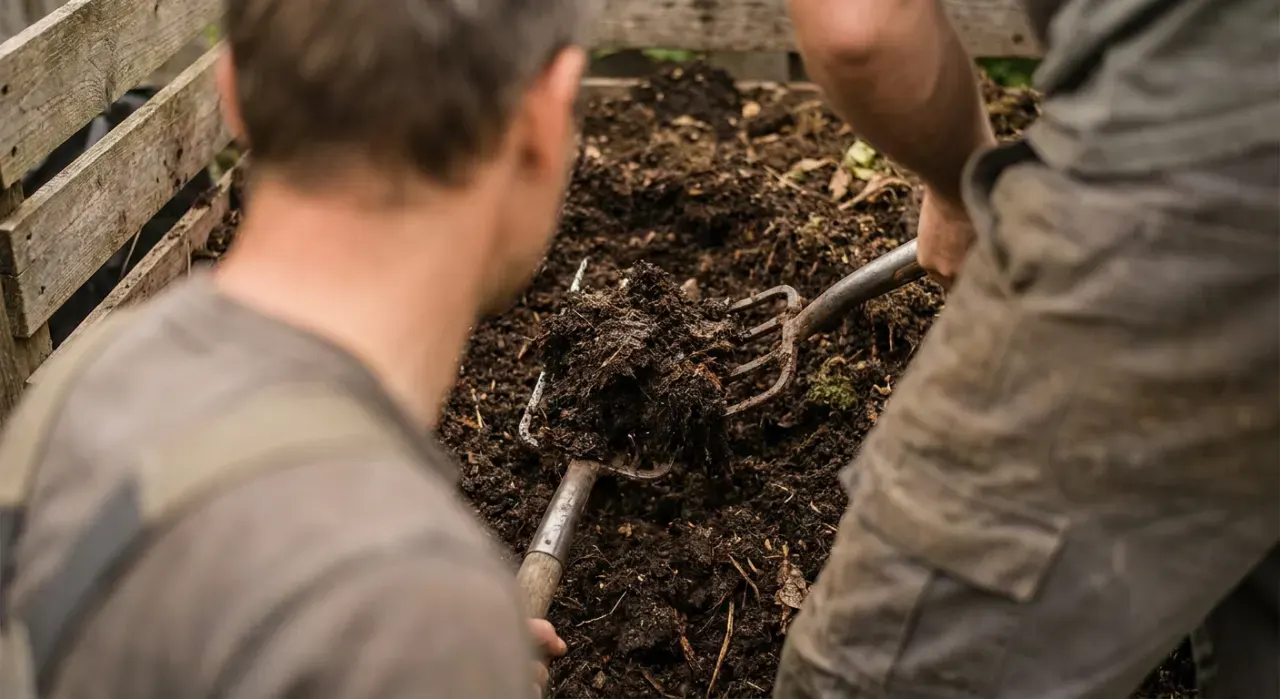
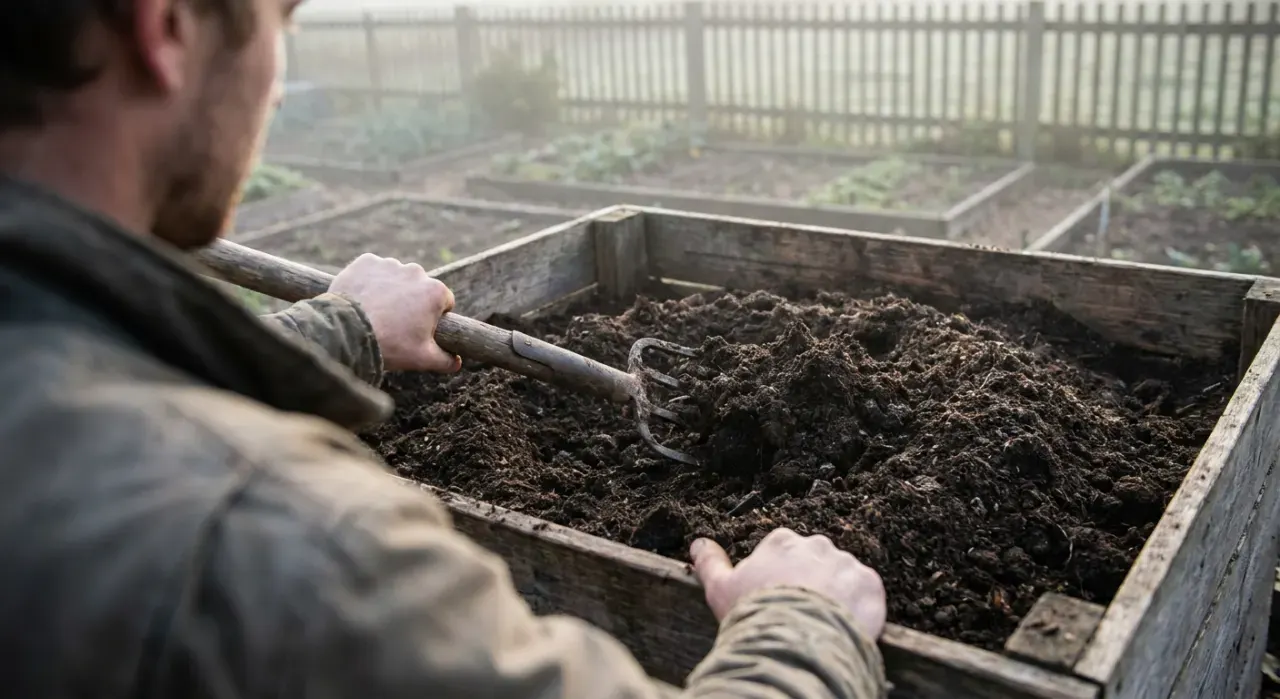
- Turn it weekly. The single most effective habit — it destroys nests, restores heat, and reveals problems early.
Which composting system is most rodent-resistant?
Tumblers are the strongest option: a sealed drum raised on a frame with no soil floor and a latching lid. If rodents are an active problem in your neighborhood, that is the system to choose, accepting that tumblers are smaller and rarely get properly hot — tumbler versus compost bin covers the compromise, and how long compost takes in a tumbler covers the timeline.
Enclosed plastic bins with a lid and a hardware cloth base are the middle option, and the most common recommendation from municipal composting programs, many of which subsidize exactly that design for this reason. Open heaps and pallet bins are the most vulnerable and are best used for yard waste only, with kitchen scraps going to a closed system. Worm bins kept indoors or in a garage sidestep the question entirely.

How do you know if you have them?
Look for smooth burrow holes two to four inches across at the base of the bin or nearby, runways of flattened vegetation, droppings, gnaw marks on plastic near the lid or hatch, and a hollow dry cavity when you fork into the pile. Finding one of these is a management prompt, not a reason to stop composting.
If you do find an active nest, follow the US Centers for Disease Control and Prevention guidance on rodent cleanup — ventilate, wet material down rather than sweeping it dry, and wear gloves. That is general safety information, not medical advice. A persistent infestation is a pest control problem in its own right, and compost is frequently blamed for a population that is actually feeding on spilled birdseed, fallen fruit, outdoor pet food or an unsecured trash can.
Once management is back on track, a pile that heats properly is your best ongoing deterrent — why compost is not heating up and browns and greens explained cover getting there. Bin choice is ranked in best compost bin, and siting in where to put a compost bin.
We never buy, test or physically handle the products we rank. Recommendations come from aggregated owner reviews, star ratings, review volume and expert consensus — see how we rank.
More from this hub: Composting & Soil · Best compost tumbler · How to make compost · How we rank