 Garden
Affiliate Disclosure
Some links on this page are affiliate links. As an Amazon Associate, we earn from qualifying purchases — at no extra cost to you. We do not buy, test, or physically handle the products we cover; our rankings come from aggregated owner reviews, ratings and expert consensus. Commissions never change our verdicts. How we rank · full disclosure.
Level ground, directly on soil, in partial shade, within a short walk of the kitchen door, and at least 10 to 15 feet from the house and any neighbor window. Soil contact matters most — it lets worms and soil microbes move into the pile and lets excess water drain away. Partial shade keeps the pile from drying out in summer without freezing it in winter. Convenient access matters more than people expect: a bin at the far corner of the yard is a bin that stops getting fed by November.
What surface should it sit on?
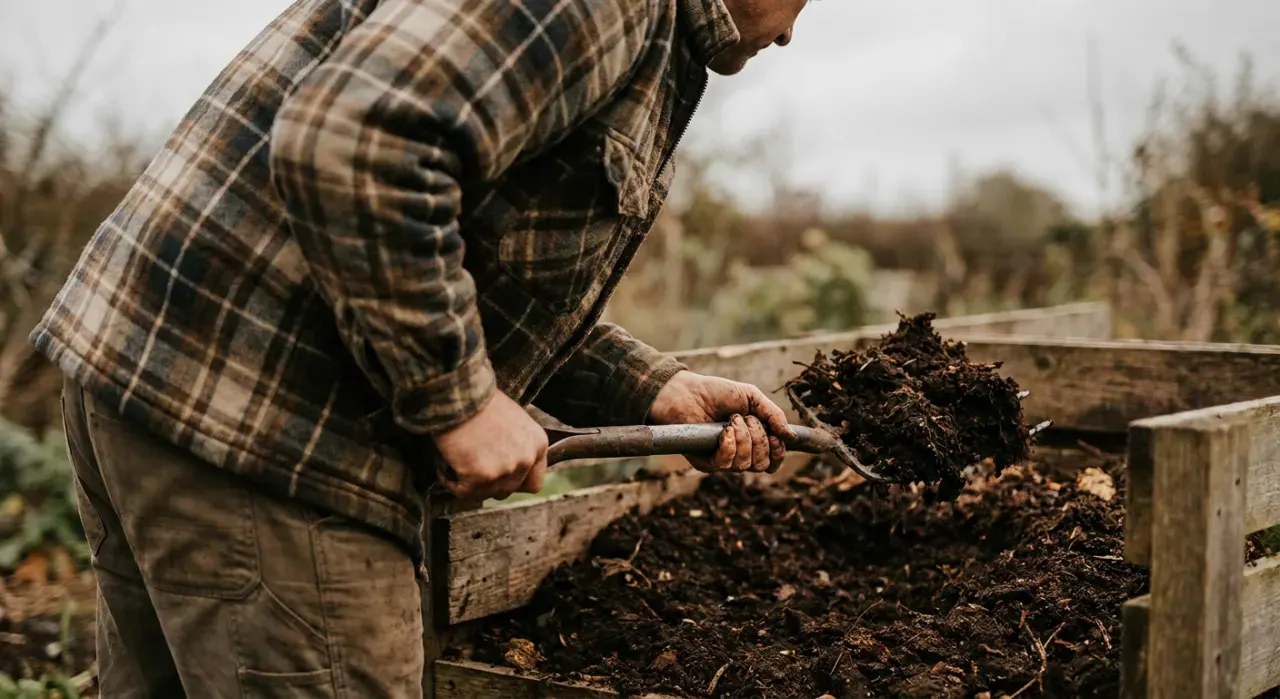
Bare soil, ideally loosened with a fork before you start. That gives you three things a hard surface cannot: drainage for excess moisture, free inoculation as earthworms, springtails and soil bacteria migrate up into the material, and a moisture buffer in dry weather, since the pile draws from the ground below it.
If you only have concrete, a patio or a deck, you can still compost — set the bin on a tray or a few inches of wood chips to handle leachate, and seed each new pile with a couple of shovelfuls of garden soil or finished compost. Tumblers are the better fit for hard standing because they are sealed systems by design; the trade-offs are in tumbler versus compost bin.
What does a good spot look like?
| Factor | Target | Why |
|---|---|---|
| Surface | Bare, level soil | Drainage and free soil life |
| Light | Partial shade; morning sun | Full sun dries it, deep shade chills it |
| Drainage | Never in a low spot that puddles | Waterlogged piles go anaerobic and smell |
| Distance from house | 10–15 ft minimum, more from windows | Odor and insects |
| Distance from the kitchen door | As short as the above allows | Convenience decides whether you keep using it |
| Water access | Within hose reach | Moisture is the top cause of a stalled pile |
| Working room | 3 ft clear on the access side | Room for a fork, a wheelbarrow and turning |
| Wind | Sheltered | Wind dries the surface and scatters light material |
| Near a well or waterway | Avoid; keep well back | Leachate and nutrient runoff |
Are there rules about where you can put one?
Sometimes, and they are worth ten minutes of checking before you build a three-bay bin you cannot move. Many US municipalities address backyard composting in a nuisance, health or solid waste ordinance, commonly with a minimum setback from property lines and dwellings and occasionally a requirement that food scraps go into a rodent-resistant container with a lid and a solid or screened base. Homeowner associations sometimes add screening or placement rules of their own.
Codes are local and this is not legal advice — check your own city or county ordinance and any HOA covenants for the current requirements before siting a permanent bin. Your county extension office can usually point you to the relevant local guidance as well.
What are the common siting mistakes?
- Too far from the house. The most common failure. If the walk is unpleasant in the rain, the scraps go in the trash instead.
- The low corner of the yard. It is out of the way for a reason, and that reason is usually that water collects there.
- Full afternoon sun in a hot climate. The pile bakes dry and stalls, and you end up watering it constantly.
- Tight against a fence or wall. No room to turn the pile, and moisture against the fence rots it.
- Under a dense evergreen. Cold, dry, and the roots will colonize the base.
- Against a wooden house wall or deck post. Constant moisture against untreated wood is a rot and termite invitation.
What if you want more than one bin?
Plan the footprint before you site the first one. A two- or three-bay system — one filling, one working, one finished — needs a run of roughly 9 to 12 feet with 3 feet of working space in front, and it makes turning far easier because you are simply forking material from one bay into the next. Set the bays so the access side faces the path, not the fence.
Bin size is the other half of the decision and it interacts with siting, since a bin below about 3 feet cubed will not hold heat regardless of where you put it — see how big a compost bin should be. If rodents are a concern in your neighborhood, siting and bin design together are the answer, covered in do compost bins attract rats. Our compost bin picks rank enclosed bins on owner reports of durability outdoors, and kitchen compost bins covers the countertop end of the trip.
We never buy, test or physically handle the products we rank. Recommendations come from aggregated owner reviews, star ratings, review volume and expert consensus — see how we rank.
More from this hub: Composting & Soil · How to make compost · What not to compost · How we rank