 Garden

Affiliate Disclosure
Some links on this page are affiliate links. As an Amazon Associate, we earn from qualifying purchases — at no extra cost to you. We do not buy, test, or physically handle the products we cover; our rankings come from aggregated owner reviews, ratings and expert consensus. Commissions never change our verdicts. How we rank · full disclosure.
The short answer: a tumbler is faster, cleaner, rodent-proof and easier on your back, but holds only 5 to 11 cubic feet and works in batches. A stationary bin holds two to four times as much, costs far less, sits open to the soil so worms move in, and takes material continuously. Buy a tumbler for kitchen scraps and speed; buy a bin for leaves and garden volume. Many gardens run both.
The marketing on tumblers promises finished compost in two weeks, which no home user achieves. The marketing on bins implies zero effort, which is true only if you are content to wait a year. Here is the comparison without either claim.
We never buy or physically handle the products we rank; recommendations come from aggregated owner reviews, star ratings and review volume, described in how we rank. The full system is at the composting and soil hub.
Side by Side
| Tumbler | Stationary bin | |
|---|---|---|
| Typical capacity | 37 to 80 gal, about 5 to 11 cu ft | 80 to 130 gal, about 11 to 17 cu ft |
| Realistic time to finish | 6 to 10 weeks in warm weather | 4 to 12 months, less if turned |
| Effort | A handle, 20 turns every 2 to 3 days | Fork work, or none if you are patient |
| Loading | Batch — fill once, then leave it | Continuous — add whenever |
| Rodent resistance | Excellent when sealed and raised | Poor to fair; bottomless designs are open |
| Soil contact | None; no worms, no soil organisms | Full; worms and fungi colonize from below |
| Heat | Rarely above 120°F — too little mass | Can hit 130 to 160°F if built large |
| Winter | Freezes solid, stops entirely | Core keeps working slowly if the pile is big |
| Cost | Higher | Lower, and a wire cage costs almost nothing |
| Best for | Kitchen scraps, small yards, urban lots, bad backs | Leaves, garden waste, volume, low effort |
Capacity Is the Number People Underestimate
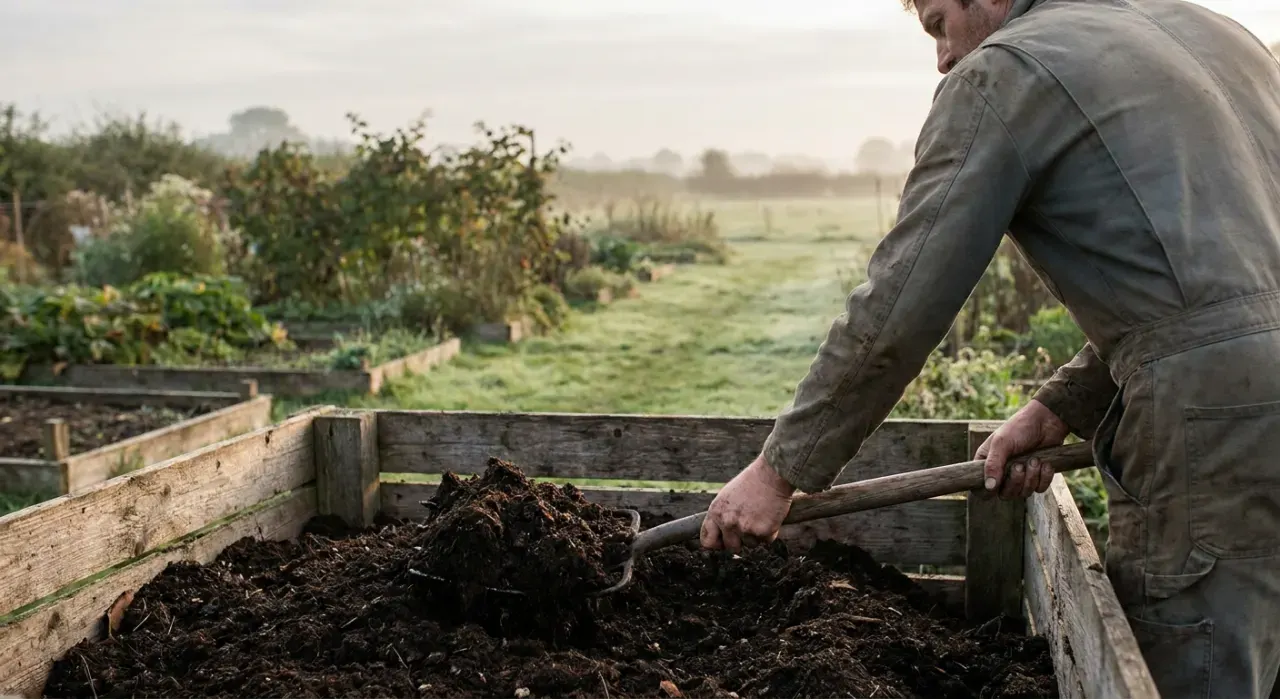
A 60-gallon tumbler sounds large and is about 8 cubic feet. Fall leaves from a single mature maple can run to 30 or 40 cubic feet before shredding. If your main input is yard waste, a tumbler will be full in one afternoon and then unavailable for two months.
The mismatch matters in the other direction too. A household producing a gallon of kitchen scraps a week will take months to fill a large bin, and that trickle of material never builds the mass needed to heat. Match the system to what you actually generate: kitchen scraps and small garden trimmings suit a tumbler, and leaves, prunings, spent plants and grass clippings suit a bin or an open pile.
Capacity is also why tumblers do not get hot. Sustained thermophilic temperatures need roughly 27 cubic feet of material to insulate its own core, and a raised drum loses heat from every surface. A tumbler running at 100 to 120°F is performing normally — its speed comes from constant aeration and fine particle size, not heat. That has one real consequence: a tumbler will not kill weed seeds or plant pathogens, so keep seed heads and diseased material out of it. Why a pile does or does not heat is covered in compost not heating up.
The Batch Problem
This is the practical weakness owners run into most, and it is rarely mentioned before purchase. A tumbler works properly only as a batch: load it in one go with a balanced mix, seal it, turn it every few days, and empty it when it is finished. Add a fresh bucket of scraps at week five and you have reset the batch — there is now raw material mixed through nearly finished compost, and the drum never produces anything you can use.
There are three workable answers. A dual-chamber tumbler: fill one side while the other finishes, then swap. Be aware the stated volume is split between them, so a 43-gallon dual model gives you two 21-gallon batches. A holding container: a lidded bucket or a second bin where scraps accumulate while the tumbler works, then loaded as the next batch. A companion bin: kitchen scraps go to the stationary bin during a tumbler cycle.
Stationary bins have no equivalent problem. Material goes in at the top whenever it arrives, finished compost is harvested from a hatch at the bottom, and the pile quietly stratifies by age. That continuous behavior is the strongest argument for a bin in a household that generates scraps daily.
Effort and Physical Access
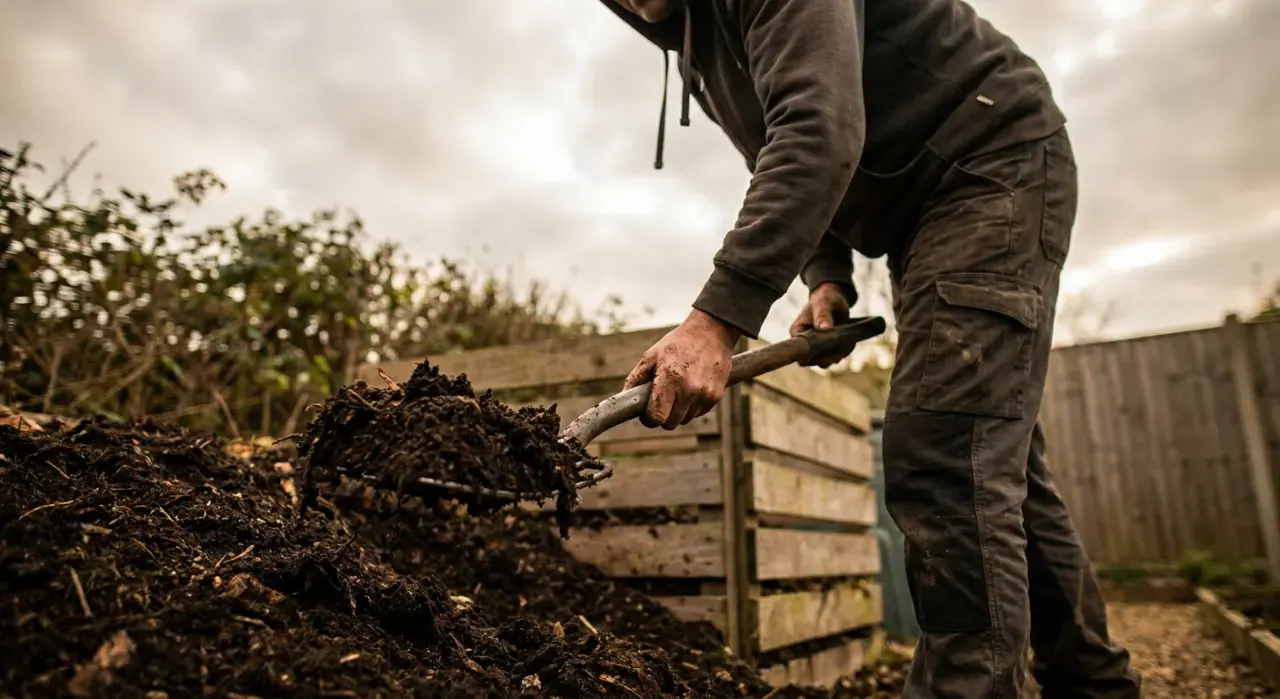
Turning a heap with a garden fork is real work — moving 25 cubic feet of damp material takes half an hour and a strong back, and it is a genuine barrier for anyone with a shoulder or lower back problem. This is the clearest advantage of a tumbler and it comes up constantly in owner reviews: a handle and twenty rotations replaces the whole job.
Two caveats show up just as often. A full tumbler is heavy, and the last third of a rotation on a poorly geared model takes real force — owners consistently report this on the largest single-chamber drums. And loading a tumbler mounted at chest height means lifting buckets to shoulder level, which is its own problem. Check the drum height against the person who will actually use it.
Stationary bins can be run with almost no effort at all if you accept the timeline. Cold composting in a bin, never turned, still produces excellent compost in a year or so, largely through worms and fungi rather than bacteria. Turning simply accelerates it.
Pests, Smell and Neighbors
A sealed drum raised on a frame is the most rodent-resistant home composting system that is not a purpose-built insulated hot bin. There is no route in and no dry bedding material, which is why tumblers are the standard recommendation for urban lots, townhouse yards and anywhere with a known rat problem.
Bottomless bins are the opposite. The open base that lets worms in also lets rodents in, and the warm dry interior is attractive shelter as well as food. Wire mesh across the base, buried a few inches, helps considerably. Open piles offer no resistance at all.
Smell is a management issue in either system rather than a design one. A pile or drum that smells is too wet, too green or short of oxygen — the balance is set out in browns and greens explained. A tumbler does contain odor better simply by being sealed, which matters if the composter sits near a patio or a property line.
What a Tumbler Gives Up
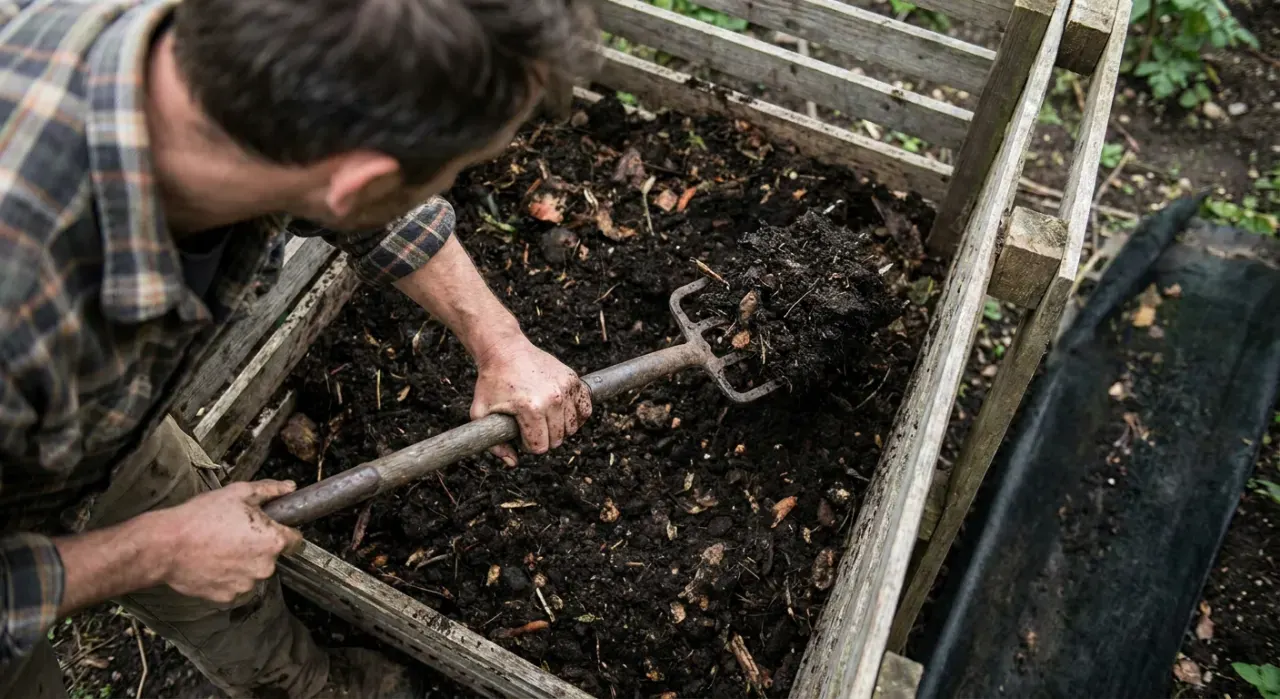
Being sealed and raised has a cost that rarely appears in comparisons: nothing can get in. Earthworms, springtails, mites, beetles and soil fungi are the organisms that do the slow, high-quality finishing work in a ground-contact pile, and they cannot reach a drum. Tumbler compost is genuinely good, but it is a bacterial product rather than a whole soil-food-web product, and it usually benefits from a curing period on the ground before use.
You can partly compensate by adding a few shovels of finished compost or garden soil to each new batch as an inoculant. It also helps the batch start faster.
Which to Buy
Buy a tumbler if your main input is kitchen scraps, your yard is small or overlooked, you have rodents in the neighborhood, forking a heap is not physically realistic, or you want usable compost within a season. Pick a dual-chamber model unless you have a separate holding container, and choose the sturdiest frame you can — owners consistently report frame flex and stripped gears as the failure points, not the drum. The ranked field is in best compost tumbler.
Buy a stationary bin if you generate real volumes of leaves and garden waste, you want the cheapest route to a lot of compost, you have somewhere out of sight to put it, or you would rather wait than turn anything. A simple wire cage handles leaf composting better than any manufactured product, and two bays side by side make turning easy. Picks are in best compost bin.
Buy both if you have the space, which is what most established gardens converge on: a tumbler by the back door for kitchen scraps and fast batches, and a bin or pile at the bottom of the yard for leaves and garden waste. Whichever you choose, the method matters more than the container — start from how to make compost, and if you are composting to fix heavy soil, read how to improve clay soil for how much you will actually need.