 Garden
Affiliate Disclosure
Some links on this page are affiliate links. As an Amazon Associate, we earn from qualifying purchases — at no extra cost to you. We do not buy, test, or physically handle the products we cover; our rankings come from aggregated owner reviews, ratings and expert consensus. Commissions never change our verdicts. How we rank · full disclosure.
Tankless wins on lifespan, space and endless hot water. Tank wins on installed cost, simplicity and simultaneous demand. A tankless unit lasts 20 years or more against a tank's 8 to 12, and it never runs out. But it costs meaningfully more to install, frequently needs a larger gas line or a serious chunk of electrical service, delivers a cold-water sandwich on short draws, and its energy savings usually take well over a decade to repay the premium. It is a good upgrade in the right house and an expensive one in the wrong house.
We never buy or install these units; everything below comes from published manufacturer specifications, code requirements and aggregated owner reports. See how we rank.
The comparison, without the sales pitch
| Tankless (on demand) | Storage tank | |
|---|---|---|
| Typical life | 20+ years | 8–12 years |
| Installed cost (mid-2026) | $2,500–$4,500 gas | $1,200–$2,200 |
| Hot water supply | Unlimited, but rate-limited | Limited by tank, but full rate |
| Standby loss | Essentially none | Continuous |
| Floor space | Wall box, roughly 2 sq ft | 2×2 ft footprint, 5 ft tall |
| Common upgrade needed | 3/4-inch gas line, new vent, or 100A of 240V | Usually none |
| Annual maintenance | Descale the heat exchanger | Flush sediment, check anode rod |
| Failure consequence | No hot water | No hot water, plus 40–50 gallons on the floor |
| Recovery in a power cut | None — electronics and fan need power | A gas tank with a standing pilot keeps working |
The installation is the whole decision
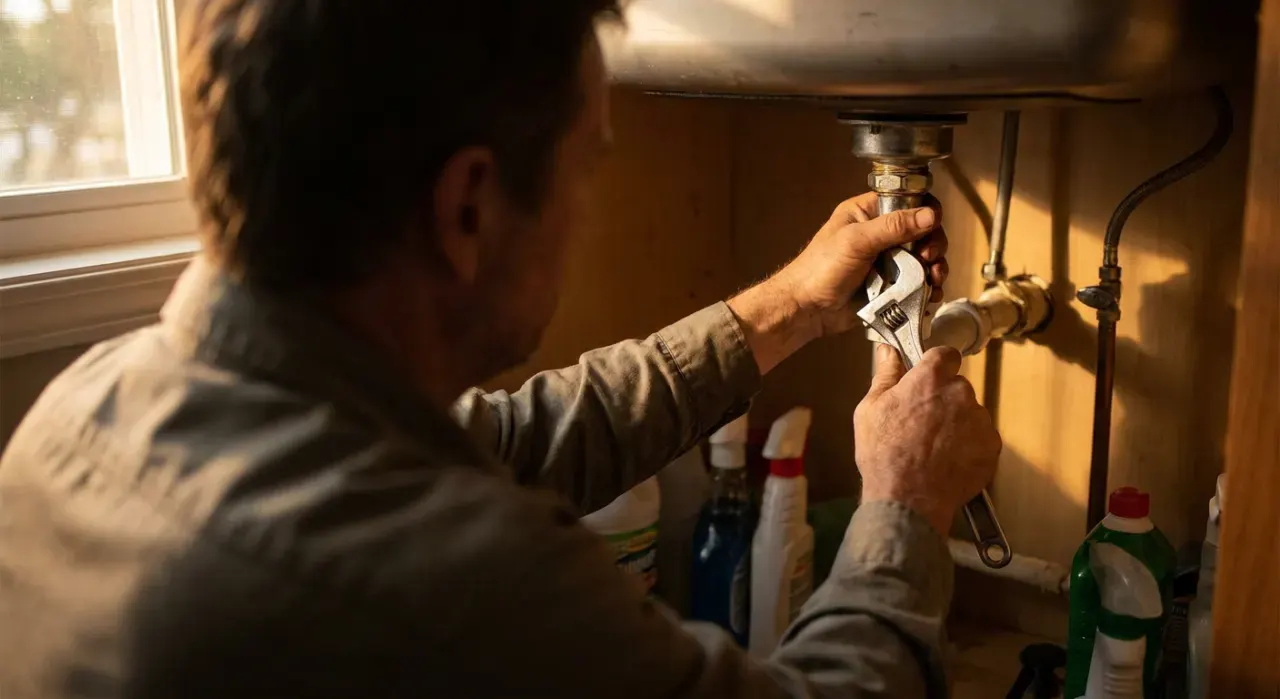
The unit price is the smaller half of the story. Look at what your house needs before you look at models.
Gas tankless: the line and the vent
A 40-gallon gas tank burns around 34,000 to 40,000 BTU per hour. A whole-home gas tankless burns 150,000 to 199,000 BTU per hour — four to five times as much, all at once. That flow frequently exceeds what an existing half-inch branch line can deliver at the required pressure, so the line gets upsized to 3/4-inch back toward the meter, and on older homes the meter and regulator sometimes need upgrading too.
Venting changes as well. A tank usually vents through an existing atmospheric flue. A non-condensing tankless needs sealed Category III stainless venting, which is not cheap per foot; a condensing unit can vent in PVC but needs a condensate drain, and that condensate is acidic and often requires a neutralizer. None of this is exotic work, but all of it is billable, and it is where quotes diverge by thousands.
Electric tankless: the service capacity
This is the one that catches people. A whole-home electric tankless is not a plug-in appliance. A 24 kW unit draws roughly 100 amps at 240 volts; a 27 kW unit draws about 112 amps and typically wants three separate 40-amp double-pole breakers. On a 100-amp service that is impossible, and on a 150-amp service it is usually impossible once the rest of the house is accounted for. Even on a 200-amp panel it may require a load calculation and, often enough, a service upgrade that costs more than the water heater.
Sizing tankless: flow rate, not gallons
A tank is sized in gallons. A tankless is sized in gallons per minute at your temperature rise, and that second half is what people miss. Temperature rise is your target outlet temperature minus your incoming groundwater temperature. Southern groundwater runs around 70°F; northern groundwater in winter can be 40°F or colder.
| Fixture | Typical flow | Notes |
|---|---|---|
| Shower | 1.8–2.5 GPM | WaterSense showerheads are capped at 2.0 GPM |
| Bathroom faucet | 0.5–1.5 GPM | Below the activation threshold on some units |
| Kitchen faucet | 1.5–2.2 GPM | |
| Dishwasher | 1.0–2.5 GPM | Many modern units heat their own water |
| Clothes washer | 1.5–3.0 GPM | Short, high-draw bursts |
Two showers plus a kitchen faucet is roughly 6 GPM. A unit rated 9.5 GPM at a 35°F rise may only manage 5 GPM at a 70°F rise, which is exactly the winter case in the northern half of the country. Size on the coldest month, not the brochure. The EPA WaterSense flow figures above are a reasonable planning basis for modern fixtures.
One more sizing quirk: tankless units have a minimum activation flow, typically 0.4 to 0.6 GPM. Open a faucet to a trickle and the burner never lights. Households used to running a thin stream of warm water notice this immediately.
The cold water sandwich, and other real annoyances
The cold water sandwich. Shut the hot tap and the burner stops. The hot water already in the pipe stays there. Reopen the tap thirty seconds later and you get that hot water first, then the cold water sitting behind it, then hot again once the unit fires and catches up. In a shower it is a brief cold slap; while washing dishes in bursts it is constant. A small buffer tank or a recirculation-equipped model reduces it. Nothing eliminates it.
The wait for hot water is not shorter. A tankless does not put hot water at the faucet faster — it still has to travel the same pipe run, and it may take a couple of seconds longer because the exchanger has to fire first.
Descaling is mandatory, not optional. A tankless heat exchanger has narrow passages, and hard water scales them. Manufacturers specify an annual descale with a pump and a vinegar or descaling solution, and many warranties require documented service. In water above roughly 10 grains per gallon, skipping it will shorten a 20-year unit to a handful of years. If your water is hard, budget for either annual descaling or a water softener — and read how to test water hardness before you assume.
No power, no hot water. Every tankless unit needs electricity for its controls, ignition and fan. In an outage you have none. An older gas tank with a standing pilot keeps producing hot water through a blackout, which matters in regions with frequent storm outages.
The payback math, done honestly
Storage tanks lose heat continuously to the room — that is the standby loss a tankless eliminates. The Department of Energy has long put demand-type water heaters at roughly 24 to 34 percent more efficient than storage tanks for homes using about 41 gallons of hot water a day, with the advantage narrowing to 8 to 14 percent for high-use households around 86 gallons a day. Certified models and their efficiency ratings are listed at Energy Star.
Turn that into money. Water heating is commonly the second largest energy use in an American home. Saving a quarter of it is real, but for most households it is on the order of $8 to $20 a month rather than a transformative number. Against an installed premium that is frequently $1,300 to $2,500, simple payback typically lands between 12 and 25 years — often longer than the tank you would otherwise have bought would have lasted, and sometimes approaching the life of the tankless unit itself.
That is not an argument against tankless. It is an argument for buying it for the right reasons: it lasts twice as long, it frees up a closet, it will not flood your floor when it dies, and you will never run out of hot water mid-shower. If someone sells it to you purely on the utility bill, ask them to show the arithmetic with your installation costs in it.
Who should buy which
Buy tankless if: your gas line and vent path already suit it, or you are building or fully renovating and the infrastructure is being run anyway; you need the floor space; your household draws hot water in long single sessions rather than many short bursts; you plan to stay in the house 15 years or more; or a flooded utility room would be a serious problem.
Buy a tank if: the tankless quote includes a gas line upsize, a new vent run or an electrical service upgrade; your service is 100 or 150 amps and you were considering electric tankless; your household runs several fixtures at once in a cold climate; you want the simplest possible replacement; or you value hot water surviving a power cut.
Consider a heat pump (hybrid) tank if you want the biggest efficiency gain and have the space. It is a tank, so it has a tank's lifespan and flood risk, but it uses roughly a third of the electricity of a resistance tank and qualifies for more incentives than tankless in many states. It needs about 700 to 1,000 cubic feet of surrounding air and produces cool exhaust — excellent in a garage in Texas, awkward in a small closet in Vermont.
When you have decided the format, our best water heater roundup covers both sides of the field from aggregated owner reviews, and best electric water heater narrows it to electric options including whole-home tankless. If you are leaning tankless and want a straightforward electric unit to price against, the Rheem RTEX-24 (paid link) is the most-owned whole-home electric model; on the gas side the Rheem RTG-70DVLN-3 (paid link) is a common non-condensing indoor choice.
The verdict
Tankless is the better appliance. Whether it is the better purchase depends on a quote you have not seen yet. Get the installer to itemize the gas, vent and electrical work separately from the unit, compare that total against a like-for-like tank replacement, and then decide on lifespan and convenience rather than on a payback figure that may never arrive. And whichever you choose, the maintenance is what determines how long it lasts — see how long water heaters last for the anode rod and flushing routine that decides a tank's fate.
More from this hub: DIY plumbing · do you need a permit to replace a water heater · water heater temperature · why hot water runs out so fast · how we rank.