 Garden
Affiliate Disclosure
Some links on this page are affiliate links. As an Amazon Associate, we earn from qualifying purchases — at no extra cost to you. We do not buy, test, or physically handle the products we cover; our rankings come from aggregated owner reviews, ratings and expert consensus. Commissions never change our verdicts. How we rank · full disclosure.
The short version: solar path lights all look similar in a photograph and behave completely differently after two winters. Three things predict which ones survive — a glass lens instead of acrylic that clouds in UV, a panel large enough to charge in a partly shaded bed, and a battery you can actually replace. Our #1 pick is the GIGALUMI metal-and-glass 8-pack, which delivers all three at a price where most competitors are painted plastic. For a front entry, the BEAU JARDIN set is the step up in finish; for a genuinely warm glow, the Mancra lights state 3000K and mean it.
One expectation to set now: these are wayfinding lights at 5 to 20 lumens each, not floodlights. If you need to see a stair tread, you need wired low-voltage instead.
Top Picks at a Glance
Our #1 Pick: GIGALUMI Metal and Glass 8-Pack
Almost everything that goes wrong with a solar path light is a materials problem, and it shows up in the second summer rather than the first week.
Acrylic lenses cloud. Ultraviolet light breaks down clear plastic, and a lens that was crisp in May reads milky and yellowed by the following August — which not only looks tired but scatters the small amount of light the fixture produces so it no longer casts a defined pool. Painted plastic bodies go chalky in exactly the same way. Panels laminated in cheap plastic haze over, and a hazy panel charges the battery less each week until one evening the light simply does not come on.
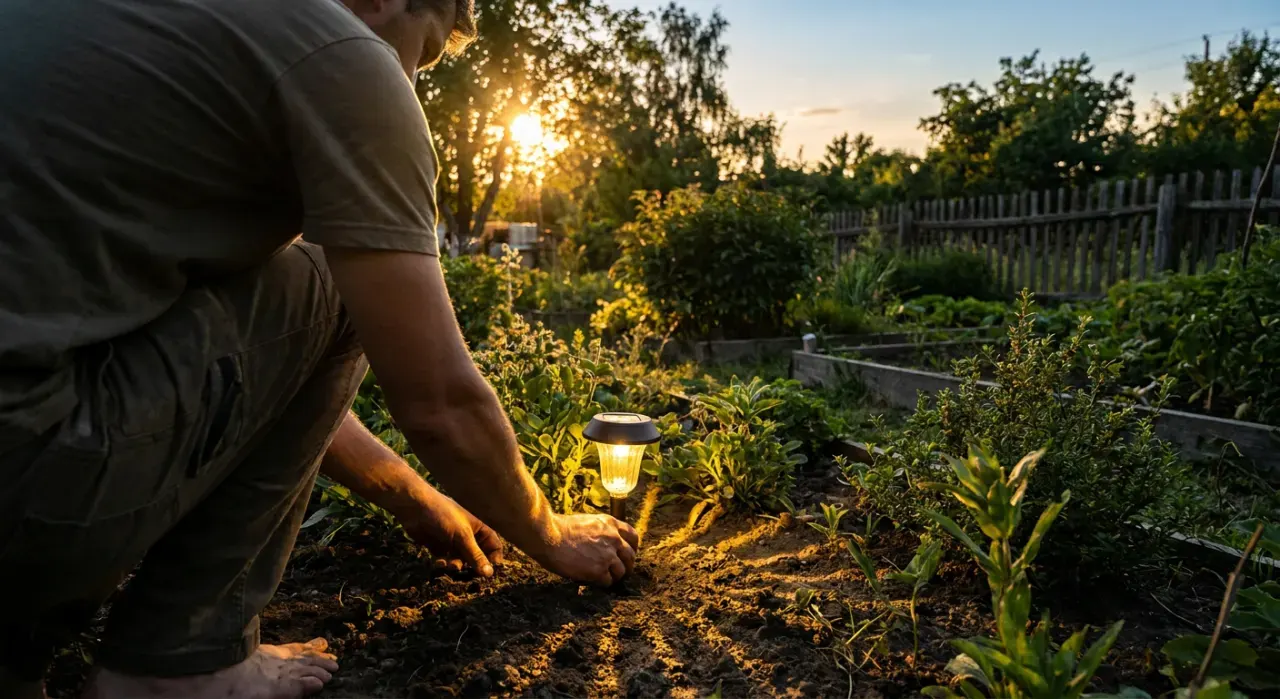
The GIGALUMI set answers the first two directly. The lens is real glass, so it stays clear indefinitely — glass is unaffected by UV and cleans with a wipe. The body is metal rather than painted plastic. And the LED is warm white rather than the harsh blue-white that makes a cheap solar light look like an emergency exit sign, which is why this set reads as landscape lighting rather than hardware.
Assembly is genuinely two minutes per light: the stake comes in two pieces, they push together, and the fixture drops on top. No tools, no wiring, no transformer.
Honest caveats: the panel is a standard small one, so these want a spot that gets several hours of direct sun — under a tree canopy or on a north-facing bed they will underperform and you will blame the fixture. The stake is fine in soft soil and struggles in dry clay, where owners recommend making a pilot hole with a screwdriver first. And, like every solar light here, the battery is a consumable — expect to swap it around the two-year mark rather than replacing the set. Check price on Amazon → (paid link)
The Ranked Field

Best for lining a walkway or driveway with something that still looks good in year two
- Real glass lens that will not cloud in UV like acrylic does
- Metal body rather than painted plastic
- Warm white LED at a landscape-friendly color temperature
- Two-piece stake that assembles in seconds without tools
Why buy it: the broadest owner agreement in the category — glass and metal at a price where almost everything else is clouding plastic.

Best for the front path or entry, where the fixtures are seen up close in daylight
- Ribbed glass lens that throws a patterned pool rather than a flat circle
- Heavier metal housing with a bronze-toned finish
- Larger solar panel than most 8-packs at this price
- Taller stem that lifts the light clear of low planting
Why buy it: the fixture owners say still looks like a light fixture in year two — heavier metal, real glass and a panel big enough for a partly shaded bed.

Best for a genuinely warm 3000K glow rather than the blue-white most solar lights emit
- 3000K color temperature stated on the specification, not left vague
- Glass lampshade with a stainless steel pole
- Monocrystalline panel, more efficient than the common polycrystalline
- Larger battery capacity than typical budget sets
Why buy it: the one that names its color temperature and means it — 3000K is what makes a garden look inviting instead of institutional.

Best for a path that is functional most nights and decorative when you want it
- Three modes: bright white, color changing, or a fixed single color
- Diamond-cut glass lampshade that is anti-fog and break resistant
- Stainless steel body that resists rust in wet climates
- Larger battery for longer runtime on the white setting
Why buy it: the only set here that does both jobs — a normal warm path light on a Tuesday and something festive when you are entertaining.

Best for covering a long run of path cheaply
- Eight fixtures for well under $4 each
- Waterproof housing with automatic dusk-to-dawn operation
- Warm white LED
- Simple two-part stake, no tools needed
Why buy it: the cheapest set here that owners still rate above four stars — the sensible pick when you need twenty fixtures, not eight.
Quick Comparison
| Product | Best for | Rating | Price | Buy |
|---|---|---|---|---|
| GIGALUMI Metal and Glass Solar Pathway Lights, 8 Pack Warm White Landscape Path Lights | Best Overall | — | Check (paid link) | |
| BEAU JARDIN 8 Pack Solar Pathway Lights, Waterproof Glass with Auto On/Off, Warm White | Best Build Quality | — | Check (paid link) | |
| Mancra Solar Pathway Lights, 8 Pack LED Glass and Metal Garden Lighting, 3000K | Best Warm Light | — | Check (paid link) | |
| BEAU JARDIN 8 Pack Solar Pathway Lights, White Plus Color Changing Stainless Steel, 3 Modes | Best Color Options | — | Check (paid link) | |
| SOLPEX 8 Pack Solar Pathway Lights, Waterproof Solar Garden Lights for Yard and Walkway | Best Value | — | Check (paid link) |

What to Check Before You Buy
Four things separate a set that lasts from a set that does not, and none of them is brightness.
Lens material. Glass or acrylic. Glass stays clear for the life of the fixture; acrylic clouds within a couple of summers of UV exposure. This is the single most reliable predictor of how a set looks in year three, and it is usually stated in the listing.
Panel size and type. Bigger is better, and monocrystalline panels convert more light than polycrystalline ones. A larger panel is what lets a fixture cope with a bed that gets four hours of sun instead of eight. If the panel is smaller than a credit card, treat the runtime claims skeptically.
Battery accessibility. Ask whether the cell is a standard AA-size NiMH or 18650 lithium in a compartment, or sealed inside. The first turns a dead light into a two-dollar fix; the second turns it into landfill. This single detail is the difference between a five-year fixture and a two-year one.
Color temperature. Look for 2700K to 3000K. Cheap solar LEDs are frequently 6000K or higher, which reads blue-white and makes planting look gray and lifeless at night. Warm white is what makes a garden feel inviting, and it is worth paying a few dollars more for. There is more on this in our guide to lumens and color temperature.
How We Rank
We do not buy or install these lights. We read the owner-review record at volume, and for solar lighting specifically we weight reviews written after a full year far above new-purchase ones — because every solar light works beautifully for the first month, and the entire question is what happens after two winters. Four factors carry the weight. Material durability, meaning lens clouding, finish chalking and panel hazing. Charging performance, judged from reports in partly shaded and northern locations rather than ideal ones. Battery serviceability, since a replaceable cell doubles or triples usable life. And light quality, meaning color temperature and how the lens shapes the pool. Prices were checked at the time of writing. Full method on how we rank.
The Lights, Reviewed
1. GIGALUMI Metal and Glass — Best Overall
Covered above. Owners praise: a glass lens that stays clear, a metal body that survives, warm rather than blue light, and two-minute assembly. Owners gripe about: a standard-size panel that needs real sun, stakes that struggle in hard clay, and the usual two-year battery life. The best balance of looks, light and longevity here. Check price (paid link).
2. BEAU JARDIN Warm White — Best Build Quality
The step up in finish. Heavier metal, a bronze-toned housing and a ribbed glass lens that throws a patterned pool rather than a flat circle — which is a noticeable difference on a front path where the light is seen close up. The panel is larger than most 8-packs at this price, which is why owners in partly shaded beds rate it better than the norm, and the taller stem lifts the light clear of low planting instead of being swallowed by it.
Owners gripe about: a higher price per fixture, a smaller review record than the mass-market sets, and a finish that can mark if the lights are stored carelessly over winter. The pick for the fixtures people actually walk past. Check price (paid link).
3. Mancra 3000K — Best Warm Light
Most solar path lights describe their light as warm white and leave it at that. Mancra states 3000K, which is a real specification and is exactly the temperature that makes planting look alive at night rather than gray. The glass lampshade and stainless pole are the right materials, and the monocrystalline panel converts more of a short winter day than the polycrystalline panels common at this price.
Owners gripe about: a lens shape that casts a tighter pool than some prefer, occasional variation in brightness between fixtures in the same pack, and a stake that owners describe as adequate rather than robust. If color quality is what you care about, this is the set. Check price (paid link).
4. BEAU JARDIN White Plus Color Changing — Best Color Options
The same brand as our number two, solving a different problem. Three modes let the set run as an ordinary warm path light most nights, switch to slow color changing for a party, or hold a single fixed color for a season. The diamond-cut glass is anti-fog and break resistant, and the stainless body holds up better than painted metal in a wet climate.
Owners gripe about: shorter runtime in the color-changing modes than on plain white, a mode button that has to be pressed on each fixture individually, and a decorative look that will not suit a minimal front garden. Genuinely useful if you want one set to do both jobs. Check price (paid link).
5. SOLPEX 8-Pack — Best Value
The volume answer. Eight waterproof, dusk-to-dawn fixtures for around $30 works out well under $4 each, which is what makes lining a hundred feet of driveway financially sensible rather than a project.
Owners gripe about: plastic construction that will not look new in year three, a small panel that needs a genuinely sunny position, and more unit-to-unit variation than the pricier sets. Buy these when you need quantity, and accept them as a two-season fixture rather than a permanent one. Check price (paid link).
What Owners Actually Complain About
Solar path light reviews follow such a consistent arc that the complaints are almost a checklist of what to plan for.
They dimmed after a year. The most common complaint by a wide margin, and it is the battery rather than the LED. Nightly full cycling wears a rechargeable cell out in roughly eighteen months to two years. Buy a set with an accessible battery compartment and budget a couple of dollars per fixture to refresh them.
The lens went cloudy. Acrylic and UV. It is not dirt and it does not wash off. Glass-lensed fixtures do not do this, which is the entire argument for paying a little more.
They never charged properly. Usually placement rather than product. A panel needs several hours of direct sun, and a bed that looks bright to a person can be in dappled shade for most of the day. Also check nobody has left the protective film on the panel — a startling number of one-star reviews turn out to be exactly that.
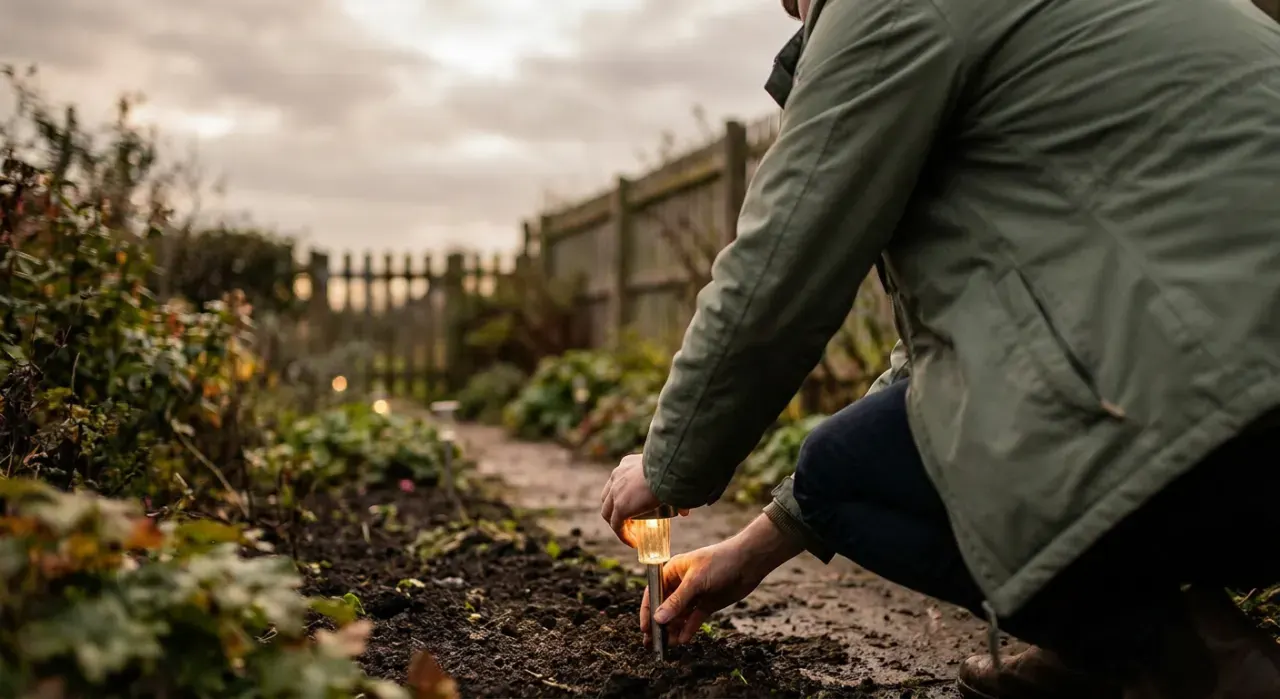
The stakes snapped. Thin plastic stakes pushed into dry or stony ground. Make a pilot hole with a screwdriver or a length of rebar first, water the ground the evening before if it is baked hard, and pull the lights before running a mower or a string trimmer near them.
They filled with water. The seal at the top of the fixture is the weak point on cheaper sets, and once condensation gets inside the lens fogs permanently and the electronics corrode. An IP44 rating is the practical minimum for a fixture that lives outdoors year-round, and a UL listing for damp or wet locations is the equivalent marking on the electrical side — our guide to outdoor lighting IP ratings explains what the numbers mean.
How to Choose
Start with where the lights will live. Sunny path, want them to last? The GIGALUMI. Front entry seen close up? The BEAU JARDIN warm white. Care about the color of the light? The Mancra 3000K — that figure is the ceiling the DarkSky Approved luminaires program sets for certified outdoor fixtures. Want them to double as party lighting? The BEAU JARDIN color-changing set. Need twenty of them? The SOLPEX.
Then install them properly, which matters more than the set you buy. Space them six to eight feet apart and stagger them side to side rather than lining them up. Keep them 12 to 18 inches back from the paving edge so they survive a wheel and so the light spills onto the path. Site every panel where it gets several hours of genuinely direct sun, not dappled shade. Choose a fixture with a shade that throws light down rather than out — shielding and aiming light downward is the first of DarkSky's five principles for responsible outdoor lighting. And wipe the panels twice a year — a film of dust and pollen cuts charging more than most people expect. There is a full walkthrough in how to install path lighting. If you want light you can rely on in December, read solar vs low voltage before you commit.
The Verdict
For most gardens the GIGALUMI metal-and-glass 8-pack is what the owner-review record supports — glass instead of clouding acrylic, metal instead of chalking plastic, and a warm light that makes planting look alive. For a front entry the BEAU JARDIN is the step up in finish, and the Mancra 3000K is the pick if light quality is what you care about most. Whichever you choose, put the panels in real sun and plan to replace the batteries at the two-year mark rather than the fixtures. Check price on Amazon → (paid link)
Next: the full garden lighting hub · best solar landscape lights · best solar spotlights · why solar lights stop working · how we rank.