 Garden


Affiliate Disclosure
Some links on this page are affiliate links. As an Amazon Associate, we earn from qualifying purchases — at no extra cost to you. We do not buy, test, or physically handle the products we cover; our rankings come from aggregated owner reviews, ratings and expert consensus. Commissions never change our verdicts. How we rank · full disclosure.
For most US home greenhouses, 6mm twinwall polycarbonate is the right default — around a quarter inch, roughly R-1.6, and about 80 percent light transmission. Step up to 8mm or 10mm in cold or snowy climates or if you intend to heat the greenhouse through winter. 16mm multiwall makes sense only for a heated, year-round house where fuel cost outweighs light loss. The 4mm panels supplied with budget kits are the weak point of those kits: adequate for spring and fall, flexible in wind, and easily hail-damaged.
We never buy, test or physically handle the products we rank; recommendations come from aggregated owner reviews and expert consensus, described in how we rank. More at the greenhouses and season extension hub.
What do you get at each thickness?
Approximate published figures for multiwall polycarbonate sheet. Exact numbers vary by manufacturer and wall structure, so check the datasheet for the specific product.
| Thickness | Approx. inches | Structure | Approx. R-value | Light transmission | Best for |
|---|---|---|---|---|---|
| 4mm | 5/32 | Twinwall | ~1.4 | ~80% | Budget kits, cold frames, mild climates, 3-season use |
| 6mm | 1/4 | Twinwall | ~1.6 | ~78–80% | The general-purpose default for a home greenhouse |
| 8mm | 5/16 | Twinwall | ~1.8 | ~76–78% | Cold climates, snow load, heated houses |
| 10mm | 3/8 | Twin or triple wall | ~2.0 | ~74–76% | Northern winters, year-round growing |
| 16mm | 5/8 | Triple or five-wall | ~2.4–2.5 | ~62–68% | Heated year-round houses where fuel cost dominates |
| Corrugated single-skin | ~1/32 | Single | ~0.8–0.9 | ~85–90% | Roofs, lean-tos, unheated structures, hail country |
For context: a single pane of glass is about R-0.9, standard 6-mil greenhouse poly film about R-0.8, and inflated double poly film about R-1.5. So even 4mm twinwall roughly doubles the insulation of glass, which is the main reason polycarbonate took over home greenhouses.
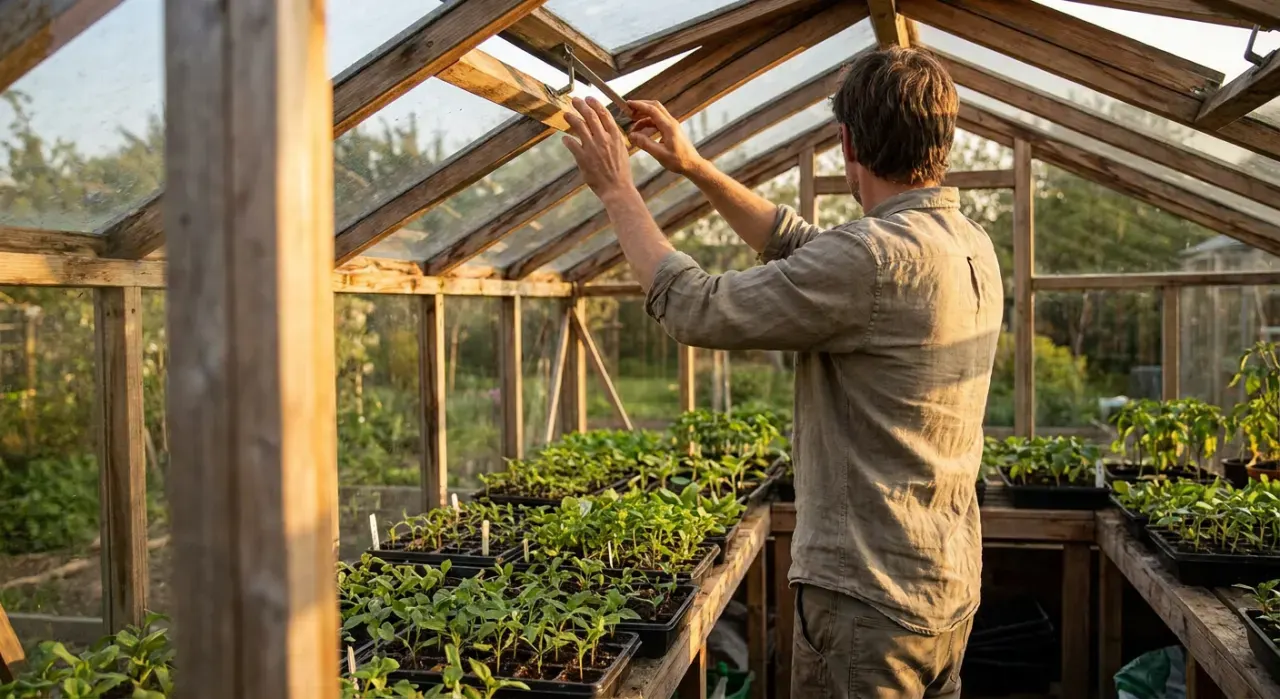
How should climate change the choice?
The question to ask is what limits you in winter — heat or light.
- Cold and sunny (Mountain West, northern Plains, upper Midwest): heat is limiting. Go 8 to 10mm, and consider 16mm on the north wall where light contributes least.
- Cold and cloudy (Great Lakes, New England, Pacific Northwest): light is limiting in December and January. Stay at 6 to 8mm and put the money into insulation you can remove in spring, or into supplemental lighting.
- Hot and sunny (Southwest, Texas, Florida): overheating is the year-round problem, not cold. 6mm is plenty, and ventilation and shading matter far more than glazing thickness — see greenhouse ventilation and overheating.
- Hail-prone (Front Range, central Plains): thicker multiwall or corrugated, and check whether your homeowners policy covers detached structures.
- High snow load: the frame governs, not the panel. A 10mm sheet in an under-braced frame fails at the frame.
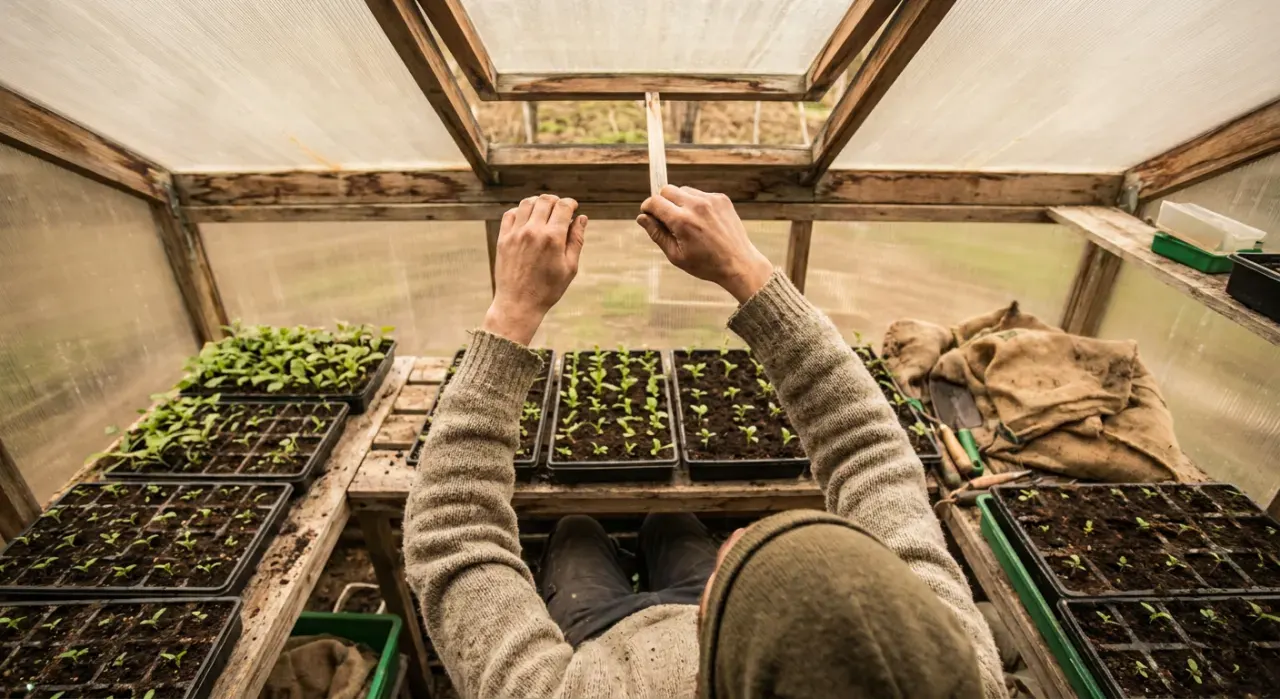
What does the extra thickness cost?
Roughly, sheet price scales with thickness — 8mm typically runs 30 to 50 percent more per square foot than 6mm, and 16mm can be two to three times 6mm. On a 8 by 12 foot greenhouse that is a few hundred dollars either way. Weigh it against heating: the difference between R-1.6 and R-2.0 glazing is real but modest, and in most home greenhouses air leakage around doors, vents and the base rail loses more heat than the panels do. Sealing the structure and adding a thermal mass such as water barrels usually buys more winter performance per dollar than upgrading glazing — the options are compared in how to heat a greenhouse in winter.
Whatever thickness you choose, the panel only reaches its rated life if it is installed with the UV layer outward, with oversized fastener holes and expansion allowance, and with the channel ends taped correctly — the detail is in how long polycarbonate greenhouse panels last.
Related: polycarbonate vs glass vs film, do you need a permit to build a greenhouse in your backyard, greenhouse sizing and siting, and ranked structures in best backyard greenhouse.