 Garden
Affiliate Disclosure
Some links on this page are affiliate links. As an Amazon Associate, we earn from qualifying purchases — at no extra cost to you. We do not buy, test, or physically handle the products we cover; our rankings come from aggregated owner reviews, ratings and expert consensus. Commissions never change our verdicts. How we rank · full disclosure.
The short answer: the best electric baseboard heater for most rooms is the Cadet F Series 72 in. 6F1500-1W — 1,500 watts, about 5,100 BTU per hour, spread across six feet of element. Length is the specification that matters most: the same wattage over a longer element runs cooler, produces a gentler and more even convection current, and eliminates the hot spot you get from a short unit working hard. King's 6K1215BW is an equally good six-foot alternative with a heavier enclosure. Renting? The plug-in Cadet 4P1500W is the only one here that needs no electrician.
The sizing rule is simple and worth doing before you shop: 10 watts per square foot for a well-insulated room with 8-foot ceilings, and baseboard heaters run at about 250 watts per foot of length. A 150 square foot bedroom therefore wants 1,500 watts, which is a 6-foot unit. Add roughly 20 percent for large windows, an exterior corner, poor insulation or an unheated space below. For other formats see best space heater or the heating and cooling hub.
Top Picks at a Glance
Our #1 Pick: Cadet F Series 72 in., 6F1500-1W
Baseboard heating has a reputation problem, and most of it comes from undersized installations. A 1,000-watt heater fighting to hold a 200 square foot room will run its element hot, produce a strong updraft in one part of the wall, and leave the rest of the room cold — which is exactly the experience that makes people think baseboard heat is unpleasant. Spread the same energy over a longer element and the whole character changes.
Consensus Score ████████░░ 8.3 — owners consistently report even, quiet warmth across the room rather than a hot corner
Six feet at 1,500 watts is 250 watts per foot, which is the standard density and the right one. Cool air enters the slot at the bottom of the enclosure, passes over a finned element that runs warm rather than glowing, and rises out of the top across the whole width of the unit. There is no fan, so there is no sound and no dust being blown around. Put it under a window, which is where the cold air falls, and the rising warm air meets the descending cold air and cancels the draft.
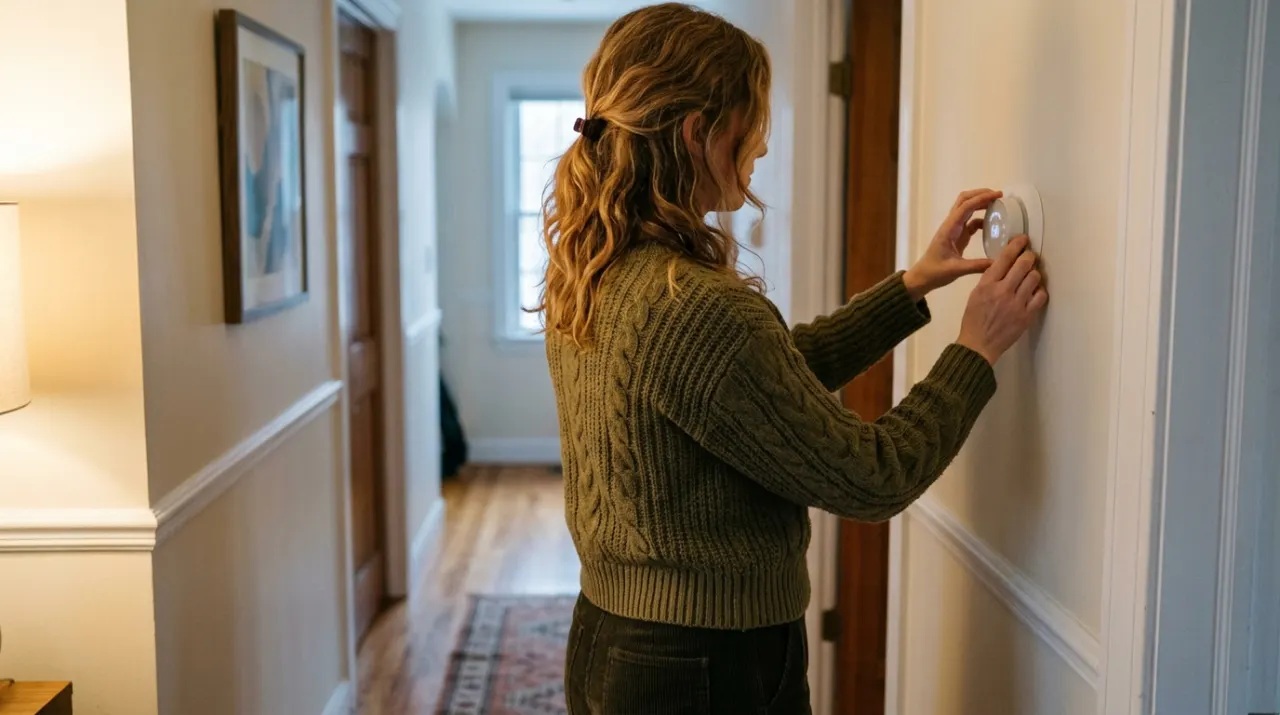
The F Series has been Cadet's mainstream line for a long time, and that shows in the details: a steel enclosure with a powder-coat finish that survives being kicked, a straightforward mounting pattern, and compatibility with both integral and wall-mounted line-voltage thermostats. A wall thermostat is the better choice — a thermostat mounted on the heater is sitting in the heater's own rising warm air, which makes it cut out early and cycle the room wider than it should.
The honest caveat is that this is hard-wired equipment. It needs a dedicated circuit and a line-voltage thermostat, and that is licensed electrician work in essentially every jurisdiction. Budget for it.
Check price on Amazon → (paid link)
Best Baseboard Heaters 2026: The Ranked Field
Best for a bedroom or living room as a primary or supplemental heat source
- 1,500 W on 120 V — about 5,100 BTU per hour
- 72 in. long, spreading heat across a whole wall
- Hard-wired, with a separate wall thermostat
- Steel enclosure with a durable powder-coat finish
Why buy it: six feet of element is the length that actually produces even, draft-free warmth instead of a hot spot in one corner.

Best for the same coverage with a heavier-gauge enclosure
- 1,500 W on 120 V across a 6 ft element
- Heavy-gauge steel with a bright white finish
- Full-length wireway on both ends for easier wiring
- Compatible with King thermostat kits
Why buy it: King builds a noticeably sturdier enclosure than most, and the double-ended wireway makes the electrical work far simpler.
Best for a bathroom, small bedroom or home office
- 1,000 W on 120 V — about 3,400 BTU per hour
- 4 ft length for a shorter wall run
- Heavy-gauge steel enclosure
- Accepts an integral or wall-mounted thermostat
Why buy it: a four-foot unit fits under a window in a small room where a six-foot heater simply will not go.
Best for a bedroom of roughly 120 to 150 sq ft
- 1,250 W on 120 V — about 4,300 BTU per hour
- 5 ft length, the most common bedroom fit
- Heavy-gauge steel with a smooth white finish
- Standard King mounting and thermostat compatibility
Why buy it: five feet at 1,250 W is the size that actually matches an average American bedroom, and it is the one most people should be buying.

Best for a rental, or any room where hard wiring is not an option
- 1,500 W on 120 V, about 5,120 BTU per hour
- 49 in. long with a cord and plug — no wiring required
- Built-in thermostat and feet
- Steel enclosure, same element as the hard-wired F Series
Why buy it: the only unit here that needs no electrician, which makes baseboard heat available to renters for the first time.
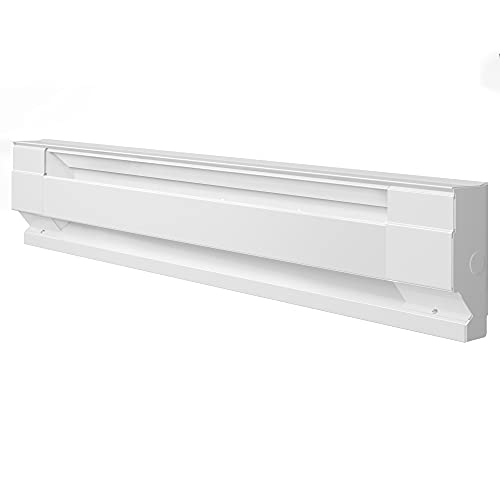
Best for adding a zone to an existing 240 V baseboard system
- 750 W at 240 V, 563 W at 208 V — about 2,560 BTU
- 36 in. length for a short wall or a bathroom
- Matches existing 240 V baseboard circuits
- Steel enclosure with a standard mounting pattern
Why buy it: if the house already runs 240 V baseboards, adding a matching unit is far simpler than mixing voltages.
Quick Comparison
| Product | Best for | Rating | Price | Buy |
|---|---|---|---|---|
| Cadet F Series 72 in. Electric Baseboard Heater, 6F1500-1W, 120V 1500W | Best Overall | — | Check (paid link) | |
| King 6K1215BW 1500-Watt 120-Volt 6-Foot Baseboard Heater, Bright White | Best 6-Foot Alternative | — | Check (paid link) | |
| KING 4K1210BW K Series Baseboard Heater, 4 ft, 1000W, 120V, Bright White | Best for Small Rooms | — | Check (paid link) | |
| King 5K1212BW 1250-Watt 120-Volt 5-Foot Baseboard Heater, Bright White | Best Mid-Size | — | Check (paid link) | |
| Cadet F Series 49 in. Portable Electric Baseboard Heater, 4P1500W, 120V | Best Plug-In | — | Check (paid link) | |
| Cadet F Series 36 in. Electric Baseboard Heater, 3F750W, 240/208V | Best 240V Option | — | Check (paid link) |
How We Rank
We do not buy, install or physically handle these heaters. Rankings come from aggregating star ratings and review volume across thousands of verified owner reviews, weighting recent reviews above launch-window ones, checking published wattage, length, voltage, watt density and safety listings against manufacturer documentation, and reading negative reviews for the failures that appear after a full heating season.
Four factors set the order. Watt density and length, because spreading the same wattage over more element is what makes baseboard heat comfortable. Enclosure quality, since these live at floor level and get kicked, vacuumed into and leaned on. Wiring practicality — wireway access, thermostat compatibility and whether a plug-in option exists. And owner satisfaction weighted by review volume. Prices were checked at time of writing. Full method: how we rank.
The Baseboard Heaters, Reviewed
1. Cadet F Series 72 in. — Best Overall
Covered above. Consensus Score ████████░░ 8.3. Strengths: the right length and watt density for an average bedroom or living room, silent fanless operation, a durable steel enclosure, wide thermostat compatibility, and a long production history. Recurring complaints: the enclosure gauge is lighter than King's and owners report it denting easily. The finish is prone to a burning smell on first use as manufacturing oils burn off — normal, but alarming. Several reviewers describe the mounting holes not aligning with studs without additional blocking. And the electrician cost surprises buyers who assumed it plugged in.
2. King 6K1215BW — Best 6-Foot Alternative
The same 1,500 watts over the same six feet in a heavier-gauge enclosure, with a full-length wireway at both ends that makes the electrical work noticeably easier — an installer can bring the feed in from either side without contortions. King has a strong reputation among electricians for exactly this kind of detail.
Consensus Score ████████░░ 8.3 — equal to the Cadet on ratings, with better feedback on build quality
Recurring complaints: it costs a little more than the equivalent Cadet, which owners note. Thermostat kits are sold separately and the compatibility list is not obvious from the listing, leading to wrong purchases. And several reviewers report the white finish being slightly off-white compared with trim, which matters if you are matching existing units.
3. KING 4K1210BW 4 ft — Best for Small Rooms
A thousand watts over four feet, or about 3,400 BTU — the right size for a bathroom, a small bedroom or a home office of roughly 100 square feet. The value here is fit rather than output: a four-foot unit goes under a window or along a short wall where a six-footer physically will not.
Consensus Score ████████░░ 8.2 — well rated, with capacity expectations the main issue
Recurring complaints: undersizing. Owners who install a 1,000-watt unit in a 150 square foot room report it running constantly without holding temperature, which is what the arithmetic predicts. The integral thermostat option is criticized as inaccurate because it sits in the heater's own updraft. And a few report the element ticking as it heats and cools, which is normal metal expansion but irritating in a quiet bedroom.
4. King 5K1212BW 5 ft — Best Mid-Size
Twelve hundred and fifty watts over five feet, about 4,300 BTU, which is genuinely the best match for the average American bedroom of 120 to 150 square feet. It is also the length that fits under a standard bedroom window with room to spare, which is more often the constraint than wattage.
Consensus Score ████████░░ 8.1 — solid ratings on a good review base
Recurring complaints: the same off-white finish note, and the same separate-thermostat confusion as its siblings. Several owners describe the packaging as inadequate for a six-foot steel enclosure, with dented units arriving. And a minority report the element buzzing faintly on some circuits, which is usually a dimmer or a shared load rather than the heater.
5. Cadet F Series 49 in. Portable 4P1500W — Best Plug-In
The exception that makes this category available to renters. Same 1,500-watt F Series element, same steel enclosure, but with feet, a built-in thermostat, and a cord and plug. No electrician, no dedicated circuit, no landlord conversation. Around 5,120 BTU from a standard outlet.
Consensus Score ███████░░░ 7.9 — good ratings, with cost relative to hard-wired units the main complaint
Recurring complaints: it costs more than the hard-wired equivalent, which owners find counterintuitive. The cord is short and, since CPSC guidance forbids extension cords with heaters, that dictates where the unit can go. The integral thermostat sits in the updraft and reads high. And because it stands on feet rather than mounting to the wall, it is easier to knock and harder to vacuum around.
6. Cadet F Series 36 in. 3F750W 240/208V — Best 240V Option
The unit to buy when the house already runs 240-volt baseboards, which many homes built with electric heat do. Seven hundred and fifty watts at 240 volts, or 563 at 208, in a 36-inch enclosure — about 2,560 BTU, suited to a bathroom, a hallway or a small bedroom being added to an existing zone.
Consensus Score ███████░░░ 7.8 — decent ratings, with voltage confusion the recurring problem
Recurring complaints: voltage. A meaningful share of poor reviews come from buyers who installed a 240-volt heater on a 120-volt circuit and got a quarter of the rated output, which is exactly what physics dictates. Output at 208 volts is lower again, which catches out buyers in apartment buildings. And at 750 watts it is a small heater, so expectations need to match.
How to Choose a Baseboard Heater
Size it before you shop. Ten watts per square foot for a well-insulated room with 8-foot ceilings, then add roughly 20 percent for large or single-glazed windows, an exterior corner, poor insulation, or an unheated crawl space or garage below. Convert wattage to length at 250 watts per foot: 1,000 watts is 4 feet, 1,250 is 5, 1,500 is 6.
Then confirm the wall will take it. Under a window is the correct position, because that is where cold air falls and the rising warm air cancels the draft. If the window wall cannot take the full length, two shorter heaters wired to one thermostat work just as well and often look better.
Get the voltage right, and this is where most bad reviews come from. A 240-volt heater on a 120-volt circuit produces roughly a quarter of its rated output. A 240-volt heater on a 208-volt commercial or apartment supply produces about 75 percent. Check what is actually at the wall before ordering, and if the house already has baseboards, match their voltage.
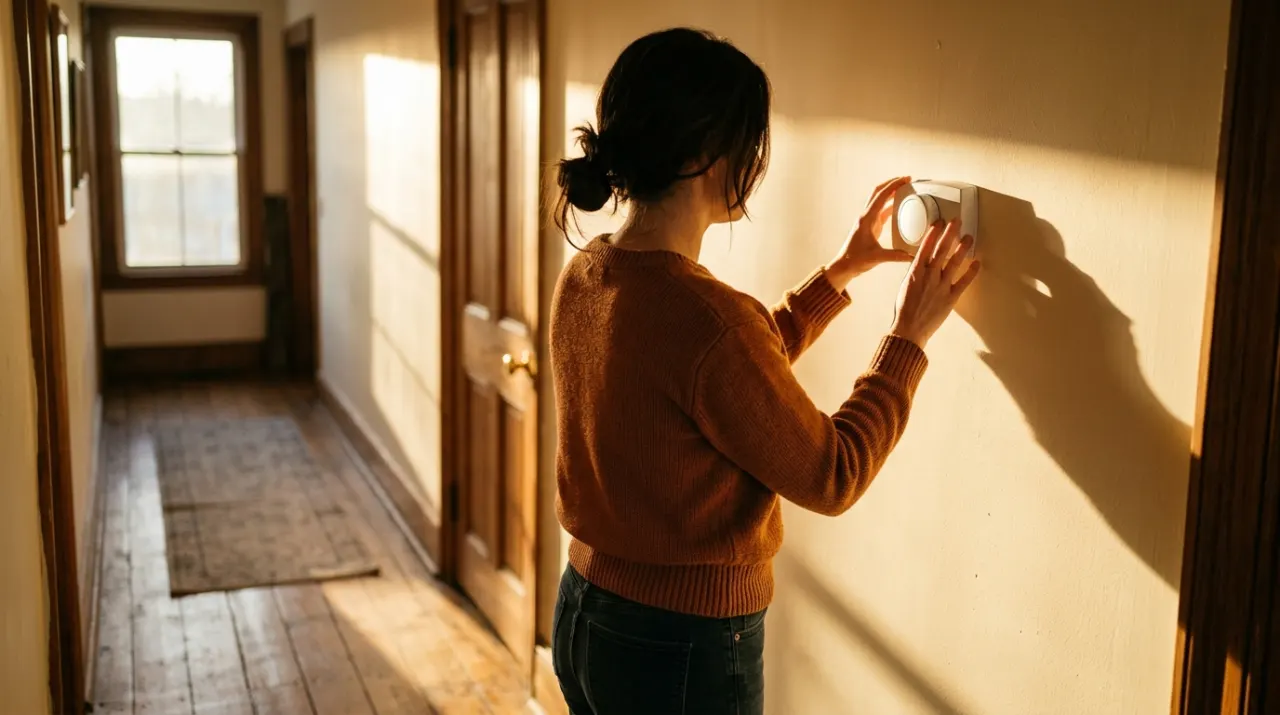
Choose a wall thermostat over an integral one. A thermostat mounted on the heater sits in the heater's own rising warm air and satisfies early, which makes the room cycle wider and feel colder than the setpoint suggests. A line-voltage wall thermostat on an interior wall away from the heater and out of direct sun gives far better control, and a programmable one pays for itself.
Finally, respect the clearances. At least 12 inches in front, nothing blocking the top slots, and curtains that clear the unit or stop above it — the US Fire Administration asks for three feet between a heat source and anything that can burn, and curtains over a live element are exactly the failure it has in mind. Blocking a baseboard heater is both the most common cause of poor performance and the leading cause of scorched furniture in the category.
What Owners Actually Complain About
Four themes dominate the negative reviews.
Undersizing is the biggest, and it is arithmetic rather than a product fault. A heater sized at 6 watts per square foot instead of 10 will run continuously and never hold the room, and the owner concludes baseboard heat does not work. Do the calculation, and round up rather than down.
Voltage mistakes come second and produce the most dramatic disappointments. A 240-volt unit on 120 volts delivers a quarter of its rating and feels broken. Check the circuit, and if you are matching existing heaters, match their voltage exactly.
Running cost is third and it is honest. Electric resistance heat is the most expensive common way to heat a house, because every BTU costs the full price of the electricity that made it — a heat pump moves three to four times as much heat per kilowatt-hour. Baseboard makes sense for a room, an addition, or a zone you use occasionally. It rarely makes sense for a whole house unless electricity is unusually cheap.
And the burning smell on first use generates a steady flow of alarmed one-star reviews across every brand. New elements burn off manufacturing oils and settled dust for the first few hours. Ventilate the room the first time you run it, and expect the same thing each fall after the heater has sat idle collecting dust all summer — vacuuming the fins before the first cold night largely prevents it.
The Verdict
For a standard bedroom or living room, buy the Cadet F Series 72 in. — the right length, the right watt density, silent, and backed by a long track record. If you want a sturdier enclosure and easier wiring, the King 6K1215BW is its equal and arguably better built. Smaller rooms should step down rather than run a big heater at a low setting: the King 5K1212BW for an average bedroom, the King 4K1210BW for a bathroom or office. Renting or unable to hard wire? The Cadet 4P1500W plugs in. And if the house already runs 240 volts, match it with the Cadet 3F750W.
Check price on Amazon → (paid link)
Next: compare portable options in best space heater and best oil filled radiator heater, size a room with what size space heater for a room, or reduce the load first with how to weatherstrip a door.