 Garden
Affiliate Disclosure
Some links on this page are affiliate links. As an Amazon Associate, we earn from qualifying purchases — at no extra cost to you. We do not buy, test, or physically handle the products we cover; our rankings come from aggregated owner reviews, ratings and expert consensus. Commissions never change our verdicts. How we rank · full disclosure.
The short answer: buy Crock-Pot. A slow cooker is a heating element, a thermostat and a pot, so what separates the brands is not cooking — it is whether you can buy a replacement crock and lid in three years, and Crock-Pot is the brand that sells them. Buy Instant instead if you want pressure cooking and a pot that cannot crack, and Ninja if you cook in large batches.
This page answers which brand. It does not answer which cooker. Each entry below names one representative machine to anchor the company and nothing more — the model-by-model ranking is at best slow cooker, which is where the buying decision actually happens. Then narrow by need with best programmable slow cooker, slow cooker vs Instant Pot or what size slow cooker for a family of 4.
Why Brand Is a Different Question From Model Here
Slow cookers are the simplest appliance in the kitchen. An element, a thermostat and a pot — there is very little to engineer, which is why two cookers at the same size and price cook almost identically. That has an unusual consequence: brand tells you almost nothing about how well the machine works, and almost everything about what happens when something breaks.
- Replacement stoneware and lids. This is the decisive axis, because it is what fails. A crock cracks from thermal shock at the sink, or a glass lid goes off the counter, and the appliance either costs twenty dollars to fix or it is finished. Almost nobody checks this before buying.
- Brand licensing and corporate ownership, which in this category is unusually heavy. Several of the most familiar slow cooker names are brands inside larger appliance groups, and that shapes how long parts stay listed.
- Published warranty terms and what they exclude, since one year is the norm and broken ceramic is very rarely covered as a defect.
- Recurring parts. Sealing rings on multi-cookers, gaskets on locking transport lids, and nonstick pots on anything that browns.
- Heating architecture, the one genuine design difference: wrap-around elements against base-only heating.
- Breadth of range, because 2 quarts and 8 quarts are different appliances for different households.
One thing that is not a brand-level difference: cookers running hotter than they used to. That is an industry-wide response to food-safety guidance, it affects every brand equally, and old recipes will overcook in any new machine.
The Brands at a Glance
Our #1 Brand: Crock-Pot
Crock-Pot did not merely define the category — the name is genericised in American kitchens — and it still leads on the only measure that separates brands in an appliance this simple.
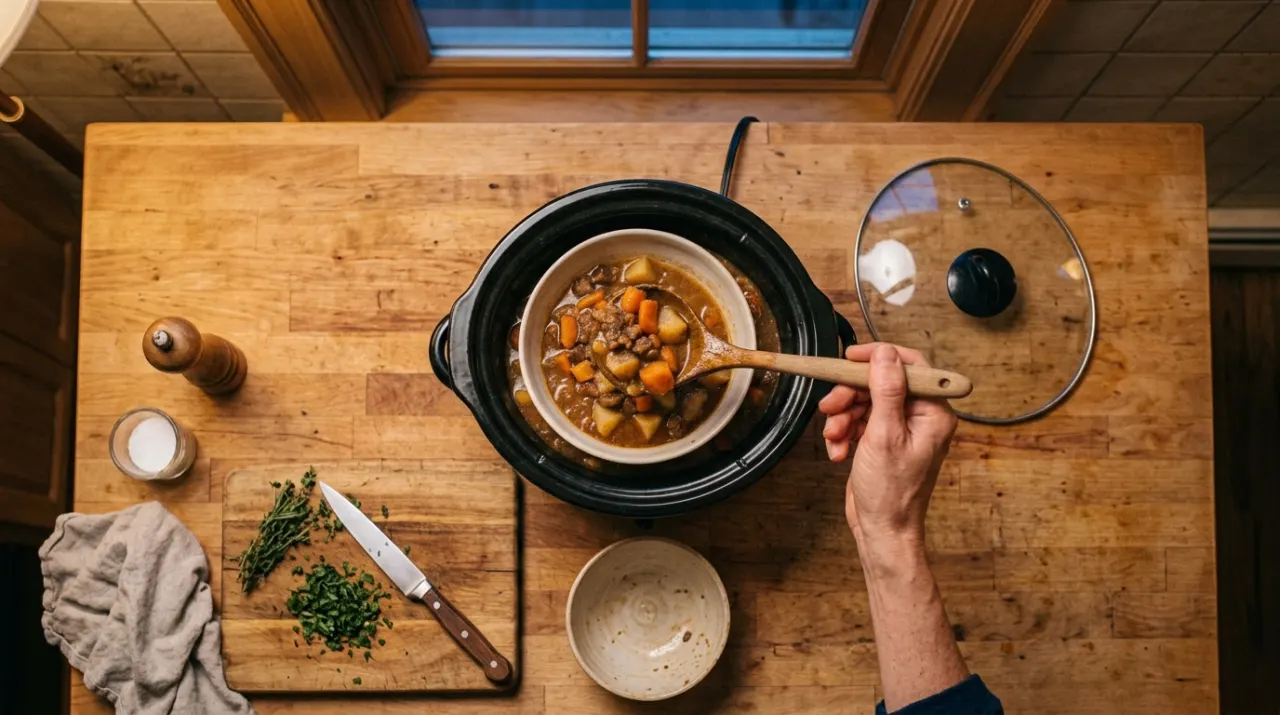
What it does better than the others. Parts. The part of a slow cooker that actually breaks is the stoneware, almost always from thermal shock when a hot crock meets cold water in a sink, and the second most common breakage is the glass lid going off a counter. Crock-Pot sells replacements for both, for models years old, and there is a third-party market behind the popular sizes as well. That is the difference between a fifteen-dollar inconvenience and a new appliance, and no other brand in the category matches it.
Range is the second argument. Two-quart units for dips and sides, six-quart programmable Cook and Carry models with locking lids for potlucks, and seven-quart manual cookers that take a six-pound roast, at prices between roughly twenty-five and ninety dollars. We have anchored the brand above with the cheapest thing it sells rather than its flagship, deliberately: the parts argument is only worth anything if it holds at the bottom of the range too, and here it does.
Where it is weak. Manual models have no timer at all, so they stay on until somebody switches them off. The cheapest units use thinner stoneware that owners report chipping and hairline-cracking more readily. Programmable models put a digital control panel into an appliance whose whole appeal is that there is nothing to fail, and that panel is the likeliest long-term failure. Locking-lid gaskets perish and are another part to order. Crock-Pot does not brown, sear or pressure cook, so the whole modern multi-cooker case sits outside what this brand does. And like everyone else, its Low setting runs hotter than the machines older cooks remember.
Check price on Amazon → (paid link)
The Brands, Ranked

Best for the brand whose replacement stoneware and lids you can still order years later
- Replacement stoneware and glass lids listed for models years old
- A Sunbeam Products brand within Newell Brands
- Covers 2 quarts through 8, roughly $25 to $90
- Wrap-around heating rather than a base element
Why buy it: Crock-Pot is the only brand in the category where a dropped crock or a broken lid is a parts order rather than a new appliance.

Best for slow cooking plus pressure cooking, browning and a stainless pot with no coating to wear
- Stainless inner pot with no nonstick coating to fail
- Silicone sealing rings are a genuine recurring consumable
- Instant Brands also owns Pyrex and Corelle
- Filed for Chapter 11 protection in 2023 and continues to trade
Why buy it: Instant sells the only pot in this comparison that cannot chip, crack from thermal shock or lose a coating, which removes the category failure mode entirely.

Best for cooking for a crowd in a pot that goes from the base into a hot oven
- A SharkNinja brand with a published US parts operation
- Oven-safe nonstick pot rather than stoneware
- Sears, slow cooks, steams, braises, proofs and bakes
- One-year warranty and a coating that will not last forever
Why buy it: Ninja is the only brand here whose pot goes straight into a hot oven, which no stoneware crock can do without cracking.
Quick Comparison
| Product | Best for | Rating | Price | Buy |
|---|---|---|---|---|
| Crock-Pot 2-Quart Manual Slow Cooker with Removable Oven-Safe Stoneware | Best Brand Overall — Crock-Pot | — | Check (paid link) | |
| Instant Pot Duo 7-in-1 Electric Pressure Cooker and Slow Cooker with Steamer and Saute | Best Value Multi-Cooker Brand — Instant | — | Check (paid link) | |
| Ninja PossibleCooker PRO 14-in-1 Multi-Cooker 8.5-qt MC1001 | Best Premium Big-Batch Brand — Ninja | — | Check (paid link) |
Five Years of Parts: What You Buy Again, and What Ends the Machine
Slow cookers cost almost nothing to run — roughly 200 to 300 watts on Low, less than an oven draws in a single hour, as do slow cookers use a lot of electricity sets out. The real cost of ownership is parts, and it is entirely a brand decision made at the moment of purchase.
| Brand | What you buy again over five years | Pot material | When the pot breaks or wears |
|---|---|---|---|
| Crock-Pot | Occasionally a lid gasket; a crock or lid if one breaks | Stoneware | Order a replacement crock or lid — the strongest parts record here |
| Instant | Silicone sealing rings, roughly yearly | Stainless steel | Effectively never: stainless cannot crack or lose a coating |
| Ninja | Nothing routine, then a pot once the coating tires | Nonstick, oven safe | Replacement pots sold while the model is current |
| Hamilton Beach | Probe cables on probe models; lid gaskets | Stoneware | Parts listed for current models, thinner on retired ones |
| Cuisinart | Nothing routine, then a pot once the coating tires | Nonstick | Depends on the model still being listed |
| Unbranded and marketplace cookers | Nothing, because nothing is sold | Stoneware | A dropped crock ends the appliance — treat it as disposable |
That last row is the honest answer for a large share of what is sold in this category, and it is worth saying plainly: if nobody sells the crock, the machine is disposable and should be priced as a three-year purchase rather than a lifetime one. The silicone sealing ring on a multi-cooker is the one genuine recurring consumable here — it absorbs odour and hardens, manufacturers generally advise replacing it around once a year, and spares are cheap and easy to find. It is a small cost, but it is the only line item in this whole category that repeats on a schedule.
Warranty, Ownership and Heating Design
| Brand | Who owns or operates it | Published warranty position | Heating | Range |
|---|---|---|---|---|
| Crock-Pot | A Sunbeam Products brand within Newell Brands | 1 year typical | Wrap-around element | Widest here, 2 to 8 quarts |
| Instant | Instant Brands, which also owns Pyrex and Corelle | 1 year typical | Base element | Moderate, multi-cooker weighted |
| Ninja | A SharkNinja brand | 1 year standard | Base and side heating | Narrow in this category, large capacities |
| Hamilton Beach | Publicly traded American company | 1 year typical | Wrap-around element | Moderate, budget-weighted |
| Cuisinart | A Conair brand | 3 years on many kitchen models | Base element | Narrow in this category |
Warranty terms and corporate arrangements both change, and everything above reflects published company material at the time of writing — the individual listing is always the authority. Two patterns are worth carrying away. First, this is a category where almost everything is a brand inside a larger group rather than an independent manufacturer, so support quality follows the parent rather than the badge. Second, a one-year warranty on a machine whose likeliest failure is broken ceramic tells you very little; parts availability is the more useful number, and it is the one nobody publishes as a headline. Read the document rather than the duration: the FTC notes a manufacturer cannot require you to use branded parts or services to keep coverage unless it supplies them free. Appliance warranties decoded covers what these terms usually exclude.
How We Rank Brands
We do not buy these cookers or cook in them. Ranking brands rather than models means weighting different evidence. Replacement part availability carries the most weight here, because in an appliance this mechanically simple it is the single most consequential difference between brands. Aggregate rating across a brand’s whole range rather than at its flagship. Published warranty terms read for their exclusions. Heating architecture, since wrap-around against base-only is a documented design difference with real effects over an eight-hour cook — and holding temperature is the whole safety case, given the USDA puts slow cooker operating temperatures between 170 and 280 degrees Fahrenheit and that food stays out of the danger zone only while the cooker is running. And failure patterns in reviews written six months or more after purchase, which is where cracked stoneware, perished gaskets and dead control panels actually appear. Prices were current at the time of writing. Full method: how we rank.
The Brands, Assessed
1. Crock-Pot — Best Brand Overall
Covered above. Who it is for: anyone who wants a slow cooker and nothing else, and wants it usable in eight years. What it does better: replacement stoneware and lids that stay listed, the widest size range in the category, wrap-around heating that is more even over a long cook than base-only designs, and the largest and steadiest owner record of any name here. Where it is weak: no timer on manual models, thinner stoneware at the bottom of the range, control panels that are the likeliest long-term failure on programmable units, gaskets that perish on locking lids, no browning or searing at all, and the same run-hot-on-Low behavior as every modern cooker.
2. Instant — Best Value Multi-Cooker Brand
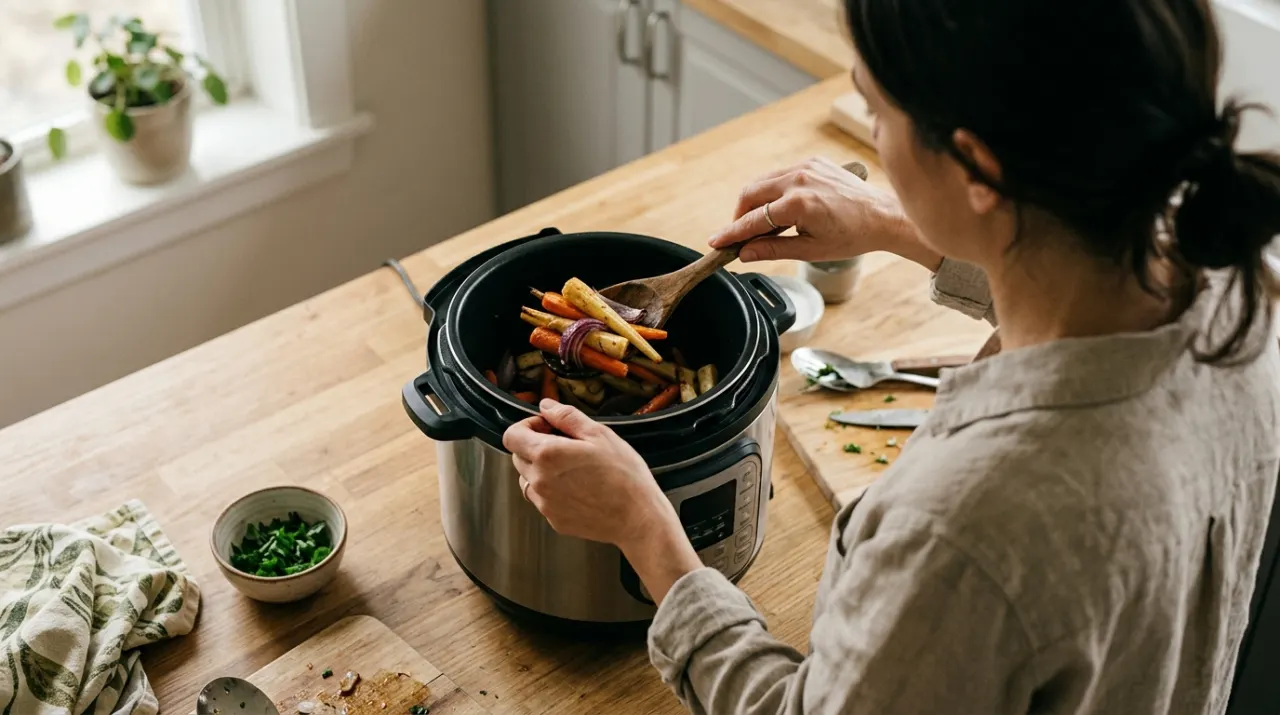
Who it is for: a household that wants one appliance rather than three, and would rather rescue a forgotten dinner under pressure than accept it is not happening. Instant is not primarily a slow cooker brand and that is both its strength and its limitation. It browns in the pot, pressure cooks, slow cooks, steams, makes rice and makes yogurt, in a single stainless inner pot with no extra pan to wash.
The parts story is genuinely different here, and it deserves more attention than it gets: a stainless inner pot cannot crack from thermal shock, cannot chip and has no coating to lose, which removes the failure mode that defines this entire category. In exchange it introduces the only true recurring consumable on this page, the silicone sealing ring, which absorbs odour and hardens and is generally advised to be replaced around annually. Spares are cheap and everywhere. On the corporate side, stated plainly: Instant Brands, which also owns Pyrex and Corelle, filed for Chapter 11 protection in 2023 and has continued to trade. That is not a reason to avoid the brand, but on a page ranking companies partly on whether a part will exist in five years, it belongs in the assessment rather than in a footnote.
Where it is weak: it heats from the base where a dedicated cooker wraps elements around the sides, and owners consistently report the slow-cook setting running cooler than a traditional cooker — many solve it by using the higher setting than a recipe suggests, but it is a real compromise over eight hours. There is a genuine learning curve. The lid is a two-hand operation. The warranty is one year. And a machine with this many functions has more that can eventually fail than a dial and an element.
3. Ninja — Best Premium Big-Batch Brand
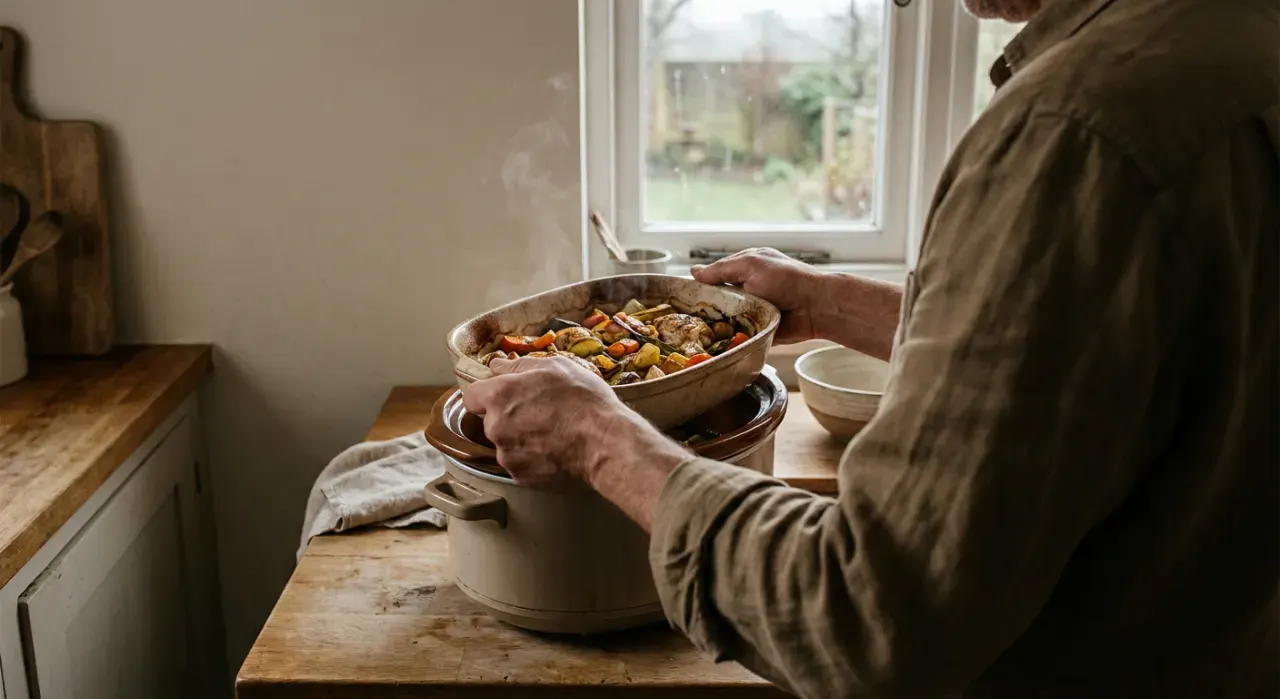
Who it is for: the household cooking for a crowd, or anyone who wants to finish a braise under an oven element rather than serving it pale. Ninja, a SharkNinja brand, has done the most interesting rethinking of the format in years: a large nonstick pot that sears on the base, slow cooks, steams, braises, proofs and bakes — and then goes straight into a hot oven, which no stoneware crock can do without cracking. Capacity is genuinely large, and the brand runs a published US parts operation, so replacement pots and accessories can be ordered while a model is current.
Where it is weak: the pot is nonstick, which means it is a wear part rather than a lifetime one, and it needs silicone tools and hand-washing to survive — the exact opposite of stoneware, which is nearly indestructible until the day it is not. A full 8.5-quart pot is heavy to lift. The footprint dominates a small counter. The warranty is one year, where Cuisinart publishes three on much of its kitchen range. And Ninja retires model lines faster than Crock-Pot does, so a replacement pot for a machine several years old is a less certain thing than a replacement crock would be.
The brands just outside this list
Two names belong on any honest list of slow cooker brands and are not carded here, because their machines are model-level recommendations that already sit in the head roundup. Hamilton Beach contributed the one genuinely useful feature invented in this category in decades: the temperature probe, which cooks a roast to an internal temperature and then shifts to Warm, rather than cooking to a clock and hoping. For pot roast, pork shoulder and whole birds that is a better tool than anything Crock-Pot sells, and its clip-tight gasket lids make transporting a full cooker realistic. Its weaknesses are a probe cable that owners report failing at the connector after a few years, a narrower range than Crock-Pot, and a thinner parts record on retired models. Cuisinart, a Conair brand, takes the other sensible step beyond a plain cooker: a sauté function hot enough to genuinely brown meat in the same pot you will slow cook in, which is the step most recipes call for and most people skip. It publishes three years on much of its kitchen range, the longest here. Against that, the pot is nonstick rather than stoneware, the unit is heavy, and its slow cooker review base is much smaller than the leaders so the durability picture is thinner. Both are ranked properly at best slow cooker. Beyond those, treat any cooker whose brand does not sell a replacement crock as a disposable appliance and price it accordingly — that filter removes most of the marketplace field on its own.
What Owners Complain About, By Brand
Two complaints dominate and neither is a brand failure. Food overcooking on Low is the loudest, and it is an industry-wide change rather than a defect: modern cookers move contents through the bacterial danger zone faster, so a modern Low stabilises around 190 to 200 degrees Fahrenheit and old family recipes scorch. Start checking two hours early. Cracked stoneware is the leading physical failure and it is nearly always thermal shock — a hot crock into a cold sink, or a cold crock straight from the refrigerator into a preheated base. Let it cool first, and see can you overcook meat in a slow cooker and how full should a slow cooker be for the two mistakes behind most disappointing results.
Brand-specific patterns are clear. Crock-Pot attracts complaints about the absence of timers on manual models and about control panels failing on programmable ones. Instant owners consistently report the slow-cook mode running cooler than a dedicated cooker, plus a learning curve. Ninja draws nonstick-wear and weight complaints, which is the trade for a pot you can sear and bake in. And across every brand, lids knocked off counters account for a surprising share of dead appliances — which is the whole argument of this page in one sentence, because whether that is a twenty-dollar problem depends entirely on the badge.
How to Choose a Slow Cooker Brand
A slow cooker and nothing else: Crock-Pot, for the wrap-around heating and the parts. One appliance replacing several: Instant, for pressure cooking and a pot that cannot crack. Cooking for a crowd, or finishing in the oven: Ninja. Roasts cooked to a temperature rather than a clock: a Hamilton Beach probe model. Browning in the pot with the longest published warranty: Cuisinart.
Then check two brand-level facts before you commit. Does the brand sell a replacement crock, pot and lid for this model? If not, it is a disposable appliance whatever it costs. What recurs? A sealing ring roughly yearly on a multi-cooker, a gasket on a locking lid, a nonstick pot eventually on anything that browns. Then get the size right, which matters more than the badge — a cooker needs to sit between half and two-thirds full to behave, and an oversized pot run quarter-full scorches at the edges. Choose the actual machine at best slow cooker, with programmable vs manual slow cooker for the control decision.
The Verdict
Crock-Pot is the slow cooker brand we would tell a friend to buy: even wrap-around heating, every size a household might want, the largest and steadiest owner record in the category, and replacement crocks and lids you can genuinely still order. Buy Instant if you want pressure cooking, browning and a stainless pot that cannot crack, and Ninja if you cook in large batches and want a pot that goes into a hot oven. Hamilton Beach and Cuisinart are both worth owning and are ranked model by model in the roundup. Then pick the cooker at best slow cooker. Check the current Crock-Pot price on Amazon → (paid link)
More from this hub: small kitchen appliances · best programmable slow cooker · slow cooker vs Instant Pot · is it safe to leave a slow cooker on overnight · how we rank.