 Garden

Affiliate Disclosure
Some links on this page are affiliate links. As an Amazon Associate, we earn from qualifying purchases — at no extra cost to you. We do not buy, test, or physically handle the products we cover; our rankings come from aggregated owner reviews, ratings and expert consensus. Commissions never change our verdicts. How we rank · full disclosure.
Do not put wet batter, loose leafy greens, raw rice or dried grains, plain cheese, or large roasts in an air fryer. Each fails for a structural reason rather than a taste one: wet batter drips through the basket before it can set, light greens are lifted into the heating element by the fan, dry grains need submersion an air fryer cannot supply, uncoated cheese melts straight through the perforations, and a large roast scorches outside before the center reaches a safe internal temperature. Dry breading, cooked grains and smaller cuts all work.
Which foods fail, and why?
The pattern behind the list is simple. An air fryer is a small convection oven with a powerful fan and a perforated basket, so anything that is liquid, light, or needs to be submerged is working against the appliance rather than with it.
| Food | What goes wrong | Do instead |
|---|---|---|
| Wet batter (tempura, beer batter) | Runs through the basket, burns on the drawer | Dry breading: flour, egg, panko, oil mist |
| Loose leafy greens | Fan lifts them into the element | Oil-coat, weigh down, low temperature, small batches |
| Raw rice, pasta, dried beans | Needs submersion; scorches dry | Cook conventionally, then crisp if wanted |
| Plain cheese | Melts through the perforations | Breaded cheese sticks, frozen solid first |
| Large roasts, whole turkey | Outside burns before the center is safe | Full oven; 4 to 5 lb chicken is the basket limit |
| Broccoli and cauliflower florets, dry | Tips dehydrate and burn | Toss in oil first, cover the tips |
| Delicate white fish, unprotected | Fan tears the flake apart | Breaded, foil-wrapped, or on parchment |
| Whole-grain toast in a basket model | Blows around, browns unevenly | Use a toaster or oven-style unit |
Why is wet batter the classic failure?
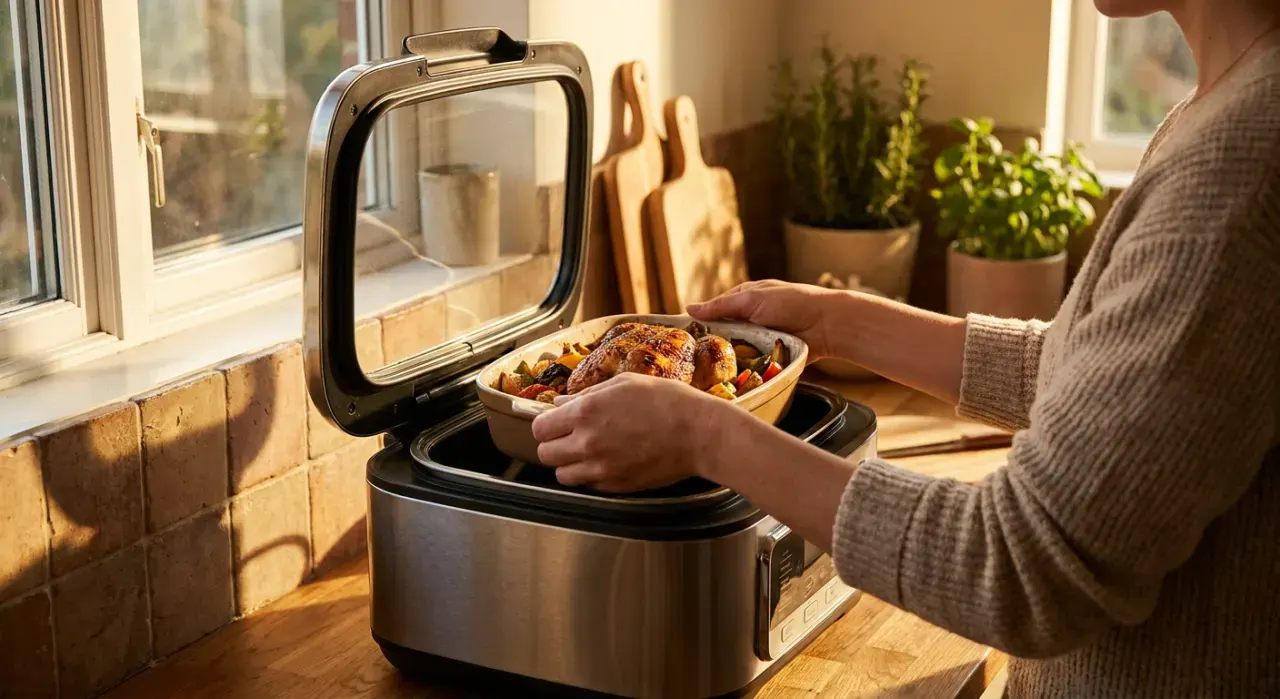
Because a deep fryer and an air fryer set a coating by completely different mechanisms. Batter dropped into 350 degree oil forms a crust within a couple of seconds, because oil transfers heat to the surface far faster than air can. An air fryer has no such medium — the coating sits in moving hot air, stays liquid for a good half-minute, and gravity wins. The batter runs off the food, through the perforations in the basket, and onto the drawer, where it bakes into a hard burnt layer and smokes.
Dry breading is the workaround and it is genuinely good. Flour, then egg wash, then panko or seasoned breadcrumbs, misted with a high-smoke-point oil like avocado or refined peanut, gives a crisp shell that clings because it was already solid when it went in. Frozen battered foods work too, because the batter was set at the factory.
What happens with light foods and the fan?
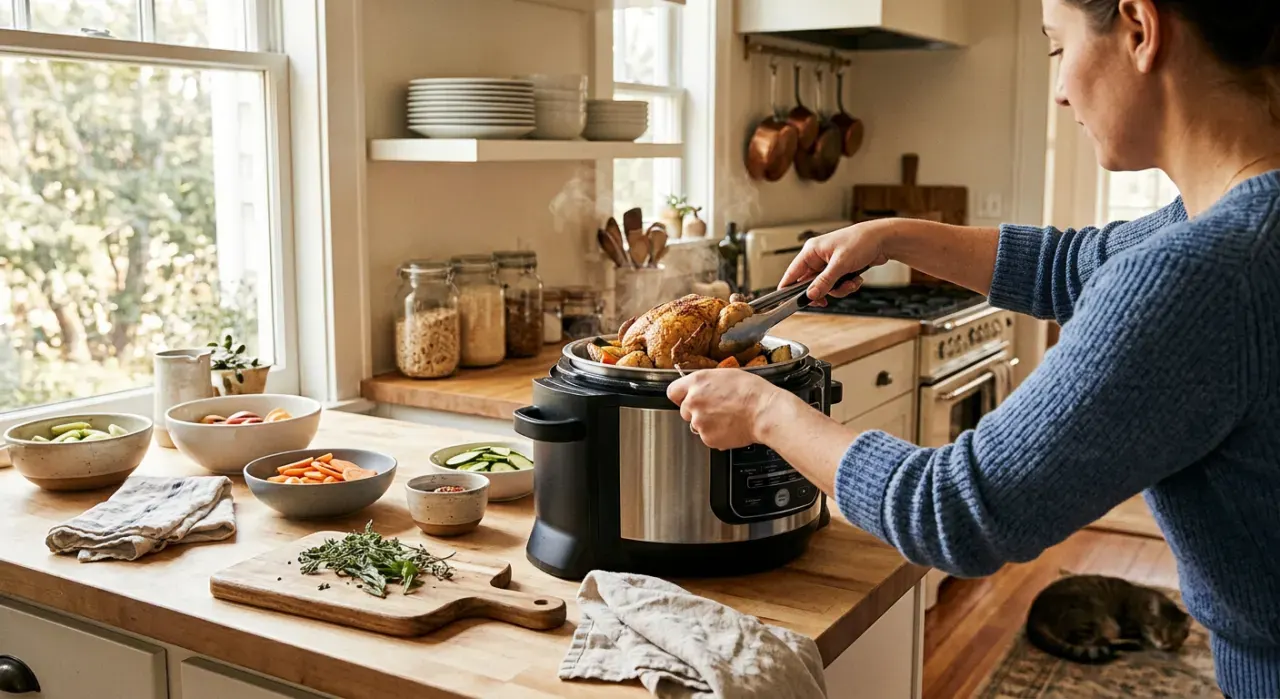
They end up on the element. Air fryer fans move air hard enough to lift a slice of bread, a sheet of parchment or a handful of spinach, and contact with a glowing element scorches the item instantly. If there is grease residue on whatever gets lifted, it can spark. This is also why manufacturers warn against putting a liner in an empty basket during preheat: nothing is holding it down.
The rule that follows is worth generalizing. Anything going into an air fryer should either be heavy enough to stay put or be weighed down by something that is. Kale chips work when the leaves are oiled and pressed under a rack; they do not work loose and dry.
What about size and safety?
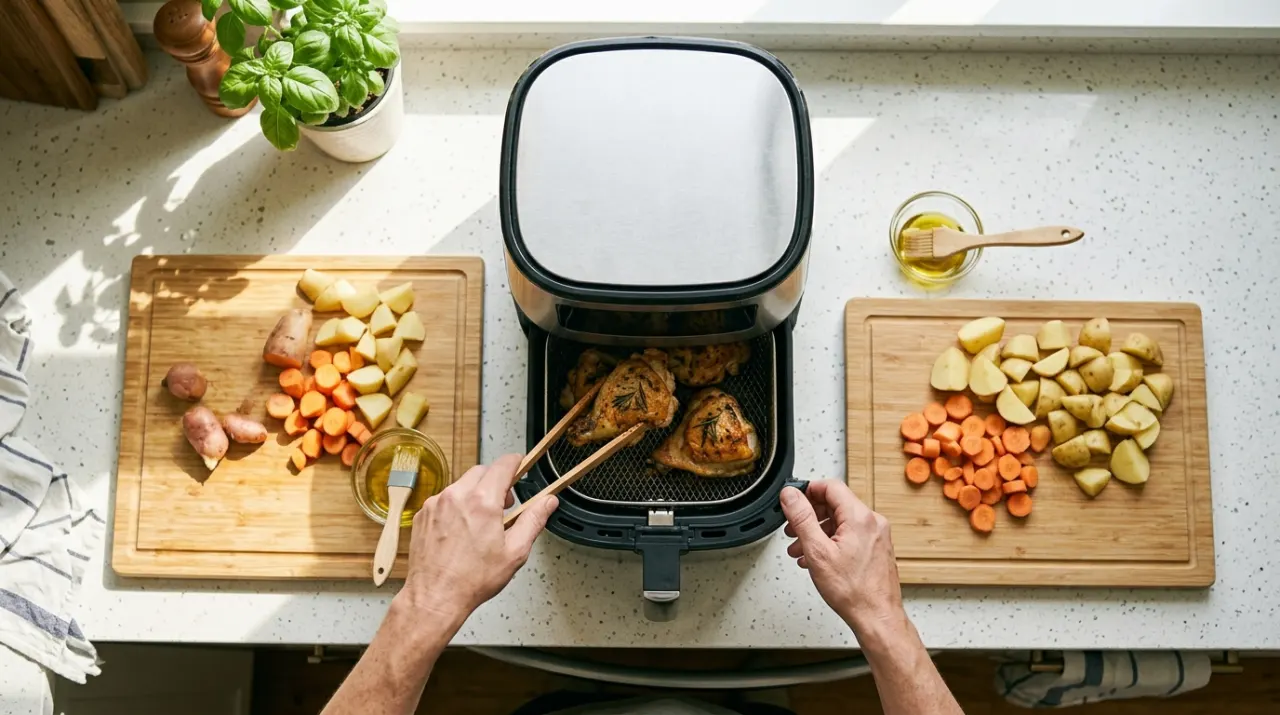
A basket air fryer sits the food a few inches below the heating element, which is why it browns so effectively and why large cuts fail. A 6 to 8 pound roast or a whole turkey develops a dark, sometimes burnt exterior while the center is still well short of the USDA safe minimum — 165 degrees Fahrenheit for poultry, 145 with a three-minute rest for whole cuts of beef and pork. That is a safety problem, not just a cosmetic one.
The practical ceiling is a 4 to 5 pound chicken in a 6 to 8 quart basket, with the breast at least an inch clear of the element, checked with an instant-read thermometer in the thickest part of the thigh. Anything larger belongs in a conventional oven, and an oven-style air fryer with a rotisserie handles birds more gracefully than a drawer basket because it is wider than it is tall.
Where to go next
Several of these limits show up as smoke — why an air fryer smokes covers the causes and fixes. Liner questions are settled in foil in an air fryer. If capacity is the constraint, see what size air fryer suits a family of four and basket versus oven air fryers. Shopping? The best air fryers ranks models on aggregated owner ratings, inside the small kitchen appliances hub.
We never buy or physically handle the products we rank — our picks come from aggregated owner reviews and expert consensus, explained on how we rank.