 Garden
Affiliate Disclosure
Some links on this page are affiliate links. As an Amazon Associate, we earn from qualifying purchases — at no extra cost to you. We do not buy, test, or physically handle the products we cover; our rankings come from aggregated owner reviews, ratings and expert consensus. Commissions never change our verdicts. How we rank · full disclosure.
The short answer: the most effective low-maintenance landscaping ideas all reduce the two biggest sources of yard work — lawn and weeds. Shrink the lawn and replace it with beds, groundcover, or hardscape; plant native, drought-tolerant perennials and shrubs that thrive without babysitting; mulch beds 2 to 3 inches deep to smother weeds and hold moisture; group plants by water need so irrigation is simple; and use permanent hardscape for the areas you actually walk on. Design the work out once, and the yard largely runs itself.
Low-maintenance does not mean low-interest or bare. A well-planned yard can be lush, colorful, and full of texture while needing a fraction of the mowing, watering, and weeding of a conventional lawn-and-annuals setup. The trick is choosing plants and surfaces that are self-sufficient, and designing so upkeep is occasional rather than weekly. Here are twelve ideas that genuinely cut the workload, grouped by how much change each involves.
1. Shrink the lawn — the biggest low-maintenance win
Turf is the most demanding thing in most yards: mowing, edging, watering, fertilizing, aerating, and weed control, week after week. Cutting the lawn area cuts all of that proportionally.
- Keep only the lawn you use — a play or gathering area — and convert the rest to beds or hardscape.
- Sheet-mulch to remove grass without digging: lay cardboard over the turf, top with 3 to 4 inches of mulch, and plant into it after a season. Free and back-friendly.
- Replace narrow, hard-to-mow strips along fences and driveways with gravel or groundcover first — they are the most annoying to maintain.
Every square foot of lawn you retire is a square foot you never mow again. This one move does more than any other on the list.
2. Plant natives and tough perennials
Plants adapted to your region survive on natural rainfall and shrug off local pests once established, which means no coddling.
- Choose native perennials and shrubs suited to your USDA zone — they need no supplemental water in a normal season once rooted in.
- Favor perennials over annuals so you plant once instead of replanting every spring.
- Pick disease-resistant, slow-growing shrubs that hold their shape and rarely need pruning.
- Use ornamental grasses for movement and structure with one annual cut-back and nothing else.
If your region is dry, lean into it — see our full guide to drought tolerant landscaping, which is the lowest-maintenance approach of all in arid climates.
3. Mulch deeply and everywhere
A thick mulch layer is the closest thing to a maintenance cheat code: it suppresses weeds, holds soil moisture, moderates temperature, and slowly feeds the soil.
- Apply 2 to 3 inches of mulch across all planting beds — enough to block light to weed seeds.
- Keep it a couple of inches off plant stems and trunks to avoid rot.
- Top up once a year or two as it breaks down; that is nearly the whole maintenance commitment for a mulched bed.
For the ranked field of bed mulches, see best mulch for flower beds; we rank on aggregated owner reviews, not in-house testing — see how we rank. To decide between materials for different zones, gravel vs mulch paths is worth a read.
4. Use hardscape for the areas you actually use
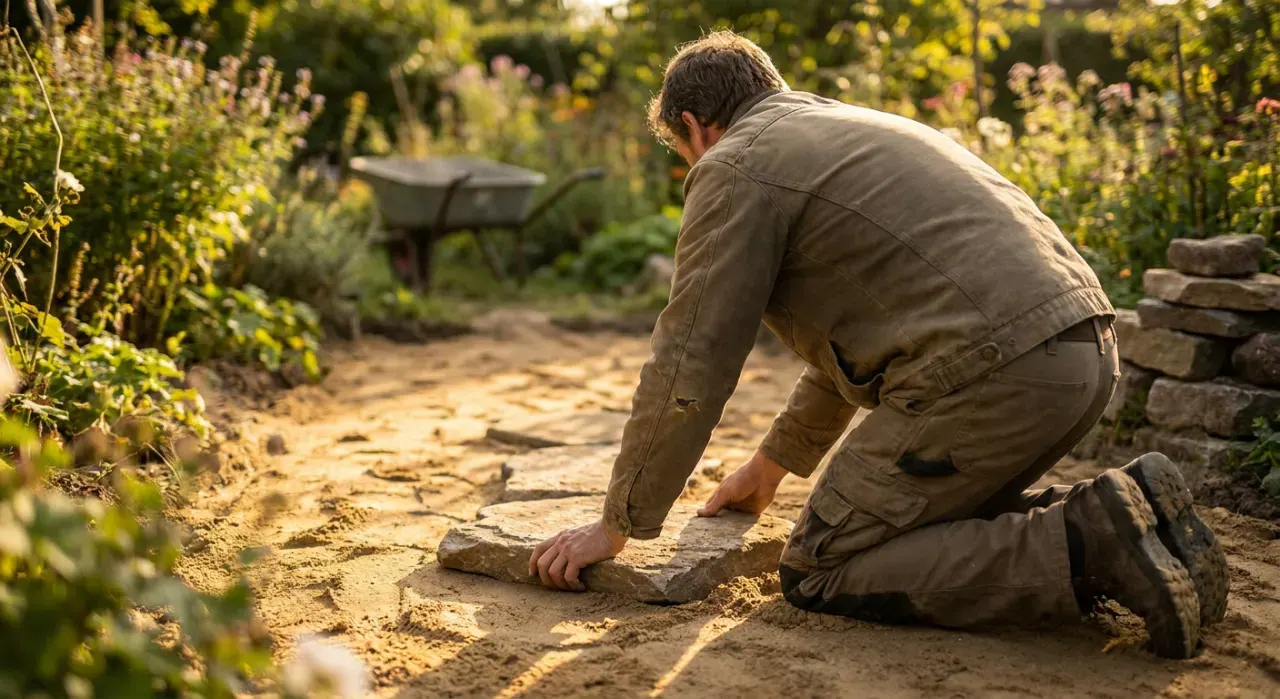
Patios, paths, gravel seating areas, and decks need essentially no ongoing care beyond an occasional sweep or wash, and they handle heavy foot traffic that would wear out any plant.
| Hardscape | Upkeep | Best for |
|---|---|---|
| Gravel | Occasional rake and top-up | Paths, dry gardens, seating |
| Pavers | Sweep; refresh joint sand | Patios, walkways |
| Decking | Wash; reseal every few years | Sitting areas over uneven ground |
| Flagstone | Minimal | Natural-look paths |
Lay hardscape well the first time and it lasts decades. If you are considering a paver area, can you lay pavers directly on dirt covers the base prep that keeps it maintenance-free.
5. Install permanent edging
Crisp edges between lawn, beds, and paths keep grass from creeping into beds and mulch from spilling onto paths — the two jobs that eat weekend time.
- Steel, aluminum, or heavy composite edging lasts years and holds a clean line with no re-cutting.
- A mowing strip — a flush row of pavers or concrete between lawn and bed — lets the mower wheel run on it, eliminating hand-edging entirely.
See best landscape edging for the options that hold up.
6. Group plants by water need and automate irrigation
Watering by hand is a recurring chore; designing it away is not hard.
- Cluster thirsty plants together and dry-tolerant plants together, so each zone can be watered appropriately without waste.
- Fit drip irrigation on a timer for beds — it delivers water to roots, cuts evaporation, and runs itself. See best drip irrigation kit.
- Choose plants that need no supplemental water for the outer, less-used parts of the yard.
7. Replace problem lawn with groundcover
Slopes, shade, and narrow strips are miserable to mow. Low groundcovers fill them and choke out weeds.
- Creeping thyme, clover, and sedum handle sun and light traffic with almost no care.
- Shade groundcovers like pachysandra or native wild ginger cover ground where grass sulks.
- Let them knit together over a season or two and they need only an occasional trim.
More low-maintenance landscaping ideas
| Idea | Why it cuts work |
|---|---|
| 8. Landscape fabric under gravel and paths | Blocks weeds for years — see below |
| 9. Fewer, larger beds instead of many small ones | Less edge to maintain, easier to mow around |
| 10. Slow-growing, self-shaping shrubs | Little to no pruning |
| 11. Native meadow or no-mow zone in back areas | Mow once or twice a year, not weekly |
| 12. Perennial pollinator bed instead of annual color | Plant once, blooms return yearly |
Under gravel and non-planted areas, a quality landscape fabric barrier keeps the surface weed-free for years — see best landscape fabric and the caution in how long landscape fabric lasts under gravel before using it in planting beds, where it can do more harm than good.
Putting your low-maintenance landscape together
The lowest-maintenance yards are not the ones with the fewest plants — they are the ones designed so the plants and surfaces look after themselves. Start with the highest-work element you have, usually the lawn, replace a piece of it each season with mulch beds, natives, or hardscape, and add permanent edging and drip irrigation as you go. Within a couple of years the weekly grind of mowing, watering, and weeding shrinks to occasional seasonal upkeep. For the full toolkit of surfaces, edging, and structures, browse the landscaping and hardscaping hub and our front yard curb appeal guide.