 Garden

Affiliate Disclosure
Some links on this page are affiliate links. As an Amazon Associate, we earn from qualifying purchases — at no extra cost to you. We do not buy, test, or physically handle the products we cover; our rankings come from aggregated owner reviews, ratings and expert consensus. Commissions never change our verdicts. How we rank · full disclosure.
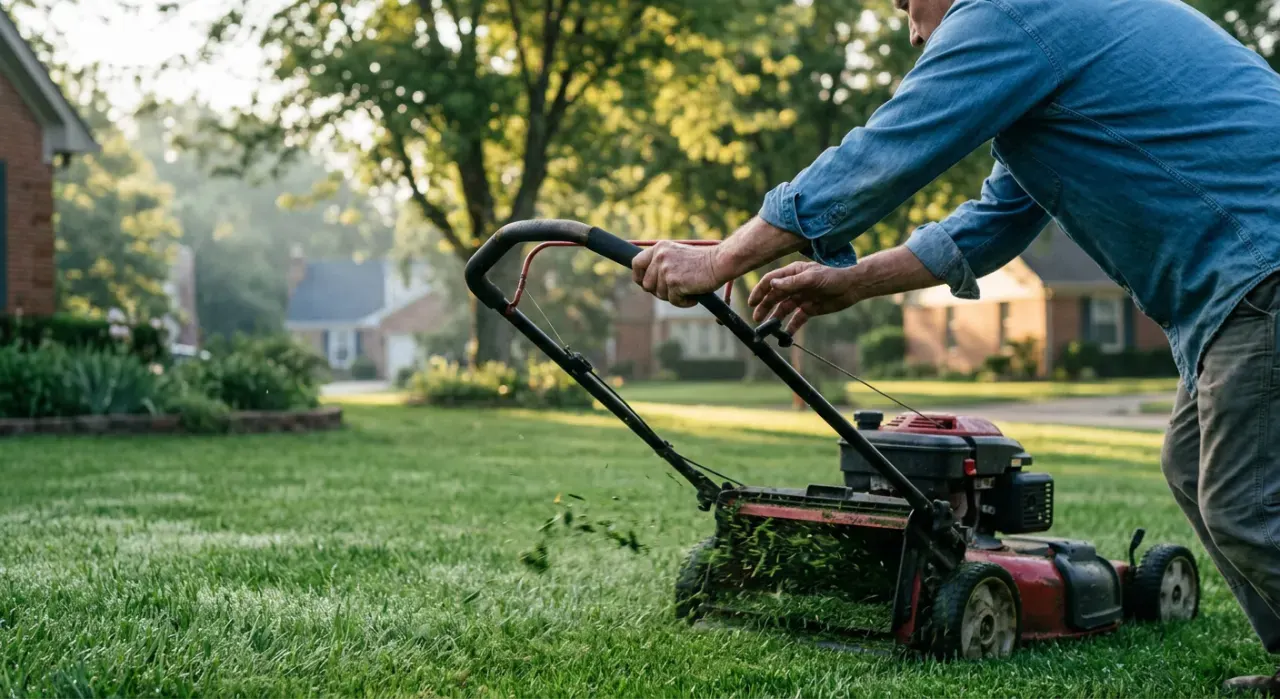
The short answer: you can mow wet grass, but you generally should not. Wet blades bend and clump instead of standing up to be cut cleanly, so the mower tears them, leaving a ragged lawn. Wet clippings clog the deck and discharge chute, mat down and can smother the grass, and their weight bogs the engine. On soft ground the wheels compact the soil and leave ruts, and moving a wet blade around the lawn spreads fungal disease. If you can wait for it to dry, wait — the cut and the lawn are both better for it.
When rain and a busy week collide, though, sometimes you have to. We do not run mowers across test plots; our mower rankings come from aggregated owner reviews and expert consensus, described in how we rank. The full routine is at the lawn care hub.
Why is mowing wet grass a problem?
Several things go wrong at once when the lawn is soaked, which is why extension turf programs advise waiting for dry conditions.
| Problem | What happens |
|---|---|
| Ragged cut | Wet blades fold over and tear instead of slicing cleanly |
| Clumping | Heavy wet clippings fall in mats that smother grass beneath |
| Clogging | The deck and chute pack with wet clippings and jam |
| Compaction and ruts | Wheels press soft, saturated soil and leave tracks |
| Disease spread | The blade and wheels carry fungal spores across the lawn |
| Engine strain | The extra load bogs a gas engine and drains a battery faster |

When is it OK to mow damp grass?
There is a difference between damp and soaked. Grass carrying light morning dew, or a lawn that has had a few hours to drain after a passing shower, is usually workable with a sharp blade and a slower pace. The test is simple: if water drips when you brush the blades with your hand, it is too wet; if they are merely cool and damp, you can mow. Waiting until mid-morning, once the dew has burned off, is almost always the better call, and it lines up with the ideal mowing window described in the best time of day to water, which is early so the lawn dries before you cut.
How do you mow wet grass if you have to?
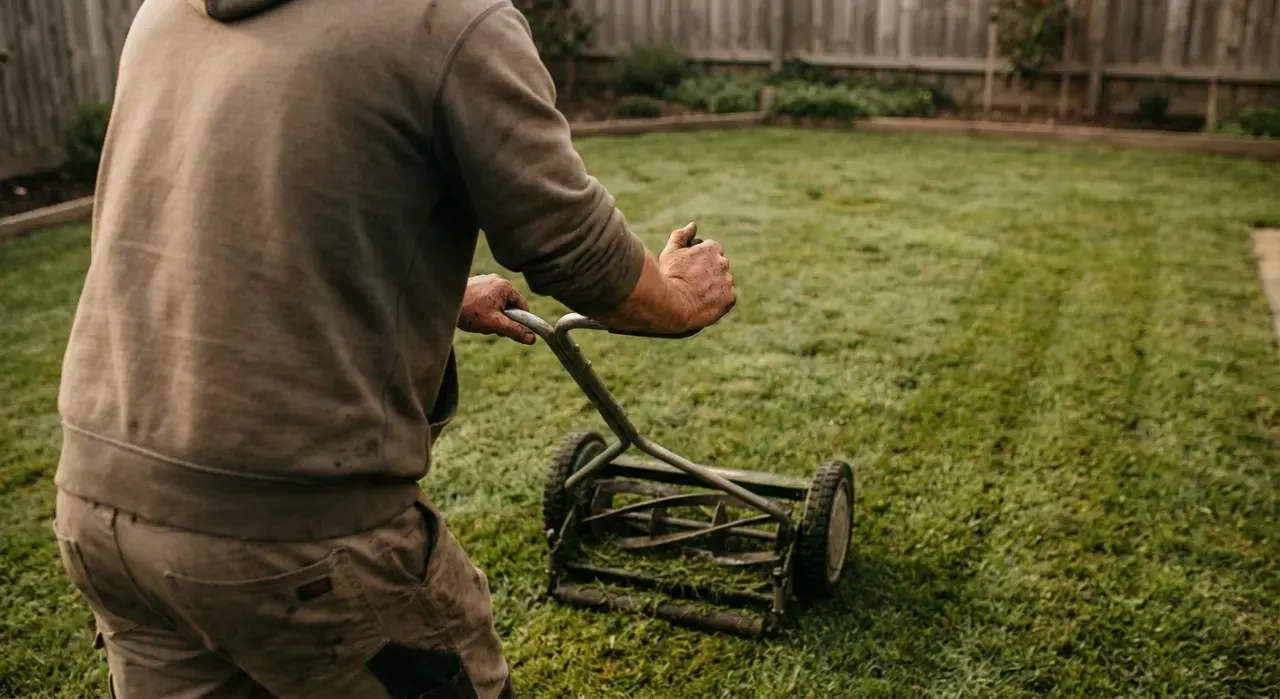
If waiting is not an option, stack the odds in your favor:
- Sharpen the blade first. A dull blade tears dry grass and mangles wet grass; a sharp one gives the cleanest cut possible. See how often to sharpen mower blades.
- Raise the deck a notch. Cutting less off the top reduces clumping and load.
- Slow down and take narrower passes, overlapping more than usual so the deck handles less grass at once.
- Side-discharge or bag rather than mulch, so wet clippings do not pack and smother the turf.
- Never use a corded electric mower on wet grass, and stop the engine and pull the spark plug before clearing any clog.
- Clean the deck and blade afterward to remove packed clippings and reduce disease spread.
What about mowing after heavy rain?
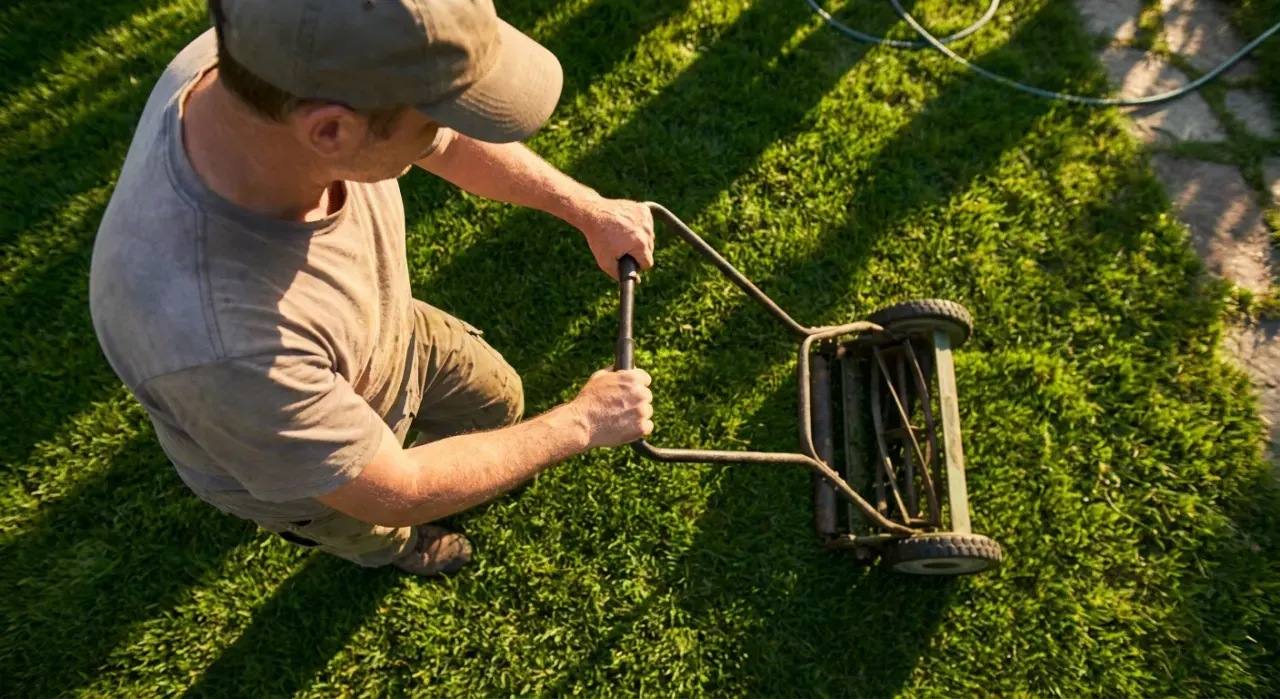
Saturated soil is the real reason to wait. Rolling a mower over waterlogged ground compacts it and leaves ruts that persist for months, and compacted soil is exactly what leads to thin, water-shedding turf and the aeration problem covered in how often to aerate a lawn. Give the lawn at least half a day of drainage after a soaking rain, longer on clay soils that hold water. If the grass has also grown long during a rainy stretch, do not scalp it back in one pass; step the height down over two or three cuts a few days apart.
The honest bottom line: dry grass cuts better, protects the lawn and is safer, so wait when you can. When you cannot, a sharp blade, a raised deck and a slow pace make the best of it. Related questions: how often to sharpen blades, leaving clippings on the lawn, and the mower field in best lawn mowers.