 Garden
Affiliate Disclosure
Some links on this page are affiliate links. As an Amazon Associate, we earn from qualifying purchases — at no extra cost to you. We do not buy, test, or physically handle the products we cover; our rankings come from aggregated owner reviews, ratings and expert consensus. Commissions never change our verdicts. How we rank · full disclosure.
Let charcoal burn 15 to 20 minutes before you cook on it — long enough for at least 80 percent of the coals to glow orange under a coat of light gray ash. That gray ash is the signal, not the clock: black patches mean unlit fuel and tall yellow flames mean the fire is still burning off volatiles that will taint food. Lump charcoal typically gets there in 10 to 15 minutes, briquettes in 15 to 20, and lighter fluid needs at least 10 minutes past the last visible flame. Then dump, spread, and give the grate five more minutes.
How long does each lighting method take?
The starter you use sets the clock more than the charcoal does. A chimney starter is the fastest reliable route and produces the most even bed, which is why it dominates owner recommendations; lighter fluid is quicker to set up but adds a mandatory burn-off wait; an electric loop coil is slow but needs nothing but an outlet.
| Method | Time to ready coals | Ready signal |
|---|---|---|
| Chimney starter, briquettes | 15–20 min | Top coals ashed gray, flames licking the rim |
| Chimney starter, lump | 10–15 min | Orange glow, lighter ash coat |
| Lighter fluid | 15–20 min | Flames fully out, ash coat even |
| Electric coil starter | 8–10 min on the coil, 10 more off | Coals spread and ashing across the pile |
| Paraffin or wax cubes | 15–20 min | Cube fully consumed, ash coat forming |
Chimney timing is worth its own detail — see how long a charcoal chimney takes to light. Fuel choice shifts the numbers too, which is the practical half of lump charcoal versus briquettes.
What does a ready charcoal bed look like?
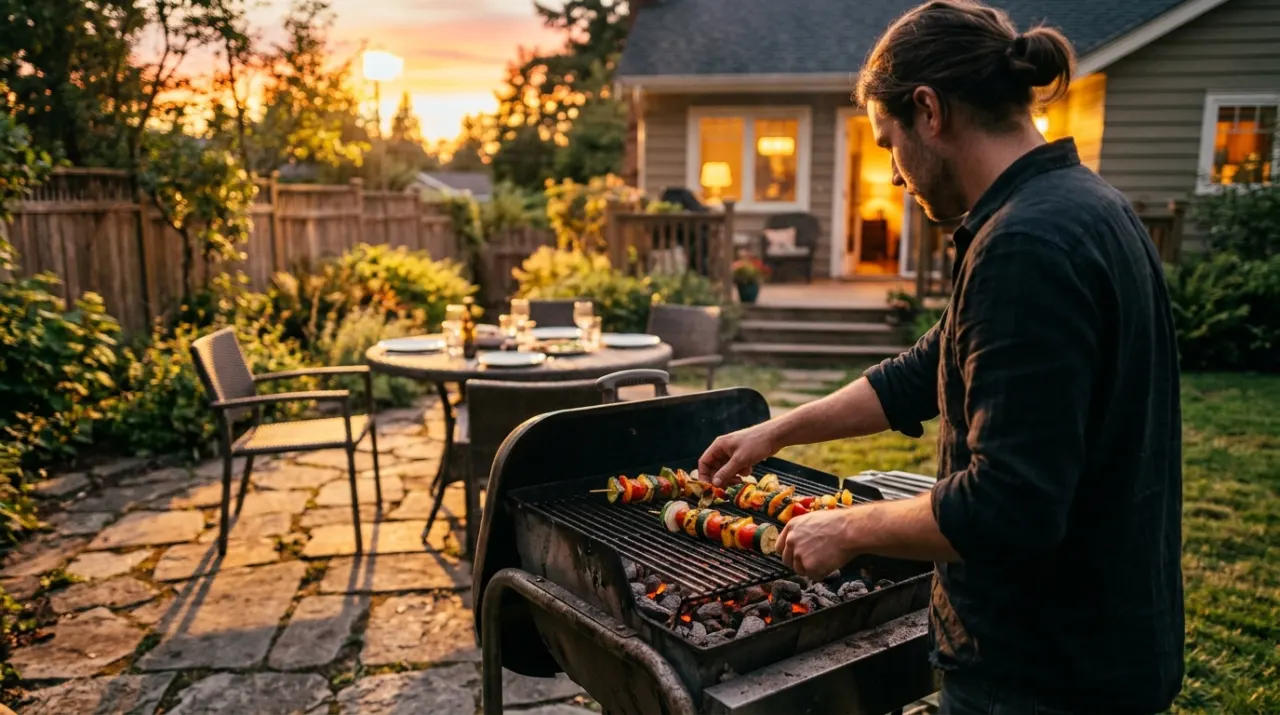
Three cues, in order of reliability. First, ash color: an even light gray coat across most of the pile means the fuel has caught all the way through. Second, glow: lift a coal with tongs and it should be orange right to the core rather than black inside. Third, heat at the grate — hold your palm five inches above it and count. Two to four seconds means high heat suited to steaks and burgers, five to seven seconds means medium, and eight or more means the bed is either not ready or already fading. A bed that still shows tall yellow flames is not a hot bed, it is an unfinished one.
What should you do after dumping the coals?
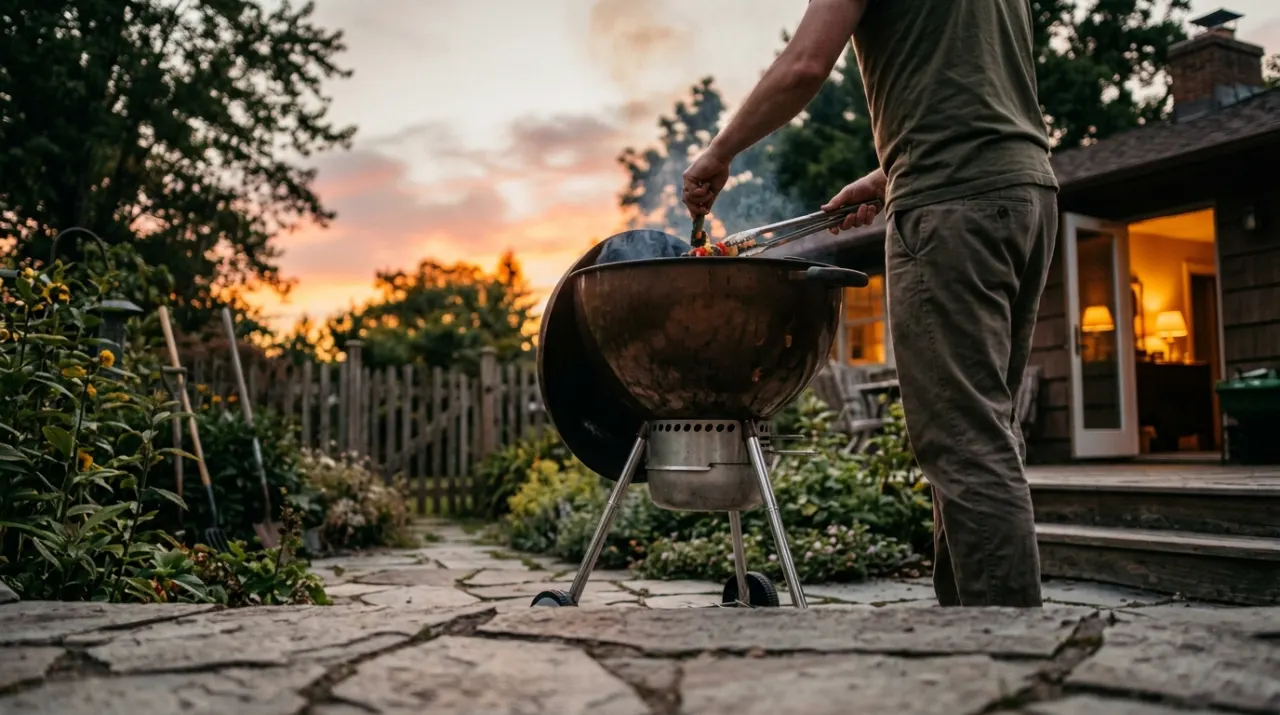
Spread them into the configuration you actually need — a full even layer for burgers, a two-zone bank pushed to one side for anything thicker than an inch — then set the cooking grate on and close the lid for about five minutes. That preheat does two jobs: it brings the grate to searing temperature so food releases cleanly, and it carbonizes leftover residue so a wire brush takes it off in one pass. Scrape, oil lightly, then cook. Skipping the grate preheat is why food sticks even on a well-seasoned surface, and it matters more on cast iron — see seasoning cast iron grill grates.
Why does waiting longer sometimes make it worse?
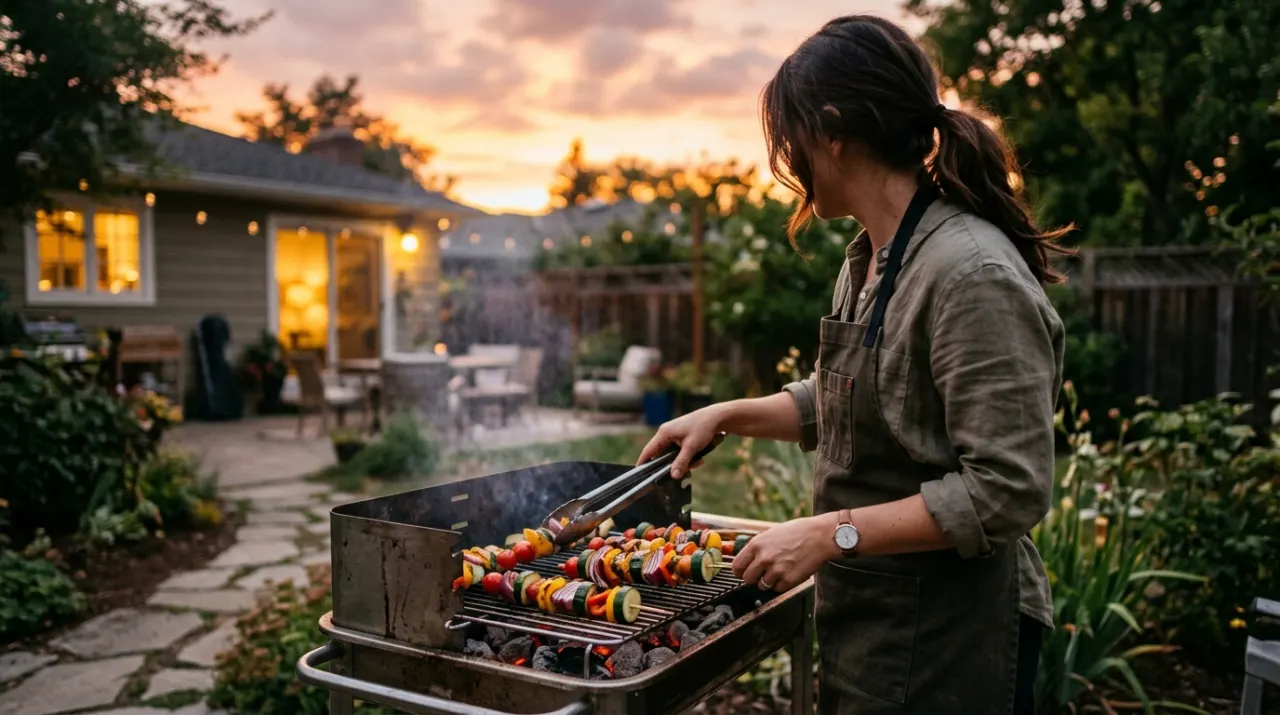
Because charcoal has a peak. A briquette bed climbs to full temperature around 20 minutes, holds a usable plateau for roughly 45 to 60 minutes, then declines steadily. Light 40 minutes before you plan to cook and you are working on a bed that is already fading, which shows up as burgers that never quite sear. The practical window is to start food between 15 and 25 minutes after lighting. If dinner slips, add a small handful of fresh briquettes around the edge rather than waiting on the old bed — the detail behind how long a charcoal grill stays hot.
We do not buy, test or physically handle any product on this site — guidance here reflects manufacturer instructions, CPSC safety advice and aggregated owner reports. See how we rank.
More from this hub: Outdoor Living & Grills · Charcoal will not stay lit · How long a bag of charcoal lasts · Best charcoal grills · How we rank