 Garden

Affiliate Disclosure
Some links on this page are affiliate links. As an Amazon Associate, we earn from qualifying purchases — at no extra cost to you. We do not buy, test, or physically handle the products we cover; our rankings come from aggregated owner reviews, ratings and expert consensus. Commissions never change our verdicts. How we rank · full disclosure.
It depends on the product, and the number that governs it is the replant interval on the label. Many glyphosate labels allow planting within 1 to 3 days; selective broadleaf herbicides containing 2,4-D, dicamba or triclopyr commonly require about 30 days, and longer for food crops; pre-emergents block any new seeding for roughly 3 to 4 months by design. Contact burndown sprays such as pelargonic acid leave essentially no residual. Intervals for edible crops are usually longer than for ornamentals.
What is the wait for each product type?
These are typical label ranges. Your specific product governs — two bottles with the same active ingredient can carry different intervals if one includes an added residual.
| Product type | Common actives | Typical wait before planting |
|---|---|---|
| Contact burndown | Pelargonic acid, acetic acid | 1–2 days; no soil residual |
| Non-selective systemic | Glyphosate | 1–3 days per many labels |
| Selective broadleaf | 2,4-D, dicamba, MCPP | ~30 days; longer for edibles |
| Brush and stump killer | Triclopyr | 30 days to several months |
| Pre-emergent | Prodiamine, pendimethalin, dithiopyr | 3–4 months before seeding |
| Pasture and range | Aminopyralid, clopyralid | A season or more; check carefully |
Why can you plant so soon after glyphosate?
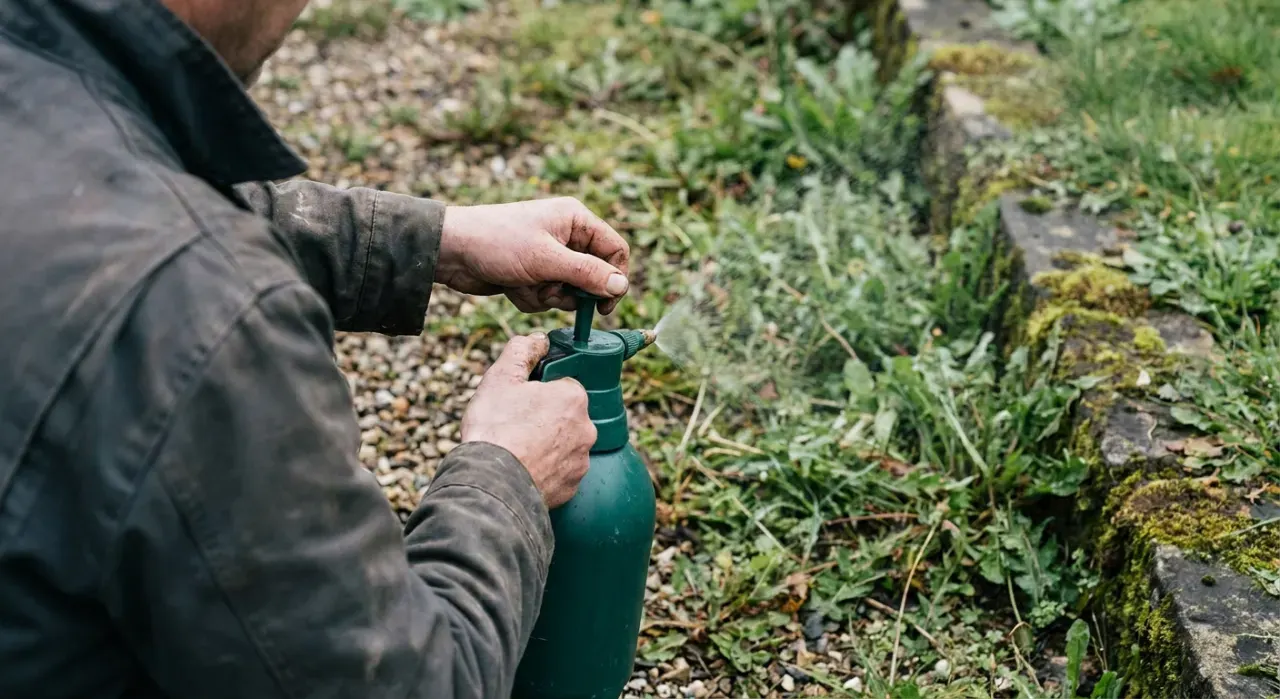
Because it binds rather than lingers in solution. Glyphosate adsorbs strongly onto clay and organic matter in soil, which leaves very little available in the soil water where a new root could absorb it, and soil microbes then degrade what remains. The EPA characterizes it as having limited soil mobility for this reason, and that is what allows many labels to permit replanting within a couple of days. One practical caveat: wait until the sprayed weeds are visibly yellowing and dying before you dig. Glyphosate is systemic and still moving down to the roots for several days, so disturbing the plants early can leave perennial roots alive to regrow through your new planting. More on the soil side is in how long weed killer stays in the soil.
Why do lawn weed killers need so much longer?
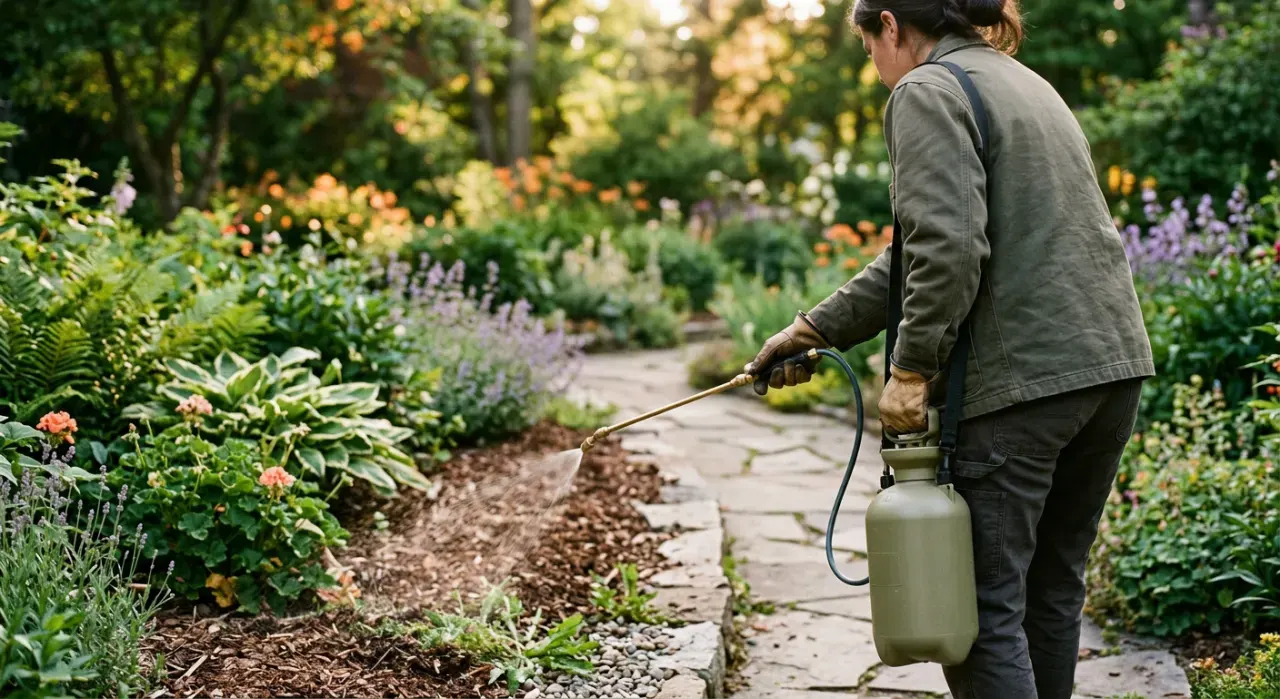
Selective broadleaf herbicides work by mimicking plant growth hormones, and they stay biologically active in soil for days to weeks. Tender transplants and seedlings — which are broadleaf plants themselves — are far more sensitive than an established lawn weed, so residue that seems trivial can twist, cup and stunt a new tomato or a bed of annuals long after the dandelions have gone brown. Triclopyr, used on brush and stumps, is more persistent again. This is also why the label interval for planting a vegetable garden is usually longer than the one for ornamentals, and why some products simply prohibit use in food-growing areas.
Pre-emergents are the special case
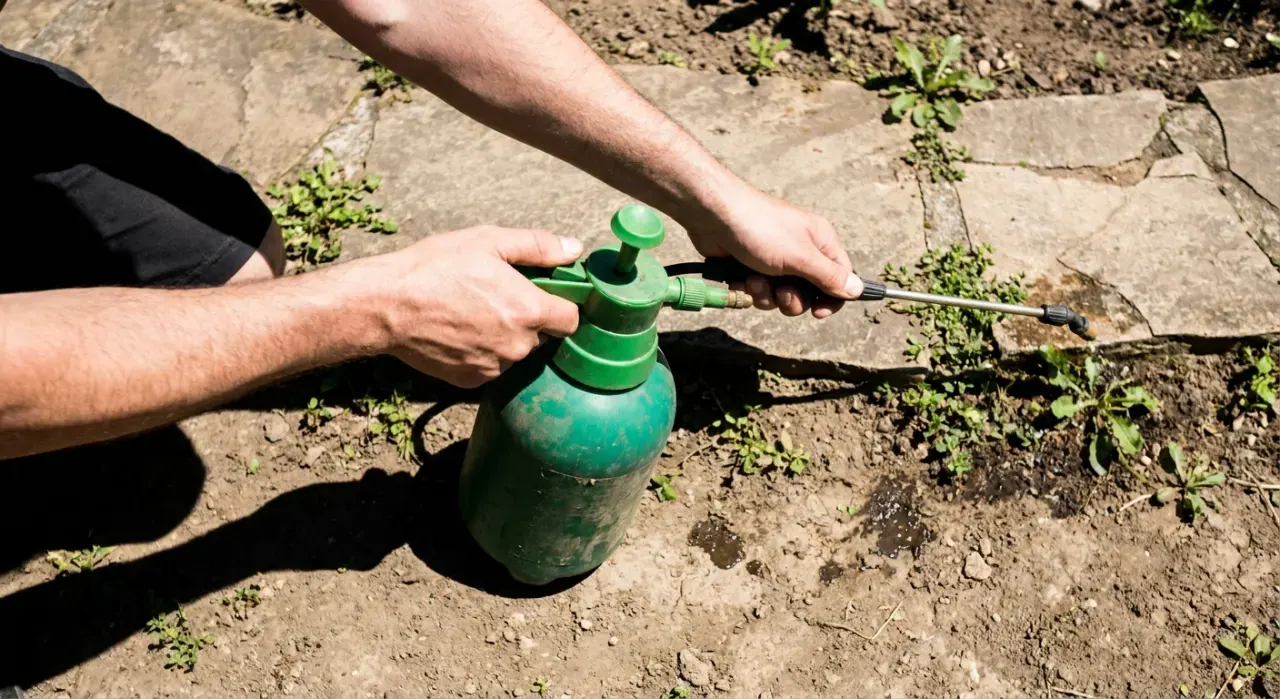
A pre-emergent is not a residue problem, it is a working barrier — the entire product is designed to stop seeds germinating for months. It has no way to tell your grass seed or carrot seed from a crabgrass seed. That means:
- No seeding for 3 to 4 months after a typical spring application.
- Plan the seeding date first and schedule the pre-emergent around it, not the other way around.
- Transplants and plugs are different from seed — many labels permit planting established transplants sooner, since the barrier acts on germinating seedlings. Check yours.
Duration detail is in how long pre-emergent lasts, and timing in when to apply pre-emergent.
Where to find the answer for your product
Look on the label for a section headed replant restrictions, rotational crop restrictions, or planting intervals — that is the legally binding figure in the United States, and it is the one to follow. If you have lost the label, nearly every manufacturer posts a PDF of it online, and your state land-grant extension service will help identify a product and give regional advice. When in genuine doubt, extension services suggest a bioassay: sow beans or peas in a pot of the treated soil next to a pot of clean soil and compare growth over two to three weeks before committing a bed. For approaches that sidestep the whole question, see killing weeds without chemicals.
We never buy, apply or physically handle the products we rank — our method is on how we rank.
More from this hub: Pest & Weed Control · Best weed killers · How long weed killer takes to work · How we rank