 Garden
Affiliate Disclosure
Some links on this page are affiliate links. As an Amazon Associate, we earn from qualifying purchases — at no extra cost to you. We do not buy, test, or physically handle the products we cover; our rankings come from aggregated owner reviews, ratings and expert consensus. Commissions never change our verdicts. How we rank · full disclosure.
It varies from days to months depending on the active ingredient. Glyphosate binds tightly to soil particles and is broken down by microbes, with reported field half-lives running from a few days to a couple of months; 2,4-D typically degrades within 1 to 2 weeks; pre-emergents such as prodiamine and pendimethalin are designed to persist 3 to 6 months. A handful of pasture herbicides last far longer and survive composting. The number that governs your garden is the replant interval printed on the label.
How long does each active ingredient last?
Persistence is a property of the chemical, not the brand, so read the active ingredients panel. These are commonly reported soil half-life ranges — the time for half the residue to break down — which vary with soil type, temperature, moisture and microbial activity.
| Active ingredient | Used for | Typical soil persistence |
|---|---|---|
| Pelargonic acid, acetic acid | Contact burndown | Days; no meaningful residual |
| Glyphosate | Non-selective systemic | Days to a couple of months; strongly soil-bound |
| 2,4-D | Selective broadleaf | Roughly 1–2 weeks |
| Dicamba | Selective broadleaf | Weeks; more mobile in soil |
| Prodiamine, pendimethalin, dithiopyr | Pre-emergent | 3–6 months by design |
| Aminopyralid, clopyralid, picloram | Pasture and brush | Many months to years; survives composting |
Why does glyphosate not sterilize the soil?
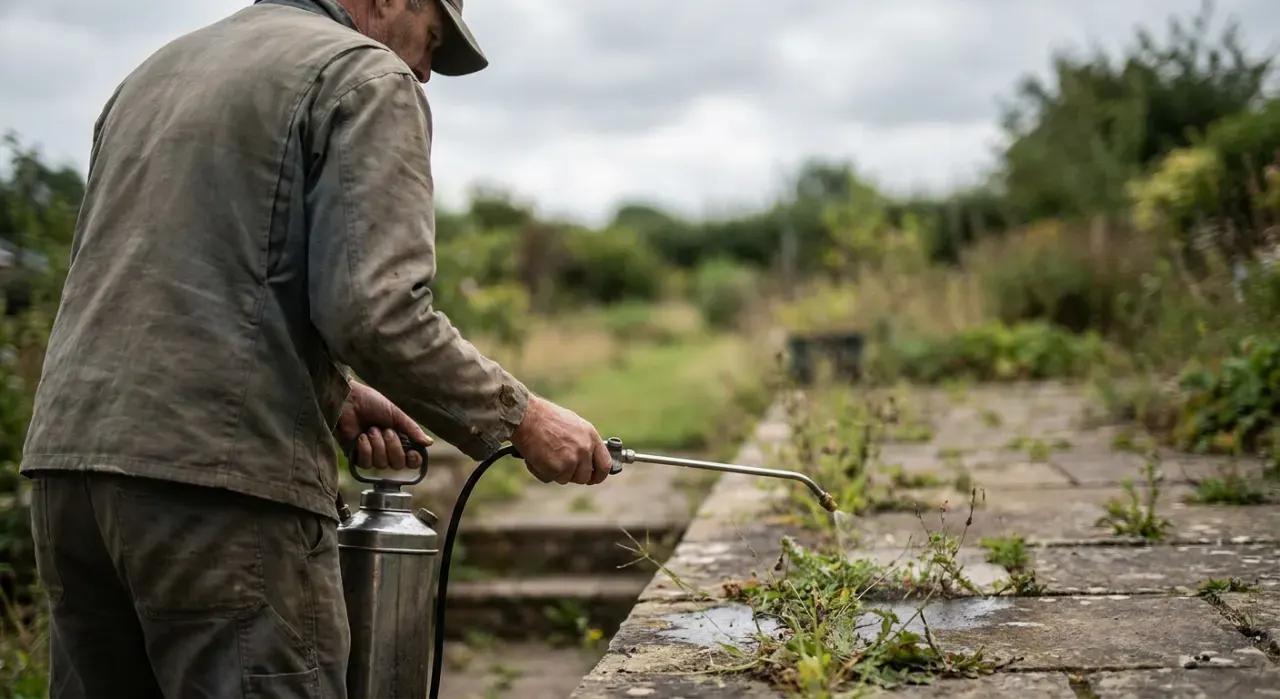
Because it is bound before it can act. Glyphosate adsorbs strongly onto clay and organic matter in soil, which leaves very little in the soil water where roots could take it up. Microbial degradation then does the rest. This is why the U.S. Environmental Protection Agency treats it as having limited soil mobility, and why many glyphosate product labels permit replanting within days of an application. It is also why the common fear that one spray ruins a bed for a season does not generally match what happens. What glyphosate does not do is prevent germination, so weeds will return from seed regardless of residue.
What makes residue break down faster?
Soil biology does most of the work, so the conditions that favor microbes favor degradation.
- Warmth. Microbial activity climbs with soil temperature; a cold spring stretches persistence considerably.
- Moisture. Moist soil degrades faster than bone-dry ground, where microbes are dormant.
- Organic matter. Compost-rich soil both binds and degrades residues faster than sand or compacted subsoil.
- Cultivation. Turning the soil exposes residue to air, light and a wider microbial population.
When can you plant afterward?
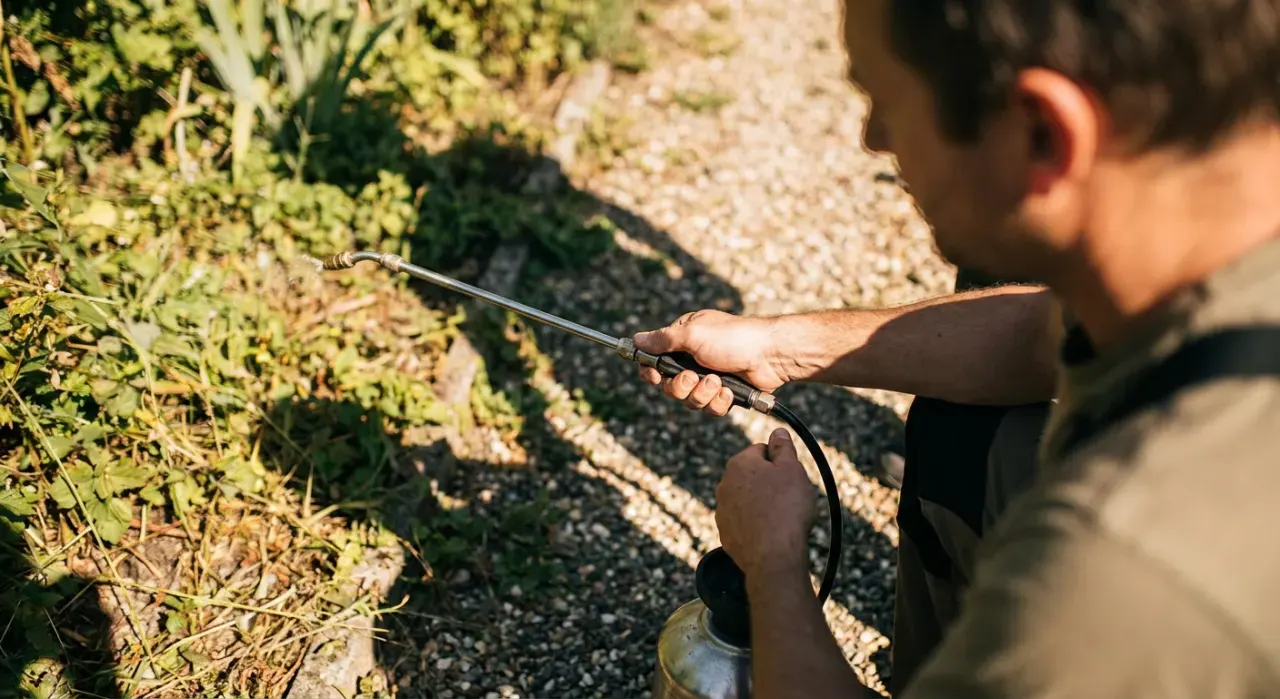
Use the replant interval on the label — it is the only answer with legal force behind it, and it differs enormously between products. Non-selective glyphosate labels commonly allow planting within 1 to 3 days; many selective broadleaf lawn products specify 30 days, or a full season before food crops; and a pre-emergent creates a germination barrier that can block seeding for 3 to 4 months, which is exactly why you do not overseed a lawn after applying one. Detail on the waiting period is in how long after weed killer you can plant, and on the barrier itself in how long pre-emergent lasts. If you cannot locate the label, your state land-grant extension service will identify the product and give regionally specific guidance.
The residue problem nobody expects
The persistence cases that actually ruin gardens usually arrive as an input rather than a spray. Aminopyralid and clopyralid, used on pasture and hay, survive grazing, the animal's digestive tract and the composting process, and have repeatedly turned up in manure, straw and municipal compost — where they cause cupped, twisted, stunted growth in tomatoes, beans, peas and potatoes at very low concentrations. Extension services recommend a simple bioassay before spreading unknown compost or manure: plant beans or peas in a pot of the material alongside a pot of clean soil, and compare growth over two to three weeks. If the test plants come up distorted, do not spread it. For approaches that avoid this class of problem altogether, see killing weeds without chemicals.
We never buy, apply or physically handle the products we rank — our method is on how we rank. Follow the label, which is the law in the United States, and check your extension service for local guidance.
More from this hub: Pest & Weed Control · Best weed killers · Selective vs non-selective · How we rank