 Garden

Affiliate Disclosure
Some links on this page are affiliate links. As an Amazon Associate, we earn from qualifying purchases — at no extra cost to you. We do not buy, test, or physically handle the products we cover; our rankings come from aggregated owner reviews, ratings and expert consensus. Commissions never change our verdicts. How we rank · full disclosure.
Most tomato leaf curl is not a disease and needs no spray. The common cause is harmless physiological leaf roll — a stress response to heat, drought or swings in watering, where leaves cup upward but stay green and the plant keeps producing. The two other causes are herbicide drift, which twists the new growth, and a whitefly-spread virus, which stunts and yellows it. Only the virus involves a pathogen, and even that has no cure — you manage the whitefly and remove infected plants. So the first move is to diagnose, not to reach for a fungicide. Note this is unrelated to peach leaf curl.
We do not test or physically handle the plants and products we cover; our guidance draws on horticultural extension research and the aggregated experience in thousands of owner reviews, as explained in how we rank.
The three causes, and why it usually is not a disease
Curling tomato leaves send gardeners looking for a fungus to spray, but the honest answer is that the most common cause is not an infection at all. There are three real possibilities, and telling them apart decides everything you do next.
Physiological leaf roll is by far the most common. Under heat, drought, or sudden shifts between wet and dry, tomato leaves — usually the older, lower ones first — cup or roll upward and become thick and leathery, but they stay green and the plant keeps flowering and setting fruit. It is a self-protective stress reaction, harmless, and no spray affects it. Vigorous, heavily pruned, or over-watered plants are especially prone.
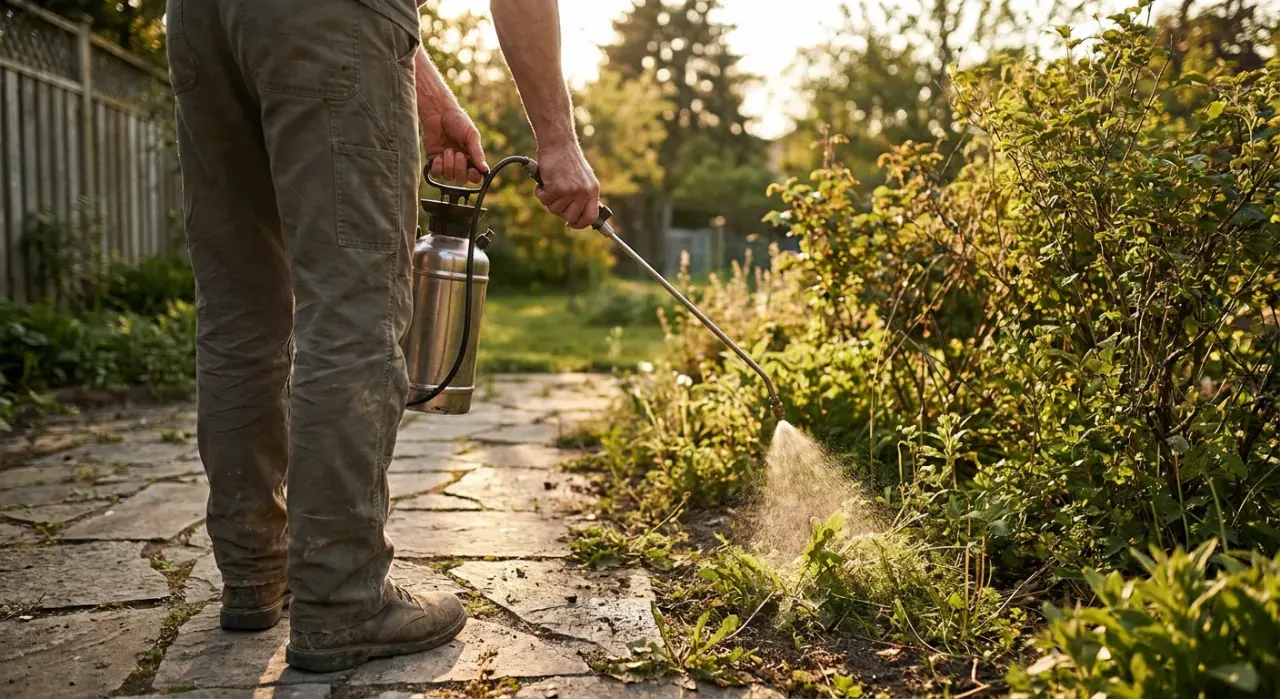
Herbicide drift is chemical injury, usually from growth-regulator weedkillers such as 2,4-D or dicamba. It distorts the new growth: the youngest leaves emerge twisted, cupped, strap-like or fern-like, and stems may bend at the tips. It comes from spray drifting on the wind, a sprayer previously used for weedkiller, or — a common hidden source — hay, straw, compost or manure contaminated with persistent herbicide.
Viral infection, chiefly tomato yellow leaf curl virus (TYLCV), is the only cause that is a true disease. Spread by the silverleaf whitefly, it makes the new growth cup upward, yellow, and stay undersized, stunts the whole plant, and causes heavy flower drop with little fruit. It is mainly a problem in warm regions where the whitefly is active.

A quick diagnostic table
| Cause | Which leaves | Look | Plant otherwise |
|---|---|---|---|
| Physiological roll | Older, lower leaves | Cupped/rolled upward, thick, green | Healthy, fruiting normally |
| Herbicide drift | New growth at tips | Twisted, strappy, fern-like distortion | Growth distorted but may recover |
| Virus (TYLCV) | New growth | Cupped, yellowed, undersized | Stunted, flowers drop, little fruit |
The single most useful question is: are the old leaves rolling while the plant looks fine (benign leaf roll), or is the new growth distorted or yellowed (herbicide or virus)? That split points you at the right response.
This is not peach leaf curl
Because both are searched as "leaf curl," people confuse this with the peach and nectarine disease, and the confusion wastes effort. Peach leaf curl is a fungus (Taphrina deformans) treated with a dormant-season copper spray on the tree — none of which applies to tomatoes. Spraying copper on a curling tomato does nothing for any of the three causes here. If your plant is a peach or nectarine, see how to treat leaf curl instead.
Treating physiological leaf roll (the usual case)
- Relax first — If the old leaves are cupping but the plant is green and setting fruit, nothing is wrong; do not spray anything.
- Steady the water — Provide deep, consistent watering rather than swinging between bone-dry and soaked. Mulch to buffer soil moisture and temperature.
- Ease the stress — Provide afternoon shade in extreme heat, avoid heavy pruning that exposes the plant, and do not over-fertilize with nitrogen, which drives soft growth prone to rolling.
- Wait — Rolled leaves often relax as conditions moderate, and even if they stay cupped the plant produces normally.
Handling herbicide-drift curl
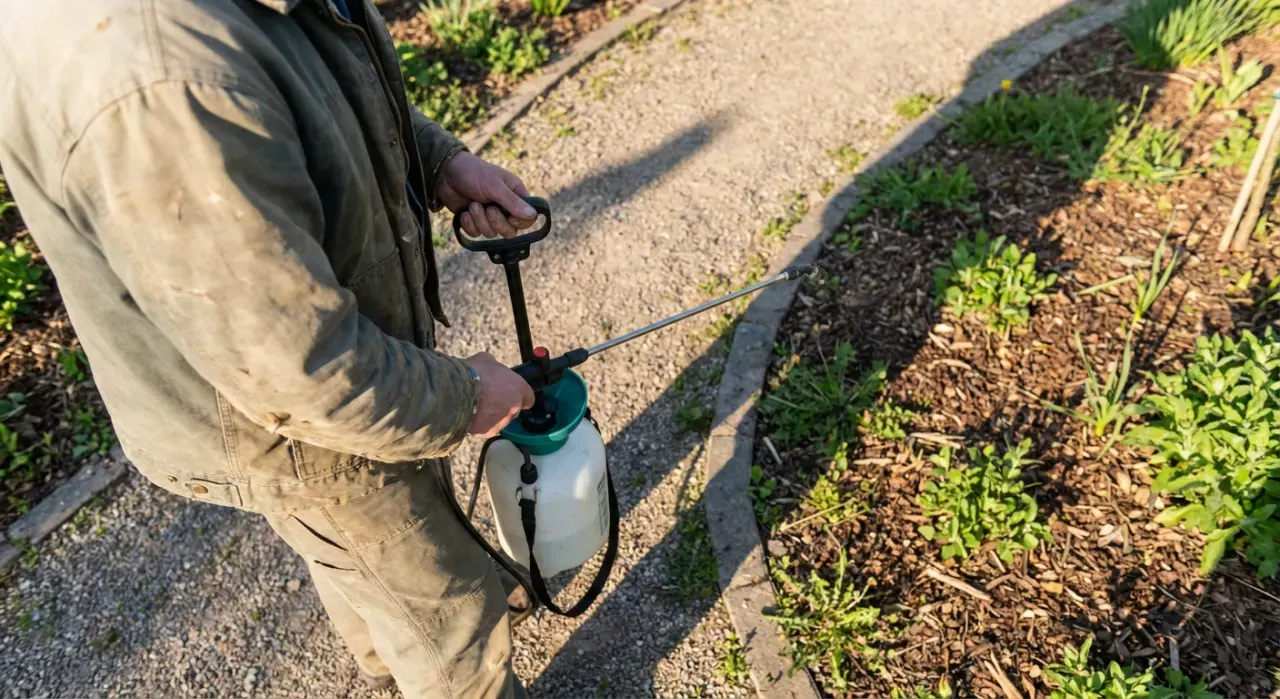
There is no antidote for herbicide injury — you cannot spray it off. Keep the plant watered and unstressed and watch the new growth: a light exposure often grows out over a few weeks, while a heavy dose may leave the plant permanently stunted and unproductive, in which case replacing it is the practical call. Just as important, find and stop the source. Do not use a sprayer that has held weedkiller for anything else, avoid applying lawn weed-and-feed near the vegetable garden on breezy days, and be wary of hay, straw, compost or manure that may carry persistent herbicide — if you suspect contaminated compost, stop using that batch. Any product you do use around the garden must be applied to its label, which in the United States is legally binding under FIFRA.

Managing the whitefly-borne virus
If the diagnosis is TYLCV, accept that there is no cure for the virus itself and shift to containment and prevention.
- Remove infected plants — Promptly pull and bag plants showing the stunted, yellow, cupped new growth, so whiteflies cannot pick up the virus from them and carry it to healthy plants.
- Control whiteflies — Reduce the silverleaf whitefly that spreads it, using yellow sticky traps to monitor, insecticidal soap or labeled products for the insect, and by removing weedy reservoirs nearby.
- Use physical barriers — Reflective (silver) mulches deter whiteflies, and fine insect netting keeps them off young plants during the vulnerable early weeks.
- Plant resistant varieties — In regions where TYLCV is common, resistant tomato varieties are the most reliable defense and should be your default choice.
Preventing tomato leaf curl
- Consistent watering and mulch — the main defense against physiological roll.
- Careful herbicide practice — dedicated sprayers, no drift near the garden, and caution with hay, straw, compost and manure.
- Whitefly management and resistant varieties — where the virus is a regional problem.
- Correct diagnosis first — because the same symptom can mean do nothing, wait it out, or remove the plant.
For the true tomato diseases that do call for treatment, see how to treat tomato blight and how to treat septoria leaf spot.
Related: Pest & Weed Control hub and how we rank.