 Garden


Affiliate Disclosure
Some links on this page are affiliate links. As an Amazon Associate, we earn from qualifying purchases — at no extra cost to you. We do not buy, test, or physically handle the products we cover; our rankings come from aggregated owner reviews, ratings and expert consensus. Commissions never change our verdicts. How we rank · full disclosure.
The verdict. Scotts Turf Builder Bonus S is the southern lawn owner’s default because it does the one thing most weed-and-feeds cannot: control broadleaf weeds without damaging St. Augustine. Its 4.5-star average reflects a product that works when applied correctly and punishes carelessness — apply to damp grass, do not water for a day, and stay away from tree roots. Skip it if you have bermudagrass, a cool-season lawn, or valued ornamentals throughout the yard.
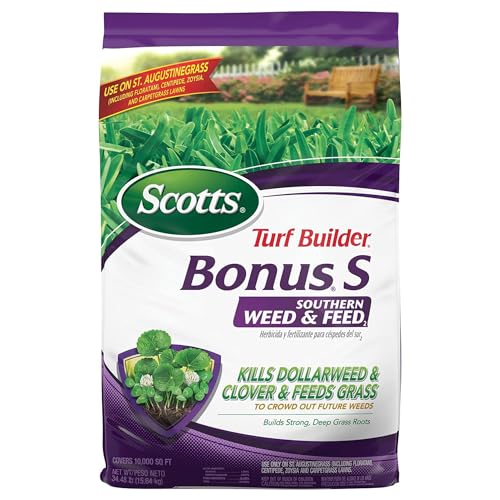
Best for St. Augustine, centipede and zoysia lawns that need feeding and broadleaf weed control in one pass
- Covers 10,000 sq. ft. of southern lawn
- Feeds the turf and controls listed broadleaf weeds in one application
- Labeled safe for St. Augustine including Floratam, centipede, zoysia and Bahia
- Granules stick to damp blades, then are watered in after the waiting period
- Both pre-emergent and post-emergent activity on listed weeds
Why buy it: it is one of the few weed-and-feeds that will not scorch St. Augustine, which is exactly why southern lawn owners keep coming back to it.
What owners consistently praise
It is safe on St. Augustine. This is the entire reason the product exists and the dominant positive in the review record. Most broadleaf herbicides that handle a dandelion will burn Floratam. Owners who tried a general-purpose weed-and-feed once and watched patches of their lawn brown out describe switching to Bonus S and getting weed control with the turf intact.
Two jobs, one pass. Feeding and weed control in a single walk across the lawn is worth real time on a 10,000 square foot property. Owners consistently report the lawn greening up within a week or two of application while the weeds decline over the following two to three.
Coverage per bag. Ten thousand square feet is a large suburban lot, and on a per-square-foot basis it compares well with buying fertilizer and a separate liquid herbicide, especially once you factor in the sprayer and the second application day.
Some pre-emergent effect. Beyond killing what is up, the chemistry suppresses some germinating weeds, so a spring application buys quieter beds of turf through early summer. Owners who apply on a consistent schedule year after year report the weed pressure genuinely declining rather than resetting each spring.

What owners actually complain about
Tree and shrub damage. The most serious complaint in the record, and the one worth taking most seriously. Root uptake is real, roots extend far past the canopy, and owners report azaleas, young oaks and ornamental trees declining after a nearby lawn treatment. The label warns about it; the warning is easy to miss and the consequence is expensive.
Applying it the wrong way round. Granular products are usually applied dry and watered in. This one goes on damp grass and must not be watered for the label interval. A large share of the "did nothing to my weeds" reviews are owners who irrigated straight after application and washed the herbicide off the foliage.
State restrictions and shipping refusals. Buyers in restricted states discover at checkout, or after ordering, that it cannot ship to them. That is regulatory rather than a seller problem, but it produces frustrated reviews and it means this is not a product everyone in the country can use.
Heat injury. Applied in the middle of a southern summer, on a lawn already stressed, it can yellow the turf it is meant to feed. Spring and early fall applications are what the successful reviews describe.
It does not touch everything. Nutsedge, dollarweed in wet areas, and grassy weeds like crabgrass are either weakly controlled or not controlled at all. Owners buying it as a universal solution are disappointed; it is a broadleaf product with a fertilizer attached.
Spreader calibration and dust. Coverage depends on the spreader setting being right, and owners report both burn stripes from overlap and untreated bands from a setting too low. The bag lists settings for common spreaders — use them, walk at a steady pace, and half-rate in two perpendicular passes if you want even coverage.
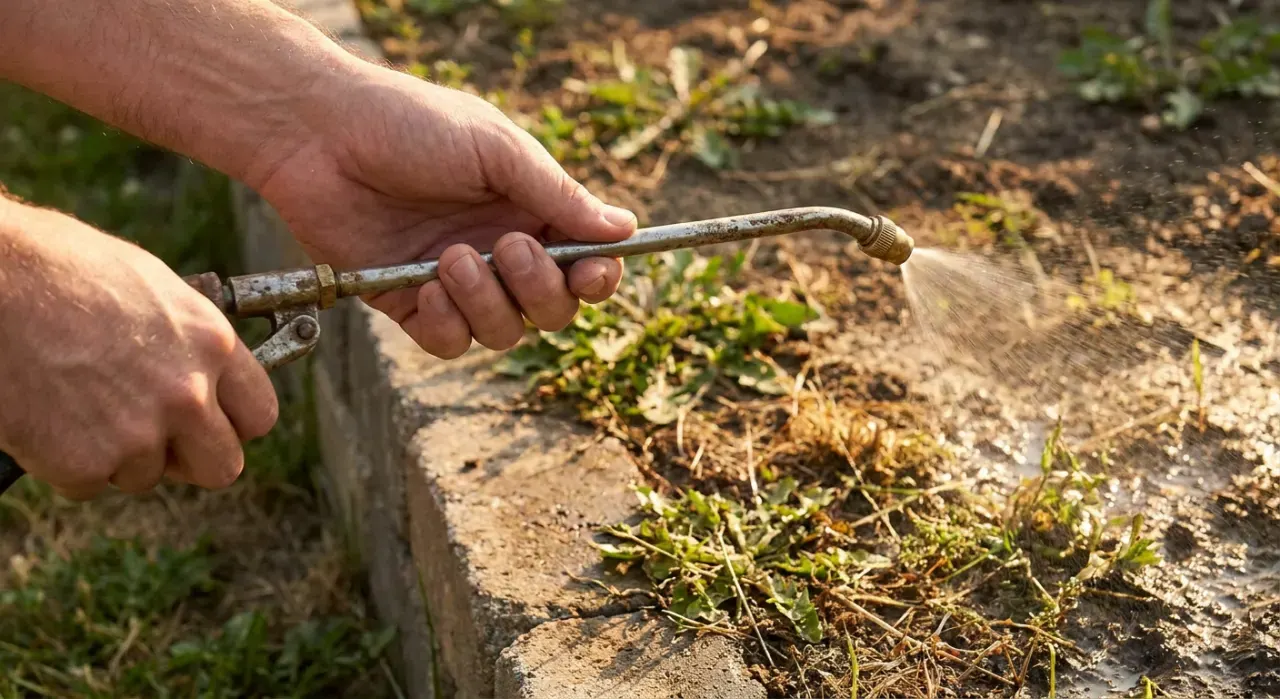
Who it suits — and who should buy something else
Buy it if you have an established southern lawn — St. Augustine, centipede, zoysia or Bahia — with broadleaf weed pressure, open turf away from tree roots, and you are applying in spring or early fall rather than midsummer.
Buy something else if your lawn is bermudagrass or a cool-season grass: this is the wrong product and the label says so. If crabgrass is the problem, prevention beats cure — see best pre-emergent herbicides and when to apply. If your yard is full of ornamentals and mature trees, a targeted spot spray is far safer than a broadcast granule — the options are ranked in best weed killers for lawns, and the Spectracide Weed Stop review covers the ready-to-use route. For beds rather than turf, see the Preen review. And if you are timing a spring feed, best weed and feed for spring is the wider comparison.
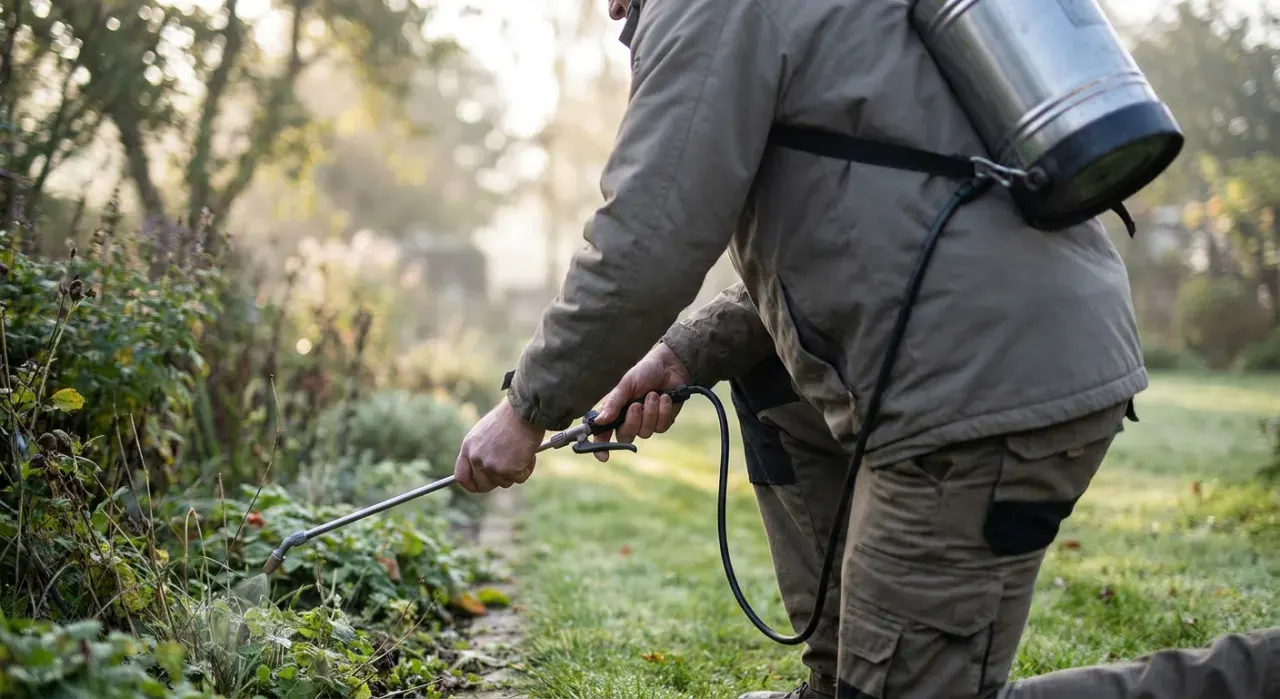
Specifications
| Spec | Scotts Turf Builder Bonus S Southern Weed & Feed2 |
|---|---|
| Type | Granular fertilizer plus broadleaf herbicide |
| Coverage | 10,000 sq. ft. |
| Safe on | St. Augustine incl. Floratam, centipede, zoysia, Bahia |
| Not for | Bermudagrass, dichondra, carpetgrass, cool-season lawns |
| Application | Damp grass; do not irrigate for the label interval afterwards |
| Weed activity | Post-emergent on listed broadleaf weeds, plus some pre-emergent effect |
| Weak or ineffective on | Nutsedge, crabgrass and other grassy weeds |
| Applications per year | Limited by label — generally no more than two |
| Tree and shrub caution | Root uptake risk — keep clear of drip lines |
| Availability | Restricted in some states and counties |
How we reached this verdict
We never buy, apply or physically handle the products on this site. This assessment comes from the aggregated owner-review record — star distribution, the specific content of critical reviews, and what southern lawn owners report a season later — read against the EPA-registered label, state restriction notices and land-grant extension guidance for warm-season turf. For weed-and-feed products we weight turf safety on the grasses actually named, how punishing a misapplication is, off-target risk to trees and ornamentals, and whether the weed list matches the weeds people have. Full method on how we rank.
More from this hub: Pest & Weed Control · Best weed and feed for spring · Ortho Home Defense review · Weed killer and pet safety · How we rank
Check price on Amazon → (paid link)