 Garden

Affiliate Disclosure
Some links on this page are affiliate links. As an Amazon Associate, we earn from qualifying purchases — at no extra cost to you. We do not buy, test, or physically handle the products we cover; our rankings come from aggregated owner reviews, ratings and expert consensus. Commissions never change our verdicts. How we rank · full disclosure.
For most household lawn herbicides, the practical rule is that pets can return once the treated surface is completely dry — and that is what the majority of US labels actually direct. The label is the legally binding instruction; read it and follow it rather than a general rule. Concentrates are far more hazardous than the diluted spray, and dogs that graze grass warrant more caution than dogs that do not. We are not veterinarians, and nothing here is veterinary advice.
The Label Is the Law
In the United States, pesticide labels are approved under EPA registration and using a product in a manner inconsistent with its labeling is a violation of federal law. That is not a formality — it is the reason the label is the authority on this page and every other one.
Three sections matter for a household with animals:
- The re-entry or restricted-entry statement. On consumer lawn products this is usually phrased as keeping people and pets off the treated area until it is dry, or until a stated interval has passed. Some granular products specify watering in first and then allowing the area to dry.
- The signal word — CAUTION, WARNING or DANGER — which reflects acute toxicity and irritation of the product as sold. Concentrates commonly carry a stronger signal word than the ready-to-use version of the same active, and that difference is real.
- The precautionary and storage statements, which cover handling and where the container may be kept.
If you have discarded the label, the manufacturer publishes it online and the safety data sheet alongside it. Keep the container until the product is used up. If an exposure ever happens, the first question you will be asked is what the active ingredient and concentration were.
Why "Dry Means Safe" Is the Working Rule
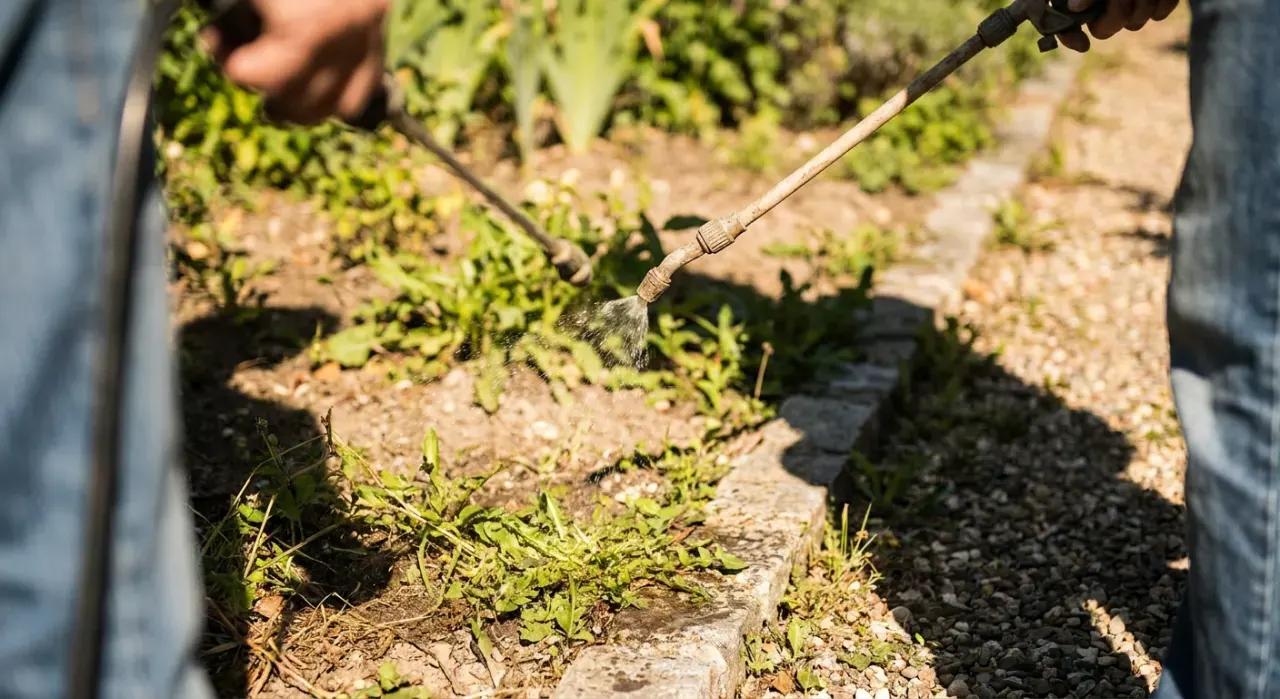
Wet spray on a leaf or a blade of grass transfers readily onto fur and paws, and from there into a pet by grooming. Once the spray has dried, the active has either been absorbed into the plant or bound to the surface, and the amount that transfers to a passing animal drops substantially. That is the mechanism behind the way most consumer lawn labels are written.
Two caveats keep it honest. Dry takes longer than people assume — a shaded, humid lawn in the Southeast in August can stay damp for most of a day, and morning dew can re-wet a surface overnight. Judge the lawn, not the clock. Granular products behave differently: undissolved granules sitting on turf are exactly the kind of thing a curious dog investigates, which is why those labels usually call for watering in. Water them in properly and then let the surface dry.
Beyond that, a set of habits does most of the remaining work. Spot-treat individual weeds rather than blanket-spraying an entire lawn, which cuts total exposure dramatically. Pick up and store pet toys, bowls and bedding before you spray — the EPA asks you to remove children, toys and pets from the area before applying and keep them away until the pesticide has dried. Keep animals indoors during the application itself rather than just afterwards, since drift onto a nearby pet is a common oversight. And extend the wait beyond the minimum whenever it costs you nothing.
Two Different Questions People Merge Into One
Most confusion in this subject comes from conflating two things that deserve separate answers.
Acute toxicity is what happens on exposure to a given dose now — the property regulators measure, that determines the signal word, and that drives the re-entry direction on the label. For the common consumer lawn actives applied at label rates on a dried lawn, acute hazard to a pet from ordinary contact is low. This is a reasonably well-characterized question.
Long-term and population-level risk is a different and genuinely contested question. Glyphosate is the clearest example: the International Agency for Research on Cancer classified it as probably carcinogenic to humans in 2015, while the EPA and the European Food Safety Authority have reached different conclusions in their own evaluations, and extensive litigation has run alongside the science. 2,4-D has a long-running body of research and debate of its own. We are not going to pretend that is settled, and we are also not going to imply that an unresolved chronic-risk debate means a dried lawn is acutely dangerous to a dog this afternoon.
The honest position is that these are two questions with two different levels of certainty. If long-term controversy matters to you, the reasonable response is to reduce total use — mulch, hand-pull, spot-treat, choose lower-hazard actives — rather than to spray the same amount and worry about it.
The Main Product Types, Compared
| Type | Typical actives | Typical re-entry direction | Notes for pet households |
|---|---|---|---|
| Iron-based selective | Iron HEDTA | Once dry | Generally regarded as lower-hazard; the usual first choice when minimizing exposure. Not harmless if granules or concentrate are eaten. |
| Fatty acid / soap | Ammonium nonanoate | Once dry | Contact-only, non-selective, low residual. Kills top growth; perennials regrow. |
| Horticultural vinegar | Acetic acid 20%+ | Once dry | Plant-derived but corrosive at strength — eye and skin hazard to people and animals. Not a gentle option. |
| Non-selective systemic | Glyphosate | Once dry | Low acute mammalian toxicity; unresolved long-term debate. Concentrate is the real hazard to store carefully. |
| Selective broadleaf (lawn) | 2,4-D, MCPP, dicamba, quinclorac | Once dry, or a stated interval | See the dogs and 2,4-D section below. Read the label rather than generalizing. |
| Total vegetation killer | Imazapyr plus residual actives | Longer; product-specific | Soil residual persists for months and moves with water. Not appropriate where animals dig or graze. |
Dogs and 2,4-D: The Specific Caution
2,4-D deserves its own paragraph because it is the most common active in American lawn weed killers and because dogs are the species most often discussed in connection with it.
Two things are worth knowing. First, dogs metabolize and clear certain acidic compounds, 2,4-D among them, more slowly than many other mammals, largely because of limited renal organic-anion clearance. That difference is well documented in veterinary toxicology and is the reason dog-specific guidance exists at all rather than a general mammalian rule being applied. Second, a body of epidemiological research — most prominently work associating lawn herbicide exposure with canine malignant lymphoma and with transitional cell carcinoma in certain breeds — has kept this an active area of study. Those studies are observational, have limitations, and have not produced a regulatory consensus that the products should not be used. They are also not nothing, and it would be dishonest to leave them out.
What follows practically is modest and clear: on 2,4-D containing lawn products, take the re-entry direction seriously rather than approximately, water the lawn after the required drying period before letting a dog back on it, spot-treat rather than blanket-spray where you can, and if your dog eats grass, treat that as a reason to choose a different approach entirely. If you want to avoid the active, read the ingredient panel — iron HEDTA products and several newer blends do not contain it.
We do not make medical or veterinary claims. If you have a specific concern about your animal, your veterinarian is the right person to ask, and they will want the product name and active ingredient.
The Risk People Underrate: Storage
The scenario most likely to seriously harm a pet is not a treated lawn. It is a container. Concentrates are many times stronger than the diluted spray, they are often stored at floor level in a garage or shed, and a chewed jug or a spill on a garage floor is a direct high-dose exposure rather than an incidental one.
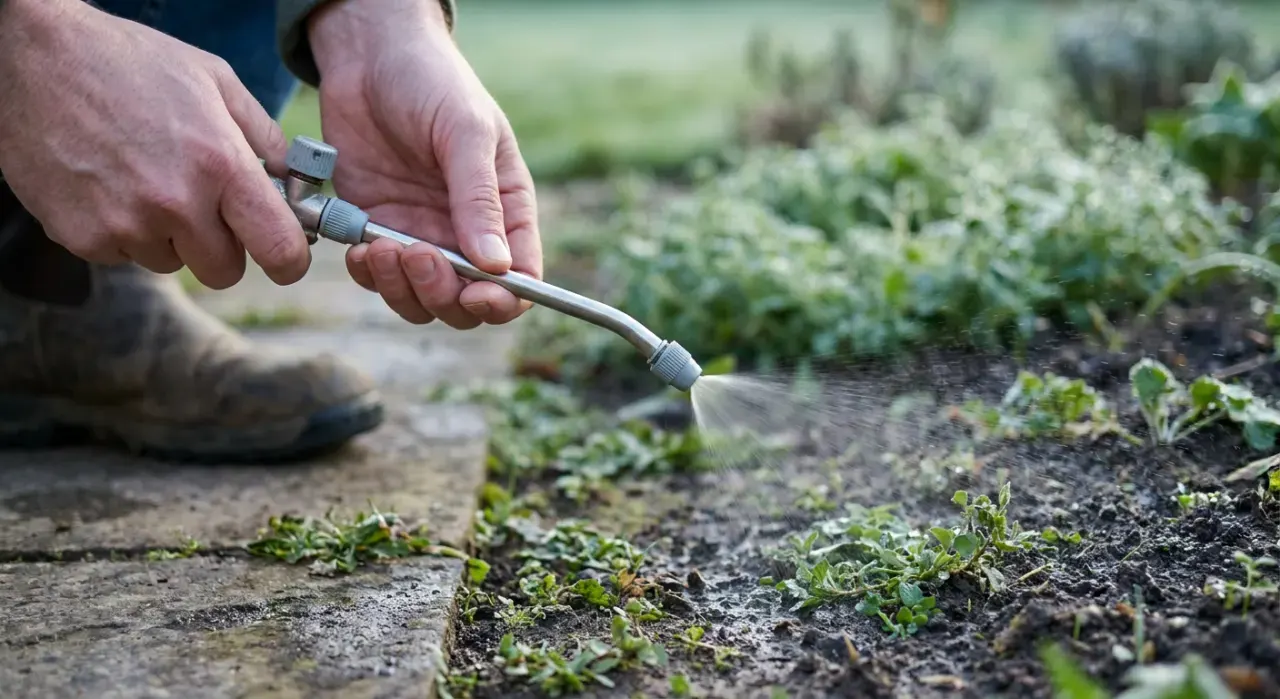
The habits worth building: keep concentrates in a latched, elevated cabinet away from where animals go; mix outdoors in the impermeable gloves, long sleeves and long pants EPA safety guidance calls for, and never leave a filled sprayer or an open measuring cup unattended; rinse and store the sprayer where a dog cannot reach the wand; and never decant a herbicide into an unlabelled bottle or a food container. The last one causes more household poisoning incidents across all product types than any other single practice.
If You Want to Spray Less
Every reduction in total application is a reduction in exposure, and several of them are free. Mulching beds two to three inches deep suppresses the large majority of annual weed germination and is the single most effective non-chemical control available — prevention is the first line of control in the EPA’s IPM principles, which treat broadcast spraying as a last resort. Mowing at 3.5 to 4 inches shades soil and prevents a substantial share of crabgrass germination before any product is involved. Boiling water clears driveway cracks at no cost. Pulling annual weeds after rain is quick and permanent, since annuals do not regrow from roots.
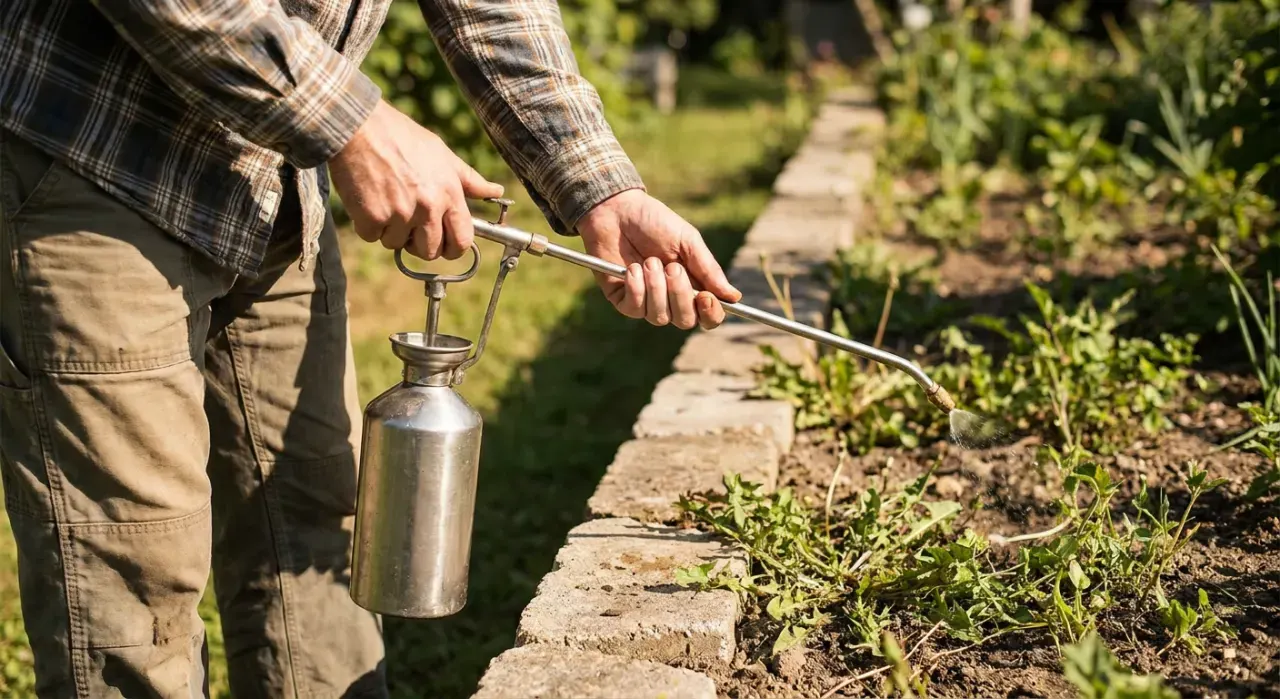
Where a product is genuinely the answer, spot-treating individual weeds with a handheld sprayer typically uses a small fraction of what a blanket application would. The non-chemical options are compared honestly, including where they fall short, in killing weeds without chemicals. Working out which category you need before you buy anything is covered in selective vs non-selective herbicides, and the lawn-safe field is ranked in best weed killer for lawns.
Where to Go Next
Identify before you treat — a lot of unnecessary spraying comes from misreading the weed, and common lawn weeds identified covers the eight that account for most complaints. Crabgrass has its own calendar in how to get rid of crabgrass. The full ranked field is in best weed killers, and everything sits under the pest and weed control hub.
We never buy, apply or physically handle the products we rank; recommendations come from aggregated owner reviews and expert consensus, and the method is on how we rank. This page is general information about product labeling and household practice, not veterinary or medical advice. When in doubt, keep pets off until the treated area is dry and watered in — and ask your veterinarian about anything specific to your animal.