 Garden


Affiliate Disclosure
Some links on this page are affiliate links. As an Amazon Associate, we earn from qualifying purchases — at no extra cost to you. We do not buy, test, or physically handle the products we cover; our rankings come from aggregated owner reviews, ratings and expert consensus. Commissions never change our verdicts. How we rank · full disclosure.
The verdict in 90 seconds
The DWE575SB is the circular saw to buy if you cut wood regularly and want to stop thinking about the saw. At around 8.8 pounds it is among the lightest full-size sidewinders made, the electric brake stops the blade in about two seconds, and the magnesium shoe stays flat. Its owner rating is one of the highest in the entire power tool category, and the criticisms that do appear are about the supplied blade, dust management and cord stiffness rather than the saw itself. The honest case against it is price.
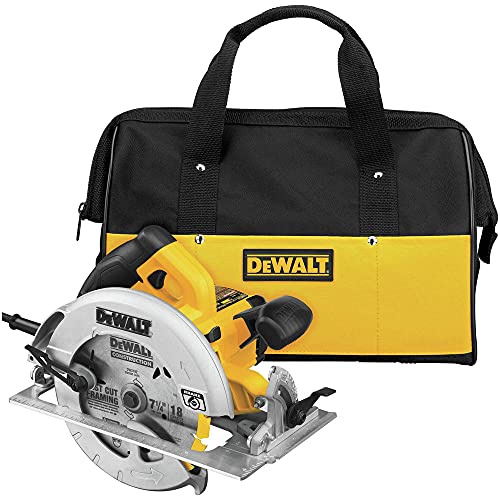
Best for anyone who cuts sheet goods and framing lumber often enough to notice weight
- 15 amp motor at 5,200 rpm with an electric brake
- Around 8.8 lb — one of the lightest full-size sidewinders
- Bevels to 57 degrees with stops at 45 and 22.5
- 2-9/16 in. depth of cut at 90 degrees
Why buy it: the combination of low weight and an electric brake is what makes a full day of overhead and repetitive cuts survivable.

What owners consistently praise
Weight, above everything. A pound and a half less than a typical competitor sounds academic until you are making repetitive cuts on sawhorses or working overhead. Owners who upgraded from a heavier saw describe the difference as the reason they finish jobs less tired, and carpenters in the review record mention it more than any specification.
The electric brake. Blade stop in roughly two seconds versus ten or more coasting. Owners frame it as a safety feature and a workflow one — you can set the saw down immediately instead of waiting, which over a day removes a lot of small pauses.
Cut quality and accuracy. The magnesium shoe resists the bending that plagues stamped steel bases, and owners report cuts staying square across years of use. The sight line at the front of the shoe gets consistent praise for actually letting you follow a pencil line.
Power that does not bog. The 15 amp motor at 5,200 rpm pushes through wet pressure-treated lumber, doubled-up joists and dense engineered beams without stalling, provided the blade is sharp.
Small design details. The integrated dust blower keeps the line visible, the 57-degree bevel range covers roof work, the depth lever holds its setting, and the on-board blade wrench means you can change a blade without hunting for a tool.

What owners actually complain about
The supplied blade. The stock 24-tooth carbide blade is a framing blade and it behaves like one: it rips studs quickly and it splinters plywood veneer and melamine. Owners routinely swap to a 40 to 60 tooth blade for sheet goods within the first week, which is an extra 20 to 40 dollars nobody expects.
Dust extraction. There is a dust port, but it is small and connecting a standard shop vac hose usually requires an adaptor that is not in the box. Owners doing indoor work describe getting more dust in the room than the port suggests.
The cord. Several owners report the cord being stiff, particularly in cold weather, and short enough that an extension is almost always needed. Both are minor and both come up often.
Blade-right layout. Like most sidewinders it puts the blade on the right of the motor, which means right-handed users watch the cut line past the body of the saw and left-handed users have the better view. Owners coming from a blade-left saw report a real adjustment period. Nothing to fix here — it is a design convention — but it is a genuine reason some buyers prefer a worm drive.
The brake jolt. A minority describe the electric brake producing a noticeable kick when it engages, and a few report it feeling harsher as the saw ages. Nobody in the record calls it dangerous, but it surprises new owners.
Price. At around 160 dollars it costs two to three times what a serviceable budget saw costs. For an occasional user that gap is difficult to justify, and reviews from infrequent DIY users say so plainly.
Lower guard sticking on thin stock. As with most circular saws, the retracting guard can catch when starting a cut on thin material or at a steep bevel. Owners learn to lift it with the lever; new users report a startled moment first.
Who it suits, and who should buy something else
Buy it if you cut wood most weeks, you value low weight and a brake, and you intend to keep the saw for a decade.
Buy the CRAFTSMAN CMES510 instead if you need a circular saw a few times a year and the price gap matters — see our CRAFTSMAN circular saw review for what you give up, chiefly the brake and the shoe.
Buy a worm drive instead if you frame for a living or you want the blade-left sight line. The trade is weight and price — worm drive vs sidewinder lays out the difference.
Buy cordless instead if most of your cutting happens away from an outlet — corded vs cordless circular saw covers the honest trade-offs, and the full ranked field is in our best circular saw guide.

Specifications
| Spec | DEWALT DWE575SB |
|---|---|
| Motor | 15 amp, 5,200 rpm |
| Blade | 7-1/4 in., blade-right sidewinder |
| Depth of cut | 2-9/16 in. at 90 degrees; about 1-13/16 in. at 45 degrees |
| Bevel | 0 to 57 degrees, stops at 45 and 22.5 |
| Weight | Approximately 8.8 lb. |
| Brake | Electric brake, roughly 2 second stop |
| Shoe | Magnesium |
| Dust management | Integrated blower plus dust port (adaptor often needed) |
| Included | 24-tooth carbide blade, wrench, edge guide, contractor bag |
| Warranty | 3 year limited, 1 year free service, 90 day money back |
The bottom line
This is one of the least controversial tools in the workshop category. The rating is high because the saw solves the two problems that actually matter over a working day — mass and blade coast — without giving anything up on power or accuracy. Budget another 30 dollars for a finish blade if you cut plywood, find a dust port adaptor if you work indoors, and it will outlast several cheaper saws.
Check price on Amazon → (paid link)
Next: get straighter cuts with how to cut a straight line with a circular saw, swap the stock blade using how to change a circular saw blade, check the limits in how deep a circular saw cuts, or start from the power tools and workshop hub.