 Garden

Affiliate Disclosure
Some links on this page are affiliate links. As an Amazon Associate, we earn from qualifying purchases — at no extra cost to you. We do not buy, test, or physically handle the products we cover; our rankings come from aggregated owner reviews, ratings and expert consensus. Commissions never change our verdicts. How we rank · full disclosure.
Yes, mulch raised beds — but with 1 to 2 inches, not the 3 to 4 inches recommended for landscape beds. Raised beds are shallower, warmer and faster-draining than open ground, so a thin layer of straw, shredded leaves or fine compost does the job without smothering the crop or delaying spring soil warming. The payoff is substantial: a mulched bed holds moisture markedly longer between waterings, blocks the light that germinates most annual weed seed, and prevents the surface crusting and splash-borne disease that bare bed soil produces after every rain.
Which mulch suits a vegetable bed?
| Mulch | Depth | Best for | Watch for |
|---|---|---|---|
| Straw (not hay) | 2 in | Tomatoes, squash, potatoes | Hay carries weed seed; buy straw |
| Shredded leaves | 1–2 in | Anything; free in fall | Whole leaves mat and shed water |
| Fine compost | 1 in | Seedlings, salad beds | Weak weed suppression |
| Grass clippings, dried | 1 in | Nitrogen-hungry crops | Never from a treated lawn |
| Pine straw | 2 in | Strawberries, blueberries | Slow to break down |
| Wood chips | 2 in | Perennials, paths | Surface only, never tilled in |
Straw and shredded leaves are the two workhorses for annual vegetables. Both decompose within a season and can be turned into the top few inches at cleanup, which feeds the bed as well as covering it.
Why less mulch than a landscape bed?
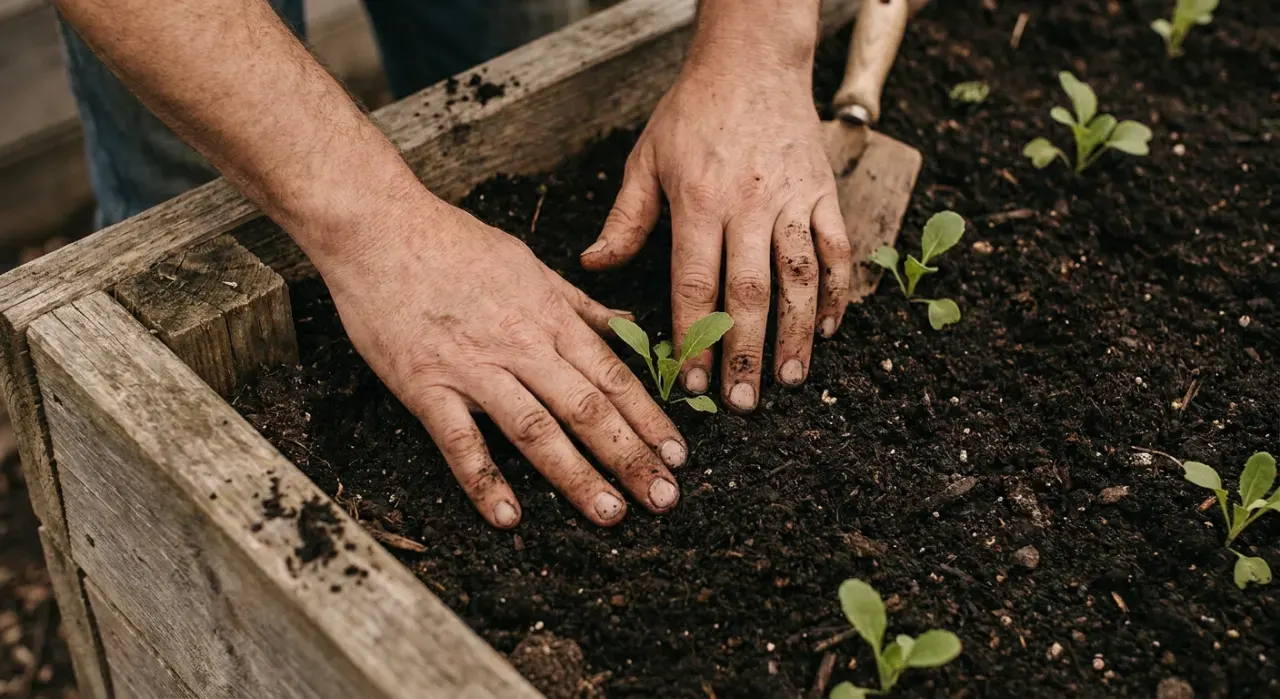
Three reasons specific to raised beds. First, depth: a bed 10 to 12 inches deep cannot afford to give three or four inches of it over to a layer roots cannot occupy. Second, temperature: raised beds warm earlier in spring, which is one of their main advantages, and a thick mulch cancels that out by insulating the surface. Third, seedlings: direct-sown carrots, lettuce and radish cannot push through a heavy layer, so bed mulching has to be thin enough to work around small plants rather than over them.
Timing follows from that. Mulch after the soil has warmed and after transplants are established, not in early April. For direct-sown crops, sow into bare soil and lay mulch between the rows once seedlings are a few inches tall.
How much watering does it actually save?
Enough to be the main reason most gardeners keep doing it. Extension horticulture guidance consistently identifies reduced evaporation as the principal benefit of organic mulch, and in a raised bed — which dries faster than open ground because it drains on all sides — the effect is amplified. In practice, midsummer beds that needed watering daily commonly stretch to every second or third day under two inches of straw. The second-order benefit is moisture consistency, which reduces blossom end rot in tomatoes and peppers and prevents the splitting that hits carrots and tomatoes after a dry spell breaks.
What goes wrong?
- Piling it against stems. Keep a clear inch or two around every stem and crown. Mulch held against soft tissue holds moisture there and invites rot.
- Using hay instead of straw. Hay is cut with the seed heads on. You will be weeding grass out of that bed for two years.
- Grass clippings from a treated lawn. Broadleaf herbicides persist in clippings and in the compost made from them, and will deform tomatoes and beans at very low concentrations.
- Mulching too early in spring. Cold, wet bed soil under mulch stalls transplants. Wait for warmth.
- Landscape fabric under mulch. It blocks the organic matter from ever reaching the soil, and it clogs. The related question is covered in should you line a raised bed with landscape fabric.
Mulching pairs with the other two habits that keep bed soil in good shape year after year: an annual compost top-dress, and moving families around on a cycle, which is covered in do you need to rotate crops in a raised bed. If you are still filling a new bed, start with the best soil mix ratio for a raised bed, and our best raised garden bed roundup covers the frames themselves.
We never buy, test or physically handle the products we rank. Recommendations come from aggregated owner reviews, star ratings, review volume and expert consensus — see how we rank.
More from this hub: Raised Beds & Planters · Best raised garden bed · What to fill a raised bed with · Best vegetables for a raised bed · How we rank