 Garden

Affiliate Disclosure
Some links on this page are affiliate links. As an Amazon Associate, we earn from qualifying purchases — at no extra cost to you. We do not buy, test, or physically handle the products we cover; our rankings come from aggregated owner reviews, ratings and expert consensus. Commissions never change our verdicts. How we rank · full disclosure.
The short answer: a railing planter is shallow, small, and exposed to sun and wind on every side including underneath, so it dries faster than any other container you own. The plants that suit it are compact, wind-firm and heat-tolerant, with something trailing at the front: lantana, portulaca, calibrachoa, trailing petunia, ivy geranium, verbena, sweet potato vine, alyssum, nasturtium — and, on a hot rail, the Mediterranean herbs that hate every other container. In shade, begonias, coleus, torenia and impatiens. Avoid anything tall, top-heavy, deep-rooted or permanently thirsty.
Exposure decides which list you work from. Drying decides whether the planting survives August. Both are covered below.
Why a Rail Box Is the Hardest Container to Plant
It helps to understand what you are actually working with, because a railing planter is not simply a small pot in an awkward place — it fails on four variables at once.
It holds very little medium. A typical rail box gives 5 to 7 inches of depth and only a few quarts of volume — enough for shallow crops like leaf lettuce, spinach and radishes, whose container minimum is about 4 to 6 inches deep according to University of Wisconsin Extension, but not for anything deeper-rooted. Small volumes buffer nothing: moisture, temperature and nutrient levels all swing much faster than in a large pot.
It is exposed on every surface. A pot on the floor is shaded on one side, sheltered below and often grouped with others. A rail box has moving air across the front, the back, both ends and the underside. That is most of its surface area losing heat and moisture.
Wind does more than dry the medium. It strips away the thin layer of humid air that sits against a leaf, which raises transpiration sharply, and it physically shreds soft, large-leaved plants. Wind is also what lifts an insecure box off a rail, and what turns a tall planting into a sail — a heavier, soil-based potting mix can help keep a box from tipping in an exposed spot, though it will also dry more slowly, per Illinois Extension.
It gets hot. A dark plastic or metal box in full sun heats the root zone directly, and on a west-facing rail with a masonry wall behind it, the plants get afternoon sun plus reflected and re-radiated heat. Root temperature, not air temperature, is what stresses the plant.
Put together, that is why the same plant that goes two or three days between waterings in a floor pot may want water twice a day on an exposed rail in midsummer. Every plant choice below is really a choice about how much of that a species will tolerate.
The Best Plants, by Exposure
Work out first whether your rail gets full sun (six hours or more), part shade, or full shade — and note that a railing frequently gets a harsher version of the exposure the balcony floor gets, because it sits above the shade line.
| Exposure | Trailing and spilling | Compact and upright | Edibles |
|---|---|---|---|
| Full sun, hot and windy | Portulaca, lantana, calibrachoa, trailing verbena, sweet potato vine, nasturtium, trailing rosemary | Gazania, dwarf French marigold, dianthus, dwarf zinnia, compact salvia, sedum | Thyme, oregano, sage, rosemary, chili peppers, strawberries |
| Full sun, sheltered | Wave and trailing petunia, ivy geranium, bacopa, alyssum | Upright geranium, angelonia, compact basil | Bush beans, cherry tomato in a deep box, leaf lettuce in spring |
| Part shade | Trailing lobelia, bacopa, creeping jenny, nemesia | Coleus, torenia, nicotiana, parsley | Leaf lettuce, arugula, spinach, radishes, chives |
| Full shade | Trailing begonia, ivy, torenia | Wax and dragon-wing begonia, impatiens, browallia, coleus | Mint (own box), cilantro, arugula, leaf lettuce |
For the fullest single box, use the standard three-part planting: one spiller at the front edge, one compact upright behind it, and a filler between them. Keep the upright genuinely compact — anything over about 18 inches starts catching wind.
The Rail Is Where Mediterranean Herbs Belong
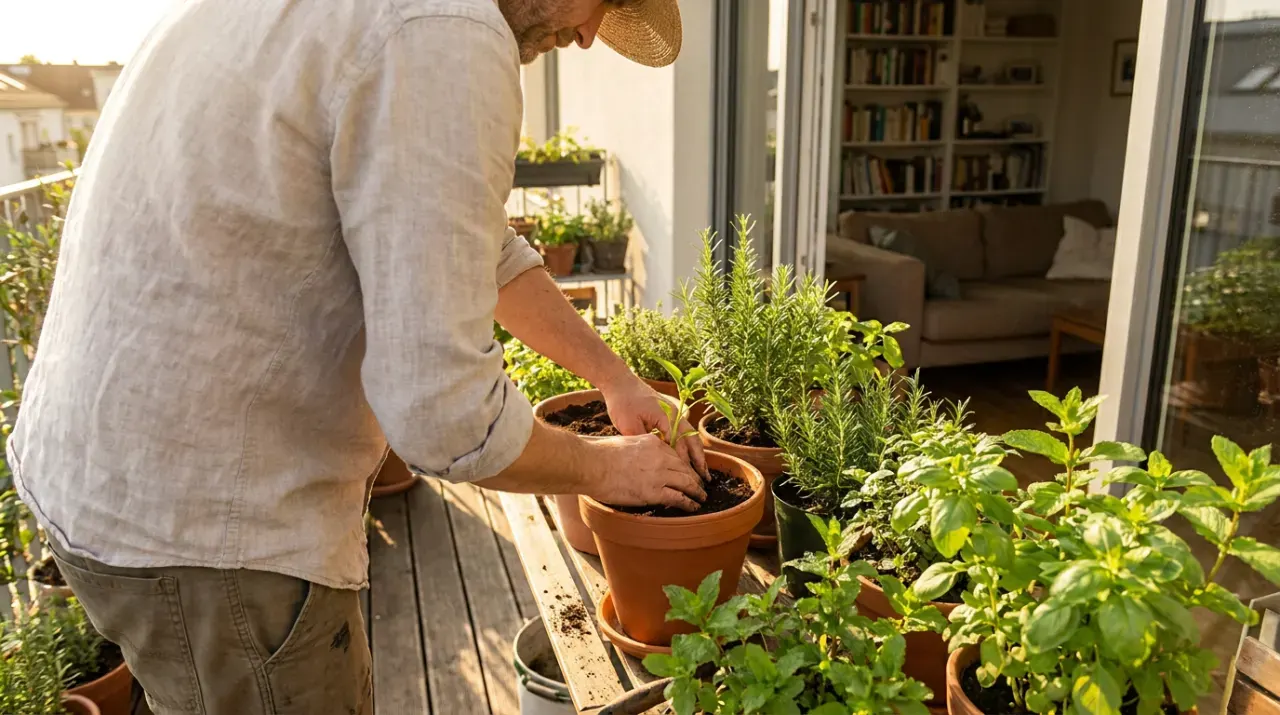
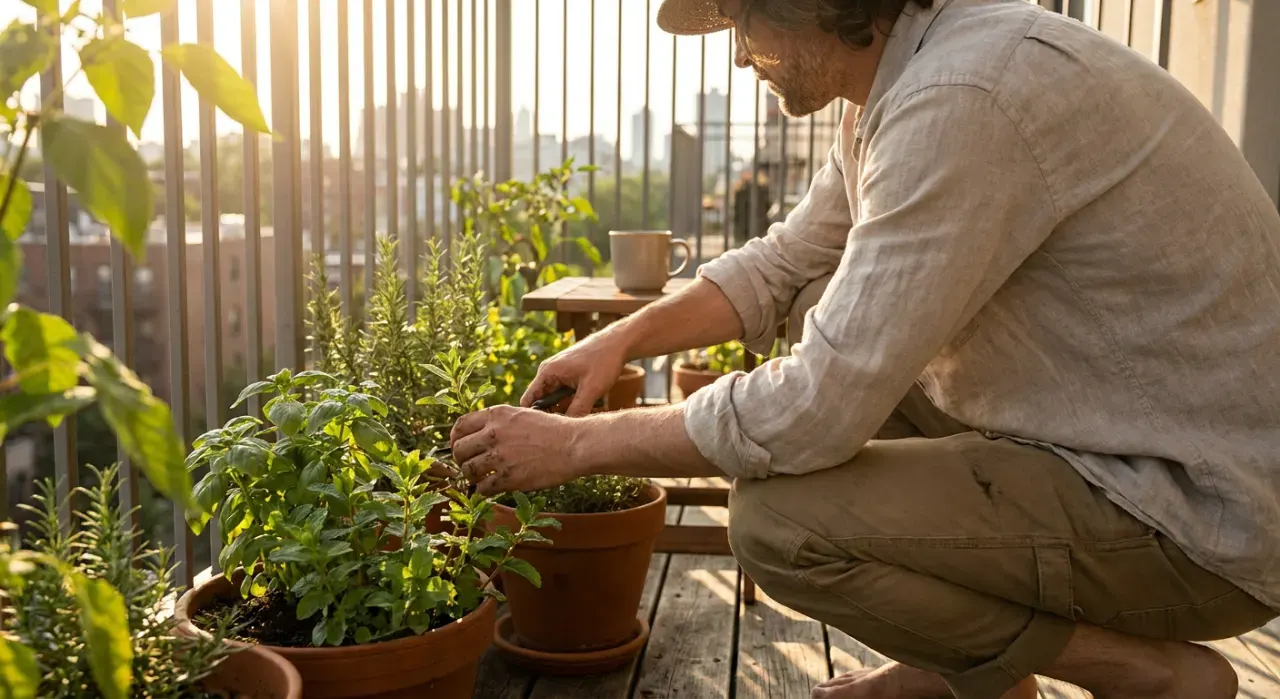
This is worth calling out because it inverts the advice on our self-watering pages. Rosemary, thyme, oregano, sage and lavender come from thin, stony, sun-baked hillsides. They want sharp drainage, lean medium, full sun and drying between waterings — precisely the conditions a hot, shallow, windy railing box creates by accident and every other container has to be coaxed into.
The same herbs rot in a self-watering pot, where the lower medium never dries. On a rail they are among the few plantings that get easier as summer gets hotter. Trailing rosemary in particular spills over the front edge and takes a west-facing rail without complaint. The two caveats are winter, since a shallow box gives roots almost no cold protection and perennial herbs often need bringing in or replacing in cold zones, and lavender, which is the fussiest of the group about drainage and rarely lasts more than a season or two in a shallow box.
What Not to Plant on a Rail
| Avoid | Why it fails on a railing |
|---|---|
| Tall, top-heavy plants — sunflowers, tall African marigolds, indeterminate tomatoes, corn | Act as a sail and lever the box off the rail; the box has no ballast to resist them |
| Large, soft-leaved plants — hosta, big-leaf begonia, banana | Wind shreds the foliage and drives water loss faster than the box can supply it |
| Deep-rooted crops — carrots, parsnips, potatoes, full-size tomatoes | Need more root depth than any rail box provides; roots hit the base and stall or fork |
| Permanently thirsty plants — ferns, astilbe, most hydrangeas | Cannot survive the drying cycle of a shallow exposed box without twice-daily watering |
| Anything that drops fruit or sap over a walkway | A safety and neighbor problem more than a plant one, and often prohibited by lease or bylaw |
Impatiens deserve a note: they are excellent on a shaded, sheltered rail and hopeless on a sunny, windy one, where they wilt by midday and never fully recover. The plant is not the problem — the pairing is.
Managing the Drying, Which Is the Whole Game
Five things, in order of how much difference they make.
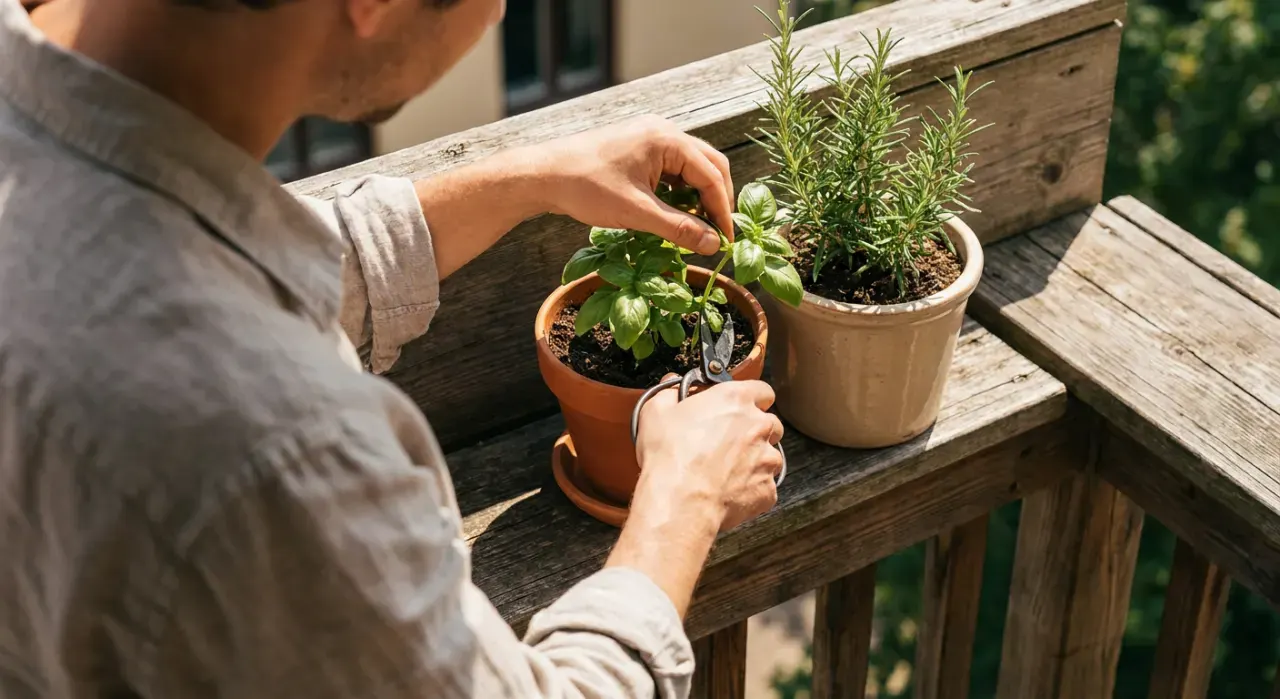
Use the deepest box the rail will take. More medium is more water in reserve, and depth beats every other trick here. A 7-inch box will carry a planting through a hot day that kills the same plants in a 4-inch tray.
Amend the medium for water holding. Mix vermiculite, or a compost or coir component, into the potting mix when you fill the box. Do not use garden soil, which compacts and then sheds water off the surface once it has dried — Illinois Extension is emphatic that garden soil used by itself in a container so badly impedes drainage and aeration that plants grow poorly or not at all.
Mulch the surface. Even half an inch of fine bark, gravel or compost cuts evaporation from what is otherwise a fully exposed surface, and it also shades the medium.
Water in the morning, and water until it runs. A splash that only wets the top inch encourages shallow rooting, which makes the plant more vulnerable, not less. Water until it drains from the bottom.
Group boxes and choose tough plants for the worst rail. Boxes set close together shelter each other and raise local humidity. And on the hottest, windiest railing you have, plant lantana, portulaca and Mediterranean herbs rather than fighting to keep petunias alive.
What to Sow, and What to Mix Into the Box
The boxes themselves are ranked separately — see the best railing planters, where fit, depth and wind security are the criteria. What this page needs is seed that suits an exposed rail and the amendment that slows the drying.
Check price on Amazon → (paid link)
The Seed and Amendment, Ranked

Best for nasturtium as the trailing, heat-tolerant, poor-soil star of a rail box
- Seven packets: nasturtium, pansy, calendula, chamomile, lavender, violet and borage
- Nasturtium is the pick here — it trails over a rail, takes heat, and flowers better in lean soil
- Calendula, pansy and violet are cool-season, so sow those for spring and fall displays
- Large seed that direct-sows easily; all non-GMO heirloom and genuinely edible
Why buy it: nasturtium is close to a purpose-built railing plant — it cascades, it shrugs off heat and wind, it flowers harder in poor soil than in rich, and both flowers and leaves are edible. The rest of the collection covers the cooler shoulder seasons.

Best for the fast, shallow-rooted crop a 6-inch rail box can actually finish
- Six varieties, most ready roughly 25 to 30 days from sowing
- Roots stay in the top few inches, which suits a shallow rail box
- Sow in spring and again in early fall — summer heat makes radishes pithy and sharp
- Direct sow only; radishes resent transplanting
Why buy it: most vegetables are wrong for a rail because the box is too shallow and dries too fast to carry a crop to maturity. Radishes finish in under a month in four inches of medium, which is exactly what a rail box has to offer.

Best for slowing the moisture loss in the fastest-drying container you own
- Fine horticultural vermiculite, a 100% natural mineral
- Holds water and releases it slowly back to roots as the medium dries
- Also holds nutrients, which matters in a box that gets watered through daily
- Mix roughly one part into four parts potting mix when filling a rail box
Why buy it: a railing box has less medium and more exposed surface than any other container, so it dries first and fastest. Vermiculite is the cheapest way to buy back a few hours of moisture between waterings.
Quick Comparison
| Product | Best for | Rating | Price | Buy |
|---|---|---|---|---|
| Sow Right Seeds Edible Flower Seed Collection, 7 Packets | Best Seed for a Sunny Rail | — | Check (paid link) | |
| Seed Needs Radish Seeds Variety Pack of 6, Non-GMO Heirloom | Best Edible for a Shallow Box | — | Check (paid link) | |
| Burpee Organic Horticultural Vermiculite, Add to Potting Soil | Best Drying-Out Fix | — | Check (paid link) |
How We Rank
We do not buy, grow or physically handle these products. Plant recommendations follow conventional horticultural guidance on exposure, drought and wind tolerance, root depth and container volume, and we say so where a plant works only in a narrower situation than usually claimed. Product verdicts come from aggregated owner ratings read at volume, weighted toward reviews describing germination and real garden use. Prices were checked at the time of writing. Full method: how we rank.
Where to Go Next
Once the planting is decided, choose the box: the best railing planters, judged on depth, rail fit and wind security. Work out your exposure properly first with how much sun your balcony gets, and if the whole balcony is new territory, start at the balcony garden starter guide. For the opposite problem — a container that stays permanently damp rather than drying out — see the best plants for self-watering pots and the best herbs for self-watering pots, where the plant list is almost the exact inverse of this one.
The Verdict
Plant a rail for heat, wind and drying, not for looks alone. Lantana, portulaca, calibrachoa, trailing petunia, ivy geranium, verbena, sweet potato vine, alyssum and nasturtium handle a sunny rail; begonias, coleus, torenia and impatiens handle a shady one; and the Mediterranean herbs are happier on a hot rail than anywhere else in a small-space garden. Keep the profile low, mix vermiculite into the medium, mulch the surface, secure every box against wind, and a railing stops being a place plants go to die.
Next: the small-space gardening hub · best railing planters · how much sun does my balcony get · watering containers in summer · how we rank.