 Garden
Affiliate Disclosure
Some links on this page are affiliate links. As an Amazon Associate, we earn from qualifying purchases — at no extra cost to you. We do not buy, test, or physically handle the products we cover; our rankings come from aggregated owner reviews, ratings and expert consensus. Commissions never change our verdicts. How we rank · full disclosure.
The short answer: to grow herbs indoors successfully you need three things — plenty of light (at least six hours of direct sun from a south-facing window, or a grow light run 12 to 16 hours a day), pots with drainage holes and well-draining potting mix, and careful watering (water only when the top inch of soil is dry). Start with easy herbs like basil, chives, mint, and parsley. Get the light right and most of the rest falls into place; too little light is the number one reason indoor herbs fail.
A windowsill herb garden is the perfect small-space project: it fits an apartment, produces something you actually use, and runs year-round regardless of the weather outside. The plants are cheap and the payoff is immediate. But indoor conditions are harder on herbs than people expect — indoor light is far weaker than outdoor sun, and homes are dry — so a little setup knowledge is what separates thriving pots from a row of sad, leggy stems. Here is the whole method.
Light: the make-or-break factor
Herbs are sun-loving plants, and light is where nearly every indoor herb garden succeeds or fails. Indoor light is dramatically dimmer than the outdoors, even by a bright window.
- Best natural spot: a south-facing window that gets six or more hours of direct sun. East and west windows are marginal; north windows are too dark.
- Rotate the pots every few days so plants do not lean toward the glass.
- Use a grow light if your light is weak. An inexpensive LED grow light a few inches above the plants, on a timer for 12 to 16 hours a day, reliably outperforms most windowsills and works anywhere, including a countertop with no window at all.
The tell that light is short: stems stretch tall and pale with big gaps between leaves. That is the plant reaching for light it is not getting. Fix light before you change anything else.
Choose the right herbs to start
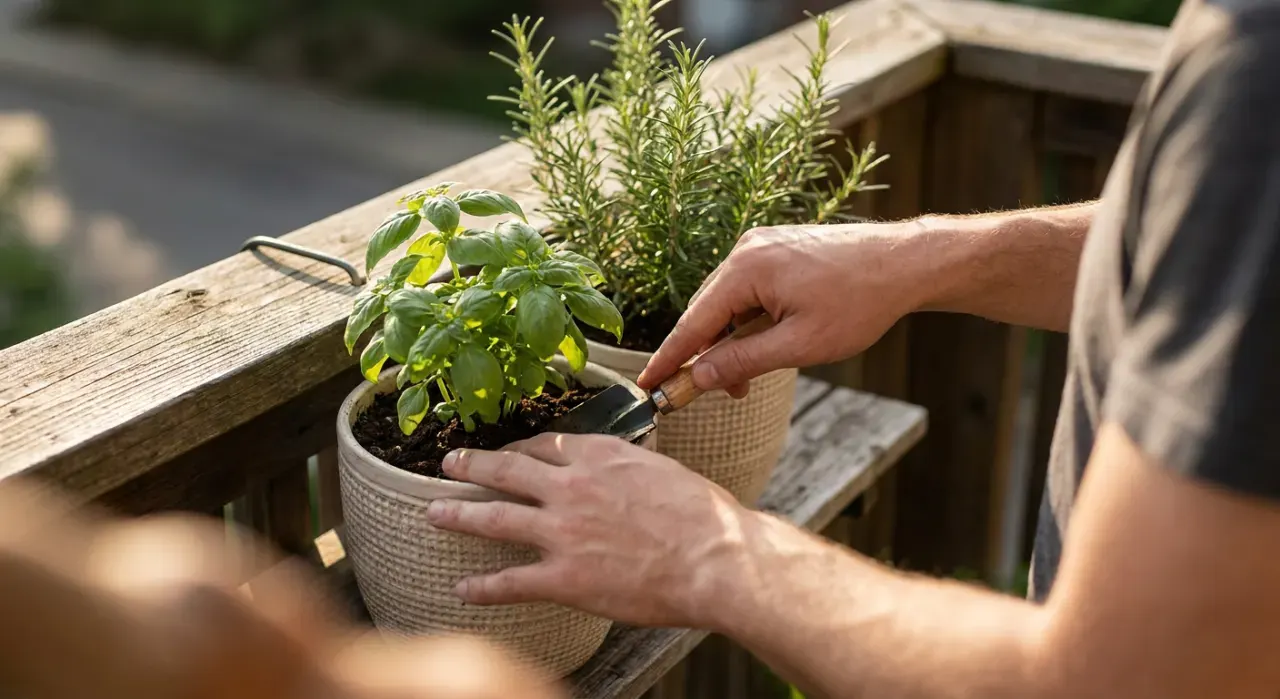
Some herbs are naturally suited to indoor life; others fight it. Start with the easy ones.
| Herb | Difficulty | Light and water notes |
|---|---|---|
| Chives | Very easy | Tolerant of moderate light; keep evenly moist |
| Mint | Very easy | Grow in its own pot; likes moist soil |
| Parsley | Easy | Slow to start; consistent moisture |
| Basil | Easy but demanding | Needs the brightest, warmest spot; moist soil |
| Thyme, oregano | Moderate | Let dry between waterings; bright light |
| Rosemary | Tricky | Hates wet roots and dry air; good drainage |
| Cilantro | Tricky | Bolts fast; sow in succession |
Always keep mint in its own container — it is a spreader that will overrun anything sharing its pot. For matching herbs to self-watering setups, see best herbs for self-watering pots.
Pots and potting mix for indoor herbs
Drainage is the second most common failure point after light. Herb roots rot in soggy soil.
- Every pot must have drainage holes. No exceptions — see do all pots need drainage holes.
- Use a light, well-draining potting mix, not garden soil, which compacts and holds too much water.
- Size the pot to the herb: at least 6 inches deep for most, more for parsley and rosemary. Cramped roots stunt growth — see container size by crop.
- Set pots on saucers and empty any standing water after watering.
Watering indoor herbs without killing them
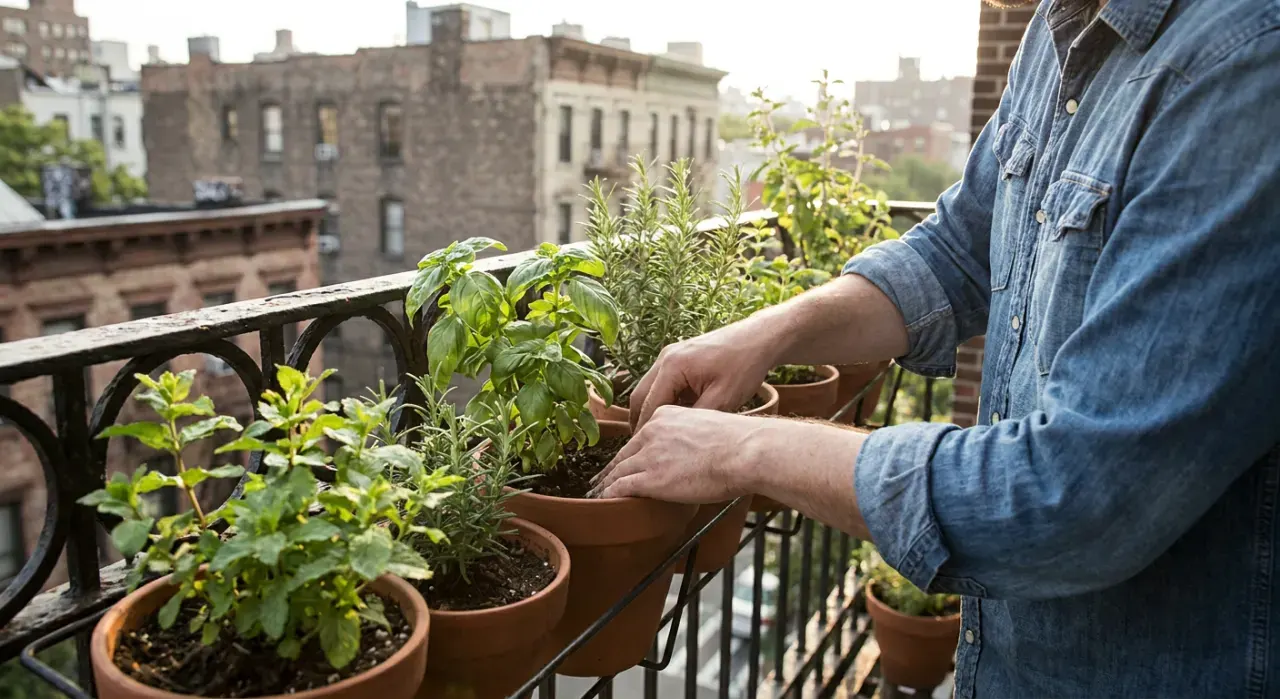
More indoor herbs die from overwatering than from anything else. The goal is moist, never soggy.
- Check the top inch of soil with your finger before watering. Dry means water; still damp means wait.
- Water thoroughly until it drains, then empty the saucer.
- Adjust by herb: Mediterranean herbs (rosemary, thyme, oregano) like to dry out more; basil, parsley, and mint prefer steady moisture.
- Water less in winter, when growth slows and plants use less.
The same deep-then-dry logic applies to all container plants — the wider principles are in the best time of day to water plants.
Temperature, humidity, and airflow
Homes are warm and dry, which suits some herbs and challenges others.
- Keep herbs at 60 to 75 F, away from cold drafts and hot air vents, both of which stress them.
- Raise humidity for basil and parsley if your air is very dry — group pots or use a pebble tray.
- Give some airflow to reduce fungal problems and strengthen stems; a lightly circulating room is fine.
- Watch for pests. Dry indoor air invites spider mites and fungus gnats — see how to get rid of fungus gnats if you see small flies around the soil.
Feeding and harvesting indoor herbs
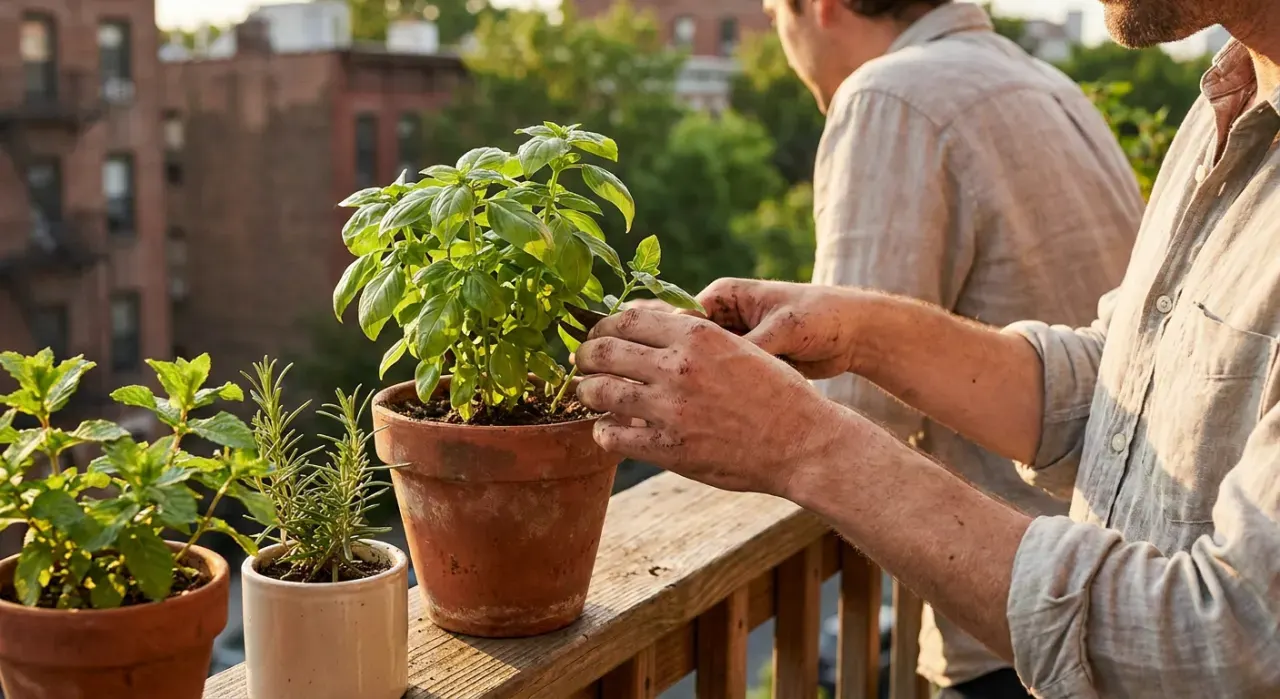
Container herbs need feeding because frequent watering flushes nutrients out, and correct harvesting keeps them productive.
- Feed lightly with a diluted balanced liquid fertilizer every few weeks during active growth — half the label strength is plenty. Over-feeding weakens flavor. See how often to fertilize plants in containers.
- Harvest regularly and correctly: pinch basil and mint above a leaf pair to encourage bushy growth; snip chives from the outside; take no more than a third of the plant at once.
- Pinch off flower buds on basil and cilantro to delay bolting and keep leaves coming.
Troubleshooting
| Symptom | Likely cause | Fix |
|---|---|---|
| Tall, pale, leggy stems | Too little light | Move to a brighter window or add a grow light |
| Yellowing, wilting despite wet soil | Overwatering or no drainage | Let soil dry; use pots with holes |
| Crispy brown leaf tips | Dry air or under-watering | Raise humidity; check moisture |
| Basil or cilantro flowering fast | Bolting | Pinch buds; sow cilantro in succession |
| Tiny flies around soil | Fungus gnats from wet soil | Dry the surface; treat larvae |
An indoor herb garden is one of the most rewarding small-space projects because it pays off every time you cook. Nail the light, use pots that drain, water only when the soil is dry, and start with the easy herbs — then branch into rosemary and cilantro once you have the rhythm. For the ranked field of compact indoor growing gear, see best self-watering pots; we rank on aggregated owner reviews, as explained in how we rank. Browse the full vertical and small-space gardening hub for more apartment-scale ideas, including our balcony garden starter guide.