 Garden

Affiliate Disclosure
Some links on this page are affiliate links. As an Amazon Associate, we earn from qualifying purchases — at no extra cost to you. We do not buy, test, or physically handle the products we cover; our rankings come from aggregated owner reviews, ratings and expert consensus. Commissions never change our verdicts. How we rank · full disclosure.
Vertical gardening multiplies your growing space by going up instead of out — using trellises, wall-mounted planters, hanging pockets, stacked towers, railing boxes, and repurposed pallets to turn a bare wall, fence, balcony, or patio into productive space. It is the single best strategy for small yards, balconies, and rentals, and it works for edibles and ornamentals alike. The keys are choosing the right plants (compact, shallow-rooted, or climbing), securing the structure for the weight of wet soil, and setting up easy watering, since vertical planters dry out faster.
Below are practical, proven ideas grouped by type, with notes on what to grow and what each approach costs. Any product picks come from aggregated owner reviews and expert consensus, not first-hand testing — see how we rank.
Why grow vertically
Growing upward is not just about saving space, though that is the headline benefit. A vertical setup also brings real horticultural advantages.
- More growing area in a tiny footprint — a single wall can hold what a whole bed would.
- Better air circulation around foliage, which reduces fungal disease common in crowded, ground-level plantings.
- Easier harvesting and less bending, a genuine benefit for anyone with mobility limits.
- Fewer pests and less soil splash, since foliage and fruit are lifted off the ground.
- Privacy and shade from a living screen of climbers on a trellis or fence.
For balconies and patios specifically, vertical growing is often the only way to garden at all, which is why it anchors the vertical and small-space gardening approach.
Trellises and climbing supports
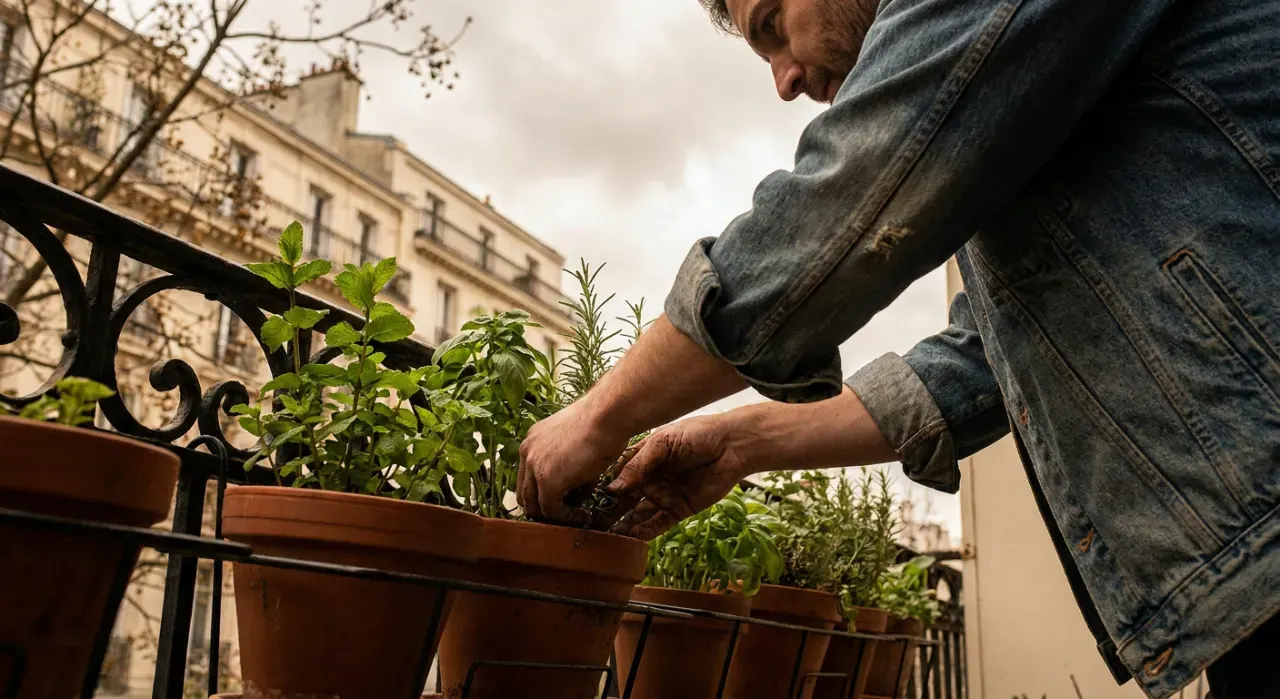
The simplest vertical idea is to let plants that already want to climb do so. A trellis, obelisk, arch, or netting turns naturally vining crops into a vertical harvest.
- Wall or fence trellis: mount a wood or metal grid against a sunny wall for cucumbers, pole beans, peas, and small-fruited tomatoes.
- Freestanding obelisk or teepee in a large pot: perfect for rented balconies since it needs no wall.
- Garden arch: spans a path and doubles growing space overhead while creating a focal point.
- String or netting for peas and beans: the cheapest support of all.
Heavier fruits like melons or large squash need slings to support the developing fruit on a trellis. Match the support strength to the crop, and anchor tall freestanding structures against wind.
Living walls and wall-mounted planters
For greens, herbs, and flowers, planting directly on a wall creates the striking "living wall" look while producing food or color at eye level.
| System | Best for | Notes |
|---|---|---|
| Fabric pocket panels | Herbs, lettuce, strawberries | Lightweight; dries fast, needs frequent water |
| Modular plastic wall planters | Greens, flowers | Interlocking, often with built-in reservoirs |
| Mounted individual pots | Mixed herbs, succulents | Flexible arrangement; secure each firmly |
| Rail or slat planters | Herbs, trailing flowers | Attach to a fence or wall batten |
Whatever you mount, the wall and fixings must carry the weight of soaked soil, which is heavier than most people expect. See the ranked options in best vertical garden planters.
Railing and balcony ideas
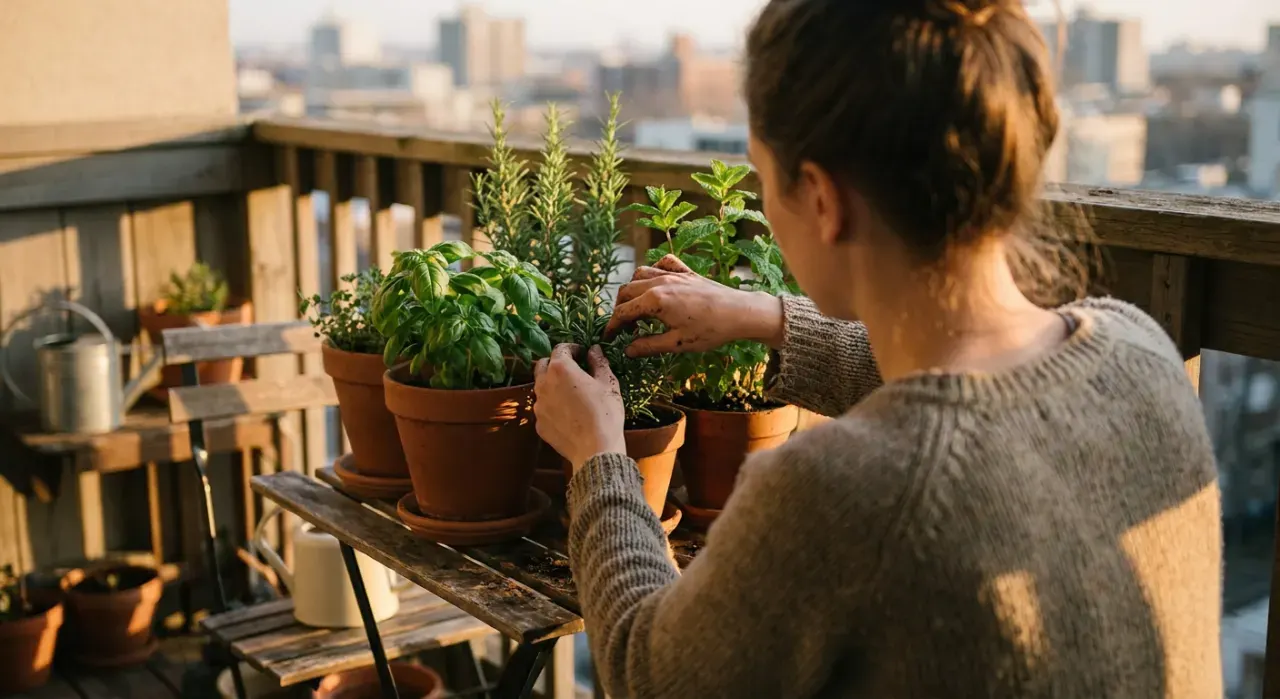
A balcony railing is prime vertical real estate, and the best part is that most railing solutions need no drilling — ideal for renters.
- Railing planters that clamp or straddle the rail hold herbs and greens along the top edge.
- Hanging baskets and rail hooks add a second tier below or above the railing.
- Tiered plant stands and ladder shelves stand freely against a wall, stepping pots upward.
- Over-the-rail pocket organizers repurpose a shoe organizer into a herb wall.
Check your balcony's weight limit and lease terms, keep heavier planters near the load-bearing edge, and make sure drainage will not drip onto neighbors below. For matching plants to railing containers, see best plants for railing planters and the setups in best railing planters.
Stacked towers and tiered planters
Vertical towers stack growing space into a small floor footprint, which suits patios and balcony corners. They shine for high-turnover crops.
- Strawberry and herb towers: stacked pots or a single columnar planter with side pockets, ideal for a big strawberry harvest in one square foot.
- Tiered pyramid beds: stepped raised beds that put more surface area over the same ground.
- Vertical hydroponic or self-watering towers: higher-cost systems with built-in reservoirs that solve the fast-drying problem.
The main watering caution with towers is that water drains downward, so upper levels dry out while lower ones stay wet. A central watering column or a drip line at the top evens this out.
Hanging gardens
Overhead space is often completely unused. Hanging planters exploit it for trailing edibles and flowers.
- Hanging baskets for trailing tomatoes, strawberries, and cascading herbs like oregano and thyme.
- Upside-down planters for cherry tomatoes and peppers where floor space is zero.
- Macramé and tiered hangers that stack several pots on one hook.
- Rain-gutter rows mounted in horizontal tiers along a fence for shallow-rooted greens.
Hanging containers dry out fastest of all because they are exposed on every side, so they are the strongest candidates for self-watering pots or a drip line.
Budget and DIY ideas
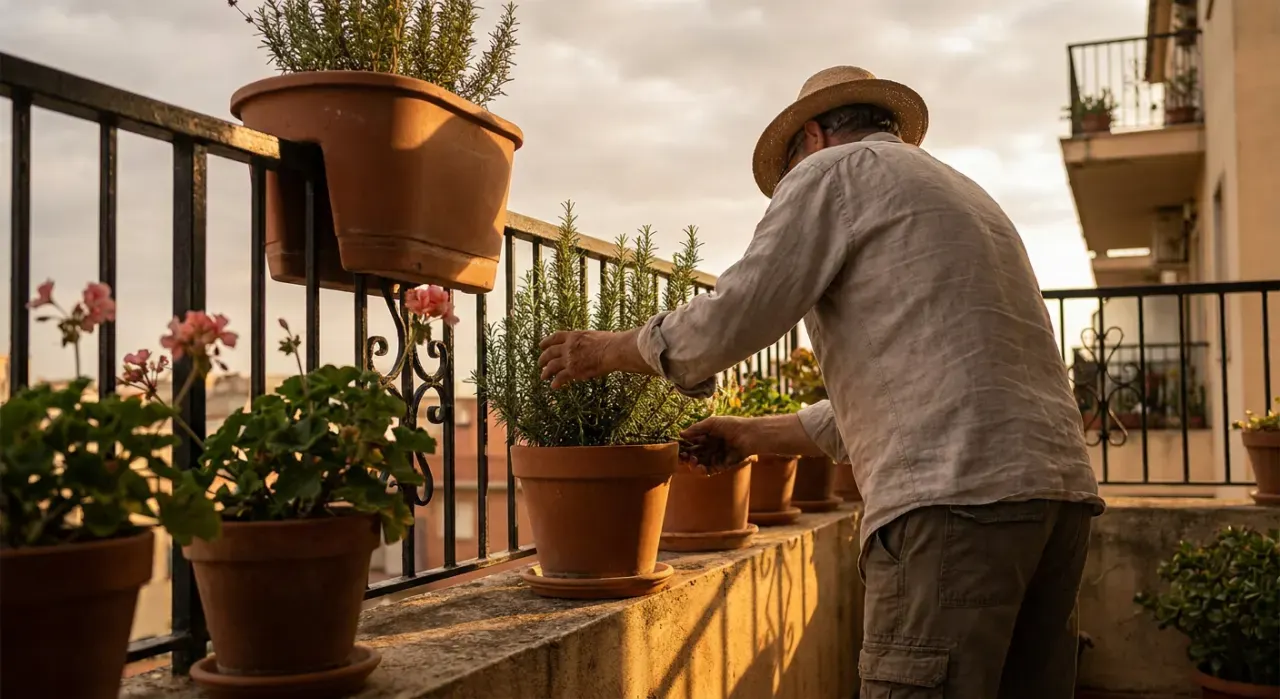
Vertical gardening does not require buying anything purpose-made. Repurposing turns cast-offs into growing walls for the cost of soil and plants.
| DIY idea | Grows |
|---|---|
| Upright wooden pallet lined with fabric | Greens, herbs, small flowers |
| Stacked or hanging gutters | Lettuce, spinach, herbs |
| Old ladder holding pots | Mixed herbs and flowers |
| Hanging plastic bottles | Herbs, seedlings |
| Shoe organizer on a wall | Herbs, strawberries |
These are less durable and tidy than manufactured systems, which makes them perfect for testing an idea before investing. Make sure repurposed wood is untreated if you are growing food.
Watering and plant choice: the two things that decide success
Two factors separate a thriving vertical garden from a row of crispy pockets: choosing the right plants and getting water to all of them.
- Grow shallow-rooted and climbing plants. Greens, herbs, strawberries, and vining crops suit vertical systems; deep-rooted or heavy crops like full-size tomatoes, corn, and root vegetables do not.
- Plan for faster drying. Less soil plus more exposure means vertical planters need more frequent watering than beds.
- Automate the water. A simple drip line along the top, letting gravity feed the lower levels, is the single biggest maintenance saver — see best drip irrigation kits.
- Mind the sun. Match sun-loving crops to the sunniest walls and leafy greens to spots with some afternoon shade.
For a broader starting framework on tight spaces, see the balcony garden starter guide.
The bottom line
Whether you have a bare fence, a sunny wall, a balcony railing, or just a corner of a patio, there is a vertical system that fits — from a simple trellis of beans to a full living wall of greens. Start with one easy project, choose compact or climbing plants, secure the structure for the weight of wet soil, and set up easy watering from day one. Grow up, not out, and even the smallest space can produce a surprising harvest.
Explore more at the vertical and small-space gardening hub, including best vertical garden planters.